

Kirjailija
Dan Hicks
Kirjat ja teokset yhdessä paikassa: 14 kirjaa, julkaisuja vuosilta 2007–2026, suosituimpiin kuuluu Corking the Bottle. Vertaile teosten hintoja ja tarkista saatavuus suomalaisista kirjakaupoista.
14 kirjaa
Kirjojen julkaisuvuodet: 2007–2026.
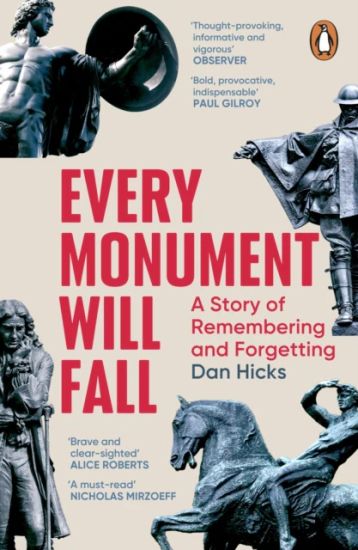
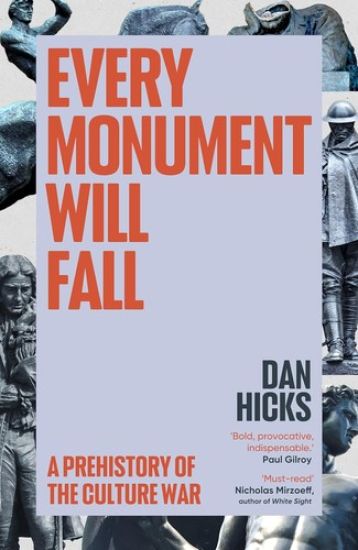
‘An extraordinary intervention. If you want to understand the stakes and the limitations of contemporary conflict over culture and colonial history this bold, provocative book is an indispensable resource’ Paul Gilroy, founding Director of the Sarah Parker Remond Centre for the Study of Race and Racism at UCL ‘Hicks’ must-read book describes how it was possible for a human skull to be made into a drinking cup and used in a genteel Oxford college, well into the 21st century, as if empire were an eternal state of nature . . . Read it to learn new ways to be anti-racist, abolitionist and to tell other stories than those commemorated by the monuments that surround us, from statues, to museums and the police’ Nicholas Mirzoeff, author of White Sight ‘Brave and clear-sighted. Hicks opens up an extraordinary conversation between the past and the present. This is a book about falling statues, but so much more. It’s about how we’ve been lied to, and how we can approach the past with honesty. Hicks asks whether history and archaeology should be used to justify actions we know impinge on the rights of others - or to understand ourselves better’ Alice Roberts, bestselling author of Crypt ‘Dan Hicks writes with grace and fierce focus about what we choose to remember and why, in our patterns of thought, our institutions and the built environment in which we live’ Eyal Weizman, director of Forensic Architecture The culture war is over. If you want it to be. It wasn’t even a culture war; it was a war on culture. A sustained attack, Dan Hicks argues, in the form of the weaponisation of civic museums, public art, and even universities — and one that has a deeper history than you might think. Tracing the origins of contemporary conflicts over art, heritage, memory, and colonialism, Every Monument Will Fall joins the dots between the building of statues, the founding of academic disciplines like archaeology and anthropology, and the warehousing of stolen art and human skulls in museums — including the one in which he is a curator. Part history, part biography, part excavation, the story runs from the Yorkshire wolds to the Crimean War, from southern Ireland to the frontline of the American Civil War, from the City of London to the University of Oxford — revealing enduring legacies of militarism, slavery, racism and white supremacy hardwired into the heart of our cultural institutions. Every Monument Will Fall offers an urgent reappraisal of how we think about culture, and how to find hope, remembrance and reconciliation in the fragments of an unfinished violent past. Refusing to choose between pulling down every statue, or living in a past that we can never change, the book makes the case for allowing monuments to fall once in a while, even those that are hard to see as monuments, rebuilding a memory culture that is in step with our times.
Every Monument Will Fall: A Prehistory of the Culture War
Dan Hicks
Hutchinson Heinemann
2025
nidottu
Halvin toimitettuna 22,00 €
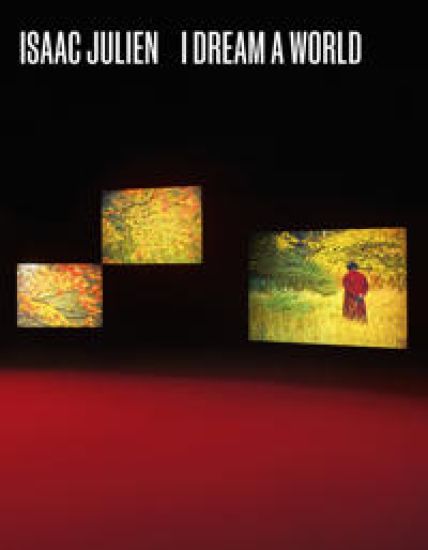
Catalogues the first thorough exhibition of Isaac Julien’s work in the USA, and the largest to date on his film and video installations. Sir Isaac Julien (b 1960) is one of the UK’s leading artists working in film and video, celebrated for his poetic yet astutely political films and video installations that reflect on the intersection of power, politics and personal experience through the lens of identity, race and sexuality. Published to accompany the first comprehensive survey of Julien’s work in a US museum setting, and the largest exhibition focusing on Julien’s film and video installation works to date, Isaac Julien: I Dream a World charts the artist’s evolution from a filmmaker working in a single-channel cinematic context to an artist redefining the possibilities of the filmic experience through spellbindingly beautiful and complex choreographies of image, movement and sound. It emphasizes Julien’s shared concerns across the Black diaspora with the inclusion of works shot in and across the Americas and the Caribbean that situate his work in a global dialogue. By addressing the pressing social and political issues of our time, in particular the movement of peoples and ideas across different continents, times and spaces, Julien asks viewers to reconsider the grand historical narratives of the global north anew. This luxurious catalogue features newly commissioned essays and archival materials, many previously unpublished, that relate to the works in the exhibition and give important insight into the artist’s working process.
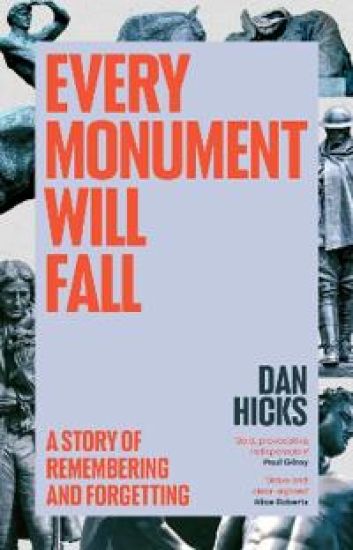
‘An extraordinary intervention. If you want to understand the stakes and the limitations of contemporary conflict over culture and colonial history this bold, provocative book is an indispensable resource’ Paul Gilroy, founding Director of the Sarah Parker Remond Centre for the Study of Race and Racism at UCL‘Hicks’ must-read book describes how it was possible for a human skull to be made into a drinking cup and used in a genteel Oxford college, well into the 21st century, as if empire were an eternal state of nature . . . Read it to learn new ways to be anti-racist, abolitionist and to tell other stories than those commemorated by the monuments that surround us, from statues, to museums and the police’ Nicholas Mirzoeff, author of White Sight‘Brave and clear-sighted. Hicks opens up an extraordinary conversation between the past and the present. This is a book about falling statues, but so much more. It’s about how we’ve been lied to, and how we can approach the past with honesty. Hicks asks whether history and archaeology should be used to justify actions we know impinge on the rights of others - or to understand ourselves better’ Alice Roberts, bestselling author of Crypt ‘Dan Hicks writes with grace and fierce focus about what we choose to remember and why, in our patterns of thought, our institutions and the built environment in which we live’ Eyal Weizman, director of Forensic ArchitectureThe culture war is over. If you want it to be. It wasn’t even a culture war; it was a war on culture. A sustained attack, Dan Hicks argues, in the form of the weaponisation of civic museums, public art, and even universities — and one that has a deeper history than you might think. Tracing the origins of contemporary conflicts over art, heritage, memory, and colonialism, Every Monument Will Fall joins the dots between the building of statues, the founding of academic disciplines like archaeology and anthropology, and the warehousing of stolen art and human skulls in museums — including the one in which he is a curator. Part history, part biography, part excavation, the story runs from the Yorkshire wolds to the Crimean War, from southern Ireland to the frontline of the American Civil War, from the City of London to the University of Oxford — revealing enduring legacies of militarism, slavery, racism and white supremacy hardwired into the heart of our cultural institutions. Every Monument Will Fall offers an urgent reappraisal of how we think about culture, and how to find hope, remembrance and reconciliation in the fragments of an unfinished violent past. Refusing to choose between pulling down every statue, or living in a past that we can never change, the book makes the case for allowing monuments to fall once in a while, even those that are hard to see as monuments, rebuilding a memory culture that is in step with our times.
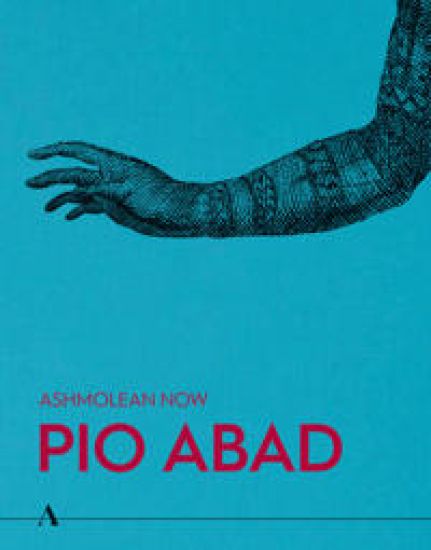
Pio Abad’s artistic practice is concerned with the personal and political entanglements of objects. His wide-ranging body of work, encompassing drawing, painting, textiles, installation and text, mines alternative or repressed historical events and offers counternarratives that draw out threads of complicity between incidents, ideologies and people. Deeply informed by unfolding events in the Philippines, where the artist was born and raised, his work emanates from a family narrative woven into the nation’s story. Abad’s parents were at the forefront of the anti-dictatorship struggle in the Philippines during the 1970s and 80s and it is the need to remember this history that has shaped the foundations of his work. This beautifully designed book accompanies the Ashmolean Museum's second exhibition of its new Ashmolean NOW series, featuring the work of Pio Abad. Abad’s artistic practice is concerned with the personal and political entanglements of objects. His wide-ranging body of work, which includes drawing, painting, installation, textiles and text, mines alternative or repressed historical events, offering counternarratives. Abad's new works link narratives found in the Museum's collections and Oxford with his personal life in the UK and Philippines, where the artist was born and raised. The book features a new text by Abad and contributions by art historical experts including Dan Hicks.

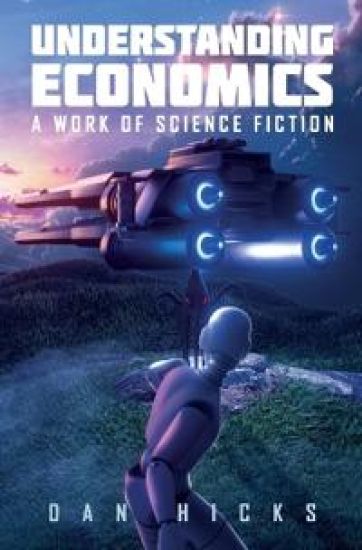
The human economy is probably the most complex thing in the known universe. It is comprised of millions or billions of self-directed human beings, their technologies, and institutions, each continuously acting and interacting within an already ridiculously complex natural world. To navigate this complexity, economists, like science fiction writers, must start with what they know and try and fill in the many gaps in their knowledge with calculated guesses, conjecture, and a little bit of fantasy. In fact, trying to understand what's happening in the economy could be described as - a work of science fiction. With the help of aliens, androids, Dr. Spock and Darth Vader, Understanding Economics: A work of science fiction takes an in depth look at the factors that make economics so difficult to understand and explain and, aware of these limitations, tries to explain them anyway. THE FIGHTIt might not seem apparent as we we sit quietly on the bus, do our taxes or wait patiently in line to order our coffee, but the foundation of the human economy is an organism whose ancestors have scavenged, fought, killed and died to enable us to come into existence. This organism, with all its fears and desires, strengths and weaknesses, remains at the centre of economics today. FAITHWithout faith we are nothing - but not in a religious sense. Without faith in each other, in our institutions, our governments and our financial system we would literally have only a fraction of the wealth and comforts we enjoy today. We might sometimes fantasize about a post-apocalyptic world with no rules, where we're left to our own resources, but in reality, most of us wouldn't even survive. THE MACHINESForget about the impending AI apocalypse, the machines rose up and took control a long time ago. Our institutions are a technology of our own making that control our lives and our economy in ways that that we have much less control over than we might like. CHAOS & CONTROLAn economy is a precarious balance of chaos and control. When chaos reigns we lose the benefit of people working together to solve their problems. Excessive controls constrain the experimentation and variation through which an economy and its participants come up with new and highly effective solutions to its problems. NO SUPERHEROESThere are no superheroes who can save us. There aren't even superheroes who can consistently determine right from wrong. What there is, if we're lucky, is a process that ensures that our system of government is subject to continuous change intended to benefit those who are being governed. THE MATRIXOur economic world exists within a virtual reality of money and finance which facilitates things that couldn't be done without them. But it also distorts reality, making it hard to distinguish between fact and fiction and smart, or not so smart economic decisions. DEFAULT SETTINGSWhatever freedom we may perceive we have to direct our economy, we are constrained by our physical, cultural and political realities as well as the predominant intellectual theories of our time. For good and bad, our economies are defined by these default settings. BETTER REPLICANTSOur understanding of economics is informed by complex theoretical models, but no matter how advanced these models might be, they are a long way from being able to replicate our incredibly complex economic reality.
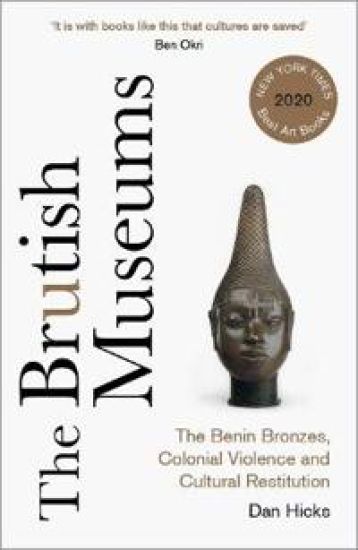
New York Times 'Best Art Books' 2020 'Essential' – Sunday Times 'Brilliantly enraged' - New York Review of Books 'A real game-changer'– Economist Walk into any Western museum today and you will see the curated spoils of Empire. They sit behind plate glass: dignified, tastefully lit. Accompanying pieces of card offer a name, date and place of origin. They do not mention that the objects are all stolen. Few artefacts embody this history of rapacious and extractive colonialism better than the Benin Bronzes - a collection of thousands of metal plaques and sculptures depicting the history of the Royal Court of the Obas of Benin City, Nigeria. Pillaged during a British naval attack in 1897, the loot was passed on to Queen Victoria, the British Museum and countless private collections. The Brutish Museums sits at the heart of a heated debate about cultural restitution, repatriation and the decolonisation of museums. Since its first publication, museums across the western world have begun to return their Bronzes to Nigeria, heralding a new era in the way we understand the collections of empire we once took for granted.
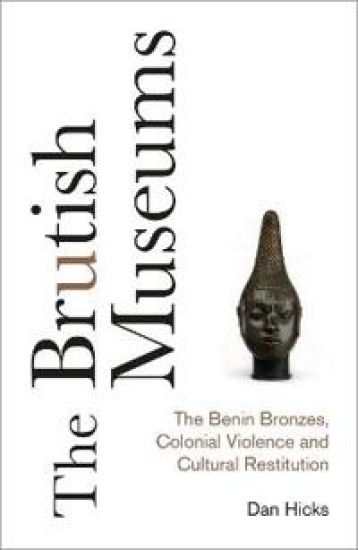
Walk into any European museum today and you will see the curated spoils of Empire. They sit behind plate glass: dignified, tastefully lit. Accompanying pieces of card offer a name, date and place of origin. They do not mention that the objects are all stolen. Few artefacts embody this history of rapacious and extractive colonialism better than the Benin Bronzes - a collection of thousands of metal plaques and sculptures depicting the history of the Royal Court of the Obas of Benin City, Nigeria. Pillaged during a British naval attack in 1897, the loot was passed on to Queen Victoria, the British Museum and countless private collections. The story of the Benin Bronzes sits at the heart of a heated debate about cultural restitution, repatriation and the decolonisation of museums. In The Brutish Museums, Dan Hicks makes a powerful case for the urgent return of such objects, as part of a wider project of addressing the outstanding debt of colonialism.
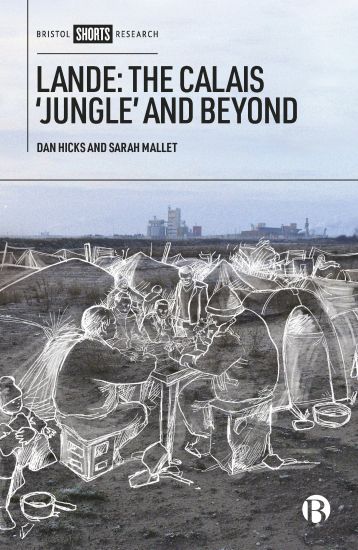
Available Open Access under CC-BY-NC licence. How can Archaeology help us understand our contemporary world? This ground-breaking book reflects on material, visual and digital culture from the Calais “Jungle” – the informal camp where, before its destruction in October 2016, more than 10,000 displaced people lived. LANDE: The Calais 'Jungle' and Beyond reassesses how we understand ‘crisis’, activism, and the infrastructure of national borders in Refugee and Forced Migration Studies, foregrounding the politics of environments, time, and the ongoing legacies of empire. Introducing a major collaborative exhibit at Oxford’s Pitt Rivers Museum, the book argues that an anthropological focus on duration, impermanence and traces of the most recent past can recentre the ongoing human experiences of displacement in Europe today.
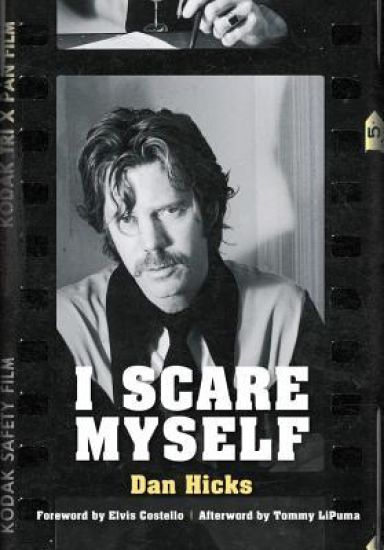
'Dan is a national treasure and one of America s great songwriters. Elvis Costello. 'Dan s songs were funny, serious, and entertaining, and the combo of old-timey folk, country, and jazz knocked me out. Matt Groening, creator of The Simpsons. 'Dan Hicks is like lightning in a bottle. Bette Midler. Dan Hicks didn t have his heart set on a career in music. It all just sort of happened to him. It didn t hurt, of course, that he was in the right place at the right time San Francisco, 1966 and had a front-row seat for the birth and death of the counterculture. Among other things, this is a classic story of the 60s. More importantly, it s a story of musical genius. By the time the Summer of Love limped to a close in the fall of 67, Hicks had quit the Charlatans the pioneering psych-rock band with whom he played the drums and turned to jazz, the music he d secretly loved all along, as he began building his own band, the Hot Licks. 'I just started taking ingredients I liked and putting them together to see what came out, Hicks writes. What came out was an amazing blend of complex time signatures, unusual instrumentation, and intricate vocal harmonies that took him to the top of the 70s rock world but also into a downward spiral of drink and drug abuse. Emerging from a long wilderness, which he writes about here with wit and candour, the man described by Tom Waits as 'fly, sly, wily, and dry eventually returned to recording and performing, making a number of acclaimed albums, including Beatin The Heat, a set of duets with Waits, Costello, Rickie Lee Jones, and more. Along the way, his music continued to subtly permeate the culture, turning up everywhere from The Sopranos to commercials for Levi s and Bic. Hicks passed away in early 2016, but his music, and the stories he tells here, remain as fresh and irresistible as ever. I Scare Myself takes readers on a journey behind the music, and into the life and mind of the fantastic artist who created it.
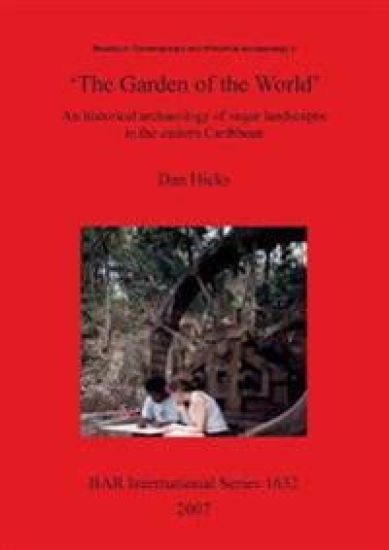
This study uses the perspectives of what might be termed the 'empirical tradition' of British landscape archaeology that developed in the 1960s and 1970s, especially in industrial archaeology, to explore the early modern history of the 'garden' landscapes formed by British colonialism in the eastern Caribbean, and their place in the world. It presents a detailed chronological sequence of the changing material conditions of these English-/British-owned plantation landscapes during the 17th, 18th and early 19th centuries, with particular reference to the origins, history and legacies of the sugar industry. The study draws together the results of archaeological fieldwork and documentary research to present a progressive account of the historical landscapes of the islands of St Kitts and St Lucia: sketching a chronological outline of landscape change. This approach to landscape is characterised by the integration of archaeological field survey, standing buildings recording alongside documentary and cartographic sources, and focuses upon producing accounts of material change to landscapes and buildings. By providing a long-term perspective on eastern Caribbean colonial history: from the nature of early, effectively prehistoric contact and interaction in the 16th century, through early permanent European settlements and into the developed sugar societies of the 18th and 19th centuries, the study suggests a temporal and thematic framework of landscape change that might inform the further development of historical archaeology in the island Caribbean region. The broader aim of the study relates to exploring how archaeological techniques can be used to contribute a highly detailed, empirical case study to the interdisciplinary study of postcolonial landscapes and British colonialism. In order to achieve this goal, the study draws upon the techniques of what has been called the 'empirical tradition' of landscape archaeology.