Kirjojen hintavertailu – 12 859 828 kirjaa ja 27 kauppaa

Kirjailija

Dan Protzman

Kirjat ja teokset yhdessä paikassa: 4 kirjaa, julkaisuja vuosilta 2015–2021, suosituimpiin kuuluu One-Piece Flow vs. Batching. Vertaile teosten hintoja ja tarkista saatavuus suomalaisista kirjakaupoista.

4 kirjaa

Kirjojen julkaisuvuodet: 2015–2021.

Lean Leadership BASICS

Lean Leadership BASICS

Michael Meyers; Charles Protzman; Dan Protzman; Davide Barbon; William Keen; Cliff Owens

Taylor Francis Ltd
2021
sidottu
This book explains how to sustain lean, or, continuous improvement practices. It introduces the BASICS® lean leadership development path, combining the "human aspect" with published BASICS® lean tools. It lays out the methodology to empower, lead, and drive ongoing improvements in your business. The book includes engaging stories and case studies to demonstrate the effectiveness of shop floor management tactics, including visual management tools, gemba walks, standard work, time analysis, kanban, 5S, and more.
Lean Leadership BASICS

Lean Leadership BASICS

Michael Meyers; Charles Protzman; Dan Protzman; Davide Barbon; William Keen; Cliff Owens

Productivity Press
2021
nidottu
This book explains how to sustain lean, or, continuous improvement practices. It introduces the BASICS® lean leadership development path, combining the "human aspect" with published BASICS® lean tools. It lays out the methodology to empower, lead, and drive ongoing improvements in your business. The book includes engaging stories and case studies to demonstrate the effectiveness of shop floor management tactics, including visual management tools, gemba walks, standard work, time analysis, kanban, 5S, and more.
One-Piece Flow vs. Batching

One-Piece Flow vs. Batching

Charles Protzman; Joe McNamara; Dan Protzman

CRC Press
2017
sidottu
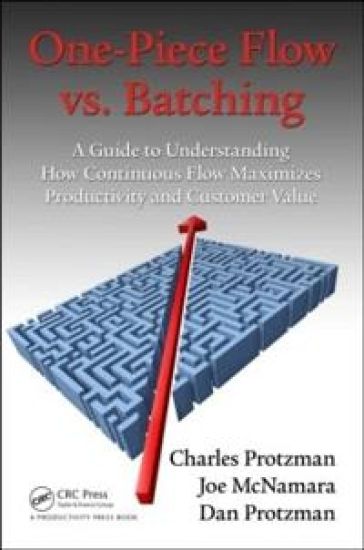
Although batching often appears more efficient than one-piece flow for individual tasks, the practice creates waste for other parts of the organization that more than offset its perceived benefits. A silent productivity killer, batching is an extremely difficult mindset to overcome and, as a result, numerous Lean initiatives have been destroyed by it. This book argues the case for one-piece flow over batching. It identifies the eight root causes of batching, the wastes created from batching, how batching drives the eight wastes, and the advantages of one-piece flow. One-Piece Flow vs. Batching: A Guide to Understanding How Continuous Flow Maximizes Productivity and Customer Value provides concrete arguments as to why batching, while sometimes necessary, is never the most efficient solution for most processes. It explains why flow, especially one-piece flow or continuous flow, should always be your ultimate objective when driving for increased productivity in any process. Using case studies to illustrate how to channel current mindsets toward one-piece flow as the preferred operation, the book is designed to support anyone involved in continuous improvement activities. It provides the tools and understanding you will need to overcome resistance to implementing flow and, in particular, one-piece flow processes whether it be on the factory floor or in a banking office.
One-Piece Flow vs. Batching

One-Piece Flow vs. Batching

Charles Protzman; Joe McNamara; Dan Protzman

Productivity Press
2015
nidottu
Although batching often appears more efficient than one-piece flow for individual tasks, the practice creates waste for other parts of the organization that more than offset its perceived benefits. A silent productivity killer, batching is an extremely difficult mindset to overcome and, as a result, numerous Lean initiatives have been destroyed by it. This book argues the case for one-piece flow over batching. It identifies the eight root causes of batching, the wastes created from batching, how batching drives the eight wastes, and the advantages of one-piece flow. One-Piece Flow vs. Batching: A Guide to Understanding How Continuous Flow Maximizes Productivity and Customer Value provides concrete arguments as to why batching, while sometimes necessary, is never the most efficient solution for most processes. It explains why flow, especially one-piece flow or continuous flow, should always be your ultimate objective when driving for increased productivity in any process. Using case studies to illustrate how to channel current mindsets toward one-piece flow as the preferred operation, the book is designed to support anyone involved in continuous improvement activities. It provides the tools and understanding you will need to overcome resistance to implementing flow and, in particular, one-piece flow processes—whether it be on the factory floor or in a banking office.