Kirjojen hintavertailu – 12 859 819 kirjaa ja 27 kauppaa

Kirjailija

Dan Wylie

Kirjat ja teokset yhdessä paikassa: 10 kirjaa, julkaisuja vuosilta 1995–2018, suosituimpiin kuuluu Mfecane Aftermath. Vertaile teosten hintoja ja tarkista saatavuus suomalaisista kirjakaupoista.

10 kirjaa

Kirjojen julkaisuvuodet: 1995–2018.

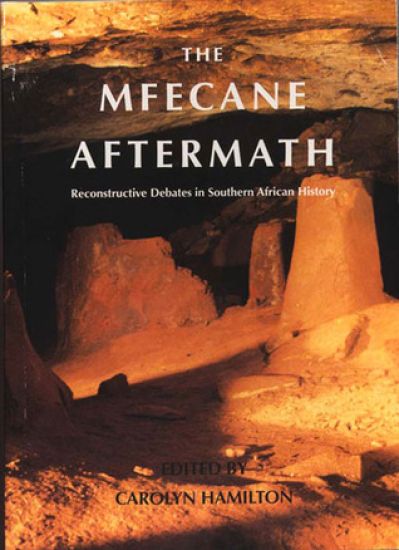
Mfecane Aftermath

Mfecane Aftermath

Carolyn Hamilton; Thomas Dowson; Elizabeth Eldredge; Norman Etherington; Jan-Bart Gewald; Simon Hall; Guy Hartley; Margaret Kinsman; Andrew Manson; John Omer-Cooper; Neil Parsons; Jeff Peires; Christopher Saunders; Alan Webster; John Wright; Dan Wylie

Wits University Press
1995
pokkari
The idea that the period of social turbulence in the nineteenth century was a consequence of the emergence of the powerful Zulu kingdom under Shaka has been written about extensively as a central episode of southern African history. Considerable dynamic debate has focused on the idea that this period – the 'mfecane'- left much of the interior depopulated, thereby justifying white occupation. One view is that 'the time of troubles' owed more to the Delagoa Bay Slave trade and the demands of the labour-hungry Cape colonists than to Shaka's empire building. But is there sufficient evidence to support the argument? The Mfecane Aftermath investigates the very nature of historical debate and examines the uncertain foundations of much of the previous historiography.
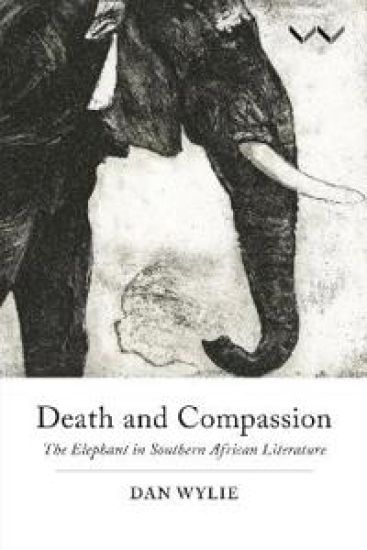
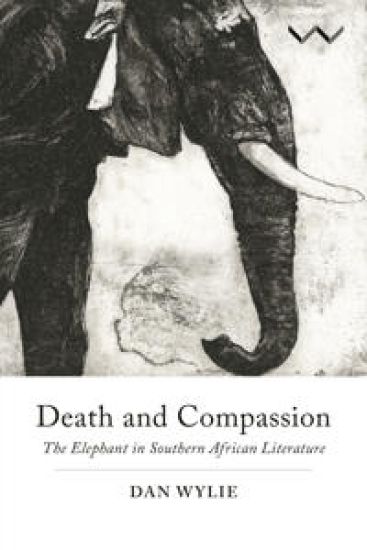
Death and Compassion

Death and Compassion

Dan Wylie

WITS UNIVERSITY PRESS
2018
sidottu
Traces the literary history of the elephant, and its role in South Africa's cultural imaginary Elephants are in dire straits – again. They were virtually extirpated from much of Africa by European hunters in the eighteenth and nineteenth centuries, but their numbers resurged for a while in the heyday of late-colonial conservation efforts in the twentieth. Now, according to one estimate, an elephant is being killed every 15 minutes. This is at the same time that the reasons for being especially compassionate and protective towards elephants are now so well-known that they have become almost a cliché: their high intelligence, rich emotional lives including a capacity for mourning, caring matriarchal societal structures, that strangely charismatic grace. Saving elephants is one of the iconic conservation struggles of our time. As a society we must aspire to understand how and why people develop compassion – or fail to do so – and what stories we tell ourselves about animals that reveal the relationship between ourselves and animals. This book is the first study to probe the primary features, and possible effects, of some major literary genres as they pertain to elephants south of the Zambezi over three centuries: indigenous forms, early European travelogues, hunting accounts, novels, game ranger memoirs, scientists' accounts, and poems. It examines what these literatures imply about the various and diverse attitudes towards elephants, about who shows compassion towards them, in what ways and why. It is the story of a developing contestation between death and compassion, between those who kill and those who love and protect.
Death and Compassion

Death and Compassion

Dan Wylie

Wits University Press
2018
pokkari
Traces the literary history of the elephant, and its role in South Africa's cultural imaginary Elephants are in dire straits – again. They were virtually extirpated from much of Africa by European hunters in the eighteenth and nineteenth centuries, but their numbers resurged for a while in the heyday of late-colonial conservation efforts in the twentieth. Now, according to one estimate, an elephant is being killed every 15 minutes. This is at the same time that the reasons for being especially compassionate and protective towards elephants are now so well-known that they have become almost a cliché: their high intelligence, rich emotional lives including a capacity for mourning, caring matriarchal societal structures, that strangely charismatic grace. Saving elephants is one of the iconic conservation struggles of our time. As a society we must aspire to understand how and why people develop compassion – or fail to do so – and what stories we tell ourselves about animals that reveal the relationship between ourselves and animals. This book is the first study to probe the primary features, and possible effects, of some major literary genres as they pertain to elephants south of the Zambezi over three centuries: indigenous forms, early European travelogues, hunting accounts, novels, game ranger memoirs, scientists' accounts, and poems. It examines what these literatures imply about the various and diverse attitudes towards elephants, about who shows compassion towards them, in what ways and why. It is the story of a developing contestation between death and compassion, between those who kill and those who love and protect.
Crocodile

Crocodile

Dan Wylie

Reaktion Books
2013
nidottu
From the croc that terrorized Captain Hook in Peter Pan to the leviathans depicted in films like Lake Placid and Dinocroc, innumerable songs, stories and legends have characterized crocodilians as pitiless predators with insatiable appetites. Yet although we commonly associate crocodiles, alligators and gharials with ferocity and deceit, they have also often been respected and revered in human history. Crocodile tracks 23 crocodilian species from India and Egypt to North America, Africa, Australia and beyond, and compares what science has discovered about the lives of these reptiles with their depictions in myth, art and literature around the world. Crocodiles were all but wiped out in the middle of the twentieth century by hunters and skin traders and are now making a comeback; as apex predators, they are today an increasingly important indicator of the health of an ecosystem. Indeed, they may outlive humans, just as they did the dinosaurs. Presenting a concise, cogent case for why we should respect these fearsome animals, this beautifully illustrated volume is a tribute to one of the world’s ultimate survivors.
Shaka

Shaka

Dan Wylie

Jacana Media (pty) Ltd
2011
pokkari
We all picture Shaka as a lean, mean, assegai-wielding warrior-king, the military genius who founded the Zulu nation. In fact, we don't actually know when he was born, what he looked like, or exactly when he died.
Myth of Iron

Myth of Iron

Dan Wylie

Ohio University Press
2008
pokkari
Over the decades we have heard a great deal about Shaka, the most famous—or infamous—of Zulu leaders. It may come as a surprise, therefore, that we do not know when he was born, nor what he looked like, nor precisely when or why he was assassinated. In Shaka's case, even these most basic facts of any person's biography remain locked in obscurity. Meanwhile the public image, sometimes monstrous, sometimes heroic, juggernauts on—truly a "myth of iron" that is so intriguing, so dramatic, so archetypal, and sometimes so politically useful, that few have subjected it to proper scrutiny. Myth of Iron: Shaka in History is the first book-length scholarly study of Shaka to be published. It lays out, as far as possible, all the available evidence—mainly hitherto underutilized Zulu oral testimonies, supported by other documentary sources—and decides, item by item, legend by legend, what exactly we can know about Shaka's reign. The picture that emerges in this meticulously researched and absorbing "anti-biography" is very different from the popular narrative we are used to.
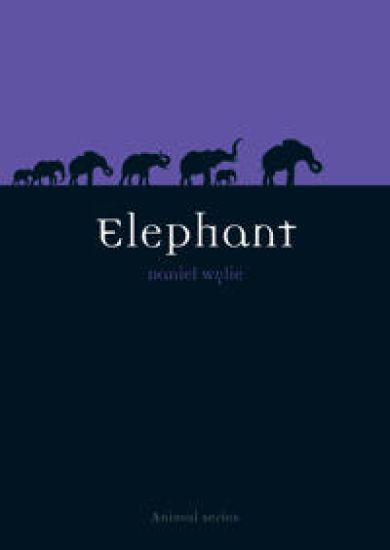
Elephant

Elephant

Dan Wylie

Reaktion Books
2008
nidottu
The image of the elephant can be found throughout world religions and cultures as a symbol of intelligence, strength and loyalty. In this book Daniel Wylie draws on a rich array of cultural examples to document that symbolic power, ranging from religious iconography for the Hindu god of wisdom, Ganesh, to beloved children’s works such as Dumbo, Babar the Elephant and Horton Hears a Who!. Elephant also considers the recurrent role of the animal in myths, paintings and sculptures. The book also describes the elephant’s three remaining species, and the controversial international efforts for elephant conservation. With ivory poaching and human encroachment into the animal’s natural habitats, Wylie argues that we face a uniquely poignant conservation crisis.
Myth of Iron

Myth of Iron

Dan Wylie

James Currey
2008
pokkari
Re-examines the evidence of what is known, or said to be known, about the life of the Zulu leader Shaka. We know very little about Shaka. This statement may come as a surprise, since over the decades we have heard a great deal about this most famous - or infamous - of Zulu leaders. People will be familiar with a cluster of dramatic stories about Shaka, derived from school or university textbooks, museums, the film Zulu, television programmes, or word of mouth. Most of these stories have come to sound so familiar that they generally pass unquestioned. Virtually everything about the popular portrait is wrong. Dan Wylie re-examines what pretends to be the biography. He lays out all the available evidence on Shaka's reign. What emerges is a work of historical detection. There are many Zulu oral testimonies. These are as flawed - even if just as entertaining - as the four main white eyewitness accounts of Shaka's last four years. Like Jesus of Nazareth, hefty attention is paid to the end of his life, while other areas attract no evidence at all. DAN WYLIE teaches in the Department of English at Rhodes University in Grahamstown North America: Ohio U Press; South Africa: University of KwaZulu-Natal Press
Dead Leaves

Dead Leaves

Dan Wylie

University of KwaZulu-Natal Press
2002
nidottu
It is January 1979. Groups of nervous, dutiful white conscripts begin their National Service with Rhodesia's security forces. Ian Smith's minority regime is in its dying days and negotiations towards majority rule are already under way. For these inexperienced eighteen-year-olds, there is nothing to do but go on fighting, hold the line while the transition happens around them. This is a textured memoir in which an ordinary troopie grapples with unique dilemmas presented by an extraordinary period in history: the spectres of inner violence and death; the pressurised arrival of manhood; and the place of conscience, friendship and beauty in the pervasive atmosphere of futile warfare.
Savage Delight

Savage Delight

Dan Wylie

University of KwaZulu-Natal Press
2001
nidottu
Provides an examination of the social and psychological dimensions of the literary mythology of Shaka, the Zulu founder King, in a genealogy of white writers.