Kirjojen hintavertailu – 12 903 725 kirjaa ja 27 kauppaa

Kirjailija

Dána-Ain Davis

Kirjat ja teokset yhdessä paikassa: 7 kirjaa, julkaisuja vuosilta 2006–2022, suosituimpiin kuuluu Engaged Observer. Vertaile teosten hintoja ja tarkista saatavuus suomalaisista kirjakaupoista.

Nimi esiintyy myös muodoissa: Dana-Ain Davis

7 kirjaa

Kirjojen julkaisuvuodet: 2006–2022.

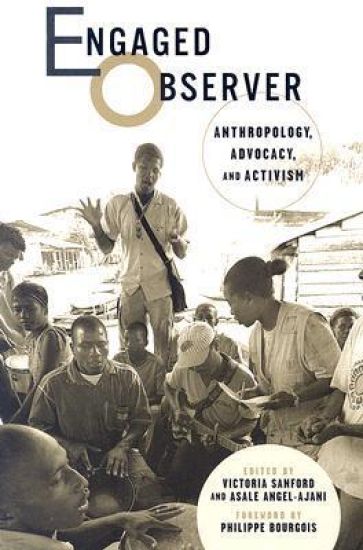
Engaged Observer

Engaged Observer

Asale Angel-Ajani; Victoria Sanford; Phillippe Bourgois; Irina Carlota Silber; Rosalva Aida Hernandez Castillo; Dr. Monique Skidmore; Shannon Speed; Dana-Ain Davis; Michael Bosia; Roberta Culbertson; John Collins; Aldo Civico; Kay Warren

Rutgers University Press
2006
nidottu
Anthropology has long been associated with an ethos of “engagement.” The field’s core methods and practices involve long-term interpersonal contact between researchers and their study participants, giving major research topics in the field a distinctively human face. Can research findings be authentic and objective? Are anthropologists able to use their data to aid the participants of their study, and is that aid always welcome? In Engaged Observer, Victoria Sanford and Asale Angel-Ajani bring together an international array of scholars who have been embedded in some of the most conflict-ridden and dangerous zones in the world to reflect on the role and responsibility of anthropological inquiry. They explore issues of truth and objectivity, the role of the academic, the politics of memory, and the impact of race, gender, and social position on the research process. Through ethnographic case studies, they offer models for conducting engaged research and illustrate the contradictions and challenges of doing so.

Feminist Ethnography

Feminist Ethnography

Dána-Ain Davis; Christa Craven

BLOOMSBURY PUBLISHING PLC
2022
sidottu
Feminist Ethnography, Second Edition, is a cross-cultural and interdisciplinary text that employs a problem-based approach to guide readers through the methods, challenges, and possibilities of feminist ethnography. Dána-Ain Davis and Christa Craven tease out the influences of feminist ethnography across a variety of disciplines including women’s and gender studies, critical race studies, ethnic studies, education, communications, psychology, sociology, urban studies, and American studies. Feature elements of the text include Essentials (excerpts from key texts in the field), Spotlights (interviews with feminist ethnographers), and suggested assignments and readings. The text concludes with a “conversation” among contemporary feminist ethnographers about what feminist ethnography looks like today and into the future.
Feminist Ethnography

Feminist Ethnography

Dána-Ain Davis; Christa Craven

BLOOMSBURY PUBLISHING PLC
2022
nidottu

Halvin toimitettuna 57,80 €

Feminist Ethnography, Second Edition, is a cross-cultural and interdisciplinary text that employs a problem-based approach to guide readers through the methods, challenges, and possibilities of feminist ethnography. Dána-Ain Davis and Christa Craven tease out the influences of feminist ethnography across a variety of disciplines including women’s and gender studies, critical race studies, ethnic studies, education, communications, psychology, sociology, urban studies, and American studies. Feature elements of the text include Essentials (excerpts from key texts in the field), Spotlights (interviews with feminist ethnographers), and suggested assignments and readings. The text concludes with a “conversation” among contemporary feminist ethnographers about what feminist ethnography looks like today and into the future.
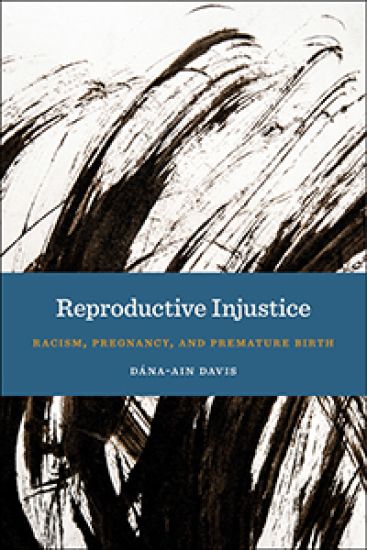
Reproductive Injustice

Reproductive Injustice

Dána-Ain Davis

New York University Press
2019
pokkari
Winner, 2020 Senior Book Prize, given by the Association of Feminist Anthropology Winner, 2020 Eileen Basker Memorial Prize, given by the Society for Medical Anthropology Honorable Mention, 2020 Victor Turner Prize in Ethnographic Writing, given by the Society for Humanistic Anthropology Finalist, 2020 PROSE Award in the Sociology, Anthropology and Criminology category, given by the Association of American Publishers A troubling study of the role that medical racism plays in the lives of Black women who have given birth to premature and low birth weight infants Black women have higher rates of premature birth than other women in America. This cannot be simply explained by economic factors, with poorer women lacking resources or access to care. Even professional, middle-class Black women are at a much higher risk of premature birth than low-income white women in the United States. Dána-Ain Davis looks into this phenomenon, placing racial differences in birth outcomes into a historical context, revealing that ideas about reproduction and race today have been influenced by the legacy of ideas which developed during the era of slavery. While poor and low-income Black women are often the "mascots" of premature birth outcomes, this book focuses on professional Black women, who are just as likely to give birth prematurely. Drawing on an impressive array of interviews with nearly fifty mothers, fathers, neonatologists, nurses, midwives, and reproductive justice advocates, Dána-Ain Davis argues that events leading up to an infant's arrival in a neonatal intensive care unit (NICU), and the parents' experiences while they are in the NICU, reveal subtle but pernicious forms of racism that confound the perceived class dynamics that are frequently understood to be a central factor of premature birth. The book argues not only that medical racism persists and must be considered when examining adverse outcomes—as well as upsetting experiences for parents—but also that NICUs and life-saving technologies should not be the only strategies for improving the outcomes for Black pregnant women and their babies. Davis makes the case for other avenues, such as community-based birthing projects, doulas, and midwives, that support women during pregnancy and labor are just as important and effective in avoiding premature births and mortality.
Reproductive Injustice

Reproductive Injustice

Dána-Ain Davis

New York University Press
2019
sidottu
Winner, 2020 Senior Book Prize, given by the Association of Feminist Anthropology Winner, 2020 Eileen Basker Memorial Prize, given by the Society for Medical Anthropology Honorable Mention, 2020 Victor Turner Prize in Ethnographic Writing, given by the Society for Humanistic Anthropology Finalist, 2020 PROSE Award in the Sociology, Anthropology and Criminology category, given by the Association of American Publishers A troubling study of the role that medical racism plays in the lives of Black women who have given birth to premature and low birth weight infants Black women have higher rates of premature birth than other women in America. This cannot be simply explained by economic factors, with poorer women lacking resources or access to care. Even professional, middle-class Black women are at a much higher risk of premature birth than low-income white women in the United States. Dána-Ain Davis looks into this phenomenon, placing racial differences in birth outcomes into a historical context, revealing that ideas about reproduction and race today have been influenced by the legacy of ideas which developed during the era of slavery. While poor and low-income Black women are often the "mascots" of premature birth outcomes, this book focuses on professional Black women, who are just as likely to give birth prematurely. Drawing on an impressive array of interviews with nearly fifty mothers, fathers, neonatologists, nurses, midwives, and reproductive justice advocates, Dána-Ain Davis argues that events leading up to an infant's arrival in a neonatal intensive care unit (NICU), and the parents' experiences while they are in the NICU, reveal subtle but pernicious forms of racism that confound the perceived class dynamics that are frequently understood to be a central factor of premature birth. The book argues not only that medical racism persists and must be considered when examining adverse outcomes—as well as upsetting experiences for parents—but also that NICUs and life-saving technologies should not be the only strategies for improving the outcomes for Black pregnant women and their babies. Davis makes the case for other avenues, such as community-based birthing projects, doulas, and midwives, that support women during pregnancy and labor are just as important and effective in avoiding premature births and mortality.
Battered Black Women and Welfare Reform

Battered Black Women and Welfare Reform

Dána-Ain Davis

State University of New York Press
2006
sidottu
Examines the consequences of welfare reform for Black women fleeing domestic violence. This timely and compelling ethnography examines the impact of welfare reform on women seeking to escape domestic violence. Dána-Ain Davis profiles twenty-two women, thirteen of whom are Black, living in a battered women's shelter in a small city in upstate New York. She explores the contradictions between welfare reform's supposed success in moving women off of public assistance and toward economic self-sufficiency and the consequences welfare reform policy has presented for Black women fleeing domestic violence. Focusing on the intersection of poverty, violence, and race, she demonstrates the differential treatment that Black and White women face in their entanglements with the welfare bureaucracy by linking those entanglements to the larger political economy of a small city, neoliberal social policies, and racialized ideas about Black women as workers and mothers.
Battered Black Women and Welfare Reform

Battered Black Women and Welfare Reform

Dána-Ain Davis

State University of New York Press
2006
pokkari
Examines the consequences of welfare reform for Black women fleeing domestic violence. This timely and compelling ethnography examines the impact of welfare reform on women seeking to escape domestic violence. Dána-Ain Davis profiles twenty-two women, thirteen of whom are Black, living in a battered women's shelter in a small city in upstate New York. She explores the contradictions between welfare reform's supposed success in moving women off of public assistance and toward economic self-sufficiency and the consequences welfare reform policy has presented for Black women fleeing domestic violence. Focusing on the intersection of poverty, violence, and race, she demonstrates the differential treatment that Black and White women face in their entanglements with the welfare bureaucracy by linking those entanglements to the larger political economy of a small city, neoliberal social policies, and racialized ideas about Black women as workers and mothers.