
Kirjailija
Dana Gioia
Kirjat ja teokset yhdessä paikassa: 37 kirjaa, julkaisuja vuosilta 2001–2026, suosituimpiin kuuluu The Art of the Short Story. Vertaile teosten hintoja ja tarkista saatavuus suomalaisista kirjakaupoista.
37 kirjaa
Kirjojen julkaisuvuodet: 2001–2026.

The 2018 edition of the Best American Poetry--"a 'best' anthology that really lives up to its title" (Chicago Tribune)--collects the most significant poems of the year, chosen by Poet Laureate of California Dana Gioia. The guest editor for 2018, Dana Gioia, has an unconventional poetic background. Gioia has published five volumes of poetry, served as the Chairman of the National Endowment for the Arts, and currently sits as the Poet Laureate of California, but he is also a graduate of Stanford Business School and was once a Vice President at General Foods. He has studied opera and is a published librettist, in addition to his prolific work in critical essay writing and editing literary anthologies. Having lived several lives, Gioia brings an insightful, varied, eclectic eye to this year's Best American Poetry. With his classic essay "Can Poetry Matter?", originally run in The Atlantic in 1991, Gioia considered whether there is a place for poetry to be a part of modern American mainstream culture. Decades later, the debate continues, but Best American Poetry 2018 stands as evidence that poetry is very much present, relevant, and finding new readers.
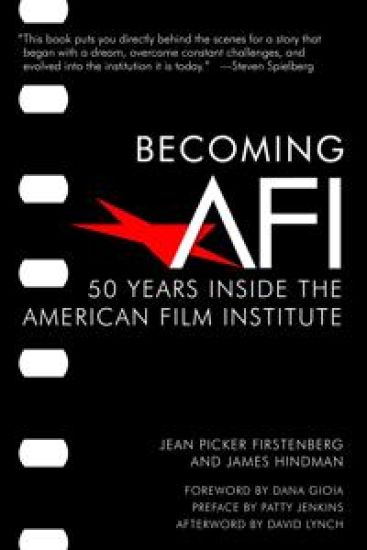
Becoming AFI
Jean Picker Firstenberg; James Hindman; Dana Gioia; David Lynch
Santa Monica Press
2017
sidottu
For over fifty years, the American Film Institute has flourished as one of America’s great cultural entities. Its graduates, faculty, supporters, and trustees have included such acclaimed individuals as Steven Spielberg, Maya Angelou, Gregory Peck, Meryl Streep, Les Moonves, Patty Jenkins, David Lynch, Jane Fonda, Edward James Olmos, Shonda Rhimes, James L. Brooks, Michael Nesmith, Sir Howard Stringer, and many other respected leaders in the worlds of film, television, digital media, and philanthropy. Written in a unique memoir style, Becoming AFI: 50 Years Inside the American Film Institute offers a candid look at how this remarkable organization has brought together aspiring filmmakers, outstanding educators, and visionary artists. The book details AFI’s journey to becoming the foremost national champion for moving images as a vibrant art form and a critical component of America’s cultural history. AFI’s story is chronicled through in-depth essays written by those who have been involved in its adventures, growth, and successes: from its early years under George Stevens Jr.’s direction at the legendary Greystone mansion and the Kennedy Center in Washington, DC; through its period of incredible growth, under Jean Picker Firstenberg’s guidance, as an influential cultural institution at its landmark Hollywood campus; to its continued years of excellence under Bob Gazzale’s dynamic leadership. Becoming AFI provides an insightful, behind-the-scenes look at how AFI—with passionate determination—overcame the hurdles of advancing technology, political shifts, and new audience dynamics to turn its aspirations into a substantial and highly successful organization. A tireless advocate of moving images as one of America’s most popular art forms, AFI is maturing into one of the world’s most respected educational and cultural institutions.
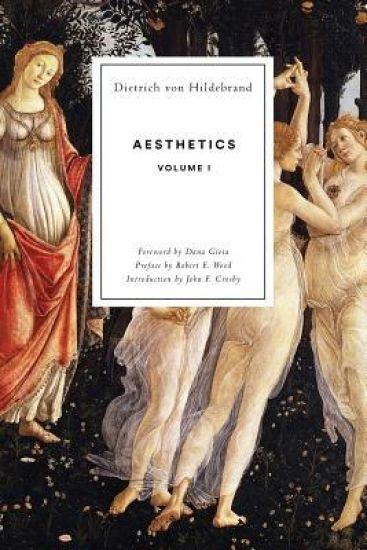
Aesthetics Volume I
Dietrich Von Hildebrand; Dana Gioia
Hildebrand Press
2016
pokkari
Halvin toimitettuna 31,20 €
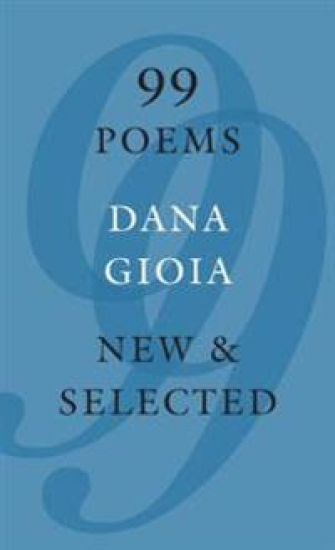
So much of what we live goes on inside-- The diaries of grief, the tongue-tied aches Of unacknowledged love are no less real For having passed unsaid. What we conceal Is always more than what we dare confide. Think of the letters that we write our dead. --from "Unsaid" Dana Gioia has long been celebrated as a poet of sharp intelligence and brooding emotion with an ingenious command of his craft. 99 Poems: New & Selected gathers for the first time work from across his career, including many remarkable new poems. Gioia has not arranged this selection chronologically but instead has organized it by theme in seven sections: Mystery, Place, Remembrance, Imagination, Stories, Songs, and Love. The result is a book that reveals and renews the pleasures, consolations, and sense of wonder that poetry bestows.
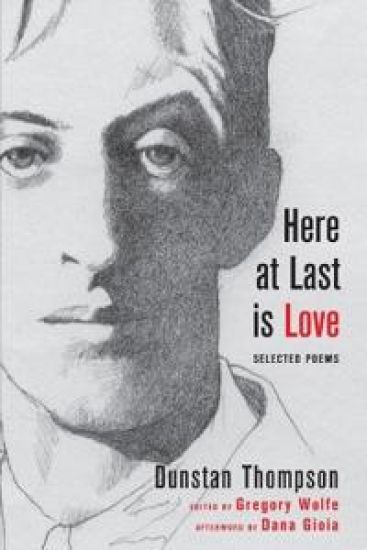
Dunstan Thompson was an American poet of great promise who burst onto the Anglo-American literary scene during World War II. In the words of one contemporary, Thompson was one of the rising "stars of modern poetry," a writer who might one day join the pantheon of poets like Hart Crane, W. H. Auden, Stephen Spender, and Dylan Thomas. And yet Thompson more or less disappeared from public view by the early 1950s. After publishing two volumes of poetry, a travel book, and a novel, Thompson had only a few scattered magazine publications until his death. A posthumous volume was privately printed in England, but the circulation was small. Here at Last is Love: Selected Poems is the definitive, authorized selection of Thompson's best work, revealing to a wider public the literary vision of a "lost master." The introduction by editor Gregory Wolfe offers the first extended narrative in print relating Thompson's complex personal story. The afterword by distinguished poet and critic Dana Gioia provides a thorough--and just--assessment of his poetic achievement. Thompson's early poetry was not only technically innovative, but saturated with the language and the drama of gay experience during World War II. Yet just a few years after the war, Thompson returned to the Catholic faith of his childhood, only to find that his new poetic voice was out of sync with the times. In spite of the difficulties he faced in his later years, Thompson did not give up writing poetry, continuing to produce quality work. After his reconversion, the poetry shifted in tone and form from a lush romanticism to an urbane classicism. The later work covers a wide range of subjects, from studies of historical figures to devotional lyrics. This volume will not only stir up the debate about Thompson's sexual and religious passions, but also help complete the history of twentieth-century Anglo-American poetry, finally making his work available to scholars and lovers of poetry everywhere.

Dunstan Thompson was an American poet of great promise who burst onto the Anglo-American literary scene during World War II. In the words of one contemporary, Thompson was one of the rising ""stars of modern poetry,"" a writer who might one day join the pantheon of poets like Hart Crane, W. H. Auden, Stephen Spender, and Dylan Thomas. And yet Thompson more or less disappeared from public view by the early 1950s. After publishing two volumes of poetry, a travel book, and a novel, Thompson had only a few scattered magazine publications until his death. A posthumous volume was privately printed in England, but the circulation was small. Here at Last is Love: Selected Poems is the definitive, authorized selection of Thompson's best work, revealing to a wider public the literary vision of a ""lost master."" The introduction by editor Gregory Wolfe offers the first extended narrative in print relating Thompson's complex personal story. The afterword by distinguished poet and critic Dana Gioia provides a thorough--and just--assessment of his poetic achievement. Thompson's early poetry was not only technically innovative, but saturated with the language and the drama of gay experience during World War II. Yet just a few years after the war, Thompson returned to the Catholic faith of his childhood, only to find that his new poetic voice was out of sync with the times. In spite of the difficulties he faced in his later years, Thompson did not give up writing poetry, continuing to produce quality work. After his reconversion, the poetry shifted in tone and form from a lush romanticism to an urbane classicism. The later work covers a wide range of subjects, from studies of historical figures to devotional lyrics. This volume will not only stir up the debate about Thompson's sexual and religious passions, but also help complete the history of twentieth-century Anglo-American poetry, finally making his work available to scholars and lovers of poetry everywhere. ""Dunstan Thompson is an immortal diamond too long lost to poetry readers. Here are poems that show the workings of a complex interiority in touch with history's quirks, the world at war, personal relationships, and struggles of the human heart."" --Jerry Harp, author of Creature, Gatherings, and Urban Flowers, Concrete Plains ""This remarkable volume should complicate efforts to make a conversion narrative out of Thompson's poetry. Theological and erotic 'loneliness' in the early work are inextricable from and further enriched by an astonishing sensibility concerning war. What could belong more to Catholic tradition than poetry that joins contemplation, eroticism, and physical suffering?"" --Martha Serpas, author of The Diener and The Dirty Side of the Storm ""Here, for the first time, Gregory Wolfe draws poems from Thompson's entire writing life, including his harrowing, erotic wartime poetry and his almost entirely unavailable, more reflective work of maturity. In doing so, he brings to new audiences the work of an essential mid-century poet, one I am confident will become much more important as his readership expands."" --Kevin Prufer co-editor of Dunstan Thompson: On the Life & Work of a Lost American Master ""Dunstan Thompson's fame underwent an eclipse, an injustice this volume strives to remedy. The preface by Gregory Wolfe and afterword by Dana Gioia begin the task of locating and elucidating Thompson's excellence, both as a novice and a mature poet."" --Alfred Corn, author of Unions ""I am happy to see poems that haven't appeared in anthologies for decades restored, with much else of value, in this selection edited by Gregory Wolfe. Here at Last is Love, indeed, and here again is Dunstan Thompson, with a lyricism and a faith that remain rare in our poetry."" --Mark Jarman, author of Bone Fires: New and Selected Poems ""This volume is a truly significant addition to twentieth-century American poetry and, even more, a vivid, heartbreaking, and authen
An Introduction to Fiction, Poetry, Drama, and Writing, Portable Edition
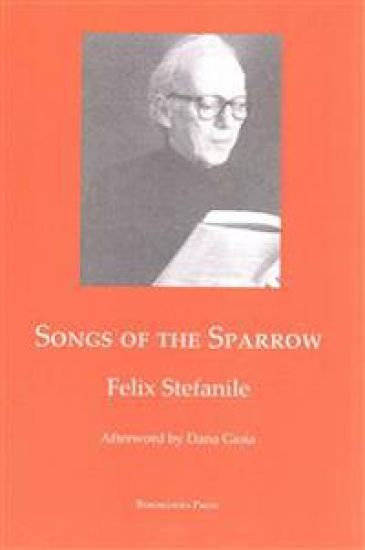
Poetry. "As a poet, Stefanile presents a series of interesting paradoxes. He was both a nationalist and a cosmopolitan. Although he consciously worked in 'the American grain, ' his poetry was nourished by deep roots in European literature. He championed free verse but also wrote in form. From his earliest work till his final publications, he was unwilling to give up one mode for the other. In The Dance at St. Gabriel's (1995), for instance, one finds a prose poem, a sonnet, free verse, blank verse, and rhymed quatrains side by side. A lifelong student of Italian Renaissance literature, Stefanile was an unapologetic traditionalist, but he was also an advocate of the avant- garde. He translated and published the first anthology of Italian Futurist poetry in English, The Blue Moustache (1981). Finally, Stefanile was a determined individualist who nonetheless always viewed himself as part of a community--ethnic, social, political, and cultural."--Dana Gioia, from his Afterword"For a long time now, Felix Stefanile has been among the most consistently interesting poets in America. His hard-hitting poems cry out to be spoken aloud. Readers who still need an introduction to them will find The Country of Absence an ideal point of entry. In memorable poems and an incisive essay, Stefanile sets out to retrace his roots, to understand those forces that make him a poet. In the process, he reveals a good deal about his readers, too."--X. J. Kennedy"Stefanile peoples his work with immigrants, bocce players, rowdy recruits and restless veterans, bringing all to life with compassion and eloquence. Besides offering reminders of the humanity behind history, he displays vitality and expertise in his craft as he allows each poem its own tempo and quiet refrain."--Elizabeth Gunderson
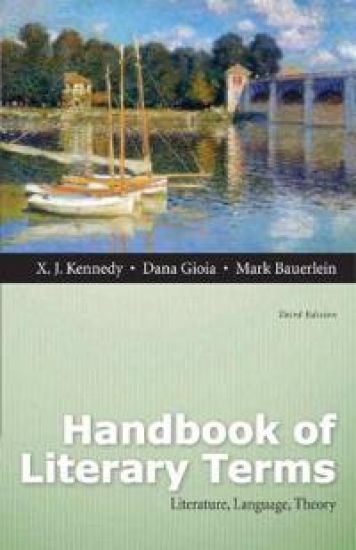
From the author team of the discipline's most widely used literature anthology, this accessible and instructive guide introduces students to the language of literary study. Featuring an engaging and accessible writing style, this supplemental reference manual for the introductory student has over 400 entries and serves to demystify literature and the terms, techniques, and analysis tools that literary scholars use.
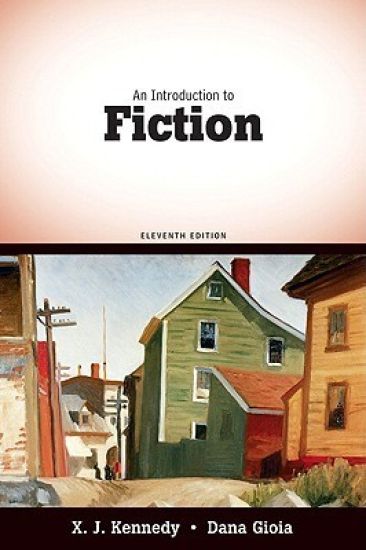
Kennedy/Gioia's An Introduction to Fiction, 11th edition continues to inspire students with a rich collection of fiction and engaging insights on reading, analyzing, and writing about stories. This bestselling anthology includes sixty-five superlative short stories, blending classic works and contemporary selections. Written by noted poets X. J. Kennedy and Dana Gioia, the text reflects the authors' wit and contagious enthusiasm for their subject. Informative, accessible apparatus presents readable discussions of the literary devices, illustrated by apt works, and supported by interludes with the anthologized writers. This edition features 10 new stories, three masterwork casebooks, revised and expanded chapters on writing, and a new design. New "Key Terms Review" feature at the end of every major chapter--provide students a simple study guide to go over key concepts and terms in each chapter. New 2009 MLA guidelines--provides students the updated source citation guidelines from the new 7th edition of the MLA Handbook and incorporates these in all sample student papers. New section on "Writing a Response Paper"--provides instructions and a sample student essay for this popular type of writing assignment. Updated, revised format to increase accessibility and ease of use--newly added section titles and sub-titles will help Web-oriented students navigate easily from topic to topic in every chapter. Additionally, all chapters have been reviewed and updated to include relevant cultural references.
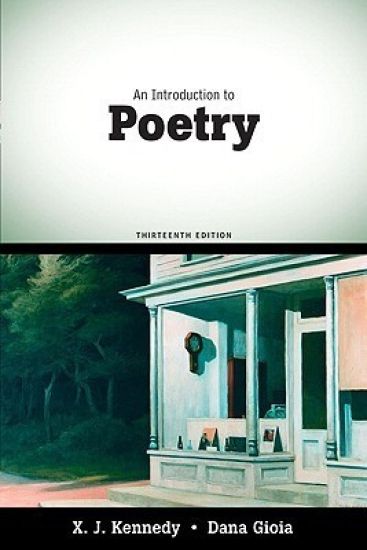
Kennedy/Gioia's An Introduction to Poetry, 13th edition continues to inspire students with a rich collection of poems and engaging insights on reading, analyzing, and writing about poetry. The authors of this bestselling book are the recipients of many prestigious poetry awards. Features new to this edition include: Exclusive conversation between Dana Gioia and U. S. Poet Laureate Kay Ryan, offer students an insider's look into the importance of literature and reading in the life of this poet. More than 50 new selections--from a wonderful range of poets including Kevin Young, Bettie Sellers, Mary Oliver, David Lehman, Constantine Cavafy, Rainer Maria Rilke, Anne Stevenson, James Weldon Johnson, Alice Fulton, Jimmy Baca, Rita Dove, Gwendolyn Brooks, and Lorine Niedecker, among others. New 2009 MLA guidelines--provides students the updated source citation guidelines from the new 7th edition of the MLA Handbook and incorporates these in all sample student papers.
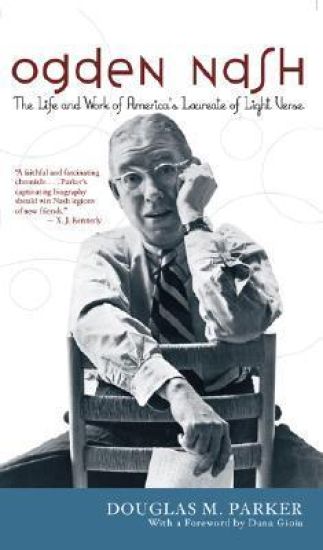
Candy Is dandy But liquor Is quicker. These inimitable lines could only have been written by Ogden Nash, the American nonpareil of light verse and one of the most remarkable figures in American letters. His keen grasp of human nature and a unique style of verse made him, in the mid-twentieth century, the most widely read and frequently quoted poet of his time. For years, readers have longed for a biography to match Nash's charm, wit, and good nature; now we have it in Douglas Parker's absorbing and delightful life of the poet. My garden will never make me famous, I'm a horticultural ignoramus, I can't tell a stringbean from a soybean, Or even a girl bean from a boy bean. Ogden Nash grew up in Savannah, Georgia, went to prep school in Newport, Rhode Island, dropped out of Harvard after his freshman year, and soon after started work as an editor with Doubleday. When he began publishing humorous poems in the New Yorker, and later when he worked at the magazine, he became part of the literary circle that included E. B. and Katharine White, Dorothy Parker, Harold Ross, and S. J. Perelman. He went on to publish more than two dozen books of verse as well as screenplays, lyrics and scripts for the theater, children's stories, and essays. Douglas Parker, who has had exclusive access to family letters and diaries, and permission to quote liberally from them and from Nash's poems, has written a warm and inviting biography of the poet who reveled in pure whimsy and wordplay, but who was applauded by his more serious contemporaries. With 12 black-and-white photographs.
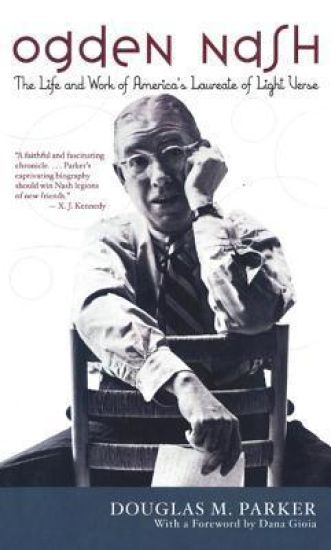
His keen grasp of human nature and a unique style of verse made Ogden Nash, in the mid-twentieth century, the most widely read and frequently quoted poet of his time. For years, readers have longed for a biography to match Nash's charm, wit, and good nature; now we have it in Douglas Parker's absorbing and delightful life of the poet. Intelligent, informative, and engaging.... There is no comparable study not only of Nash's life but also of the role that poetry, especially comic verse, played in modern American literary culture.... A story long overdue in the telling. —Dana Gioia
When Dana Gioia's essay "Can Poetry Matter?" appeared in the Atlantic in 1991, it sparked a firestorm of debate and discussion over the role of the poet in today's world - a dialogue in which Gioia participated on radio, television, and in print. One of the more stimulating and provocative figures on our literary horizon, and the author of two widely praised books of poems, Gioia is also an essayist of wide renown. This collection of essays demonstrates that Gioia's talents do not lie in the area of controversy alone. Can Poetry Matter? is an old-fashioned sort of literary book, part literary criticism, part social commentary, and part plain good reading. Addressing such subjects as the poet as businessman and New Formalism as the real avant-garde, it also includes pieces on the life and work of such diverse figures as Robinson Jeffers, Weldon Kees, Robert Bly, and Wallace Stevens. In an age when literary discourse often seems either bleached of any real content or academic to the point of inaccessibility, the essays in Can Poetry Matter? are certain to educate, provoke, and, perhaps most of all, delight readers. They also establish Dana Gioia as one of the foremost cultural observers of his generation.
Winner of the American Book Award Dana Gioia, an internationally known poet and critic, is notably prolific with his essays, reviews, translations, and anthologies. But like his celebrated teacher, Elizabeth Bishop, Gioia is meticulously painstaking and self-critical about his own poems. In an active 25-year career he has published only two previous volumes of poetry. Although Gioia is often recognized as a leading force in the recent revival of rhyme and meter in American poetry, his own work does not fit neatly into any one style. Interrogations at Noon displays an extraordinary range of style and sensibility--from rhymed couplets to free verse, from surrealist elegy to satirical ballad. What unites the poems is not a single approach but their resonant musicality and powerful but understated emotion. This new collection explores the uninvited epiphanies of love and marriage, probing the quiet mysteries of a seemingly settled domestic life. Meditating on the inescapable themes of lyric poetry--time, mortality, nature, and the contradictions of the human heart--Gioia turns them to provocative and unexpected ends.