Kirjojen hintavertailu – 12 903 724 kirjaa ja 27 kauppaa
Kirjailija
Dana MacKenzie
Kirjat ja teokset yhdessä paikassa: 12 kirjaa, julkaisuja vuosilta 2003–2026, suosituimpiin kuuluu The Book of Why: The New Science of Cause and Effect. Vertaile teosten hintoja ja tarkista saatavuus suomalaisista kirjakaupoista.
The "extraordinary" (Science Friday), "illuminating" (New York Times) argument for how understanding causality has revolutionized science and will revolutionize artificial intelligence "Correlation is not causation." This mantra, chanted by scientists for more than a century, once led to a virtual prohibition on causal talk. Today, with causal analysis taking center stage in AI and other applications, the old taboos are a thing of the past. The causal revolution, instigated by Judea Pearl and others, established causality on a firm scientific basis. Pearl showed how intuitive models can interface with data to help answer causal questions, such as whether a drug will cure an illness or, counterfactually, whether an illness would have persisted absent the drug. These models provide a blueprint for causal AI to learn and take responsibility for its mistakes. Updated with a new introduction and summary of recent advances, The Book of Why outlines the basics of cause and effect for lay readers and scientists alike, providing tools to explore the observable world and worlds that might have been.
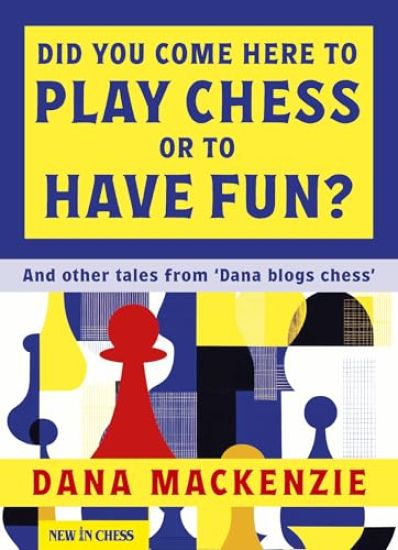
Dana Mackenzie celebrates the joy of chess-the ordinary, everyday chess we amateurs play. He has selected 40 of his favorite posts from his award-winning chess blog, including a diverse mix of stories, philosophical musings, chess improvement tips, and game analysis. In each story, the fun leaps off the page. We attend club nights, team tournaments, and state championships. We are on the road and at the board. We enjoy the company of famous and not-so-famous chess personalities. You will read about the Hook and Ladder Trick and Dana's personal favorite opening, the Bryntse Gambit (presented here with analysis found nowhere else). A special chapter is devoted to Mike Splane's invitation-only chess parties, a monthly "meeting of the minds" for masters and aspiring masters in the San Francisco Bay Area. There was no resting on one's laurels in this crowd. No matter how well you thought you played, you could expect some tough questions and spirited disagreements. The book continues in the spirit of the blog, preserving a dialogue between author and reader that is rarely found in other chess books, or any books for that matter.
The What’s Happening in the Mathematical Sciences series presents a selection of recent discoveries and exciting fields of research in mathematics, explained in depth but in a slow-paced, reader-friendly way. In the first few months of 2023, artificial “brains” like ChatGPT and GPT-4 were constantly in the news, and they have already turned into big business. One chapter in this book, “Deep Learning: Part Math, Part Alchemy”, explains how math disentangles hype from reality and explains some of the remarkable advances of machine learning. Meanwhile, “Organizing the Chaos Inside the Brain” explores animal brains, and describes how biologists can apply chaos theory to simulate the wanderings of a fly from firing data on neurons within its brain. This issue of What's Happening also includes many treats for readers who like pure math—especially those who are interested in geometry. In recent months and years, there have been unexpected discoveries in tiling (“One Stone to Rule Them All”), sphere-packing in more than three dimensions (“A Fascination of Spheres”) and the reconstruction of three-dimensional scenes from two-dimensional images (“Multi-View Geometry: E Pluribus Unum”). The chapter “How to Draw an Alternate Universe” will, as promised, open a door to a completely different, non-Euclidean universe—or several of them. Shakespeare’s words, “something rich and strange”, only begin to describe them. In “How Mathematicians Unearthed the Stubborn Secrets of Fano Varieties”, readers will learn about one of the building blocks of algebraic geometry, the branch of geometry that deals with surfaces defined by polynomial equations. The chapter “Missing One Digit” addresses a seemingly elementary problem in number theory: how many prime numbers do not have a “7” in them? The answer is easy to guess—but hard to prove. “Fluid Flow: Two Paths to a Singularity” discusses another guess that is hard to prove: can fluids in an enclosed region develop “singularities” akin to a breaking wave? Computer evidence is mounting that they can—including some evidence from machine learning algorithms. (Which brings us full circle back to the “Deep Learning” chapter.)Dana Mackenzie has written for the What's Happening series since Volume 6, published in 2006. In this volume he is joined by Leila Sloman, whose name will be familiar to many readers from her work for Quanta Magazine.
As always, What's Happening in the Mathematical Sciences presents a selection of topics in mathematics that have attracted particular attention in recent years. This volume is dominated by an event that shook the world in 2020 and 2021, the coronavirus (or COVID-19) pandemic. While the world turned to politicians and physicians for guidance, mathematicians played a key role in the background, forecasting the epidemic and providing rational frameworks for making decisions. The first three chapters of this book highlight several of their contributions, ranging from advising governors and city councils to predicting the effect of vaccines to identifying possibly dangerous ""escape variants"" that could re-infect people who already had the disease. In recent years, scientists have sounded louder and louder alarms about another global threat: climate change. Climatologists predict that the frequency of hurricanes and waves of extreme heat will change. But to even define an ""extreme"" or a ""change"", let alone to predict the direction of change, is not a climate problem: it's a math problem. Mathematicians have been developing new techniques, and reviving old ones, to help climate modelers make such assessments. In a more light-hearted vein, Descartes' ""Homework"" describes how a famous mathematician's blunder led to the discovery of new properties of foam-like structures called Apollonian packings. ""Square Pegs and Squiggly Holes"" shows that square pegs fit virtually any kind of hole, not just circular ones. ""Much Ado About Zero"" explains how difficult problems about eigenvalues of matrices can sometimes be answered by playing a simple game that involves coloring dots on a grid or a graph. Finally, ""Dancing on the Edge of the Impossible"" provides a progress report on one of the oldest and still most important challenges in number theory: to devise an effective algorithm for finding all of the rational-number points on an algebraic curve. In the great majority of cases, number theorists know that the number of solutions is finite, yet they cannot tell when they have found the last one. However, two recently proposed methods show potential for breaking the impasse.
The "extraordinary" (Science Friday), "illuminating" (New York Times) argument for how understanding causality has revolutionized science and will revolutionize artificial intelligence "Correlation is not causation." This mantra, chanted by scientists for more than a century, has led to a virtual prohibition on causal talk. Today, that taboo is dead. The causal revolution, instigated by Judea Pearl and his colleagues, has cut through a century of confusion and established causality -- the study of cause and effect -- on a firm scientific basis. His work explains how we can know easy things, like whether it was rain or a sprinkler that made a sidewalk wet; and how to answer hard questions, like whether a drug cured an illness. Pearl's work enables us to know not just whether one thing causes another: it lets us explore the world that is and the worlds that could have been. It shows us the essence of human thought and key to artificial intelligence. Anyone who wants to understand either needs The Book of Why.
Features a rich selection of articles about recent topics in pure and applied mathematics. Coverage includes new developments in the theory of expander graphs and in number theory, a solution of the so-called Cap Set Conjecture, a statement about arithmetic progressions in finite vector spaces, and recent advances in theoretical computer science.
'Correlation does not imply causation.' This mantra was invoked by scientists for decades in order to avoid taking positions as to whether one thing caused another, such as smoking and cancer and carbon dioxide and global warming. But today, that taboo is dead. The causal revolution, sparked by world-renowned computer scientist Judea Pearl and his colleagues, has cut through a century of confusion and placed cause and effect on a firm scientific basis. Now, Pearl and science journalist Dana Mackenzie explain causal thinking to general readers for the first time, showing how it allows us to explore the world that is and the worlds that could have been. It is the essence of human and artificial intelligence. And just as Pearl's discoveries have enabled machines to think better, The Book of Why explains how we can think better.
Visualizing Geology employs uniquely designed visual pedagogy to help students acquire the skills they need to become better learners. Visualizing Geology is a comprehensive, modern book for today's geology course. With current examples, thorough coverage of geologists tools and technology, and a visual design that is accessible without sacrificing content, it is a title that will appeal to a broad range of instructors. Visualizing Geologyimmerses students in course material through visuals (both in print and rich multimedia resources) while organizing complex processes and related course information into easily digestible segments.
Describes some genuine surprises, such as the discovery that coin tosses are inherently unfair; a mathematical theory of invisibility that was soon followed by the creation of a prototype 'invisibility cloak'; and, an ultra-efficient approach to image sensing that led to the development of a single-pixel camera.
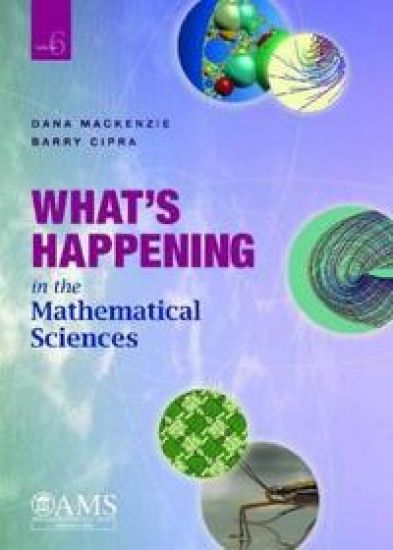
The "AMS" series "What's Happening in the Mathematical Sciences" distills the amazingly rich brew of current research in mathematics down to a few choice samples. This volume leads off with an update on the Poincare Conjecture, a hundred-year-old problem that has apparently been solved by Grigory Perelman of St. Petersburg, Russia. So what did topologists do when the oldest and most famous problem about closed manifolds was vanquished? As the second chapter describes, they confronted a suite of problems concerning the 'ends' of open manifolds...and solved those, too. Not to be outdone, number theorists accomplished several unexpected feats in the first five years of the new century, from computing a trillion digits of pi to finding arbitrarily long equally-spaced sequences of prime numbers. Undergraduates made key discoveries, as explained in the chapters on Venn diagrams and primality testing. In applied mathematics, the Navier-Stokes equations of fluid mechanics continued to stir up interest. One team proved new theorems about the long-term evolution of vortices, while others explored the surprising ways that insects use vortices to move around. The random jittering of Brownian motion became a little less mysterious. Finally, an old and trusted algorithm of computer science had its trustworthiness explained in a novel way. Barry Cipra explains these new developments in his wry and witty style, familiar to readers of Volumes 1-5, and is joined in this volume by Dana Mackenzie. Volume 6 of "What's Happening" will convey to all readers - from mathematical novices to experts - the beauty and wonder that is mathematics.
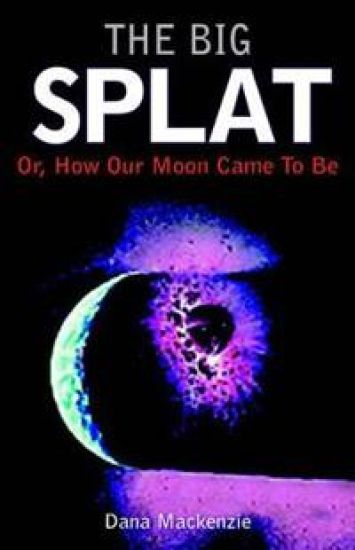
The first popular book to explain the dramatic theory behind the Moon's genesisThis lively science history relates one of the great recent breakthroughs in planetary astronomy-a successful theory of the birth of the Moon. Science journalist Dana Mackenzie traces the evolution of this theory, one little known outside the scientific community: a Mars-sized object collided with Earth some four billion years ago, and the remains of this colossal explosion-the Big Splat-came together to form the Moon. Beginning with notions of the Moon in ancient cosmologies, Mackenzie relates the fascinating history of lunar speculation, moving from Galileo and Kepler to George Darwin (son of Charles) and the Apollo astronauts, whose trips to the lunar surface helped solve one of the most enigmatic mysteries of the night sky: who hung the Moon? Dana Mackenzie (Santa Cruz, CA) is a freelance science journalist. His articles have appeared in such magazines as Science, Discover, American Scientist, The Sciences, and New Scientist.