Kirjojen hintavertailu – 12 859 824 kirjaa ja 27 kauppaa
Kirjailija
Danforth Prince
Kirjat ja teokset yhdessä paikassa: 26 kirjaa, julkaisuja vuosilta 2009–2025, suosituimpiin kuuluu Lucille Ball and Desi Arnaz. Vertaile teosten hintoja ja tarkista saatavuus suomalaisista kirjakaupoista.
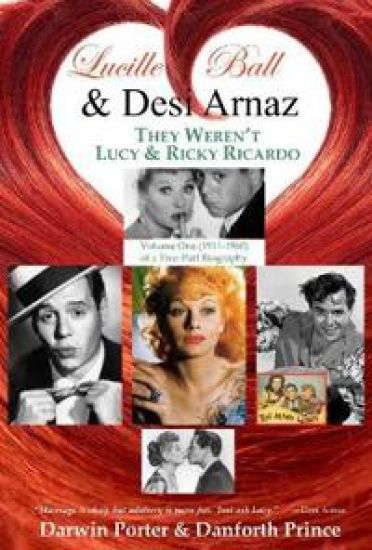
"Marriage is okay, but adultery is more fun. Just ask Lucy." --Desi Arnaz From 1951 through 1956, I Love Lucy was the most-watched show in television. Its episodes are currently being colorized in an attempt to lure new generations of 21st Century consumers. Its launch was as rocky as the marriage of the real-life show-biz pros who crafted it. After their divorce in 1960, Lucy appraised Desi Arnaz, her former husband: "He's like Jekyll and Hyde. He drinks and gambles, he's awash in broads and booze, and that gay actor, Cesar Romero, is his devoted slave. Love?" she asked. "I was always falling in love with the wrong man. Including Desi." Arnaz summed up his marriage to Lucille: "We were anything but Lucy and Ricky Ricardo. They had nothing to do with us. We dreamed of success, fame, and fortune. And guess what? It all led to hell." Their early struggles were epic. As a girl, Lucy at times was literally chained to her backyard in Jamestown, New York. As a teenager, she earned a reputation as "The Jamestown Hussy," riding around with Johnny De Vito, a local hoodlum. Later, she broke into show business, hustling "sugar daddies" and stage-door Johnnies who gave her money and gifts. When she was desperate, she worked as a nude model. In the 1930s, she migrated to Hollywood and made films for RKO. Offscreen, its executives used her as a gussied-up hooker to "entertain" exhibitors and clients from out of town. Desi, however, was born to wealth and privilege in Cuba. At the age of twelve, as an incentive to help him lose his virginity, he was escorted to a local bordello by his father. Having lost most of their assets in the Cuban Revolution, his family fled. In Miami, Desi got a job as a janitor cleaning out canary cages. Later, in Manhattan, he accepted whatever gigs he could get. He became the "kept boy" of the gay composer Lorenz Hart, sustaining an affair with superstar Ginger Rogers on the side. That included the task of escorting her into Canada for an abortion. He was eventually hired by bandleader Xavier Cugat to "beat hell out of those Afro-Cuban drums." After drifting to Hollywood, he spotted Lucy on a sound stage "dressed like a two-dollar whore who had been badly beaten by her pimp." That was, indeed, the character she developed for her role in Dance Girl Dance (1940). During its filming, she "more or less politely" resisted the lesbian advances of her director, Dorothy Arzner. Desi succeeded where Arzner failed, marrying Lucy that same year.] Characterized by violent fights and long separations, their stormy marriage staggered along for two traumatic decades. Desi's obsession with sex became legendary. He seduced every prostitute in Polly Adler's infamous NYC whorehouse. In Hollywood, Lana Turner and Judy Garland came and went from his life, along with countless showgirls and hometown gals attending his on-the-road band shows. Meanwhile, Lucy waited for his return, occupying her nights with the son (Elliott Roosevelt) of the U. S. president; actor/mobster George ("Black Snake") Raft; and George Sanders, Zsa Zsa Gabor's suicidal husband. Broderick Crawford, who desperately wanted to marry her, beat her up when she refused. Coming and going from her boudoir were--among many others--William Holden, Milton Berle, Bob Hope, Henry Fonda, Orson Welles, and Robert Mitchum. By the early 1950s, the careers of both Lucy and Desi had run out of gas. There was a lot of resistance among TV executives who objected to his Cuban accent. Nevertheless, I Love Lucy was launched and shot up in the ratings like a rocket, morphing into the most successful sitcom in TV history. "With gold arriving in wheelbarrows" (Desi's words), Lucy and Desi bought the four-block sprawl of RKO Studios and launched Desilu Productions. It became the largest motion picture and television studio in the world. This first-of-a-kind biography of TV's wackiest and most eccentric couple is generously stuffed with ironic facts and blunt assessments from their frenemies. A proud addition to Blood Moon's HOLLYWOOD LEGENDS, it radically changes the premises of the American Dream that helped fuel its success.
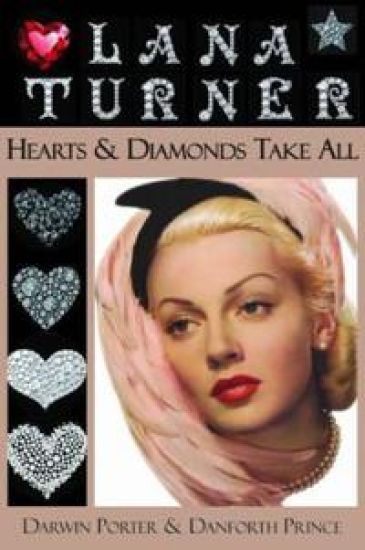
After Betty Grable, but before there was Marilyn, America's penchant for popcorn blondes focused on LANA, the "ultimate movie star." She had it all: Looks to die for, money to burn, the romantic adulation of the world, and lovers who included the world's most desirable men. In her 1937 film, They Won't Forget, a 16-year-old Lana, without wearing a brassiere, walked down the street with her boobs bouncing. Censors protested, but when it was shown, America cheered and nicknamed her The Sweater Girl." From there, Lana competed with Betty Grable and Rita Hayworth as the pre-eminent pinup girl (so many men, so little time") of World War II. Horny GIs referred to her as the Girl We'd Like to Find in Every Port." From the start, her private life was marked with scandal: She aborted Mickey Rooney's baby; seduced a young John F. Kennedy; and fell for Frank Sinatra, who later caught her in bed with another love goddess, Ava Gardner. In the early 1940s, after a nationwide campaign promoting the sale of War Bonds, Carole Lombard frantically boarded a small plane headed back to Hollywood, suffering a fiery death when it crashed within 13 minutes of takeoff. The risk she took during that thunderstorm was motivated, it was said, by her obsession with rescuing her husband, Clark Gable, from the amorous clutches of Lana Turner. Tyrone Powertall, dark, photogenic, and famouseventually evolved into the greatest love of her life until the Aviator, Howard Hughes, arguably the most psychotic billionaire in the history of Hollywood, flew in to seduce both of them. Lana (aka The Ziegfeld Girl") didn't hear The Postman Always Rings Twice because she was in bed with John Garfield. Later, in search of love, she spent a Weekend at the Waldorf before moving to Green Dolphin Street and later to the notorious Peyton Place, she found it during an experiment with an Imitation of Life. Gable took her to a Honky Tonk and vowed, Somewhere I'll Find You," before their Homecoming reunion. With Ray Milland, she found A Life of Her Own before dancing to The Merry Widow waltz with sexy Fernando Lamas. Many notoriously hot menmany of them her filmmaking co-starslay in her future: Richard Burton, Sean Connery, and Errol in like Flynn." Samson (Victor Mature) was said to be Lana's Biggest Thrill." Lana rescued Peter Lawford from Elizabeth Taylor; Ricky Ricardo from Lucy; and, when not singing amore with Dean Martin, Kirk Douglas learned that she was Bad and Beautiful both on and off the screen. "The bombshell" once said, I wanted one husband and seven babies, but I got the reverseseven husbands and an only child!" She married Tarzan (Lex Barker) after his designation as The Sexiest Man in the World," but the union ended when she caught him seducing her teenaged daughter. Opinions about Lana were as varied as her changing looks. She was amoral," said MGM's CEO, Louis B. Mayer. Robert Taylor commented: She was the type of woman a guy would risk five years in jail for rape." Gloria Swanson sniffed, She wasn't even an actress...only a trollop." And Ronald Reagan--a man who later became U. S. president--asked, In what cathouse did she learn those tricks?" And then there was that embarrassing murder: Did Lana fatally stab her gangster lover, Johnny Stompanato, known for his links to the Mob? Or was the heinous act committed by her daughter, a traumatized teenager who, after time in reform school, officially outed herself as a lesbian? How did these whirlwinds of scandal affect the gal who had it all? According to Lana, I'd like to think that in some small way, I've helped to preserve the glamour and beauty and mystery of the movie industry." Never before has there been, until now, a definitive, uncensored, and comprehensive biography of "the Ultimate Movie Star," LANA TURNER. Until now.
Donald Olson; Liz Albertson; Cheryl A. Pientka; George McDonald; Darwin Porter; Danforth Prince; Neil Edward Schlecht; Tania Kollias; Mark Baker; Dardis McNamee; Maggie Childs; Bruce Murphy; Alessandra de Rosa
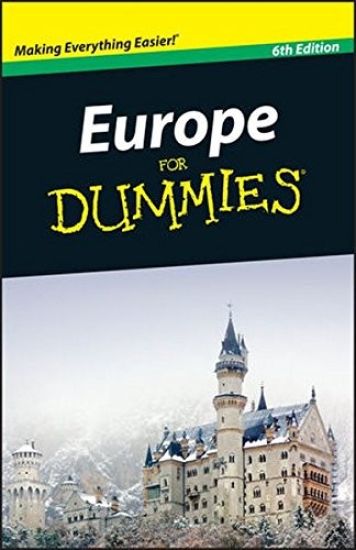
For Dummies Travel guides are the ultimate user–friendly trip planners, combining the broad appeal and time–tested features of the For Dummies series with up–to–the–minute advice and information from the experts at Frommer's. Small trim size for use on–the–goFocused coverage of only the best hotels and restaurants in all price ranges The fun and easy way to explore Europe From great museums and historic sights to fabulous food and trendsetting styles, Europe has it all. Get the lowdown on everything from passports to palaces, culture to nightlife, and cathedrals to cuisine. With mini–guides to fifteen of Europe's most popular cities and surrounding areas in eleven different countries, this book is your ticket to an exciting European adventure. Open the book and find: Down–to–earth trip–planning adviceWhat you shouldn't miss –and what you can skipThe best hotels and restaurants for every budgetLots of detailed maps
How things got DOWN and LOW at Blood Moon Productions, the ferociously independent publishing venture that changed the definition of "celebrity," will never happen again. Our story is unique. This book combines aspects of a memoir, an autobiography, and a manual for Media Studies. We present it as a bookseller's catalogue on steroids. We've added narratives that illustrate our investigative techniques, and insights into the high-flying milieux in which-for a few decades, at least-we thrived. This is it...our best shot at compiling--for estate purposes and as an effort to revise our distribution networks--an overview of our oeuvre. It's packed with dramas-within-dramas that were crucial to that all-American phenomenon known as SHOW BIZ.
This is the story behind the story of the small, scrappy independent press, Blood Moon Productions, whose celebrity expos s (more than 50 of them) generated tsunamis of tabloid flash during the decline of the entertainment industry's golden age. It's a story about Media, the Hollywood Dream Factory, and the clumsy, treacherous juggernaut known as FAME. It's about the fantasies that the entertainment industry crafted, and the secrets it conspired to conceal. It offers an "on the down low" view of entertainers who delighted us, who captured our imaginations, and who paid heavy prices for the pedestals on which we placed them. It's also a memorial to belief systems and values that in many cases have Gone With the Wind. From "Deep in December" of our lives (or, if we're lucky, from Deep in September), we offer it as a tribute to the way we were. Here it is... Hollywood Remembered...an idiosyncratic, scrappy anthology like nothing that's ever been seen before. It says a lot about the American version of Fame and/or Infamy that you might not have expected. Happy reading...and may your memories burn bright.
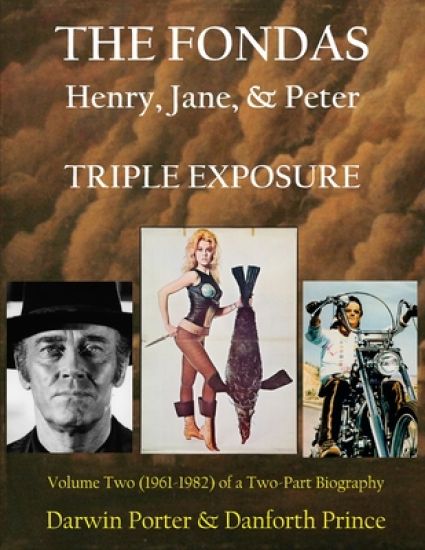
Throughout his forty-five year career, Henry Fonda-a stable, reassuring archetype of the American male-never gave a bad performance. Personal tragedies included five wives (two of whom committed suicide), and affairs which starred such mega-divas as Lucille Ball, Joan Crawford, and Bette Davis. This, Volume Two of Blood Moon's "Fonda" project, turns klieg lights on three emotionally intertwined mega-celebrities, two of them Oscar winners: The lanky and boyish American hero, Henry; his beautiful daughter, "the eternal rebel" Jane; and his son, Peter, a preppy-looking thrill-seeker indelibly linked to the "bad boy on a bike" narrative of the 60s. This is about the Fabulous Fondas, one of Hollywood's most talented but tormented families. It reflects the private agonies of a father, daughter, and son engulfed by the divisions of their respective generations and the ironies of the American Experience.
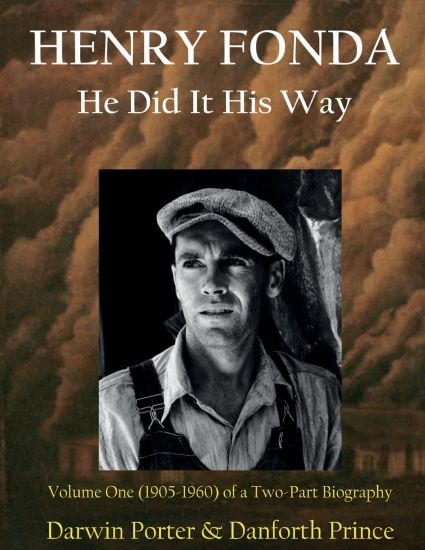
Throughout his forty-five year career, Henry Fonda-a stable, reassuring archetype of the American male-never gave a bad performance, immortalizing himself in such films as Young Mr. Lincoln, The Grapes of Wrath, and Mister Roberts. The torments of his introverted private life vied with his on-screen dilemmas. Personal dramas included five wives (two of whom committed suicide) and involvements in many of the seminal events (including active service in the Navy during World War II) of the 20th Century. His affairs starred such mega-divas as Lucille Ball, Joan Crawford, and Bette Davis, and with his second wife, Frances Seymour, he founded a Hollywood dynasty with movie star children, Jane and Peter. This, Volume One (1905-1960) covers Henry's origins in Depression-era Nebraska, his rise to fame, his complicated dynamics with other celebrities, and his middle-aged years navigating his passion for acting with the business realities of Hollywood.
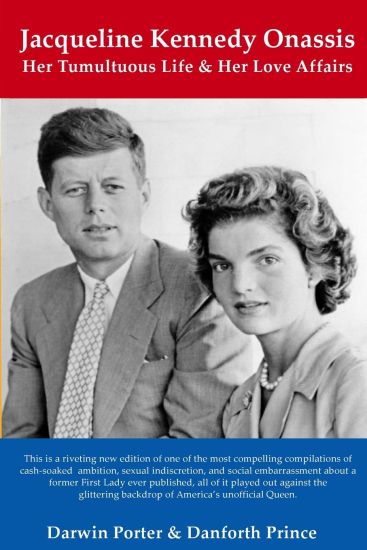
This is a new edition of a Darwin Porter classic from 2014, this is the most scandalous compilation of cash-soaked ambition, sexual indiscretion, and social embarrassment ever published about a former First Lady, Jacqueline Kennedy Onassis, all of it played out against the glittering backdrop of America's unofficial Queen.
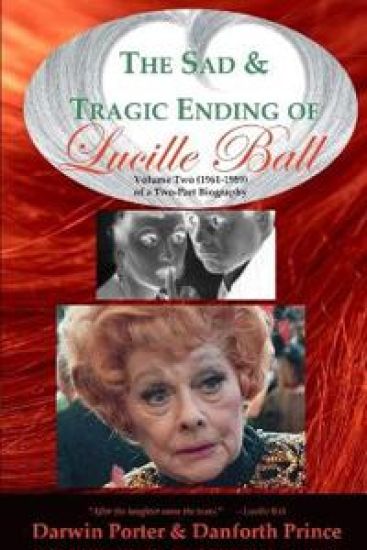
In the mid-1950s, Lucille Ball rose to the top of the Gallup Poll as the most famous woman on Earth. Today, she's one of the best examples of a celebrity who succeeded at crafting an influential "Second Act" after I Love Lucy and her devastating divorce from her show-biz partner, Desi Arnaz. The is the second volume of a two-part biography crafted by two of the most prolific show-biz biographers in America. Fans and readers have good reasons to anticipate it with gusto: The limited number of previous Lucille Ball biographies have each virtually ignored the last thirty years of her life, implying that her life ended in 1960 after her divorce from Desi Arnaz. One noted biographer summed up her three (emotional and fraught) final decades in five abbreviated pages. In vivid contrast, we maintain that Lucille, an artist and renowned businesswoman, deserves more. She gets it in the 500+ pages (with photos) of this book, the most in-depth portrait of this great American star ever published. It examines her second husband, Gary Morton, a "Borscht-Belt" stand-up comedian with a gift for diplomacy and the tactful handling of divas. It describes how she reinforced her status as a reliable television "staple" with at least two ongoing (albeit derivative) series, The Lucy Show, Here's Lucy, and as a last hurrah, the ill-fated Life With Lucy. It examines the final years of a fast-collapsing Desi Arnaz, who, "post-Lucy," gambled away his millions and destroyed his health with late nights, liquor, and endless Havana cigars. It explores the drug addiction (and recuperation) of Lucille's son, Desi Jr., and the show-biz struggles (and occasional resentments) of both of her children, including Lucie Arnaz. It also contrasts Lucille's "vintage mystique" with the "Generation Gap" and the emerging careers of younger stars (Carol Burnett, Mary Tyler Moore, Tom Selleck, Arnold Schwarzenegger, Cher, and about forty others) who admired and perhaps resented her, too. It's also filled with details about Lucille's behind-the scenes banter with MGM's, Warner Brothers', and Fox's "dragons of yesteryear," once-celebrated stars dragged, by Lucille, back into the limelight through a formulaic roster of "TV Specials" that celebrated a fast-dying way of American life. Extra-marital, post-Desi indiscretions? Let's just say that our favorite redhead liked her men big and strong-"No pretty boys for me." Her most frequent co-star in the final decade of her life was the nostalgic "for the way things used to be in Hollywood," Bob Hope. In one format or another, the very durable Lucille Ball appeared on television every year of the last thirty years of her life, making her last appearance (alongside an even more durable show-biz warhorse, Bob Hope) at the Academy Awards in March 1989. She died about a month later of heart failure. Tributes poured in from around the world. Her legend, obviously, continues to thrive, stronger, perhaps, than ever. From the grave, Lucille might refer to the media brouhahas surrounding her demise as "My Comeback." Actually, she has never gone away. Her telecasts have been broadcast somewhere, in some country, every day since the 1950s. Her reign continues decades after her heyday. Everybody Loves Lucy. This book goes a long way in explaining why.
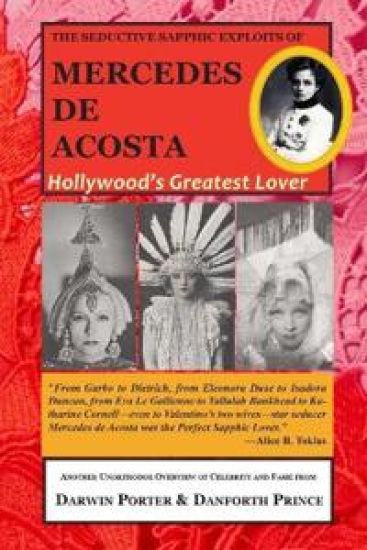
A self-defined "seductress of beautiful women" and the by-product of an immense fortune, lesbian activist Mercedes de Acosta (born in 1892) was descended from Spain's Dukes of Alba and a beneficiary of the best education and best social skills that her parents' Gilded Age fortune could buy. From her perch within the aristocracy of the Belle poque, and continuing as an arts-industry "swinger" until her death in 1968, she became notorious for seducing-and describing to socialites on both sides of the Atlantic-at least a dozen women who fast-evolved into the most widely publicized and romantically "unattainable" celebrities in the world. During her heyday-the sexually permissive "Pre-Code" free-for-all of the Silent Screen and Hollywood's early talkies-her lovers included the self-enchanted silent screen mogul, Nazimova; the "live fast and die young" tragedienne Jeanne Eagels; the blue-blooded aristocrat of the Jazz Age Broadway stage, Katharine Cornell; the most famous film goddess of the 30s and early 40s (Greta Garbo); and at least a dozen others. Within the deeply entrenched, phobically closeted lesbian circles of America's mid-century, Mercedes become quirkily famous as "Hollywood's Greatest Lover." One of her paramours, the German-born bisexual Marlene Dietrich, put Mercedes' promiscuous indiscretions into context: "During Germany's Weimar Republic (1919-1933), in Paris, London, Berlin, and in the dives and cabarets of Hollywood and New York, promiscuity was rampant and without any particular preference for any specific gender." In 1960, Mercedes published a "watered down" memoir (Here Lies the Heart) that instantly became notorious. In it, she "outed" many of her same-sex partners. A few years later-aging, crippled, blind in one eye, and desperately in need of money, she sold, for publication, some of the love letters addressed to her decades ago from, among others, Greta Garbo. And near the end of her life, within his home (historic Magnolia House on Staten Island), she was frank, unvarnished, and unapologetic during extensive interviews with film historian Darwin Porter, the co-author of this book. Suspecting that one day he might pass on some of the secrets she revealed, she cautioned him, "Don't be vulgar, dear, and promise me that you won't publish anything while my friends are still alive." Porter honored her request by waiting until 2020 to release this astonishing insight into the underground lesbian contexts of the stage, screen, and publishing scenes of the first half of "The American Century." No other book has ever interconnected so many dots. No one, until now, has ever had the courage.
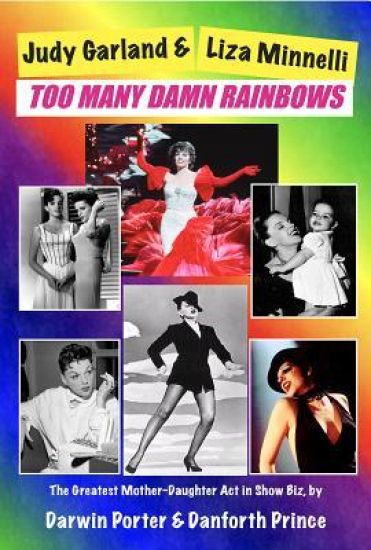
For millions of fans, Judy Garland will forever remain a relentlessly cheerful adolescent (Dorothy) skipping along a yellow brick road toward the other side of the rainbow. Liza followed her down that hallucinogenic path, searching for the childhood, the security, and the love that eluded her. Ferociously loyal but fiercely competitive, they live, laugh, and weep again in the tear-soaked pages of this remarkable biography from the entertainment industry's most prolific archivists, Darwin Porter and Danforth Prince.
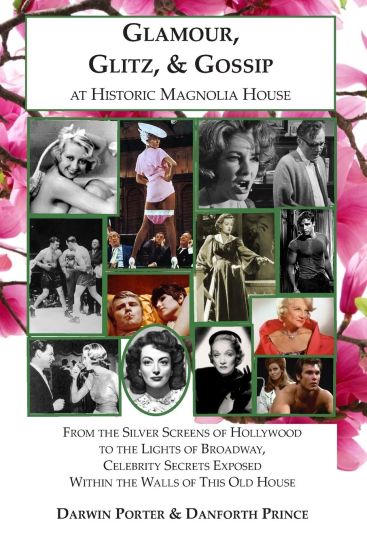
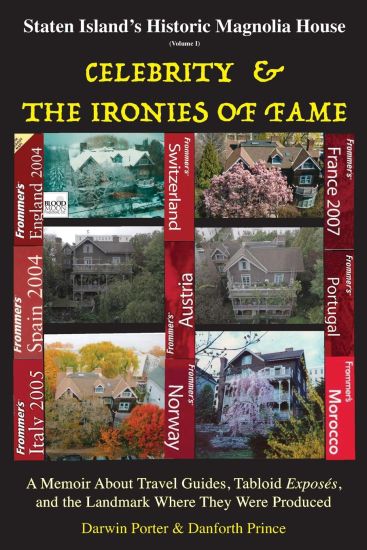
Built in stages between 1830 and 1875, Magnolia House is a historic landmark on Staten Island, the least-visited Outer Borough of New York City. Set within a 10-minute walk from the (free) Staten Island ferry that accesses Manhattan, it's the headquarters of the widely distributed independent press, BLOOD MOON PRODUCTIONS, a feisty wordsmith noted for celebrity biographies that have been reviewed in THE DAILY MAIL, the New York DAILY NEWS, show-biz news reports, and literary journals across the country. Some visitors liken Magnolia House to a grande dame with a centuries-old knack for nourishing high-functioning eccentrics. Many of them have lived or been entertained here since New York's State Senator Howard Bayne, a transplanted Southerner, moved in with his wife, the daughter of the Surgeon General of the Confederate States of America, in the aftermath of that bloodiest of wars on North American soil, the War Between the American States. Since then, many dozens of celebrities--some of them notorious--have whispered their secrets and rehearsed their ambitions within its walls. They've included movie vamps from the silent screen, MIDNIGHT COWBOYS, dancers from the dance, BUTTERFLIES IN HEAT, a heavyweight boxing champ, writers from every hue, faded film goddesses, playwrights who crafted blockbusters for both Marilyn (Monroe) and Elizabeth (Taylor), ultra-avant-garde diarists, every known variety of prima donna and diva, including some from the world of opera, and a world-class Olympic athlete. They've also included Darwin Porter and Danforth Prince, who spent decades here renovating it and producing a stream of FROMMER TRAVEL GUIDES and award-winning celebrity biographies. This book illuminates Magnolia House's contribution to the American Century, when dozens of individual movers and shakers--some of them sane and emotionally stable, others not--visited Magnolia House. This book reveals what they did and what they revealed.
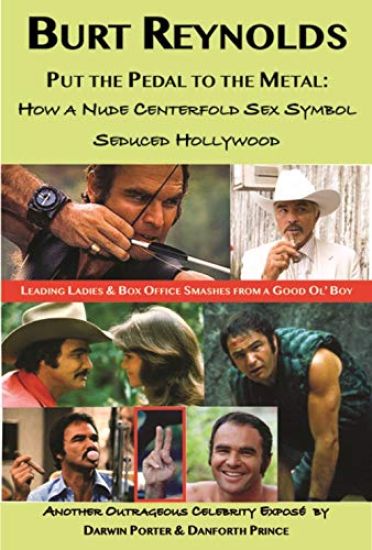
In the 1970s and '80s, Burt Reynolds represented a new breed of movie star: Charming and relentlessly macho, he was a good ol' Southern boy who made hearts throb and audiences laugh. He was Burt Reynolds, a football hero and a guy you might have shared some jokes with in a redneck bar. After an impressive but tormented career, rivers of negative publicity, a self-admitted history of bad choices, and a spectacular fall from Hollywood grace, he died in Jupiter, Florida, at the age of 82 in September of 2018. Once, he posed nude for a woman's magazine. Even though, by his admission, it ultimately hurt his career, fan mail from horny females poured in from across the nation. For five years, both in terms of earnings and popularity, he was the number one box office star in the world. Smokey and the Bandit (1977) became the biggest-grossing car-chase film of all time. As he put it, perhaps as a means of bolstering his image, 'I like nothing better than making love to some of the most beautiful women in the world.' Men liked him too: He played poker with Frank Sinatra; shared boozy nights with John Wayne; intercepted a 'pass' from closeted Spencer Tracy; talked 'penis size' with Mark Wahlberg; and threatened to kill Marlon Brando, to whom his appearance was often compared. His least happy (some said 'most poisonous') marriage — to Loni Anderson — was rife with dramas played out more in the tabloids than in the boudoir. According to Reynolds, 'She's vain, she's a rotten mother, she sleeps around, and she spent all my money.' This biography — the first comprehensive overview of the 'redneck icon' ever published — reveals the joys and sorrows of a movie star who thrived in, but who was then almost buried by the pressures and insecurities of the New Hollywood. A tribute to 'truck stop' America, it's about the accelerated life of a courageous spirit who 'Put His Pedal to the Metal' with humour, high jinx, and pizzazz. He predicted his own death: 'Soon, I'll be racing a hotrod in Valhalla in my cowboy hat and a pair of aviators.' On his tombstone, he wanted it writ: 'He was not the best actor in the world, but he was the best Burt Reynolds in the world.' Publicity from tabloids and mainstream media will accompany the release of this book, along with radio interviews targeted to Nashville and other country-western markets and videotaped book trailers illustrating the ironies of his rags-to-riches-to-rags saga.
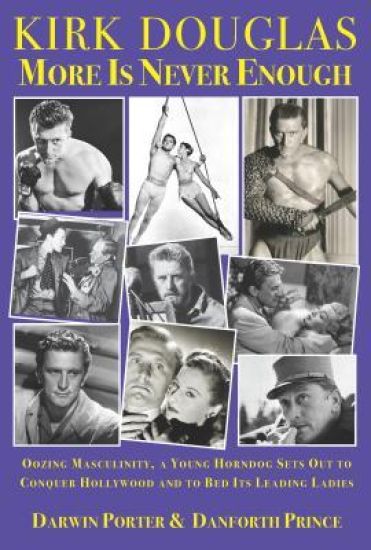
Of all the male stars of Golden Age Hollywood, Kirk Douglas became the final survivor, the last icon of a fabled era that the world will never see again. When he celebrated his birthday in 2016, a headline read — 'Legendary Hollywood horndog turns 100.' He was both a charismatic actor and a man of uncommon force and vigour. His restless and volcanic spirit is reflected both in his films and through his many sexual conquests. Douglas was the son of Russian-Jewish immigrants, his father a ragman. Conquering Tinseltown, he became the personification of the American dream, moving from obscurity and (literally) rags to riches and major-league fame. The Who’s Who cast of characters roaring through his life featured not only a daunting list of Hollywood goddesses, but the town’s most colossal male talents and egos, too. They included his kindred hellraiser and best buddy Burt Lancaster, John Wayne, Henry Fonda, Billy Wilder, Laurence Olivier, Rock Hudson, and a future U. S. President, Ronald Reagan. Douglas began his conquests in New York, stealing the virginity of model Betty Bacall before she moved to Hollywood, changed her name to Lauren, and married Humphrey Bogart. Later, both Marilyn Monroe and Lana Turner pursued him for boudoir duty. 'I had them all…well, almost,' he boasted. All of this is brought out, with photos, in this remarkable testimonial to the last hero of Hollywood’s cinematic and swashbuckling Golden Age, an inspiring testimonial to the values and core beliefs of an America that’s Gone with the Wind, yet lovingly remembered as a time when it, in many ways, was truly great.
Media gurus Darwin Porter and Danforth Prince are the owners and innkeepers of a wise and venerable Grande Dame, Magnolia House. Built in the 1830s and enlarged during America's Civil War, it's a NYC landmark in which at least fifty titles within the world-famous Frommer Travel Guides, and all of the show biz biographies of America's feistiest pop-culture publisher, Blood Moon Productions, were conceived, researched, and written. This is the first in Blood Moon's "Magnolia House Series," chatty, ironic, and irreverent memoirs in which the authors (as filtered through the historic monument that sheltered them) review the icons and divas they encountered during their course of their work in travel and show-biz publishing. It's an overview of the seismic ironies associated with celebrity, fame and circumstance. This is an "only in America" story, a sophisticated, witty overview direct from the high-octane peak of "The American Century." Loaded with gossip, some of it extracted from Blood Moon's award-winning backlist of celebrity biographies, it's about the famous or notorious players, some of them tragic, whose "talents to amuse" helped make America Great.
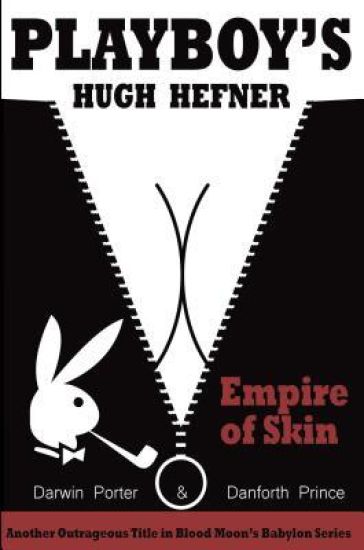
Hefner, the Playboy of the Western World, was a visionary publisher, an empire-builder, an avatar of pleasure, and a pajama-clad pipe-smoker with a pre-coital grin. In 1953, he published his first edition of Playboy, with Marilyn Monroe on the cover and her nude calendar inside. He obtained the rights for $500 with money borrowed from his puritanical Nebraska-born mother. In addition to his role as a 'tasteful pornographer,' Hef became a cultural warrior, fighting government censorship all the way to the U. S. Supreme Court after the Post Office refused to deliver his magazine to its subscribers. As the years and his notoriety progressed, he became an advocate of abortion, LGBT equality, and the legalization of pot. Eventually, he engaged in 'pubic wars' with Bob Guccione, founder of Penthouse, which cut into Hef’s sales. During his heyday, some of the biggest male stars in Hollywood, including Warren Beatty, Sammy Davis, Jr., Mick Jagger, and Jack Nicholson, came to frolic behind Hef’s guarded walls, stripping nude in the hot tube grotto before sampling the rotating beds upstairs. This ground-breaking biography, the latest in Blood Moon’s string of outrageously unvarnished myth-busters, is the first published since Hefner’s death at the age of 91 in 2017. It is a provocative saga, rich in tantalizing, often shocking detail — definitely not for the sanctimonious or the faint of heart.
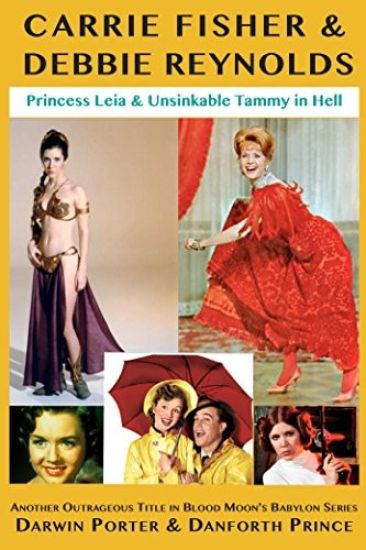
This hot, two-in-one biography examines the complicated co-dependencies of the greatest but most dysfunctional mother-daughter act in showbiz, Debbie Reynolds and her talented, often traumatized daughter, Carrie Fisher. After years of feuds and separations, they reunited at the end of their lives. Today, their legions of fans like to think they're each doing fine, together in some galaxy far, far away. Debbie Reynolds and Carrie Fisher were the greatest mother-daughter act in show business. Frank Sinatra stole her virginity, but she married pop singer Eddie Fisher for the “official deflowering” (her words). Through storm and rain, Debbie battled on, hitting a high point when she starred as Tammy in 1957 and her most memorable role was in 1964, when she was cast in the rags-to riches saga of The Unsinkable Molly Brown. Each of her three marriages was a disaster, the second one to a millionaire shoe manufacturing mogul who bankrupted both of them. Impoverished after the divorce, she ended up sleeping in her car. Debbie mingled with the élite of Hollywood in the dying days of its Golden Age. Luminaries included Clark Gable (“if I were only twenty years younger….); Judy Garland (who propositioned her); Lana Turner; Bette Davis (“she was my daughter”) and Glenn Ford, who fell in love with her. A rebellious daughter, Carrie grew up to endure a life of living hell—pill popping, drug abuse, chronic anxiety, failed love affairs, bipolar disorder, and electroshock therapy. Carrie sometimes protested: “I don’t want to be the daughter of Debbie Reynolds. I battled demons that set my brain on fire.” International celebrity came in 1977, when she played Princess Leia in Star Wars as an elaborately coiffed intergalactic princess, spearheading “The Force,” and strong enough to oppose the villainy of Darth Vader.
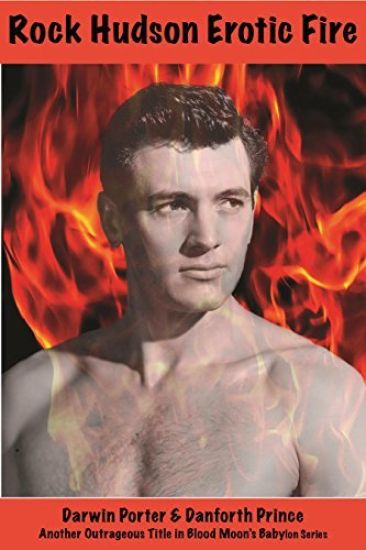
Rock Hudson reigned in the late 1950s and early '60s as Hollywood's greatest ambisexual swordsman," seducing icons who included Marilyn Monroe, Elizabeth Taylor, Errol Flynn, Tyrone Power, Joan Crawford, and Lauren Bacall, as well as hundreds of other lesser-known players willing to share some Pillow Talk." Mamie Van Doren, one of Hollywood's bustiest, most provocative, and most promiscuous bombshells, asserted loudly that the boulder that Rock's agent named him after was a big one." Just released from the Navy, the muscled, 6'4" hunk, then known as Roy Fitzgerald, arrived in Hollywood with a clear understanding of what he wanted: I don't want to be an actor... I want to be a movie star! And I don't give a damn how many casting couches I have to lie on!" To that end, between gigs as a truck driver, he donned very tight, faded jeans and seductively stationed himself near the entrances of such studios as Warners and Universal. Eventually, he was discovered." Eventually, he was assigned roles in a string of B-pictures, playing handsome Apaches, easy-on-the-eyes sea captains, and drop-dead gorgeous Ordinary Joes" whose charm moviegoers remembered way beyond the limited scale of his roles. Meanwhile, power players in Hollywood clamored for him up close and personal, too. According to Yvonne de Carlo, Rock was predatory after midnight." Stardom finally arrived based on a performance opposite Jane Wyman (she had divorced Ronald Reagan) in that tear-jerking melodrama, Magnificent Obsession (1954). Replicating her passion offscreen, she demanded (unsuccessfully) that he marry her. Hudson had already been defined as the sexiest man alive" when he was assigned the role of a Texas cattle rancher in Giant (1956). During its filming in the dusty hamlet of Marfa, Texas, he sustained affairs with both Elizabeth Taylor and James Dean. Three eventful years later, his status as one of the most popular (and most consistently profitable) actors in Hollywood was reinforced, based on his co-starring performance opposite Doris Day in the spectacularly successful Pillow Talk (1959). Together, as a captivating duo, they went on to appear together in other artfully campy" battles of the sexes. Compiled as a memorial for the 30th anniversary of his death, Rock Hudson Erotic Fire is based on dozens of face-to-face interviews with Rock Hudson's friends, co-conspirators, and enemies. Researched over a period of a half century by Hollywood insider Darwin Porter, it reveals the secretive actor's complete, never-before-told story within a context of scandal-soaked and historic ironies, many of which have never been fully exploreduntil now. Although maligned by the media because of the stigmas associated with his AIDS-related death, Rock showed inner courage and manly grace as he lay dying. This is my shining hour," he told his closest friends, as the media rushed to Out" him as a celebrity bisexual" who'd been stricken by the then-stigmatizing scourge. Today, beloved by hordes of cultish fans and film buffs around the world, Rock Hudson is the often misunderstood (until now) Golden Icon of a glamorous bygone era.