Kirjojen hintavertailu – 12 859 819 kirjaa ja 27 kauppaa

Kirjailija

Daniel Brown

Kirjat ja teokset yhdessä paikassa: 42 kirjaa, julkaisuja vuosilta 1997–2026, suosituimpiin kuuluu The Elephant Path. Vertaile teosten hintoja ja tarkista saatavuus suomalaisista kirjakaupoista.

42 kirjaa

Kirjojen julkaisuvuodet: 1997–2026.

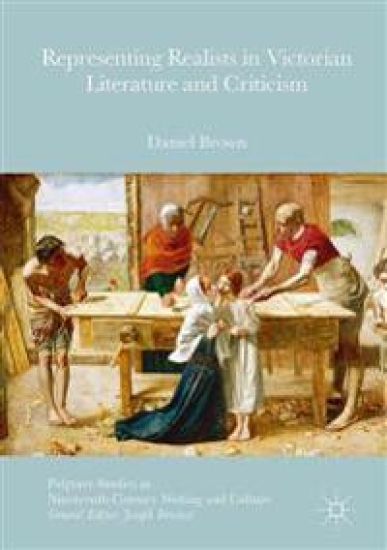
Representing Realists in Victorian Literature and Criticism

Representing Realists in Victorian Literature and Criticism

Daniel Brown

Springer International Publishing AG
2016
sidottu
This book is about the historical moment when writers and critics first used the term “realism” to describe representation in literature and painting. While scholarship on realism tends to proceed from an assumption that the term has a long-established meaning and history, this book reveals that mid-nineteenth-century critics and writers first used the term reluctantly, with much confusion over what it might actually mean. It did not acquire the ready meaning we now take for granted until the end of the nineteenth century. In fact, its first definitions came primarily by way of example and analogy, through descriptions of current practitioners, or through fictionalized representations of artists. By investigating original debates over the term “realism,” this book shows how writers simultaneously engaged with broader concerns about the changing meanings of what was real and who had the authority to decide this.
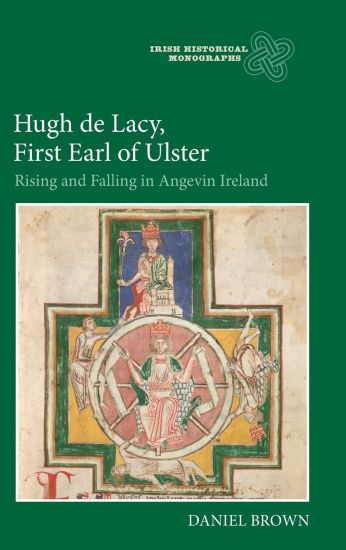
Hugh de Lacy, First Earl of Ulster

Hugh de Lacy, First Earl of Ulster

Daniel Brown

The Boydell Press
2016
sidottu
The extraordinary life story of an ambitious, thirteenth-century adventurer. This book charts the striking rise, fall and restoration of the first earl of Ulster, Hugh II de Lacy, described by one contemporary chronicler as 'the most powerful of the English in Ireland'. A younger son of the lord of Meath,de Lacy ascended from relatively humble beginnings to join the top stratum of Angevin society, being granted in 1205 the first earldom in Ireland by King John. Subsequently, in 1210, having been implicated in rebellion, Hugh wasexpelled from Ulster by a royal army and joined the Albigensian crusade against Cathar heretics in southern France. Unusually, after almost two decades in exile and a second revolt against the English crown, de Lacy was restored to the earldom of Ulster by King Henry III in 1227, retaining it to his death, c. 1242. Situated in the north-east of Ireland, Ulster's remoteness from centres of colonial administration allowed Hugh de Lacy to operate beyondthe normal mechanisms of royal control, forging his own connections with other powerful lords of the Irish Sea province. The fluidity of noble identity in frontier zones is also underlined by the career of someone who, accordingto his political needs, presented himself to different audiences as a courtly sophisticate, freebooting colonist, crusading warrior, or maurauding 'Irish' ruler. The foundation for this study is provided by Hugh de Lacy's acta, provided as an appendix, and representing the first collection of comital charters in an Irish context. These cast fresh light on the wider themes of power and identity, the intersection of crown and nobility, and the risks and rewards for ambitious frontiersmen in the Angevin world. Daniel Brown obtained his PhD from Queen's University Belfast, and completed his research on Hugh de Lacy as a postdoctoral fellow at Trinity College Dublin.
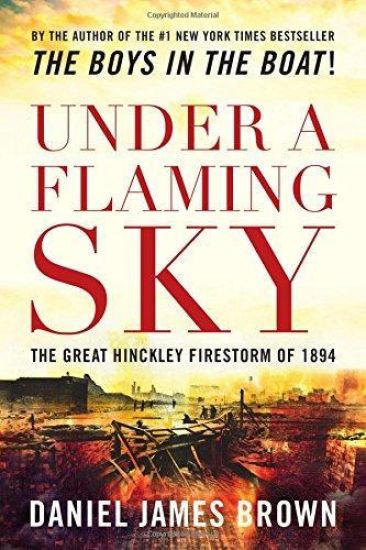
Under a Flaming Sky: The Great Hinckley Firestorm of 1894
On September 1, 1894 two forest fires converged on the town of Hinckley, Minnesota, trapping over 2,000 people. Daniel J. Brown recounts the events surrounding the fire in the first and only book on to chronicle the dramatic story that unfolded. Whereas Oregon's famous "Biscuit" fire in 2002 burned 350,000 acres in one week, the Hinckley fire did the same damage in five hours. The fire created its own weather, including hurricane-strength winds, bubbles of plasma-like glowing gas, and 200-foot-tall flames. In some instances, "fire whirls," or tornadoes of fire, danced out from the main body of the fire to knock down buildings and carry flaming debris into the sky. Temperatures reached 1,600 degrees Fahrenheit--the melting point of steel. As the fire surrounded the town, two railroads became the only means of escape. Two trains ran the gauntlet of fire. One train caught on fire from one end to the other. The heroic young African-American porter ran up and down the length of the train, reassuring the passengers even as the flames tore at their clothes. On the other train, the engineer refused to back his locomotive out of town until the last possible minute of escape. In all, more than 400 people died, leading to a revolution in forestry management practices and federal agencies that monitor and fight wildfires today. Author Daniel Brown has woven together numerous survivors' stories, historical sources, and interviews with forest fire experts in a gripping narrative that tells the fascinating story of one of North America's most devastating fires and how it changed the nation.
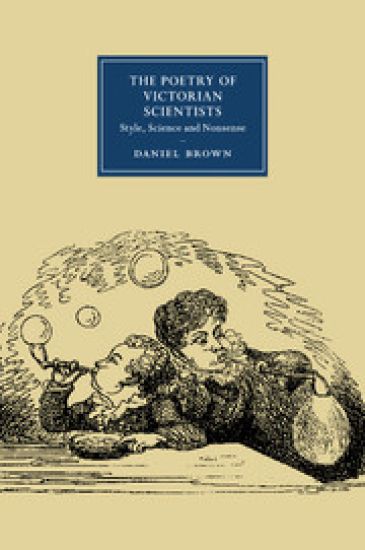
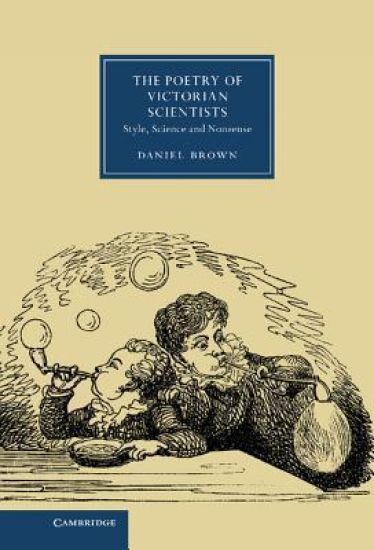
The Poetry of Victorian Scientists

The Poetry of Victorian Scientists

Daniel Brown

Cambridge University Press
2015
pokkari
A surprising number of Victorian scientists wrote poetry. Many came to science as children through such games as the spinning-top, soap-bubbles and mathematical puzzles, and this playfulness carried through to both their professional work and writing of lyrical and satirical verse. This is the first study of an oddly neglected body of work that offers a unique record of the nature and cultures of Victorian science. Such figures as the physicist James Clerk Maxwell toy with ideas of nonsense, as through their poetry they strive to delineate the boundaries of the new professional science and discover the nature of scientific creativity. Also considering Edward Lear, Daniel Brown finds the Victorian renaissances in research science and nonsense literature to be curiously interrelated. Whereas science and literature studies have mostly focused upon canonical literary figures, this original and important book conversely explores the uses literature was put to by eminent Victorian scientists.
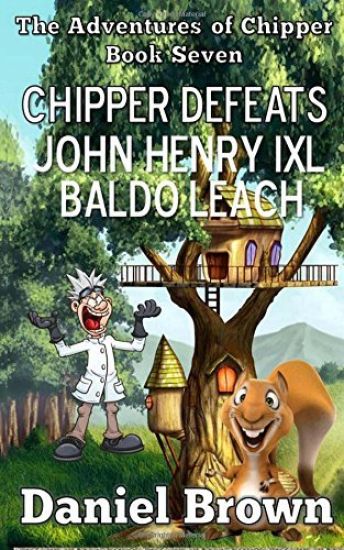
Chipper Defeats John Henry IXL Baldo Leach

Chipper Defeats John Henry IXL Baldo Leach

Daniel Brown

Chipper Defeats John Henry IXL Baldo Leach
2014
nidottu
A deadly strain of hydrophobia is spreading through the area. Some of Chipper's friends are sick. Little Jonathan introduces Chipper to his brothers, Blake and Wesley. They search far and wide for the elusive ingredients required for a cure. Evil John Henry IXL Baldo Leach sends his cronies to wreck the lab and steal the existing formula. Tip is very sick and is sinking fast. Read Book Seven and learn why children of all ages eagerly follow the Adventures of Chipper.
The Poetry of Victorian Scientists

The Poetry of Victorian Scientists

Daniel Brown

Cambridge University Press
2013
sidottu
A surprising number of Victorian scientists wrote poetry. Many came to science as children through such games as the spinning-top, soap-bubbles and mathematical puzzles, and this playfulness carried through to both their professional work and writing of lyrical and satirical verse. This is the first study of an oddly neglected body of work that offers a unique record of the nature and cultures of Victorian science. Such figures as the physicist James Clerk Maxwell toy with ideas of nonsense, as through their poetry they strive to delineate the boundaries of the new professional science and discover the nature of scientific creativity. Also considering Edward Lear, Daniel Brown finds the Victorian renaissances in research science and nonsense literature to be curiously interrelated. Whereas science and literature studies have mostly focused upon canonical literary figures, this original and important book conversely explores the uses literature was put to by eminent Victorian scientists.
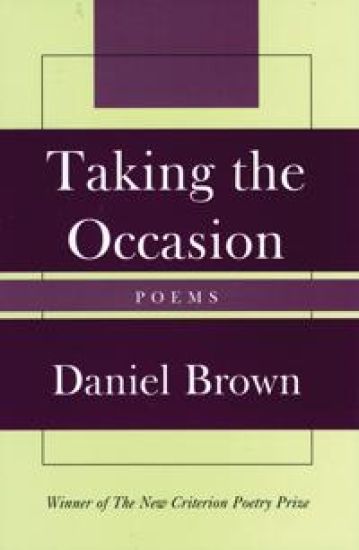
Taking the Occasion

Taking the Occasion

Daniel Brown

Ivan R Dee, Inc
2008
sidottu
The eighth winner of the New Criterion Poetry Prize is Daniel Brown's Taking the Occasion. From its opening lines, his book sounds a new note in poetry: "The thing about the old one about / The tree in the forest and nobody's around / And how it falls maybe with a sound, / Maybe not . . ." In poem after poem, Mr. Brown plays urban speech rhythms (much as Robert Frost played rural ones) across the back-beat of meter and rhyme. Distinctive in matter as well as in manner, Taking the Occasion addresses subjects that range from a moment's fancy to stirring ruminations on existence. In a time when many poets see subjects as superfluous, Brown demonstrates the abiding power of an arresting premise, much as music derives life from a memorable tune. His work repeatedly sounds emotional or philosophical depths, yet he isn't above eliciting a laugh in the process.