

Kirjailija
Daniel Carpenter
Kirjat ja teokset yhdessä paikassa: 6 kirjaa, julkaisuja vuosilta 2001–2024, suosituimpiin kuuluu Hunting by the River. Vertaile teosten hintoja ja tarkista saatavuus suomalaisista kirjakaupoista.
6 kirjaa
Kirjojen julkaisuvuodet: 2001–2024.
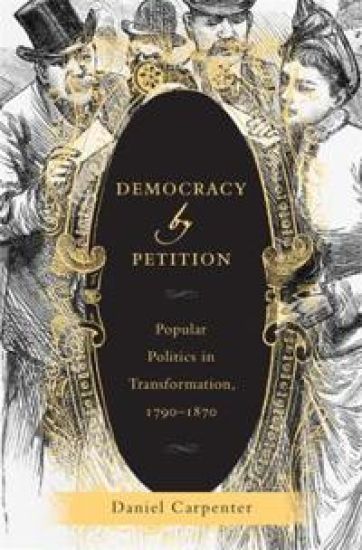
Winner of the James P. Hanlan Book AwardWinner of the J. David Greenstone Book PrizeWinner of the S. M. Lipset Best Book AwardThis pioneering work of political history recovers the central and largely forgotten role that petitioning played in the formative years of North American democracy. Known as the age of democracy, the nineteenth century witnessed the extension of the franchise and the rise of party politics. As Daniel Carpenter shows, however, democracy in America emerged not merely through elections and parties, but through the transformation of an ancient political tool: the petition. A statement of grievance accompanied by a list of signatures, the petition afforded women and men excluded from formal politics the chance to make their voices heard and to reshape the landscape of political possibility. Democracy by Petition traces the explosion and expansion of petitioning across the North American continent. Indigenous tribes in Canada, free Blacks from Boston to the British West Indies, Irish canal workers in Indiana, and Hispanic settlers in territorial New Mexico all used petitions to make claims on those in power. Petitions facilitated the extension of suffrage, the decline of feudal land tenure, and advances in liberty for women, African Americans, and Indigenous peoples. Even where petitioners failed in their immediate aims, their campaigns advanced democracy by setting agendas, recruiting people into political causes, and fostering aspirations of equality. Far more than periodic elections, petitions provided an everyday current of communication between officeholders and the people. The coming of democracy in America owes much to the unprecedented energy with which the petition was employed in the antebellum period. By uncovering this neglected yet vital strand of nineteenth-century life, Democracy by Petition will forever change how we understand our political history.
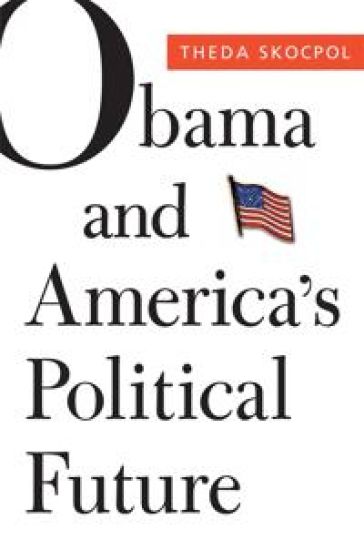
Obama and America’s Political Future
Theda Skocpol; Daniel Carpenter
Harvard University Press
2012
sidottu
Barack Obama’s galvanizing victory in 2008, coming amid the greatest economic crisis since the 1930s, opened the door to major reforms. But the president quickly faced skepticism from supporters and fierce opposition from Republicans, who scored sweeping wins in the 2010 midterm election. Here, noted political scientist Theda Skocpol surveys the political landscape and explores its most consequential questions: What happened to Obama’s “new New Deal”? Why have his achievements enraged opponents more than they have satisfied supporters? How has the Tea Party’s ascendance reshaped American politics? Skocpol’s compelling account rises above conventional wisdom and overwrought rhetoric. The Obama administration’s response to the recession produced bold initiatives—health care reform, changes in college loans, financial regulation—that promise security and opportunity. But these reforms are complex and will take years to implement. Potential beneficiaries do not readily understand them, yet the reforms alarm powerful interests and political enemies, creating the volatile mix of confusion and fear from which Tea Party forces erupted. Skocpol dissects the popular and elite components of the Tea Party reaction that has boosted the Republican Party while pushing it far to the right at a critical juncture for U. S. politics and governance. Skocpol’s analysis is accompanied by contributions from two fellow scholars and a former congressman. At this moment of economic uncertainty and extreme polarization, as voters prepare to render another verdict on Obama’s historic presidency, Skocpol and her respondents help us to understand its triumphs and setbacks and see where we might be headed next.

The Abolitionist Imagination
Andrew Delbanco; Daniel Carpenter
Harvard University Press
2012
sidottu
The abolitionists of the mid-nineteenth century have long been painted in extremes--vilified as reckless zealots who provoked the catastrophic bloodletting of the Civil War, or praised as daring and courageous reformers who hastened the end of slavery. But Andrew Delbanco sees abolitionists in a different light, as the embodiment of a driving force in American history: the recurrent impulse of an adamant minority to rid the world of outrageous evil. Delbanco imparts to the reader a sense of what it meant to be a thoughtful citizen in nineteenth-century America, appalled by slavery yet aware of the fragility of the republic and the high cost of radical action. In this light, we can better understand why the fiery vision of the "abolitionist imagination" alarmed such contemporary witnesses as Herman Melville and Nathaniel Hawthorne even as they sympathized with the cause. The story of the abolitionists thus becomes both a stirring tale of moral fervor and a cautionary tale of ideological certitude. And it raises the question of when the demand for purifying action is cogent and honorable, and when it is fanatic and irresponsible. Delbanco's work is placed in conversation with responses from literary scholars and historians. These provocative essays bring the past into urgent dialogue with the present, dissecting the power and legacies of a determined movement to bring America's reality into conformity with American ideals.

The U. S. Food and Drug Administration is the most powerful regulatory agency in the world. How did the FDA become so influential? And how exactly does it wield its extraordinary power? Reputation and Power traces the history of FDA regulation of pharmaceuticals, revealing how the agency's organizational reputation has been the primary source of its power, yet also one of its ultimate constraints. Daniel Carpenter describes how the FDA cultivated a reputation for competence and vigilance throughout the last century, and how this organizational image has enabled the agency to regulate an industry as powerful as American pharmaceuticals while resisting efforts to curb its own authority. Carpenter explains how the FDA's reputation and power have played out among committees in Congress, and with drug companies, advocacy groups, the media, research hospitals and universities, and governments in Europe and India. He shows how FDA regulatory power has influenced the way that business, medicine, and science are conducted in the United States and worldwide. Along the way, Carpenter offers new insights into the therapeutic revolution of the 1940s and 1950s; the 1980s AIDS crisis; the advent of oral contraceptives and cancer chemotherapy; the rise of antiregulatory conservatism; and the FDA's waning influence in drug regulation today. Reputation and Power demonstrates how reputation shapes the power and behavior of government agencies, and sheds new light on how that power is used and contested.

Until now political scientists have devoted little attention to the origins of American bureaucracy and the relationship between bureaucratic and interest group politics. In this pioneering book, Daniel Carpenter contributes to our understanding of institutions by presenting a unified study of bureaucratic autonomy in democratic regimes. He focuses on the emergence of bureaucratic policy innovation in the United States during the Progressive Era, asking why the Post Office Department and the Department of Agriculture became politically independent authors of new policy and why the Interior Department did not. To explain these developments, Carpenter offers a new theory of bureaucratic autonomy grounded in organization theory, rational choice models, and network concepts. According to the author, bureaucracies with unique goals achieve autonomy when their middle-level officials establish reputations among diverse coalitions for effectively providing unique services. These coalitions enable agencies to resist political control and make it costly for politicians to ignore the agencies' ideas. Carpenter assesses his argument through a highly innovative combination of historical narratives, statistical analyses, counterfactuals, and carefully structured policy comparisons. Along the way, he reinterprets the rise of national food and drug regulation, Comstockery and the Progressive anti-vice movement, the emergence of American conservation policy, the ascent of the farm lobby, the creation of postal savings banks and free rural mail delivery, and even the congressional Cannon Revolt of 1910.