

Kirjailija
Daniel David
Kirjat ja teokset yhdessä paikassa: 5 kirjaa, julkaisuja vuosilta 2009–2025, suosituimpiin kuuluu Le Levier d'Archimède. Vertaile teosten hintoja ja tarkista saatavuus suomalaisista kirjakaupoista.
5 kirjaa
Kirjojen julkaisuvuodet: 2009–2025.
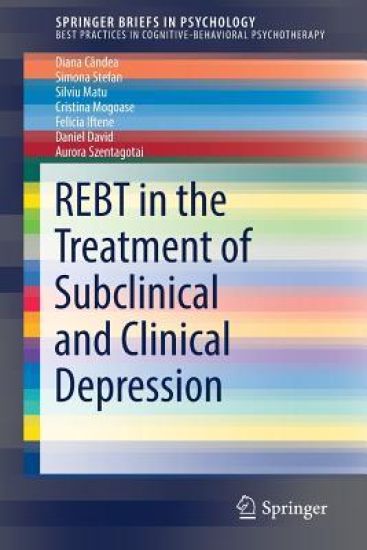
REBT in the Treatment of Subclinical and Clinical Depression
Diana Cândea; Simona Stefan; Silviu Matu; Cristina Mogoase; Felicia Iftene; Daniel David; Aurora Szentagotai
Springer Nature Switzerland AG
2019
nidottu
The clinical protocols included in this book are focused both on clinical and subclinical depression and are targeted for both adults and youth. After providing a concise overview on depression and the empirical data supporting the clinical protocols, the book illustrates REBT/CBT protocols that provide essential guidance on how to address depression by practitioners at all levels of expertise (e.g. therapists in training and/or more experienced therapists). ?? ?? The field of psychotherapy research is now at a stage where the efficacy (i.e., how treatments work in controlled studies) and effectiveness (i.e., how treatments work in real life) of psychological treatments have been demonstrated for a large spectrum of disorders (Barlow, 2001). Cognitive – behavior therapies (CBT) are considered the gold standard for empirically validated forms of psychotherapy in the treatment of clinical and subclinical depression, showing short- and long-term effects (see Barlow,2001; Chambless & Hollon, 1998) that are at least as strong as those of pharmacotherapy (medication) or other therapies (i.e., interpersonal therapy; DeRubeis et al., 200 5; Hollon et al., 2005; Shea et al., 1992) and it is hoped that these treatments will help not only treat but also prevent the onset of major depression (Cuijpers, Smit, & Straten, 2007). Cognitive –behavior therapies are based on the premise that psychological problems stem from dysfunctional cognitions (Beck, Rush, Shaw, & Emery, 1979; Ellis, 1962). In CBT, the therapist works with the client to identify and focus upon dysfunctional cognitions to modify them and remedy associated emotional and/or behavior al consequences. Two of the most influential and widespread forms of CBT are cognitive therapy (CT) and rational emotive behavior therapy (REBT) (Elis, 1987; David, 2007; David & Szentagotai, 2006).

In 2095, everyone goes digital before they hit thirty-five. Everyone except the Ghosts who grow old in the side streets of the Metropolis, and the Lifers who escape to a life of foraging and tech in the wilderness. Zoe's already made her choice, and when her mother migrates she heads beyond the wall, to find a mortal future with Matthew and the Lifers. When a new software entity takes violent control of the virtual world, cleansing the system of the hypocrisies of humanity, a stream of refugees begin to arrive at the clearing and Zoe and her friends return to defend the Metropolis, but find a different future awaits them. In 2095, the fight for who controls eternity is just beginning. "Give this a shot; it mixes future-tech dystopia with a chance for heroism and hope." **** Joe Crowe, RevolutionSF
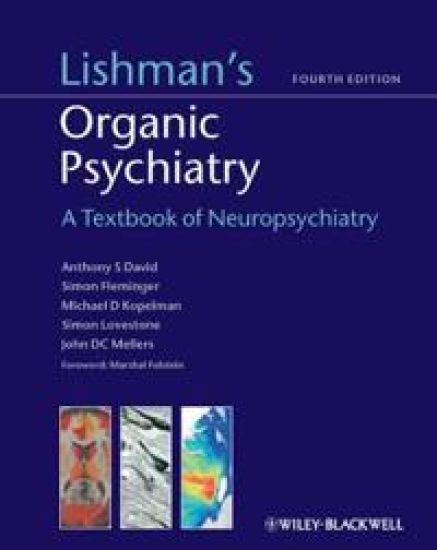
Lishman's Organic Psychiatry
Daniel David; Simon Fleminger; Michael Kopelman; Simon Lovestone; John Mellers
John Wiley Sons Inc
2012
nidottu
Halvin toimitettuna 104,40 €
"The third edition of the now-classic text Organic Psychiatry by William Alwyn Lishman should be a part of every neuropsychiatrist's library. It should also serve as a reminder that neuropsychiatric training programs must continue to promote personal clinical instruction, in the spirit of Lishman's prose, as a guiding bedside beacon to future practitioners." —from a review of the third edition in Journal of Neuropsychiatry and Clinical Neurosciences Over the past 30 years, thousands of physicians have depended on Lishman's Organic Psychiatry. Its authoritative and reliable clinical guidance was - and still is - beyond compare. The new edition of this classic textbook has now been extensively revised by a team of five authors, yet it follows the tradition of the original single-authored book. It continues to provide a comprehensive review of the cognitive, emotional and behavioural consequences of cerebral disorders and their manifestations in clinical practice. Enabling clinicians to formulate incisive diagnoses and appropriate treatment strategies, Lishman's Organic Psychiatry is an invaluable source of information for practising psychiatrists, neurologists and trainees. This new edition: covers recent theoretical and clinical developments, with expanded sections on neuropsychology and neuroimagingincludes a new chapter on sleep disorders whilst the chapters on Alzheimer's disease and related dementias, Epilepsy, Movement disorders and Traumatic brain injury have been extensively revised reflecting the greatly improved understanding of their underlying pathophysiologiesshowcases the huge advances in brain imaging and important discoveries in the fields of molecular biology and molecular geneticshas been enhanced with the inclusion of more tables and illustrations to aid clinical assessmentincorporates important diagnostic tools such as magnetic resonance brain images. With a Foreword by Marshal Folstein

Rational and Irrational Beliefs
Daniel David; Steven Lynn; Albert Ellis
Oxford University Press Inc
2009
sidottu
In Rational and Irrational Beliefs: Research, Theory, and Clinical Practice, leading scholars, researchers, and practitioners of rational emotive behavior therapy (REBT) and other cognitive-behavioral therapies (CBTs) share their perspectives and empirical findings on the nature of rational and irrational beliefs, the role of beliefs as mediators of functional and dysfunctional emotions and behaviors, and clinical approaches to modifying irrational beliefs, enhancing rational beliefs, and adaptive coping in the face of stressful life events. Offering a comprehensive and cohesive approach to understanding REBT/CBT and its central constructs of rational and irrational beliefs, contributors review a steadily accumulating empirical literature indicating that irrational beliefs are associated with a wide range of problems in living and that exposure to rational self-statements can decrease anxiety and other psychological symptoms, and play a valuable role in health promotion and disease prevention. Contributors also identify new frontiers of research and theory, including the link between irrational beliefs and other cognitive processes such as memory, psychophysiological responses, and evolutionary and cultural determinants of rational and irrational beliefs. A truly accessible, state-of-the-science summary of REBT/CBT research and clinical applications, Rational and Irrational Beliefs is an invaluable resource for psychotherapy practitioners of all theoretical orientations, as well as instructors, students, and academic psychologists.