

Kirjailija
Daniel Davis
Kirjat ja teokset yhdessä paikassa: 30 kirjaa, julkaisuja vuosilta 2006–2025, suosituimpiin kuuluu Flippy's Big Doctor Visit. Vertaile teosten hintoja ja tarkista saatavuus suomalaisista kirjakaupoista.
30 kirjaa
Kirjojen julkaisuvuodet: 2006–2025.


Davis's Manual of Magnetism. Including Also Electro-Magnetism, Magneto-Electricity, and Thermo-Electricity. With a Description of the Electrotype Process. For the Use of Students and Literary Institutions. With 100 Illustrations
William Francis Channing; Daniel Davis; John Bacon
Antigonos Verlag
2025
nidottu





Introduction to African American History: An Anthology provides students with an engaging and comprehensive narrative of African American's struggles and resilience throughout history. Beginning with an overview of African traditional religious and cultural systems prior to European intrusion, the text explores the complex journey from the beginnings of European enterprise in Africa to the origins and evolution of the Atlantic slave trade. The book continues to explore the transition from slavery to emancipation, discussions on race and religion, and the various sociopolitical movements shaping African American identity. Larger societal shifts like the Great Migration are contextualized alongside the life and thoughts of prominent African American figures, moving through evolving conceptions of black advancement, civil rights, and the advent of Black Power. Contemporary issues like the influence of hip hop on African American culture and discussions on post-Moynihan evaluations of Black community structures provide a bridge from historical perspectives to modern discourse. Providing students with a deeper understanding of African American experiences from a historical lens, Introduction to African American History is well suited for courses in African American history, sociology, and cultural studies. It is meant to inspire in-depth discussion on African American heritage, enduring cultural transformations, and the construction of race and identity in America.
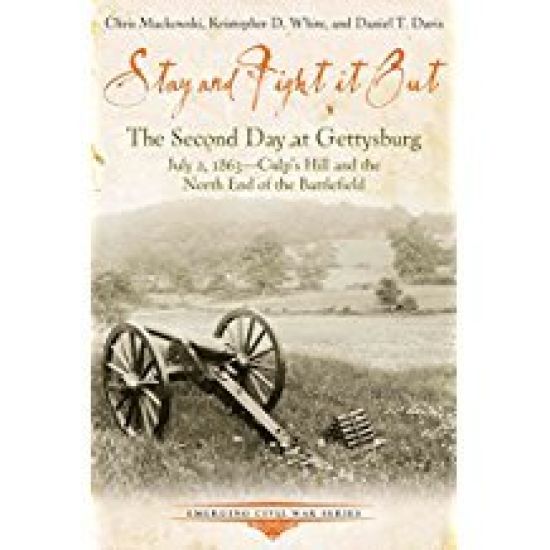
July 1, 1863, had gone poorly for the Union army’s XI Corps. Shattered in battle north of the Pennsylvania town of Gettysburg, the battered and embarrassed unit ended the day hunkered at the crest of a cemetery-topped hill south of the village. Reinforcements fortified the position, which extended eastward to include another key piece of high ground, Culp’s Hill. The Federal line also extended southward down Cemetery Ridge, forming what eventually became a long fishhook. July 2 saw a massive Confederate attack against the southernmost part of the line. As the Southern juggernaut rolled inexorably northward, Federal troops shifted away from Culp’s Hill and Cemetery Hill to meet the threat. Just then, the Army of Northern Virginia’s vaunted Second Corps launched itself at the weakened Federal right. The very men who, just the day before, broke the Union army resolved to break it once again. The ensuing struggle—every bit as desperate and with stakes every bit as high as the more-famous fight at Little Round Top on the far end of the line—left the entire Union position in the balance. “Stay and fight it out,” one Union general counseled. The Confederates were all too willing to oblige. Authors Chris Mackowski, Kristopher D. White, and Daniel T. Davis started their Gettysburg account in Don’t Give an Inch: The Second Day at Gettysburg, July 2, 1863—from Little Round Top to Cemetery Ridge. Picking up on the heels of its companion volume, Stay and Fight It Out: The Second Day at Gettysburg, July 2, 1863—Culp’s Hill and the Northern End of the Battlefield they recount the often-overlooked fight that secured the Union position and set the stage for the battle’s fateful final day.

How does a composer feel when his work is premiered?
Daniel Davis
Our Knowledge Publishing
2024
pokkari
This work consists of analyzing and reflecting on the reactions of classical music composers at the time of the premiere of their work, whether or not they are conditioned by the practical reality of putting on a concert. Based on the existing bibliographical analysis, results and conclusions will be presented on the different reactions and ways of seeing the moment of the premiere. Conclusions will be drawn with a view to relating the practical reality and the final result to future works and/or to the composer's own way of composing. Finally, the processes and dynamics of the phenomenon will be demonstrated through the analysis of various current cases with their own specificities.
Come si sente un compositore quando il suo lavoro viene presentato in anteprima?
Daniel Davis
Edizioni Sapienza
2024
pokkari
Questo lavoro consiste nell'analizzare e riflettere sulle reazioni dei compositori di musica classica al momento della prima del loro lavoro, condizionate o meno dalla realt pratica della realizzazione di un concerto. Sulla base dell'analisi bibliografica esistente, verranno presentati risultati e conclusioni sulle diverse reazioni e modi di vedere il momento della prima. Si trarranno conclusioni per mettere in relazione la realt pratica e il risultato finale con opere future e/o con il modo di comporre del compositore stesso. Infine, i processi e le dinamiche del fenomeno saranno dimostrati analizzando vari casi attuali con le loro specificit .

Wie fühlt sich ein Komponist, wenn sein Werk uraufgeführt wird?
Daniel Davis
Verlag Unser Wissen
2024
pokkari
Diese Arbeit besteht darin, die Reaktionen von Komponisten klassischer Musik bei der Urauff hrung ihres Werkes zu analysieren und dar ber nachzudenken, ob sie durch die praktische Realit t der Auff hrung eines Konzerts bedingt sind oder nicht. Auf der Grundlage der vorliegenden bibliographischen Analyse werden Ergebnisse und Schlussfolgerungen zu den unterschiedlichen Reaktionen und Sichtweisen auf den Moment der Urauff hrung vorgestellt. Es werden Schlussfolgerungen gezogen, um die praktische Realit t und das Endergebnis auf k nftige Werke und/oder auf die eigene Kompositionsweise des Komponisten zu beziehen. Schlie lich werden die Prozesse und die Dynamik des Ph nomens anhand der Analyse verschiedener aktueller F lle mit ihren eigenen Besonderheiten aufgezeigt.
Que ressent un compositeur lors de la création de son oeuvre ?
Daniel Davis
Editions Notre Savoir
2024
pokkari
Ce travail consiste analyser et r fl chir sur les r actions des compositeurs de musique classique au moment de la cr ation de leur oeuvre, qu'elles soient conditionn es ou non par la r alit pratique de la r alisation d'un concert. Sur la base de l'analyse bibliographique existante, des r sultats et des conclusions seront pr sent s sur les diff rentes r actions et mani res d'appr hender le moment de la cr ation. Des conclusions seront tir es en vue de relier la r alit pratique et le r sultat final des oeuvres futures et/ou la propre fa on de composer du compositeur. Enfin, les processus et la dynamique du ph nom ne seront d montr s par l'analyse de divers cas actuels avec leurs propres sp cificit s.

¿Qué siente un compositor cuando se estrena su obra?
Daniel Davis
Ediciones Nuestro Conocimiento
2024
nidottu

The authors of this book are students at Howard University Middle School of Math & Science in Washington, D. C. They have written short stories to showcase their knowledge of STEM, promote literacy among teenagers, and combat poverty. They have elected to have their share of the proceeds from this book donated to charities that break the cycle of food insecurity in Washington, D. C. Enjoy reading their short stories Authors: Daniel Davis (Grade 8); Indira Davis (Grade 8), Kymani Boykin (Grade 7), Kingston Sloley (Grade 7), and Camryn Dunbar (Grade 6)
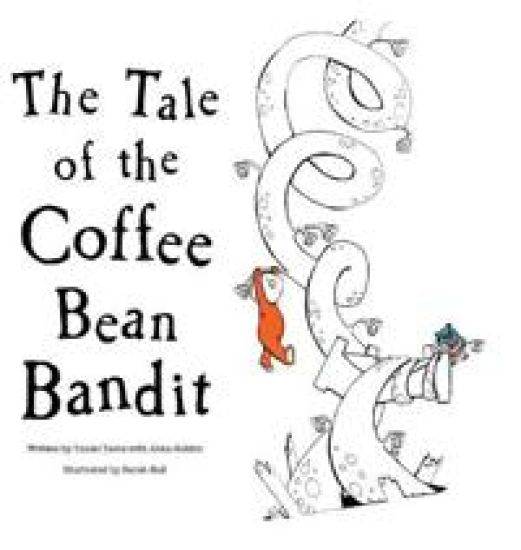
You may have heard a fantastic tale of Jack and his beanstalk grown from magical beans. And you may be sure that such beans do not exist. Well, children, listen closely... There is a magic bean that your parents know all about. They are probably in your house at this very minute. You may have smelled them brewing in the mornings. These magic beans calm grown-ups when they're grumpy. They wake them when they're sleepy. These clever adults use all manner of gadgetry and funnels and pipes and drips and steam to extract the mysterious "coffee" bean's magical properties. But what happens when a child eats these enchanted legumes? What might it do to a smaller person? Ben just has to find out. This book is a tale of a boy who discovers this magical bean. It is a stimulating tale of jittery wonder. It is a cautionary tale of a boy who cannot quite explain why he cannot quite go to sleep. For you, children, it is a tale of what might happen if you stumble upon these magical "coffee" beans. So please settle in and listen to The Tale of the Coffee Bean Bandit.

You may have heard a fantastic tale of Jack and his beanstalk grown from magical beans. And you may be sure that such beans do not exist. Well, children, listen closely... There is a magic bean that your parents know all about. They are probably in your house at this very minute. You may have smelled them brewing in the mornings. These magic beans calm grown-ups when they're grumpy. They wake them when they're sleepy. These clever adults use all manner of gadgetry and funnels and pipes and drips and steam to extract the mysterious "coffee" bean's magical properties. But what happens when a child eats these enchanted legumes? What might it do to a smaller person? Ben just has to find out. This book is a tale of a boy who discovers this magical bean. It is a stimulating tale of jittery wonder. It is a cautionary tale of a boy who cannot quite explain why he cannot quite go to sleep. For you, children, it is a tale of what might happen if you stumble upon these magical "coffee" beans. So please settle in and listen to The Tale of the Coffee Bean Bandit.
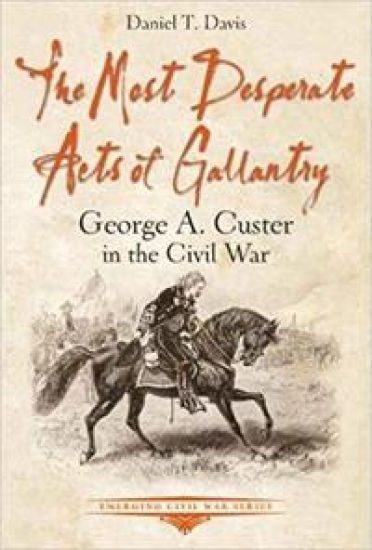
On June 25, 1876, Lt. Col. George Armstrong Custer led the 7th U. S. Cavalry into the valley of the Little Bighorn. By sunset, Custer and five of his companies lay dead—killed in battle against Sioux and Cheyenne warriors. Through the passage of time, Custer’s last fight has come to overshadow the rest of his military career, which had its brilliant beginning in the American Civil War. Plucked from obscurity by Maj. Gen. George McClellan, Custer served as a staff officer through the early stages of the war. His star began to rise in late June, 1863, when he catapulted several grades to brigadier general and was given brigade command. Shortly thereafter, at Gettysburg and Buckland Mills, he led his men—the Wolverines—in some of the heaviest cavalry fighting of the Eastern Theater. At Yellow Tavern, Custer’s assault broke the enemy line, and one of his troopers mortally wounded the legendary Confederate cavalryman, J. E. B. Stuart. At Trevilian Station, his brigade was nearly destroyed. At Third Winchester, he participated in an epic cavalry charge. Elevated to lead the Third Cavalry Division, Custer played a major role at Tom’s Brook and, later, at Appomattox, which ultimately led to the surrender of the Army of Northern Virginia. Historian Daniel T. Davis, a long-time student of George Custer, has spent countless hours walking and studying the battlefields where Custer fought in Virginia, Maryland, and Pennsylvania. In The Most Desperate Acts of Gallantry, he chronicles the Civil War experiences of one of the most recognized individuals to emerge from that tragic chapter in American history.

Copublished with the Utah State Historical Society. Affiliated with the Utah Division of State History, Utah Department of Heritage & Arts. Andrew J. Russell is primarily known as the man who photographed the famous “East and West Shaking Hands” image of the Golden Spike ceremony on May 10, 1869. He also took nearly one thousand other images that document almost every aspect of the construction of the Union Pacific Railroad. Across the Continent is the most detailed study to date of the life and work of an often-overlooked but prolific artist who contributed immensely not only to documentation of the railroad but also to the nation’s visualization of the American West and, earlier, the Civil War. The central focus in the book is on the large body of work Russell produced primarily to satisfy the needs of the Union Pacific. Daniel Davis posits that this set of Russell’s photos is best understood not through one or a handful of individual images, but as a photographic archive. Taken as a whole, that archive shows that Russell intended for viewers never to forget who built the Union Pacific. His images celebrate working people—masons working on bridge foundations, freighters and their wagons, surveyors with their transits, engine crews posed on their engines, as well as tracklayers, laborers, cooks, machinists, carpenters, graders, teamsters, and clerks pushing paper. Russell contributed to a golden age of Western photography that visually introduced the American West to the nation, changing its public image from that of a Great American Desert to a place of apparently unlimited economic potential.

Qual o sentimento de um Compositor no momento da estreia da sua obra?
Daniel Davis
Novas Edicoes Academicas
2018
pokkari
Este trabalho consiste na an lise e na reflex o das reac es dos Compositores de M sica Erudita no momento da estreia da sua obra, condicionados ou n o pelo estado da realidade pr tica da montagem do concerto. A partir da an lise bibliogr fica existente, ser o apresentados resultados e conclus es sobre as diferentes reac es e formas de ver o momento da estreia. Ser o elaboradas conclus es tendo em vista a rela o da realidade pr tica e do resultado final para com trabalhos futuros e/ou com a forma de compor do pr prio compositor. Por fim, ser o demonstrados os processos e din micas do fen meno atrav s da an lise de v rios casos actuais com especificidades pr prias.