Kirjojen hintavertailu – 12 859 819 kirjaa ja 27 kauppaa

Kirjailija

Daniel Defoe

Kirjat ja teokset yhdessä paikassa: 1 684 kirjaa, julkaisuja vuosilta 1872–2027, suosituimpiin kuuluu A New Test Of The Church Of England's Loyalty. Vertaile teosten hintoja ja tarkista saatavuus suomalaisista kirjakaupoista.

1 684 kirjaa

Kirjojen julkaisuvuodet: 1872–2027.

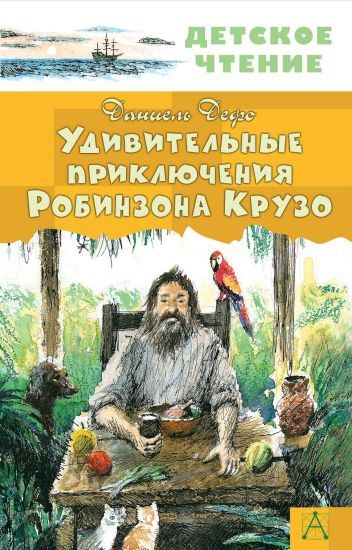
Udivitelnye prikljuchenija Robinzona Kruzo
Roman Danielja Defo ob udivitelnykh prikljuchenijakh Robinzona Kruzopriznan luchshim proizvedeniem avtora za vsju ego tvorcheskuju dejatelnost. Eta istorija o moreplavatele, voleju sudby popavshem na neobitaemyj ostrovi provedshem v nepredskazuemom i opasnom mire zhivoj prirody 28 let, stalaliteraturnoj sensatsiej i nashla otgoloski vo mnogikh proizvedenijakh drugikhizvestnykh avtorov. Zamysel sjuzheta vzjat iz realnogo sluchaja, proizoshedshegos shotlandskim morjakom v 1704 godu. Na segodnjashnij den roman vkljuchen v spisok knig, objazatelnykh k prochteniju. Dlja srednego shkolnogo vozrasta
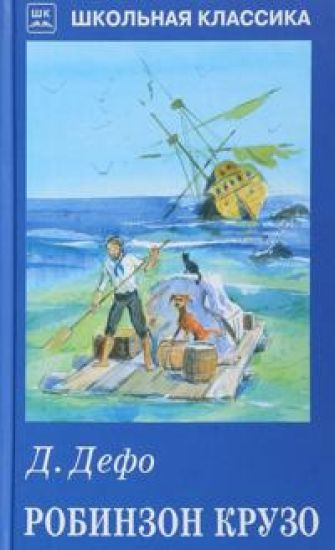
Robinzon Kruzo

Robinzon Kruzo

Daniel Defoe

Rosmen
2020
sidottu
Dejstvie znamenitogo romana anglijskogo pisatelja Danielja Defo ob udivitelnykh prikljuchenijakh morekhoda Robinzona Kruzo proiskhodit v seredine XVII veka. Poterpev korablekrushenie, on popal na dalekij neobitaemyj ostrov, gde vyzhil iskljuchitelno blagodarja svoej reshitelnosti i otvage
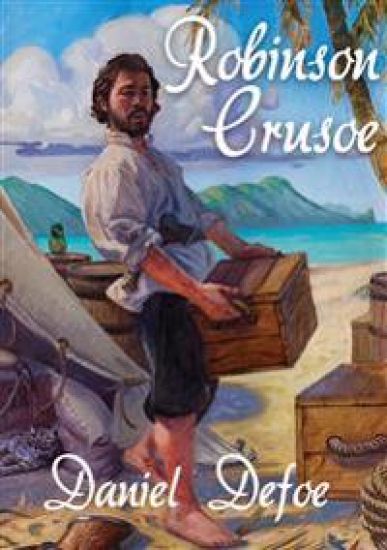
Robinson Crusoe

Robinson Crusoe

Daniel Defoe

Selector, S.A. de C.V.
2020
nidottu
Imagina que eres un ciudadano ingl s con una insistente curiosidad por descubrir qu hay m s all del horizonte, y la cual te conduce a navegar por el Atl ntico hasta bordear las costas de Brasil. En la traves a sobrevives a furiosas tormentas, caes prisionero en manos de piratas, escapas y te haces de una embarcaci n propia que finalmente naufraga y te arroja a una isla deshabitada. En medio de esta soledad aprendes a observar los cambios de las estaciones, a sembrar y, sobre todo, a tomar de la naturaleza s lo lo necesario, como lo hizo Robinson Crusoe, el protagonista de esta historia cuya lectura te reserva todav a muchas sorpresas.
Robinzon Kruzo. Dalnejshie prikljuchenija Robinzona Kruzo. Polnoe illjustrirovannoe izdanie
V odnom tome publikujutsja samye znamenitye romany odnogo iz jarkikh predstavitelej mirovoj klassiki - Danielja Defo (1660-1731) - "Robinzon Kruzo", "Dalnejshie prikljuchenija Robinzona Kruzo", "Zhizn i piratskie prikljuchenija slavnogo kapitana Singltona", "Moll Flenders", interes k kotorym u chitatelej ne ugasaet uzhe v techenie pochti trekh stoletij. Samyj znamenityj roman Defo "Robinzon Kruzo" pechataetsja v polnoj versii perevoda M. Shishmarevoj, vypolnennom v 1902 godu. Vse proizvedenija proilljustrirovany risunkami anglijskikh khudozhnikov, sredi kotorykh vosproizveden polnyj komplekt iz 120 illjustratsij Uoltera Pejdzheta k romanu "Robinzon Kruzo".
Robinzon Kruzo

Robinzon Kruzo

Daniel Defoe

Iskatel
2020
sidottu
"Robinzon Kruzo" - roman znamenitogo anglijskogo pisatelja Danielja Defo - javljaetsja pervym klassicheskim romanom, kotoryj mozhno nazvat "istoriej sovremennika". Eto roman o cheloveke, kotoryj preodolel vse trudnosti, vypavshie na ego dolju posle korablekrushenija, o cheloveke, kotoryj oderzhal pobedu i nad soboj, i nad prirodoj.
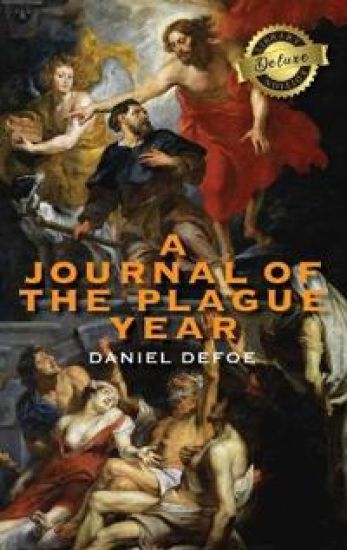
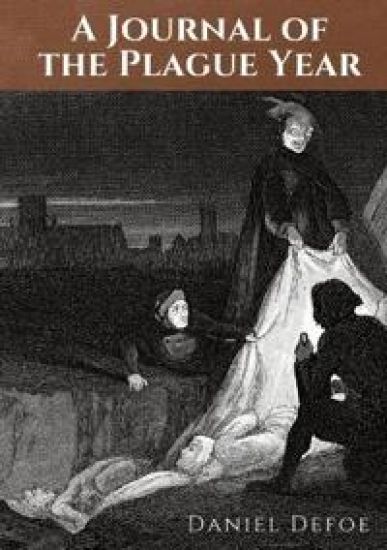
A Journal of the Plague Year (Deluxe Library Edition)
A Journal of the Plague Year is an account of one man's experiences of the year 1665 when the bubonic plague struck the city of London. It is presented as an eyewitness account of the events at the time, told in somewhat chronological order. Defoe goes to great pains to achieve an effect of verisimilitude, identifying specific neighborhoods, streets, and even houses in which events took place. He presents tables of casualty figures and discusses the credibility of various accounts and anecdotes received by the narrator. Defoe was only five years old in 1665 when the Great Plague took place. The book was published under the initials H. F. and is likely based on the journals of Defoe's uncle, Henry Foe. Like the narrator of the book, Henry Foe was a saddler who lived in the Whitechapel district of East London. The book is often compared to the actual, contemporary accounts of the plague in the diary of Samuel Pepys. Defoe's account, which appears to include much research, is far more systematic and detailed than Pepys's first-person account.

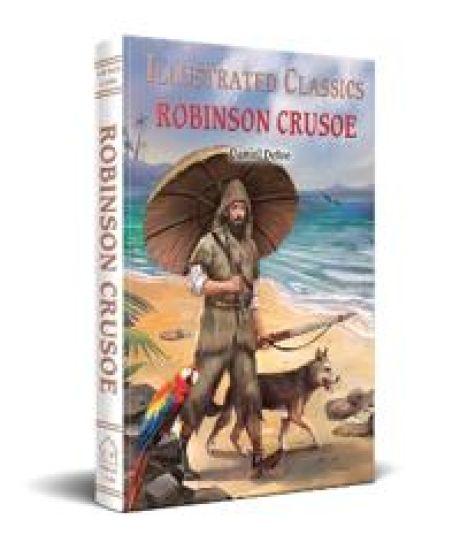
The Adventures of Robinson Crusoe

The Adventures of Robinson Crusoe

Daniel Defoe

Ramesh Publishing House
2020
nidottu
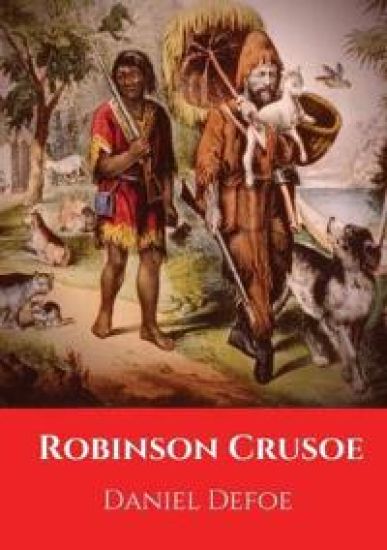
Crusoe sets sail from the Queen's Dockin Hull on a sea voyage in August 1651. After a tumultuous journey where his ship is wrecked in a storm, his lust for the sea remains so strong that he sets out to sea again. This journey, too, ends in disaster as the ship is taken over by pirates and Crusoe is enslaved by a Moor. Two years later, he escapes in a boat with a boy. A captain of a Portuguese ship of the west coast of Africa rescues him. The ship is en route to Brazil. With the captain's help, Crusoe procures a plantation. Years later, Crusoe joins an expedition to bring slaves from Africa but he is shipwrecked in a storm about forty miles out to sea on an island. As for his arrival there, only he and three animals, the captain's dog and two cats, survive the shipwreck. Overcoming his despair, he fetches arms, tools, and other supplies from the ship before it breaks apart and sinks.....
A Journal of the Plague Year

A Journal of the Plague Year

Daniel Defoe

Arcturus
2020
sidottu
This beautiful jacketed hardback presents Daniel Defoe's classic A Journal of the Plague Year, a vivid and arresting account of the impact of London's Great Plague of 1665. A Journal of the Plague Year, first published in 1722, is an account of the impact of London's Great Plague of 1665. Daniel Defoe himself was only five years old at the time of the Plague and so his personal experience would have been limited. He claimed that the Journal was a historical account of the events of that year, based on extensive research and seen through an eyewitness experience, that of his uncle, Henry Foe. Defoe details the progress of the plague through London's districts, how the city attempted to fight it, and describes the horror of carts piled high with the dead. He also examines the distressing effect of the disease on the human psyche, personified by Solomon Eagle, renowned for parading naked with a burning pan of charcoal on his head, denouncing the sins of the city. Whether novel or history or something in between, the Journal is packed with incident and insight, as well as statistics and intriguing facts, making a brilliant account of a city and its people in a terrible time. Featuring an illuminating introduction by Henry Morley, this beautiful jacketed hardback makes a perfect gift or collectible for any history or literature lover. ABOUT THE SERIES: Arcturus Silhouette Classics are high-quality hardback editions with contemporary cover-designs. Presented with dust jackets and beautiful colour end-papers, the titles in this series make wonderful gifts or collectibles for any classic literature lover.
Robinson Crusoe

Robinson Crusoe

Daniel Defoe

Les Prairies Numeriques
2020
pokkari
The Farther Adventures of Robinson Crusoe (now more commonly rendered as "The Further adventures of Robinson Crusoe") is a novel by Daniel Defoe, first published in 1719. Just as in its significantly more popular predecessor, Robinson Crusoe (1719), the first edition credits the work's fictional protagonist Robinson Crusoe as its author. It was published under the considerably longer original title: The Farther Adventures of Robinson Crusoe; Being the Second and Last Part of His Life, And of the Strange Surprising Accounts of his Travels Round three Parts of the Globe. Although intended to be the last Crusoe tale, the novel is followed by a third and final novel involving the character by Defoe entitled Serious Reflections of Robinson Crusoe (1720).
Glück und Unglück der brühmten Moll Flanders
Im Jahr 1722 schrieb Daniel Dafoe seinen Roman ner Moll Flanders, im englischen Originaltitel The fortunes and misfortunes of the famous Moll Flanders. Darin erz hlt er als Ich-Erz hler die wechselhaft Lebensgeschichte einer fiktiven Person in der sich unter anderem auch Episoden aus dem Leben des Autors selbst wiederfinden.
A Journal of the Plague Year

A Journal of the Plague Year

Daniel Defoe

Les Prairies Numeriques
2020
pokkari
A Journal of the Plague Year is a book by Daniel Defoe, first published in March 1722. It is an account of one man's experiences of the year 1665, in which the bubonic plague struck the city of London in what became known as the Great Plague of London, the last epidemic of plague in that city. The book is told somewhat chronologically, though without sections or chapter headings, and with frequent digressions and repetitions. Presented as an eyewitness account of the events at the time, it was written in the years just prior to the book's first publication in March 1722. Defoe was only five years old in 1665 when the Great Plague took place, and the book itself was published under the initials H. F. and is probably based on the journals of Defoe's uncle, Henry Foe, who, like 'H. F.', was a saddler who lived in the Whitechapel district of East London. In the book, Defoe goes to great pains to achieve an effect of verisimilitude, identifying specific neighborhoods, streets, and even houses in which events took place. Additionally, it provides tables of casualty figures and discusses the credibility of various accounts and anecdotes received by the narrator. The book is often compared to the actual, contemporary accounts of the plague in the diary of Samuel Pepys. Defoe's account, which appears to include much research, is far more systematic and detailed than Pepys's first-person account. A Journal of the Plague Year is a book by Daniel Defoe, first published in March 1722. It is an account of one man's experiences of the year 1665, in which the bubonic plague struck the city of London in what became known as the Great Plague of London, the last epidemic of plague in that city. The book is told somewhat chronologically, though without sections or chapter headings, and with frequent digressions and repetitions. 1]Presented as an eyewitness account of the events at the time, it was written in the years just prior to the book's first publication in March 1722. Defoe was only five years old in 1665 when the Great Plague took place, and the book itself was published under the initials H. F. and is probably based on the journals of Defoe's uncle, Henry Foe, who, like 'H. F.', was a saddler who lived in the Whitechapel district of East London. In the book, Defoe goes to great pains to achieve an effect of verisimilitude, identifying specific neighborhoods, streets, and even houses in which events took place. Additionally, it provides tables of casualty figures and discusses the credibility of various accounts and anecdotes received by the narrator. The book is often compared to the actual, contemporary accounts of the plague in the diary of Samuel Pepys. Defoe's account, which appears to include much research, is far more systematic and detailed than Pepys's first-person account.

History of the Plague in London

History of the Plague in London

Daniel Defoe

Bibliotech Press
2020
sidottu
A Journal of the Plague Year is a book by Daniel Defoe, first published in March 1722. It is an account of one man's experiences of the year 1665, in which the bubonic plague struck the city of London in what became known as the Great Plague of London, the last epidemic of plague in that city. The book is told somewhat chronologically, though without sections or chapter headings, and with frequent digressions and repetitions. Presented as an eyewitness account of the events at the time, it was written in the years just prior to the book's first publication in March 1722. Defoe was only five years old in 1665 when the Great Plague took place, and the book itself was published under the initials H. F. and is probably based on the journals of Defoe's uncle, Henry Foe, who, like 'H. F.', was a saddler who lived in the Whitechapel district of East London. In the book, Defoe goes to great pains to achieve an effect of verisimilitude, identifying specific neighborhoods, streets, and even houses in which events took place. Additionally, it provides tables of casualty figures and discusses the credibility of various accounts and anecdotes received by the narrator. The book is often compared to the actual, contemporary accounts of the plague in the diary of Samuel Pepys. Defoe's account, which appears to include much research, is far more systematic and detailed than Pepys's first-person account. (wikipedia.org)

History of the Plague in London

History of the Plague in London

Daniel Defoe

Bibliotech Press
2020
pokkari
A Journal of the Plague Year is a book by Daniel Defoe, first published in March 1722. It is an account of one man's experiences of the year 1665, in which the bubonic plague struck the city of London in what became known as the Great Plague of London, the last epidemic of plague in that city. The book is told somewhat chronologically, though without sections or chapter headings, and with frequent digressions and repetitions. Presented as an eyewitness account of the events at the time, it was written in the years just prior to the book's first publication in March 1722. Defoe was only five years old in 1665 when the Great Plague took place, and the book itself was published under the initials H. F. and is probably based on the journals of Defoe's uncle, Henry Foe, who, like 'H. F.', was a saddler who lived in the Whitechapel district of East London. In the book, Defoe goes to great pains to achieve an effect of verisimilitude, identifying specific neighborhoods, streets, and even houses in which events took place. Additionally, it provides tables of casualty figures and discusses the credibility of various accounts and anecdotes received by the narrator. The book is often compared to the actual, contemporary accounts of the plague in the diary of Samuel Pepys. Defoe's account, which appears to include much research, is far more systematic and detailed than Pepys's first-person account. (wikipedia.org)