Kirjojen hintavertailu – 12 859 819 kirjaa ja 27 kauppaa
Kirjailija
Daniel Defoe
Kirjat ja teokset yhdessä paikassa: 1 684 kirjaa, julkaisuja vuosilta 1872–2027, suosituimpiin kuuluu A New Test Of The Church Of England's Loyalty. Vertaile teosten hintoja ja tarkista saatavuus suomalaisista kirjakaupoista.
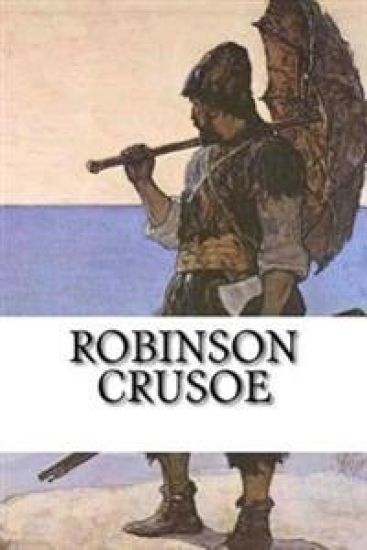
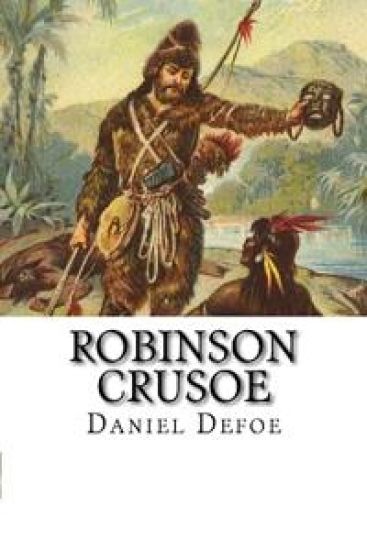
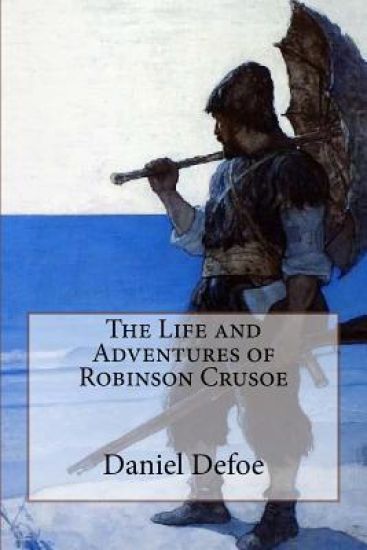
Robinson Crusoe is a novel by Daniel Defoe, first published on 25 April 1719. The first edition credited the work's protagonist Robinson Crusoe as its author, leading many readers to believe he was a real person and the book a travelogue of true incidents. Epistolary, confessional, and didactic in form, the book is presented as an autobiography of the title character (whose birth name is Robinson Kreutznaer)-a castaway who spends twenty-eight years on a remote tropical desert island near Trinidad, encountering cannibals, captives, and mutineers, before ultimately being rescued. The story has since been thought to be based on the life of Alexander Selkirk, a Scottish castaway who lived for four years on a Pacific island called "M s a Tierra", now part of Chile, which was renamed Robinson Crusoe Island in 1966, but various literary sources have also been suggested. Despite its simple narrative style, Robinson Crusoe was well received in the literary world and is often credited as marking the beginning of realistic fiction as a literary genre. It is generally seen as a contender for the first English novel. Before the end of 1719, the book had already run through four editions, and it has gone on to become one of the most widely published books in history, spawning numerous imitations in film, television and radio that its name was used to define a genre, Robinsonade.
Robinson Crusoe is a novel by Daniel Defoe, first published on 25 April 1719. This first edition credited the work's fictional protagonist Robinson Crusoe as its author, leading many readers to believe he was a real person and the book a travelogue of true incidents. It was published under the considerably longer original title The Life and Strange Surprizing Adventures of Robinson Crusoe, Of York, Mariner: Who lived Eight and Twenty Years, all alone in an un-inhabited Island on the Coast of America, near the Mouth of the Great River of Oroonoque; Having been cast on Shore by Shipwreck, wherein all the Men perished but himself. With An Account how he was at last as strangely deliver'd by Pyrates. Epistolary, confessional, and didactic in form, the book is a fictional autobiography of the title character (whose birth name is Robinson Kreutznaer)-a castaway who spends years on a remote tropical island near Trinidad, encountering cannibals, captives, and mutineers before being rescued. The story is widely perceived to have been influenced by the life of Alexander Selkirk, a Scottish castaway who lived for four years on the Pacific island called "M s a Tierra" (in 1966 its name was changed to Robinson Crusoe Island), Chile. However, other possible sources have been put forward for the text. It is possible, for example, that Defoe was inspired by the Latin or English translations of Ibn Tufail's Hayy ibn Yaqdhan, an earlier novel also set on a desert island. Another source for Defoe's novel may have been Robert Knox's account of his abduction by the King of Ceylon in 1659 in "An Historical Account of the Island Ceylon," Glasgow: James MacLehose and Sons (Publishers to the University), 1911.
Robinson Crusoe is a novel by Daniel Defoe, first published on 25 April 1719. The first edition credited the work's protagonist Robinson Crusoe as its author, leading many readers to believe he was a real person and the book a travelogue of true incidents. Epistolary, confessional, and didactic in form, the book is presented as an autobiography of the title character (whose birth name is Robinson Kreutznaer)-a castaway who spends twenty-seven years on a remote tropical desert island near Trinidad, encountering cannibals, captives, and mutineers, before ultimately being rescued. The story has since been thought to be based on the life of Alexander Selkirk, a Scottish castaway who lived for four years on a Paci c island called "M s a Tierra", now part of Chile, which was renamed Robinson Crusoe Island in 1966, but various literary sources have also been suggested. Despite its simple narrative style, Robinson Crusoe was well received in the literary world and is often credited as marking the beginning of realistic ction as a literary genre. It is generally seen as a contender for the first English novel. Each RADLEY CLASSIC is a meticulously restored, luxurious and faithful reproduction of a classic book; produced with elegant text layout, clarity of presentation, and stylistic features that make reading a true pleasure. Special attention is given to legible fonts and adequate letter sizing, correct line length for readability, generous margins and triple lead (lavish line separation); plus we do not allow any mistakes/changes/ additions to creep into the author's words.
Extrait du roman: Mon v ritable nom est si bien connu dans les archives ou registres des prisons de Newgate et de Old Bailey et certaines choses de telle importance en d pendent encore, qui sont relatives ma conduite particuli re, qu'il ne faut pas attendre que je fasse mention ici de mon nom ou de l'origine de ma famille; peut- tre apr s ma mort ceci sera mieux connu; pr sent il n'y aurait nulle convenance, non, quand m me on donnerait pleine et enti re r mission, sans exception de personnes ou de crimes. Il suffira de vous dire que certaines de mes pires camarades, hors d' tat de me faire du mal, car elles sont sorties de ce monde par le chemin de l' chelle et de la corde que moi-m me j'ai souvent pens prendre, m'ayant connue par le nom de Moll Flanders, vous me permettrez de passer sous ce nom jusqu' ce que j'ose avouer tout ensemble qui j'ai t et qui je suis. Biographie de l'auteur: Daniel Defoe, de son vrai nom Daniel Foe, est un aventurier, commer ant, agent politique et crivain anglais, n vers 1660 Stoke Newington (pr s de Londres), mort en avril 1731 Ropemaker's Alley, Moorfields (pr s de Londres). Il est notamment connu pour tre l'auteur de Robinson Cruso et de Heurs et Malheurs de la fameuse Moll Flanders. Biographie du traducteur: Marcel Schwob, n Chaville (Seine-et-Oise, aujourd'hui Hauts-de-Seine) le 23 ao t 1867 et mort Paris le 26 f vrier 1905, est un crivain fran ais - conteur, po te, traducteur, rudit - proche des symbolistes.
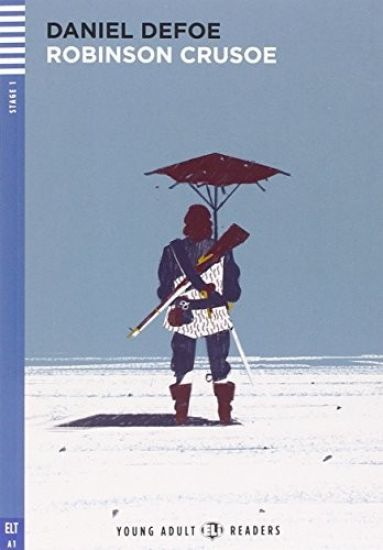
Efter ett skeppsbrott hamnar den engelske sjömannen Robinson isolerad på en öde ö i Karibien. Med honom lyckas även verktyg och förnödenheter spolas upp på stranden och han blir kvar på ön i 28 år. Boken om Robinson Crusoe skrevs 1719, och är en av de mest lästa romanerna genom tiderna. Här är den i en lättläst, varsamt bearbetad och förkortad version för att fler ska få möjlighet att läsa den. De skönlitterära texterna är illustrerade och varvas med läs- och skrivövningar samt fakta, bland annat om författaren.
Daniel Defoe was an English writer, journalist and spy, who gained enduring fame for his novel Robinson Crusoe. Defoe is notable for being one of the earliest practitioners of the novel and helped popularize the genre in Britain. In some texts he is even referred to as one of the founders, if not the founder, of the English novel. A prolific and versatile writer, he wrote over five hundred books, pamphlets, and journals on various topics (including politics, crime, religion, marriage, psychology and the supernatural). He was also a pioneer of economic journalism.
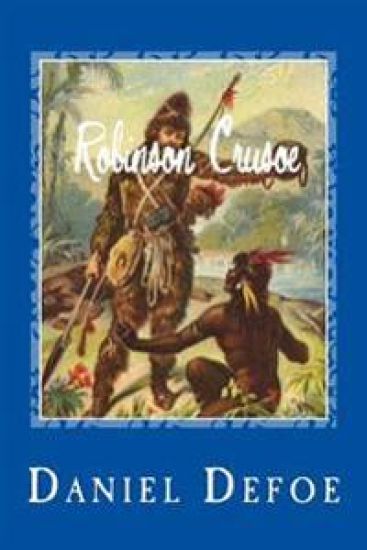
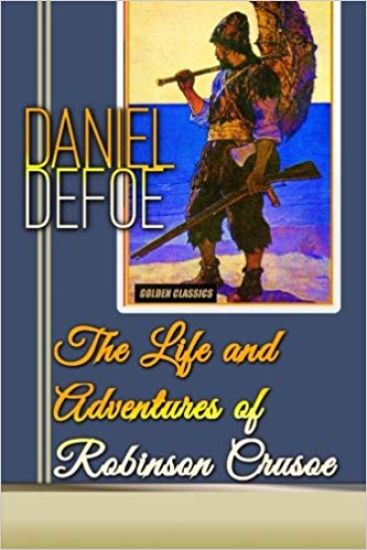
Classics for Your Collection: goo.gl/U80LCr --------- Crusoe sets sail from the Queen's Dock in Hull on a sea voyage in August 1651, against the wishes of his parents, who want him to pursue a career, possibly in law. After a tumultuous journey where his ship is wrecked in a storm, his lust for the sea remains so strong that he sets out to sea again. This journey, too, ends in disaster, as the ship is taken over by Sal pirates (the Sal Rovers) and Crusoe is enslaved by a Moor. Two years later, he escapes in a boat with a boy named Xury; a captain of a Portuguese ship off the west coast of Africa rescues him. The ship is en route to Brazil. Crusoe sells Xury to the captain. With the captain's help, Crusoe procures a plantation. Years later, Crusoe joins an expedition to bring slaves from Africa, but he is shipwrecked in a storm about forty miles out to sea on an island (which he calls the Island of Despair) near the mouth of the Orinoco river on 30 September 1659. He sees penguins and seals on his island. (However, seals and penguins live together in the Northern Hemisphere only around the Gal pagos Islands.) As for his arrival there, only he and three animals, the captain's dog and two cats, survive the shipwreck. Overcoming his despair, he fetches arms, tools and other supplies from the ship before it breaks apart and sinks. He builds a fenced-in habitat near a cave which he excavates. By making marks in a wooden cross, he creates a calendar. By using tools salvaged from the ship, and some he makes himself from "ironwood", he hunts, grows barley and rice, dries grapes to make raisins, learns to make pottery and raises goats. He also adopts a small parrot. He reads the Bible and becomes religious, thanking God for his fate in which nothing is missing but human society. More years pass and Crusoe discovers native cannibals, who occasionally visit the island to kill and eat prisoners. At first he plans to kill them for committing an abomination but later realizes he has no right to do so, as the cannibals do not knowingly commit a crime. He dreams of obtaining one or two servants by freeing some prisoners; when a prisoner escapes, Crusoe helps him, naming his new companion "Friday" after the day of the week he appeared. Crusoe then teaches him English and converts him to Christianity. After more natives arrive to partake in a cannibal feast, Crusoe and Friday kill most of the natives and save two prisoners. One is Friday's father and the other is a Spaniard, who informs Crusoe about other Spaniards shipwrecked on the mainland. A plan is devised wherein the Spaniard would return to the mainland with Friday's father and bring back the others, build a ship, and sail to a Spanish port. Before embarking for England, Crusoe shows the mutineers how he survived on the island and states that there will be more men coming. Crusoe leaves the island 19 December 1686 and arrives in England on 11 June 1687. He learns that his family believed him dead; as a result, he was left nothing in his father's will. Crusoe departs for Lisbon to reclaim the profits of his estate in Brazil, which has granted him much wealth. In conclusion, he transports his wealth overland to England to avoid travelling by sea. Friday accompanies him and, en route, they endure one last adventure together as they fight off famished wolves while crossing the Pyrenees. Scroll Up and Get Your Copy
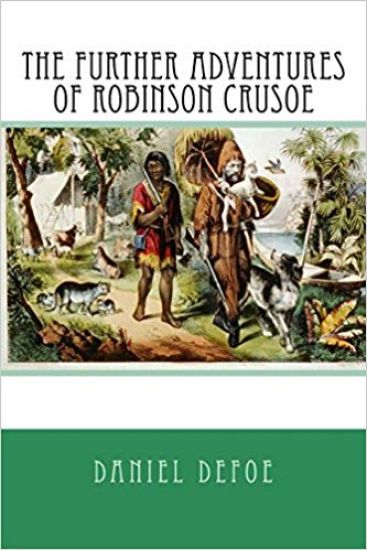
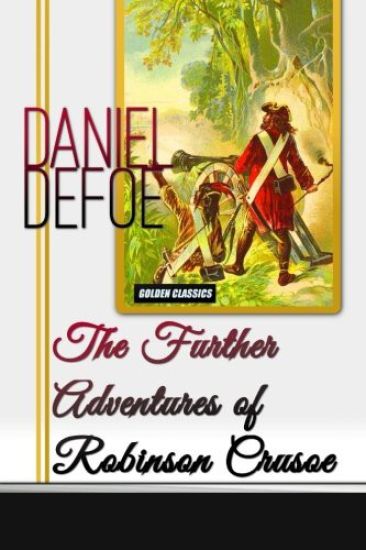
Classics for Your Collection: goo.gl/U80LCr --------- Defoe published the follow-up to his best-seller Robinson Crusoe just five months after the first book hit the streets, in a surprisingly modern marketing effort to cash in on the name recognition. Surprisingly modern, that is, given that both books were published in 1719, just one hundred years after Shakespeare and the King James Version of the Bible set the standard for the English language for the next 300 years. The book starts with the statement about Crusoe's marriage in England. He bought a little farm in Bedford and had three children: two sons and one daughter. Our hero suffered a distemper and a desire to see "his island." He could talk of nothing else, and one can imagine that no one took his stories seriously, except his wife. She told, in tears, "I will go with you, but I won't leave you." But in the middle of this felicity, Providence unhinged him at once, with the loss of his wife... In some ways more interesting than the original, the "further adventures" allows Defoe to set up some new scenarios: women and "savages" have been introduced into his paradise, giving him the opportunity to write about salvation and missionary zeal. Of course, since Defoe seemed to delight in contrarian views, he embodies the missionary zeal in the body of a French Catholic priest, in sharp contrast to his non-Conformist Protestantism. Defoe resolves the problem in strikingly modern terms pleasing to the true Biblical view. Written in much the same style the original Robinson Crusoe. Scroll Up and Grab Your Copy Timeless Classics for Your BookshelfClassic Books for Your Inspiration and Entertainment Visit Us at: goo.gl/0oisZU
The Life and Strange Surprising Adventures of Robinson Crusoe (of York, Mariner Who lived Eight and Twenty Years all alone in an un-inhabited Island on the Coast of America, near the Mouth of the Great River of Oroonoque; Having been cast on Shore by Shipwreck, where in all the Men perished but Himself. With An Account how he was at last as strangely deliver'd by Pyrates) is a novel by Daniel Defoe, first published in 1719 and sometimes regarded as the first novel...
Robinson Crusoe is one of the most famous works of the famous English writer Daniel Defoe, published in 1719 and considered the first English novel. It is a fictional autobiography of the protagonist, an English castaway who spends 28 years on a remote desert island. Probably the story was inspired by real events that occurred to Pedro Serrano and Alexander Selkirk, from where he would build, with a simple and authentic plot, a symbol of colonialism, perfect man and supreme morality.
Aventures de Robinson Crusoe / Daniel de Foe; illustrees par GavarniDate de l'edition originale: 1877Ce livre est la reproduction fidele d'une oeuvre publiee avant 1920 et fait partie d'une collection de livres reimprimes a la demande editee par Hachette Livre, dans le cadre d'un partenariat avec la Bibliotheque nationale de France, offrant l'opportunite d'acceder a des ouvrages anciens et souvent rares issus des fonds patrimoniaux de la BnF. Les oeuvres faisant partie de cette collection ont ete numerisees par la BnF et sont presentes sur Gallica, sa bibliotheque numerique. En entreprenant de redonner vie a ces ouvrages au travers d'une collection de livres reimprimes a la demande, nous leur donnons la possibilite de rencontrer un public elargi et participons a la transmission de connaissances et de savoirs parfois difficilement accessibles. Nous avons cherche a concilier la reproduction fidele d'un livre ancien a partir de sa version numerisee avec le souci d'un confort de lecture optimal. Nous esperons que les ouvrages de cette nouvelle collection vous apporteront entiere satisfaction. Pour plus d'informations, rendez-vous sur www.hachettebnf.fr