Kirjojen hintavertailu – 12 859 819 kirjaa ja 27 kauppaa

Kirjailija

Daniel Defoe

Kirjat ja teokset yhdessä paikassa: 1 684 kirjaa, julkaisuja vuosilta 1872–2027, suosituimpiin kuuluu A New Test Of The Church Of England's Loyalty. Vertaile teosten hintoja ja tarkista saatavuus suomalaisista kirjakaupoista.

1 684 kirjaa

Kirjojen julkaisuvuodet: 1872–2027.

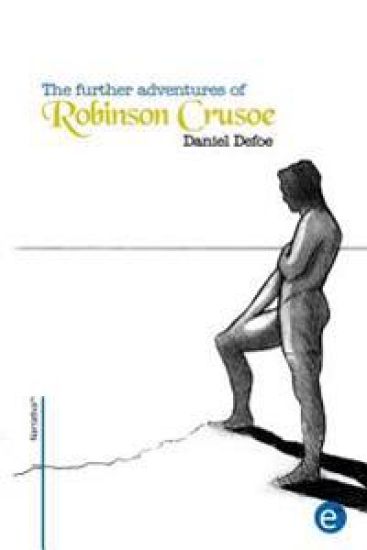
The further adventures of Robinson Crusoe

The further adventures of Robinson Crusoe

Daniel Defoe

Createspace Independent Publishing Platform
2015
nidottu
Crusoe (the family name corrupted from the German name "Kreutznaer") sets sail from the Queen's Dock in Hull on a sea voyage in August 1651, against the wishes of his parents, who want him to pursue a career, possibly in law. After a tumultuous journey where his ship is wrecked in a storm, his lust for the sea remains so strong that he sets out to sea again. This journey, too, ends in disaster as the ship is taken over by Sal pirates (the Sal Rovers) and Crusoe is enslaved by a Moor. Two years later, he escapes in a boat with a boy named Xury; a Captain of a Portuguese ship off the west coast of Africa rescues him. The ship is en route to Brazil. Crusoe sells Xury to the captain. With the captain's help, Crusoe procures a plantation. Years later, Crusoe joins an expedition to bring slaves from Africa but he is shipwrecked in a storm about forty miles out to sea on an island (which he calls the Island of Despair) near the mouth of the Orinoco river on 30 September 1659. The details of Crusoe's island were probably based on the Caribbean island of Tobago, since that island lies a short distance north of the Venezuelan coast near the mouth of the Orinoco river, in sight of Trinidad. 10] He observes the latitude as 9 degrees and 22 minutes north. He sees penguins and seals on his island. (However, there are no seals and penguins living together in the Northern Hemisphere, only around the Galapagos Islands.) As for his arrival there, only he and three animals, the captain's dog and two cats, survive the shipwreck. Overcoming his despair, he fetches arms, tools, and other supplies from the ship before it breaks apart and sinks. He builds a fenced-in habitat near a cave which he excavates. By making marks in a wooden cross, he creates a calendar. By using tools salvaged from the ship, and some he makes himself from "ironwood", he hunts, grows barley and rice, dries grapes to make raisins, learns to make pottery, and raises goats. He also adopts a small parrot. He reads the Bible and becomes religious, thanking God for his fate in which nothing is missing but human society. More years pass and Crusoe discovers native cannibals, who occasionally visit the island to kill and eat prisoners. At first he plans to kill them for committing an abomination but later realizes he has no right to do so, as the cannibals do not knowingly commit a crime.
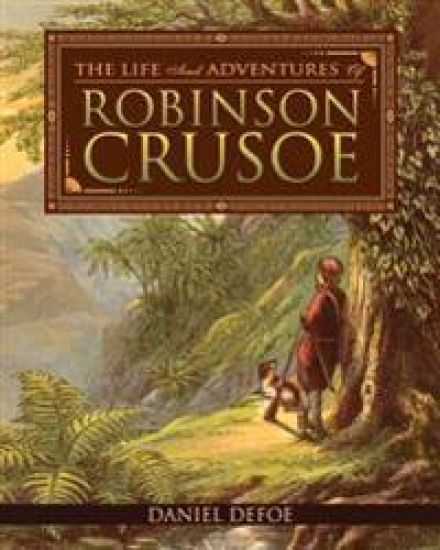
The adventures of Robinson Crusoe 1719

The adventures of Robinson Crusoe 1719

Daniel Defoe

Createspace Independent Publishing Platform
2015
nidottu
Crusoe (the family name corrupted from the German name "Kreutznaer") sets sail from the Queen's Dock in Hull on a sea voyage in August 1651, against the wishes of his parents, who want him to pursue a career, possibly in law. After a tumultuous journey where his ship is wrecked in a storm, his lust for the sea remains so strong that he sets out to sea again. This journey, too, ends in disaster as the ship is taken over by Sal pirates (the Sal Rovers) and Crusoe is enslaved by a Moor. Two years later, he escapes in a boat with a boy named Xury; a Captain of a Portuguese ship off the west coast of Africa rescues him. The ship is en route to Brazil. Crusoe sells Xury to the captain. With the captain's help, Crusoe procures a plantation. Years later, Crusoe joins an expedition to bring slaves from Africa but he is shipwrecked in a storm about forty miles out to sea on an island (which he calls the Island of Despair) near the mouth of the Orinoco river on 30 September 1659. The details of Crusoe's island were probably based on the Caribbean island of Tobago, since that island lies a short distance north of the Venezuelan coast near the mouth of the Orinoco river, in sight of Trinidad. 10] He observes the latitude as 9 degrees and 22 minutes north. He sees penguins and seals on his island. (However, there are no seals and penguins living together in the Northern Hemisphere, only around the Galapagos Islands.) As for his arrival there, only he and three animals, the captain's dog and two cats, survive the shipwreck. Overcoming his despair, he fetches arms, tools, and other supplies from the ship before it breaks apart and sinks. He builds a fenced-in habitat near a cave which he excavates. By making marks in a wooden cross, he creates a calendar. By using tools salvaged from the ship, and some he makes himself from "ironwood", he hunts, grows barley and rice, dries grapes to make raisins, learns to make pottery, and raises goats. He also adopts a small parrot. He reads the Bible and becomes religious, thanking God for his fate in which nothing is missing but human society. More years pass and Crusoe discovers native cannibals, who occasionally visit the island to kill and eat prisoners. At first he plans to kill them for committing an abomination but later realizes he has no right to do so, as the cannibals do not knowingly commit a crime.

Moll Flanders (French)

Moll Flanders (French)

Daniel Defoe

Createspace Independent Publishing Platform
2015
nidottu
La fortune litt raire de Robinson Cruso a t si prodigieuse que le nom de l'auteur, aux yeux du public, a presque disparu sous sa gloire. Si Daniel de Fo avait eu la pr caution de faire suivre sa signature du titre qu'il avait la c l brit , la Peste de Londres, Roxana, le Colonel Jacques, le Capitaine Singleton et Moll Flanders auraient fait leur chemin dans le monde. Mais il n'en a pas t ainsi. Pareille aventure tait arriv e Cervantes, apr s avoir crit Don Quichotte. Car on ne lut gu re ses admirables nouvelles, son th tre, sans compter Galath e et Persiles y Sigismunde.