Kirjojen hintavertailu – 12 875 628 kirjaa ja 26 kauppaa

Kirjailija

Daniel E. Lieberman

Kirjat ja teokset yhdessä paikassa: 6 kirjaa, julkaisuja vuosilta 2011–2026, suosituimpiin kuuluu Unser Körper. Vertaile teosten hintoja ja tarkista saatavuus suomalaisista kirjakaupoista.

6 kirjaa

Kirjojen julkaisuvuodet: 2011–2026.

Fed Up: A Hungry Person's Guide to the Story and Science of Food and Diets
Daniel E. Lieberman--bestselling author and chair of the Dept. of Human Evolutionary Biology at Harvard University--offers a dramatically fresh, novel, entertaining, and compassionate perspective on the utterly modern problem of deciding what to eat, including how to lose weight, by applying the lenses of evolution and anthropology to basic information on nutrition, digestion, and medical science. Fed Up weaves together three stories. First, Lieberman tells the fascinating history of food and diets. What did we evolve to eat, and how did farming and industrialization change our diet? He then describes his own experiences with the major 'big idea' diets that mirror this history. Beginning with raw foodism and the Paleo diet, progressing to the Mediterranean and Blue Zone diets, and then sampling more recent weight-loss diets such as Weight Watchers, Atkins, and Ornish. Finally, he uses an evolutionary anthropological framework to demystify and evaluate the multifaceted science behind these diets and their effects on health. Among the many questions Lieberman addresses are: What is in food, how do we digest it, and what are we adapted to eat? Why do we cook? How does food affect aging and how we get sick? Why is it so easy to gain weight but so hard to lose it? In addition to introducing readers to the fascinating history of food and the fundamentals of nutrition and digestion, it debunks and disentangles the confusing and divergent prescriptions we hear and read so often. Why are some big idea diets high-fat, others low-fat, and only some restrict calories? Why is no diet highly effective for weight loss? Beyond myth-busting, Fed Up concludes with scientifically sound guidance without being prescriptive or facile. It summarizes what we know and don't know about how people lose weight and prevent weight gain, and which diets make sense in the light of ancient adaptations, recent history, and today's food landscape. Lieberman also touches upon the evolutionary underpinnings behind what diets have been shown to help people age well while decreasing their risk of heart disease, cancer, metabolic syndrome, dementia, and depression. Food ought to be enjoyed and shared, but for many, choosing what to eat has become confusing and stressful. By telling the story and science of food and diets, Fed Up engagingly empowers readers with the information and concepts they need to make their own choices.
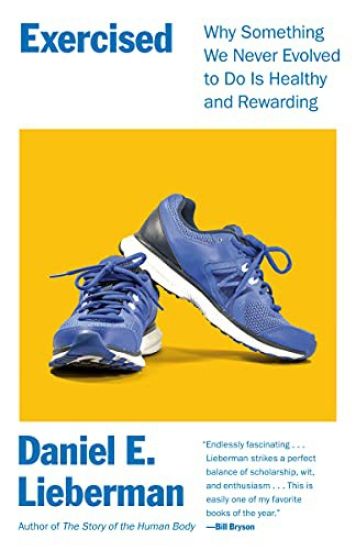
Exercised: Why Something We Never Evolved to Do Is Healthy and Rewarding

Exercised: Why Something We Never Evolved to Do Is Healthy and Rewarding

Daniel E. Lieberman

VINTAGE
2021
nidottu

Halvin toimitettuna 19,90 €

If exercise is healthy (so good for you ), why do many people dislike or avoid it? These engaging stories and explanations will revolutionize the way you think about exercising--not to mention sitting, sleeping, sprinting, weight lifting, playing, fighting, walking, jogging, and even dancing." Strikes a perfect balance of scholarship, wit, and enthusiasm." --Bill Bryson, New York Times best-selling author of The Body - If we are born to walk and run, why do most of us take it easy whenever possible?- Does running ruin your knees?- Should we do weights, cardio, or high-intensity training?- Is sitting really the new smoking?- Can you lose weight by walking?- And how do we make sense of the conflicting, anxiety-inducing information about rest, physical activity, and exercise with which we are bombarded? In this myth-busting book, Daniel Lieberman, professor of human evolutionary biology at Harvard University and a pioneering researcher on the evolution of human physical activity, tells the story of how we never evolved to exercise--to do voluntary physical activity for the sake of health. Using his own research and experiences throughout the world, Lieberman recounts without jargon how and why humans evolved to walk, run, dig, and do other necessary and rewarding physical activities while avoiding needless exertion. Exercised is entertaining and enlightening but also constructive. As our increasingly sedentary lifestyles have contributed to skyrocketing rates of obesity and diseases such as diabetes, Lieberman audaciously argues that to become more active we need to do more than medicalize and commodify exercise. Drawing on insights from evolutionary biology and anthropology, Lieberman suggests how we can make exercise more enjoyable, rather than shaming and blaming people for avoiding it. He also tackles the question of whether you can exercise too much, even as he explains why exercise can reduce our vulnerability to the diseases mostly likely to make us sick and kill us.
Ihmiskehon lyhyt historia

Ihmiskehon lyhyt historia

Daniel E. Lieberman

Into Kustannus
2021
nidottu

Halvin toimitettuna 21,90 €

Ihmiskehon lyhyt historia on innostava kertomus ihmiskunnan historiasta ja oman kehomme evoluutiosta. Ihminen ei ole aikoinaan kehittynyt tiettyjä olosuhteita varten, vaan kehomme on sekoitus ominaisuuksia, jotka olemme perineet lukuisilta edeltäviltä lajeilta. Tarkat heitot mahdolliseksi tekevä olkapäämme on peräisin Homo erectukselta ja poskihampaamme Australopithecus-lajeilta. Daniel E. Lieberman on maailman johtavia ihmisen evoluutiobiologian tutkijoita. Hän tarjoaa poikkeuksellisen katsauksen oman kehomme miljoonien vuosien mittaiseen kehitykseen ja sen tulevaisuuden näkymiin. Ihmisen elimistö on ainutlaatuinen, mutta kehomme ei ole ennättänyt sopeutua maanviljelyn, karjatalouden ja teollisen vallankumouksen synnyttämiin, evoluution näkökulmasta salamannopeisiin muutoksiin. Ihminen pystyy juoksemaan antiloopin uuvuksiin savannilla ja meidät on tarkoitettu liikkumaan paljon. Tästä syystä nykyiset elämäntapamme uhkaavat aiheuttaa eräänlaisen 'elintasosairauksien tsunamin'. Ongelmaan ei Liebermanin mukaan ole lääketieteellisiä, vaan ainoastaan kulttuurisia ja sosiaalisia ratkaisuja: meidän täytyy jälleen rakentaa yhteiskuntamme sellaiseksi, että se suosii omalle kehollemme soveltuvia elintapoja.
The Story of the Human Body: Evolution, Health, and Disease

The Story of the Human Body: Evolution, Health, and Disease

Daniel E. Lieberman

Knopf Doubleday Publishing Group
2014
nidottu

Halvin toimitettuna 22,20 €

A landmark book of popular science that gives us a lucid and engaging account of how the human body evolved over millions of years--with charts and line drawings throughout. "Fascinating.... A readable introduction to the whole field and great on the making of our physicality."--Nature In this book, Daniel E. Lieberman illuminates the major transformations that contributed to key adaptations to the body: the rise of bipedalism; the shift to a non-fruit-based diet; the advent of hunting and gathering; and how cultural changes like the Agricultural and Industrial Revolutions have impacted us physically. He shows how the increasing disparity between the jumble of adaptations in our Stone Age bodies and advancements in the modern world is occasioning a paradox: greater longevity but increased chronic disease. And finally--provocatively--he advocates the use of evolutionary information to help nudge, push, and sometimes even compel us to create a more salubrious environment and pursue better lifestyles.
The Evolution of the Human Head

The Evolution of the Human Head

Daniel E. Lieberman

The Belknap Press
2011
sidottu
In one sense, human heads function much like those of other mammals. We use them to chew, smell, swallow, think, hear, and so on. But, in other respects, the human head is quite unusual. Unlike other animals, even our great ape cousins, our heads are short and wide, very big brained, snoutless, largely furless, and perched on a short, nearly vertical neck. Daniel E. Lieberman sets out to explain how the human head works, and why our heads evolved in this peculiarly human way. Exhaustively researched and years in the making, this innovative book documents how the many components of the head function, how they evolved since we diverged from the apes, and how they interact in diverse ways both functionally and developmentally, causing them to be highly integrated. This integration not only permits the head’s many units to accommodate each other as they grow and work, but also facilitates evolutionary change. Lieberman shows how, when, and why the major transformations evident in the evolution of the human head occurred. The special way the head is integrated, Lieberman argues, made it possible for a few developmental shifts to have had widespread effects on craniofacial growth, yet still permit the head to function exquisitely. This is the first book to explore in depth what happened in human evolution by integrating principles of development and functional morphology with the hominin fossil record. The Evolution of the Human Head will permanently change the study of human evolution and has widespread ramifications for thinking about other branches of evolutionary biology.