Kirjojen hintavertailu – 12 903 725 kirjaa ja 27 kauppaa

Kirjailija

Daniel E. Sutherland

Kirjat ja teokset yhdessä paikassa: 14 kirjaa, julkaisuja vuosilta 1988–2026, suosituimpiin kuuluu Whistler’s Legacy. Vertaile teosten hintoja ja tarkista saatavuus suomalaisista kirjakaupoista.

14 kirjaa

Kirjojen julkaisuvuodet: 1988–2026.

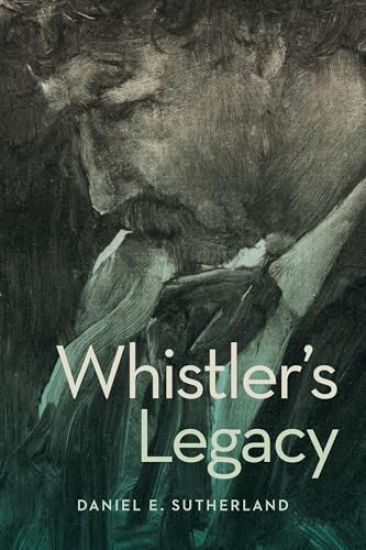
Whistler’s Legacy

Whistler’s Legacy

Daniel E. Sutherland

Pennsylvania State University Press
2026
sidottu
Few artists were as determined to shape their own legacy as James Abbott McNeill Whistler. Fiercely protective of his reputation, he denounced would-be biographers, published The Gentle Art of Making Enemies as his own autobiography, and destroyed works he thought unworthy of his genius, declaring more than once that “to destroy is to survive.” Yet despite his efforts at control, Whistler’s legacy has proved as unpredictable and contentious as the man himself. In this engagingly written book, Daniel E. Sutherland traces the turbulent fortunes of Whistler’s reputation since his death in 1903. He examines the friends, relatives, and acquaintances who first shaped the story of Whistler’s life and art and shows how three defining issues—the cultivated image of the dandy, his reputation for quarrelsomeness, and the origins of the nocturnes—came to dominate critical debates. Along the way, Sutherland challenges entrenched assumptions by questioning and often correcting the reasons behind Whistler’s controversial standing. He also demonstrates how these narratives have evolved through successive generations of critics, curators, and scholars, while seeping into popular culture as well. Offering the first sustained study of Whistler’s contested posthumous reputation, this book makes a significant contribution to the field of nineteenth-century art and biography. It will appeal to art historians, museum professionals, and scholars of modernism, as well as any admirers of Whistler eager to understand how and why he remains such a polarizing figure today.
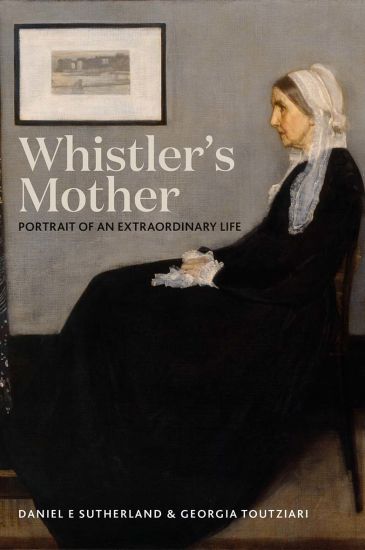
Whistler's Mother

Whistler's Mother

Daniel E. Sutherland; Georgia Toutziari

Yale University Press
2018
sidottu
Discover the extraordinary woman behind one of the most famous images of motherhood in Western art Judged by the portrait Arrangement in Gray and Black No. 1 (1871), painted by her son James McNeill Whistler, Anna Whistler (1804–1881) appears to have been a pious, unassuming, domestic woman. This characterization, however, is far from the whole truth. Anna was born in the slaveholding South, raised principally in Brooklyn, New York, and resided for many years in both Russia and Great Britain, and her life was filled with adventure and excitement. The authors’ unprecedented use of her private diaries and correspondence results in a crisp biographical rendering that reveals a resilient, vibrant, bright, and deeply engaged woman. In her writings, Anna made shrewd observations about the social, cultural, artistic, and political issues of her era, which was one of enormous and near-constant change. She knew and interacted with an astonishing array of people, from Russian peasants and American farmers to Robert E. Lee and Giuseppe Mazzini. She also raised one of the finest artists of the nineteenth century. As her son made his way in the art world, Anna became his unofficial agent, promoting his work, managing his finances, and advising him on the best opportunities for success. That he, in turn, should immortalize her as a global celebrity and international icon of motherhood was only appropriate.
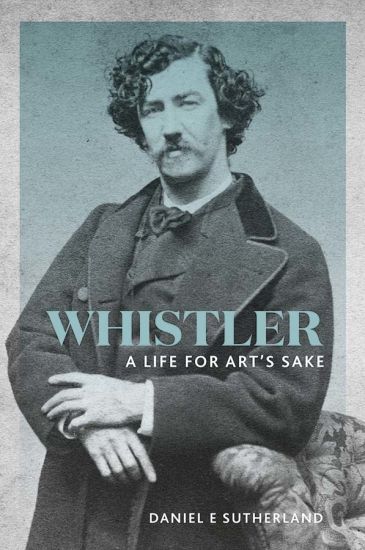
Whistler

Whistler

Daniel E. Sutherland

Yale University Press
2018
pokkari
A major new biography of James McNeill Whistler, one of most complex, intriguing, and important of America’s artists This engaging personal history dispels the popular notion of James McNeill Whistler (1834–1903) as merely a combative, eccentric, and unrelenting publicity seeker. The Whistler revealed in these beautifully illustrated pages is an intense, introspective, and complex man, plagued by self-doubt and haunted by an endless pursuit of perfection in his painting and drawing. “[Sutherland] seeks to get behind the public Whistler . . . never judging or condescending to his subject. . . . The portrait of Whistler that emerges is complex and mysterious . . . a measured and scholarly account of an extraordinary life.”—Ruth Scurr, Wall Street Journal “The first comprehensive biography of Whistler in at least a generation. . . . Sutherland skillfully captures Whistler’s ambition, tenacity, and insecurity and presents his life in a narrative that does justice to both his triumphs and his failures.”—Eleanor Jones Harvey, American Scholar
The Guerrilla Hunters

The Guerrilla Hunters

Daniel E. Sutherland; Kenneth W. Noe

Louisiana State University Press
2017
sidottu
Throughout the Civil War, irregular warfare, including the use of hit-and-run assaults, ambushes, and raiding tactics, thrived in localized guerrilla fights within the Border States and the Confederate South. The Guerrilla Hunters offers a comprehensive overview of the tactics, motives, and actors in these conflicts, from the Confederate-authorised Partisan Rangers, a military force directed to spy on, harass, and steal from Union forces, to men like John Gatewood, who deserted the Confederate army in favour of targeting Tennessee civilians believed to be in sympathy with the Union. With a foreword by Kenneth W. Noe and an afterword by Daniel E. Sutherland, this collection represents an impressive array of the foremost experts on guerrilla fighting in the Civil War. Providing new interpretations of this long-misconstrued aspect of warfare, these scholars go beyond the conventional battlefield to examine the stories of irregular combatants across all theaters of the Civil War, bringing geographic breadth to what is often treated as local and regional history. The Guerrilla Hunters shows that instances of unorthodox combat, once thought isolated and infrequent, were numerous, and many clashes defy easy categorisation. Novel methodological approaches and a staggering diversity of research and topics allow this volume to support multiple areas for debate and discovery within this growing field of Civil War scholarship.
American Civil War Guerrillas

American Civil War Guerrillas

Daniel E. Sutherland

Praeger Publishers Inc
2013
sidottu
Focusing on a little-known yet critical aspect of the American Civil War, this must-read history illustrates how guerrilla warfare shaped the course of the war and, to a surprisingly large extent, determined its outcome. The Civil War is generally regarded as a contest of pitched battles waged by large armies on battlefields such as Gettysburg. However, as American Civil War Guerrillas: Changing the Rules of Warfare makes clear, that is far from the whole story. Both the Union and Confederate armies waged extensive guerrilla campaigns—against each other and against civilian noncombatants. Exposing an aspect of the War Between the States many readers will find unfamiliar, this book demonstrates how the unbridled and unexpectedly brutal nature of guerrilla fighting profoundly affected the tactics and strategies of the larger, conventional war. The reasons for the rise and popularity of guerrilla warfare, particularly in the South and lower Midwest, are examined, as is the way each side dealt with its consequences. Guerrilla warfare's impact on the outcome of the conflict is analyzed as well. Finally, the role of memory in shaping history is touched on in an epilogue that explores how veteran Civil War guerrillas recalled their role in the war.
Seasons of War

Seasons of War

Daniel E. Sutherland

The Free Press
2013
pokkari
The story of Culpeper County, Virginia, is a unique one in Civil War history. Nestled in one of the South’s most strategically important locations, it was occupied by the Northern army, recaptured by the Confederacy, and finally ceded to the North. Told largely through diaries, papers, and correspondence of residents, common infantrymen, and such eminent personalities as Robert E. Lee, Walt Whitman, Ulysses S. Grant, Clara Barton, and Stonewall Jackson, all of whom spent time in Culpeper, this story wonderfully captures both the intimacy and grandeur of war. Seasons of War moves from the primitive squalor of filled hospitals and the daily indignities of a soldier’s life to the editorials of a local newspaperman and the struggles of women and children left to the mercy of an occupying and hostile army. While famous Culpeper visitors like Lee and Whitman compose dispatches and lyric poetry, private citizens mourn their dead and defend their homes. Here are the very personal aspirations, losses, and sometimes gruesome banalities of an unforgettable American war. Sutherland’s account of the war is unlike any other. Both a military and a social history, it details the life of a single Confederate community without losing sight of the titanic struggle of a nation divided. It allows readers to join the councils of Lee and Grant while sharing the letters of young couples separated by war. We frolic with the fun-loving Jeb Stuart, experience the confused terror of men in battle, feel the anguish of civilians surrounded by contending armies, observe the tensions between neighbors with different loyalties, and sense the joy of liberated slaves. Written in a daring style that thrusts readers into the vortex of war, Seasons of War tells the story of a place and a nation. It is a tale by turns heroic and mean, hopeful and bleak, humorous and grave. It is a story of the American people—Northern and Southern, white and black, free and unfree—at the defining hour of their history.
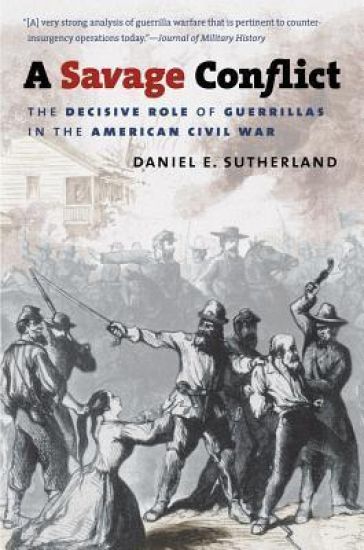
A Savage Conflict

A Savage Conflict

Daniel E. Sutherland

The University of North Carolina Press
2013
nidottu
While the Civil War is famous for epic battles involving massive armies engaged in conventional warfare, A Savage Conflict is the first work to treat guerrilla warfare as critical to understanding the course and outcome of the Civil War. Daniel Sutherland argues that irregular warfare took a large toll on the Confederate war effort by weakening support for state and national governments and diminishing the trust citizens had in their officials to protect them.
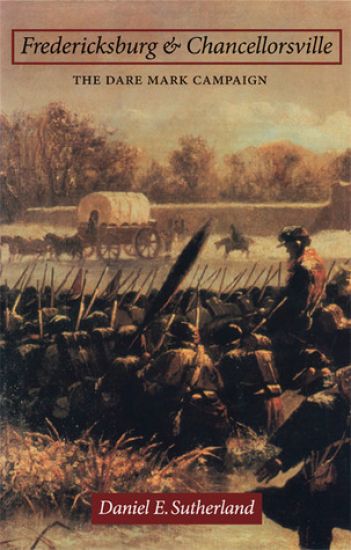
Fredericksburg and Chancellorsville

Fredericksburg and Chancellorsville

Daniel E. Sutherland

University of Nebraska Press
2010
pokkari
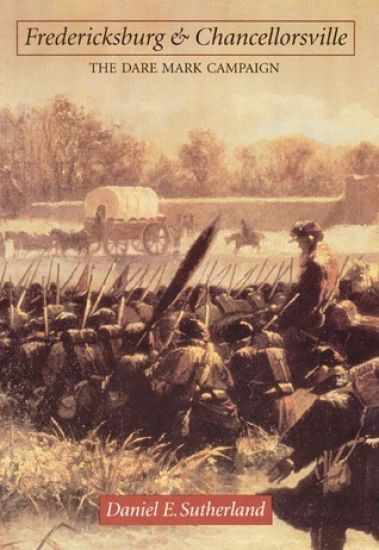
All too often, histories of Civil War battles concentrate on the events of the battle, ignoring the larger campaign and undervaluing the battle's impact on subsequent events. This work reveals and explains the vital connection between two epic battles: Fredericksburg and Chancellorsville. The staggering Confederate victories at Fredericksburg and Chancellorsville are seldom treated as part of a coherent strategy, and they have never been presented as a single campaign. Yet, analyzed as a whole, the two battles go far to explain Lee's military success. At the same time, the failures and bungling that characterized Federal efforts are more intelligible when seen in the light of the political and military circumstances that thrust unprepared and inadequate Union commanders into predicaments they little understood. The eastern theater in the winter of 1862 and spring of 1863 witnessed sudden shifts in northern command and strategy and increasing political intervention. Lincoln despaired of McClellan and sought a general more willing to fight; whatever the ultimate result of this search, it provided opportunities the canny Lee was willing and able to exploit.
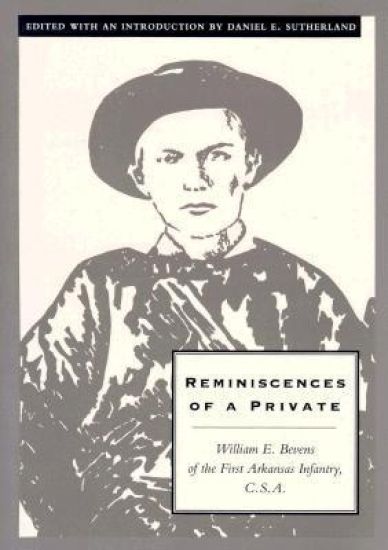
Reminiscences of a Private

Reminiscences of a Private

Daniel E. Sutherland

University of Arkansas Press
1999
sidottu
Reminiscences of a Private is William Bevens’s personal chronicle of his participation in such famous Civil War battles as Shiloh, Chickamauga, Atlanta, and Nashville. There is no supernal heroism here, no pretension, no grandiose analysis. Bevens is neither introspective nor philosophical, and he rarely dwells on the larger issues of the war. He concerns himself with what mattered to him as a common foot soldier. There are longer and fuller accounts of the war; however, few are as honest or as direct as this frank and forthright journal. By confining his contributions as editor to filling gaps in Bevens’s narrative, to correcting some misspellings, and to providing dates and explanatory notes, Daniel Sutherland allows Bevens to tell his story of a young Arkansan at war. His unassuming voice will speak to all readers with compelling candor.
Fredericksburg and Chancellorsville

Fredericksburg and Chancellorsville

Daniel E. Sutherland

University of Nebraska Press
1998
sidottu
All too often, histories of Civil War battles concentrate on the events of the battle, ignoring the larger campaign and undervaluing the battle's impact on subsequent events. This work reveals and explains the vital connection between two epic battles: Fredericksburg and Chancellorsville. The staggering Confederate victories at Fredericksburg and Chancellorsville are seldom treated as part of a coherent strategy, and they have never been presented as a single campaign. Yet, analyzed as a whole, the two battles go far to explain Lee's military success. At the same time, the failures and bungling that characterized Federal efforts are more intelligible when seen in the light of the political and military circumstances that thrust unprepared and inadequate Union commanders into predicaments they little understood. The eastern theater in the winter of 1862 and spring of 1863 witnessed sudden shifts in northern command and strategy and increasing political intervention. Lincoln despaired of McClellan and sought a general more willing to fight; whatever the ultimate result of this search, it provided opportunities the canny Lee was willing and able to exploit. Daniel E. Sutherland is a professor of history at the University of Arkansas. His books include "The Confederate Carpetbaggers" and the award-winning "Seasons of War: The Ordeal of a Confederate Community, 1861-1865".
The Emergence of Total War

The Emergence of Total War

Daniel E. Sutherland; Grady McWhiney

McWhiney Foundation Press
1998
nidottu
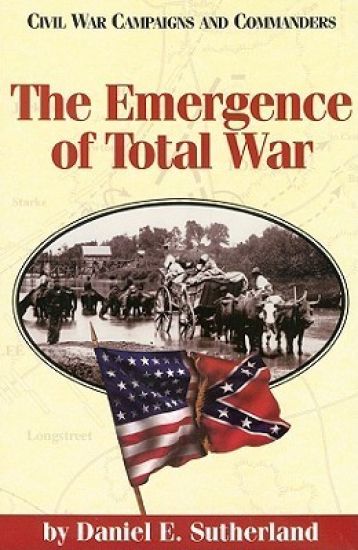
Summer 1862. The Confederacy has suffered several important defeats in the Western Theater and faces a serious threat to Richmond in the East. Federal politicians and citizenry, perplexed that fighting has continued into a second year, want an end to the war. Abraham Lincoln asks his battlefield commanders to develop a winning strategy in the East, a strategy that will not spare resources, terrain, nor the well being of private citizens--a strategy that would come to be known as "total war." The plan, implemented in 1862, proves a failure, mostly because of the man charged with carrying it out: Gen. John Pope. Pope's defeat is the story of the Second Manassas campaign. While Pope's demise gives new life to the Confederacy and emboldens Robert E. Lee to invade Maryland, Lincoln remains convinced that a strategy of total war represents the North's best chance for victory. In 1864-1865, Generals Ulysses S. Grant and William T. Sherman will prove him right. A vivid account of how Civil War campaigns foreshadowed total war.
The Confederate Carpetbaggers

The Confederate Carpetbaggers

Daniel E. Sutherland

Louisiana State University Press
1988
nidottu
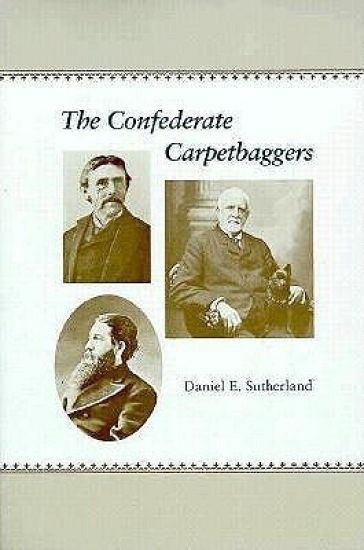
Following the American Civil War, many former Confederates fled their southern homeland. Some became expatriates, settling in Canada, Europe, Mexico, South America, and Asia. Others mi-grated to the western United States, seeking fresh starts in the newly forming territories. But a third, somewhat more audacious group invaded the land of their Yankee foe. Settling in northeastern and midwestern towns and cities, these ""Confederate carpetbaggers"" believed that northern economic and educational opportunities offered the quickest means of rebuilding shattered fortunes and lives. In The Confederate Carpetbaggers, Daniel E. Sutherland examines the lives of those southern men and women who moved north between 1865 and 1880. Dealing with their various motives for moving north, problems of adaptation to northern society, attempts to find new identities, and efforts to maintain personal ties with other Confederates in the North as well as with old friends in the South, Sutherland provides a detailed and illuminating account of the contributions these displaced southerners made to the financial, literary, artistic, and political life of the nation. The principal characters in Sutherland's story are Burton Norvell Harrison, who served as private secretary to Jefferson Davis, and his wife, Constance Cary Harrison, a popular belle in wartime Richmond. In 1867 the Harrisons moved to New York City, where they remained for four decades. Their exploits, beliefs, and emotions serve as a prism through which to view the successes and failures of other Confederate carpetbaggers. Although some emigrants returned to the South after brief, unpleasant northern sojourns, others spent the remainder of their lives in the North. Some became millionaires; others suffered poverty and ill health. Some became famous; most settled into tolerable, unobtrusive lives as productive citizens in a reunited nation. Sutherland's study breaks new and significant ground in explaining the complexities of Reconstruction and late nineteenth-century American life. Traditional approaches to Reconstruction history concentrate on the South, particularly on the plight of freedmen and on the political battle for control of state governments. Some scholars have made passing references to the most prominent Confederates in the North, but until now no one has explored the lives of these men and women in detail. In this entertaining and well-written account, Sutherland suggests that while the Confederate carpetbaggers were relatively few in number, they made significant contributions to American progress in the years following the war, contributions they might not have made had they remained in the South.