Kirjojen hintavertailu – 12 903 725 kirjaa ja 27 kauppaa

Kirjailija

Daniel Gros

Kirjat ja teokset yhdessä paikassa: 8 kirjaa, julkaisuja vuosilta 1992–2025, suosituimpiin kuuluu Banking Union as a Shock Absorber. Vertaile teosten hintoja ja tarkista saatavuus suomalaisista kirjakaupoista.

8 kirjaa

Kirjojen julkaisuvuodet: 1992–2025.

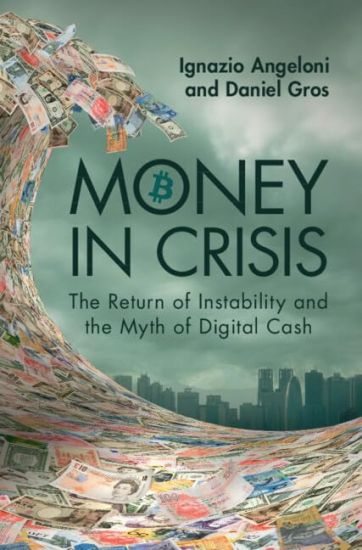
Money In Crisis

Money In Crisis

Ignazio Angeloni; Daniel Gros

Cambridge University Press
2025
sidottu
From its origins in ancient Mesopotamia, through the advent of coinage in ancient Greece and Rome and the invention of paper currency in medieval China, the progress of finance and money has been driven by technological developments. The great technological change of our age in relation to money centres on the creation of digital money and digital payment systems. Money in Crisis explains what the digital revolution in money is, why it matters and how its potential benefits can be realized or undermined. It explores the history, theory and evolving technologies underlying money and warns us that money is in crisis: under threat from inflation, financial instability, and digital wizardry. It discusses how modern forms of digital money (crypto, central bank digital currencies) fit into monetary history and explains the benefits and risks of recent innovations from an economic, political, social and cultural viewpoint.
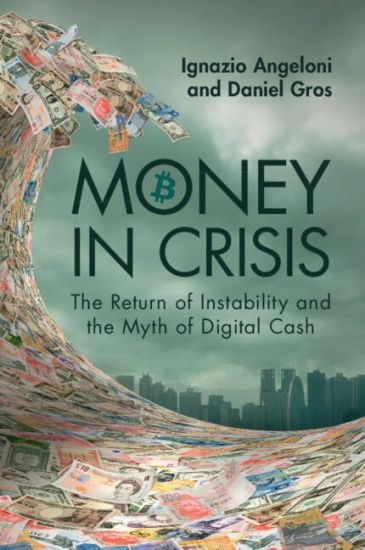
Money In Crisis

Money In Crisis

Ignazio Angeloni; Daniel Gros

Cambridge University Press
2025
pokkari

Halvin toimitettuna 36,30 €

From its origins in ancient Mesopotamia, through the advent of coinage in ancient Greece and Rome and the invention of paper currency in medieval China, the progress of finance and money has been driven by technological developments. The great technological change of our age in relation to money centres on the creation of digital money and digital payment systems. Money in Crisis explains what the digital revolution in money is, why it matters and how its potential benefits can be realized or undermined. It explores the history, theory and evolving technologies underlying money and warns us that money is in crisis: under threat from inflation, financial instability, and digital wizardry. It discusses how modern forms of digital money (crypto, central bank digital currencies) fit into monetary history and explains the benefits and risks of recent innovations from an economic, political, social and cultural viewpoint.

Banking Union as a Shock Absorber

Banking Union as a Shock Absorber

Daniel Gros; Ansgar Belke

Rowman Littlefield International
2015
sidottu
The Great Financial Crisis, which started in 2007-08, was originally called the ‘sub-prime’ crisis because its origins could be traced to excessive lending in the real estate sector in the US, concentrated mostly in sunbelt states like Nevada, Florida and California. There were similar pockets of excess lending for housing in Europe, notably in Ireland and Spain. But a key difference emerged later: in Ireland and Spain, the local banking systems almost collapsed and the governments experienced severe financial stress with large macroeconomic costs. Nothing similar happened in the US. The local financial system remained fully functional and the local governments did not experience increased financial stress in the states with the biggest real estate booms, like Nevada or Florida. This book illustrates how the structure of the US banking market and the existence of federal institutions allowed regional financial shocks to be absorbed at the federal level in the US, thus avoiding local financial crisis. The authors argue that the experience of the US shows the importance of a ‘banking union’ to avoid severe regional (national) financial dislocation in the wake of regional boom and bust cycles. They also discuss the extent to which the institutions of the partial banking union, now in the process of being created for the euro area, should be able to increase its capacity to deal with future regional boom and bust cycles, thereby stabilising the single currency.
Banking Union as a Shock Absorber

Banking Union as a Shock Absorber

Daniel Gros; Ansgar Belke

Rowman Littlefield International
2015
nidottu
The Great Financial Crisis, which started in 2007-08, was originally called the ‘sub-prime’ crisis because its origins could be traced to excessive lending in the real estate sector in the US, concentrated mostly in sunbelt states like Nevada, Florida and California. There were similar pockets of excess lending for housing in Europe, notably in Ireland and Spain. But a key difference emerged later: in Ireland and Spain, the local banking systems almost collapsed and the governments experienced severe financial stress with large macroeconomic costs. Nothing similar happened in the US. The local financial system remained fully functional and the local governments did not experience increased financial stress in the states with the biggest real estate booms, like Nevada or Florida. This book illustrates how the structure of the US banking market and the existence of federal institutions allowed regional financial shocks to be absorbed at the federal level in the US, thus avoiding local financial crisis. The authors argue that the experience of the US shows the importance of a ‘banking union’ to avoid severe regional (national) financial dislocation in the wake of regional boom and bust cycles. They also discuss the extent to which the institutions of the partial banking union, now in the process of being created for the euro area, should be able to increase its capacity to deal with future regional boom and bust cycles, thereby stabilising the single currency.
Economic Transition in Central and Eastern Europe

Economic Transition in Central and Eastern Europe

Daniel Gros; Alfred Steinherr

Cambridge University Press
2004
sidottu
Analysing the key problems facing the transition countries in Central and Eastern Europe, this accessible book describes the legacy of the central planners, the progress achieved so far and the need for further reforms. It documents the outstanding successes and failures, and analyses why certain approaches to transition have worked and others have not. It tests where transition is over and shows how some countries have graduated from 'transition' to 'integration' through their efforts to join the European Union (EU). It discusses the costs and benefits of the eastern enlargement of the EU. The specific experiences of German unification, the Soviet Union's disintegration, and Russia's complex reforms are examined, as are the specific issues that need to be addressed in the Balkans. The book concludes by indicating how the expanding EU could help the poor performers through inclusion in a continent-wide integrated economic area.
Economic Transition in Central and Eastern Europe

Economic Transition in Central and Eastern Europe

Daniel Gros; Alfred Steinherr

Cambridge University Press
2004
pokkari
Analysing the key problems facing the transition countries in Central and Eastern Europe, this accessible book describes the legacy of the central planners, the progress achieved so far and the need for further reforms. It documents the outstanding successes and failures, and analyses why certain approaches to transition have worked and others have not. It tests where transition is over and shows how some countries have graduated from 'transition' to 'integration' through their efforts to join the European Union (EU). It discusses the costs and benefits of the eastern enlargement of the EU. The specific experiences of German unification, the Soviet Union's disintegration, and Russia's complex reforms are examined, as are the specific issues that need to be addressed in the Balkans. The book concludes by indicating how the expanding EU could help the poor performers through inclusion in a continent-wide integrated economic area.
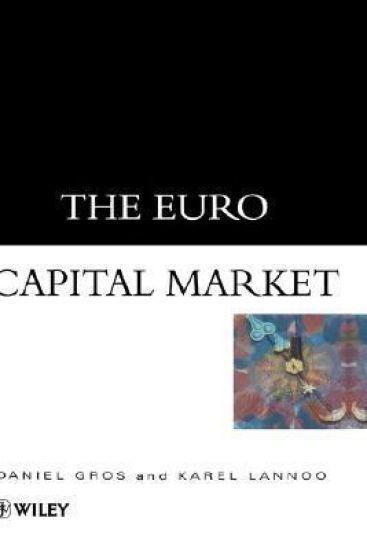
The Euro Capital Market

The Euro Capital Market

Daniel Gros; Karel Lannoo

John Wiley Sons Inc
1999
sidottu
The start of monetary union on 1 January 1999 launched a process of radical change in the structure of capital markets in Europe. Whereas previously, Europe had been fragmented into many diverse national markets, a single Euro capital market is now emerging. This book focuses on the long-term impact that the introduction of the euro will have on European capital markets and spells out implications for the financial sector and the wider economy. It discusses what further steps need to be taken to achieve a fully integrated market. In particular, the book examines:*The institutional and regulatory framework for European capital markets*The structure of European capital markets on the eve of EMU*The regional differences and the contrasts with the US capital market*The central role played by banks in European capital markets and the likelihood that a more market-based system may emerge*The implications of EMU for organised securities markets*The consequences for governance and policy, and more; in particular for the taxation of savings income, securities market regulation and financial supervision. Foreword by Dr Padoa-Schioppa, European Central Bank
One Market, One Money

One Market, One Money

Michael Emerson; Daniel Gros; Alexander Italianer

Oxford University Press
1992
nidottu
This first volume of two on European Monetary Union (EMU) is based on the work, and gives the view, of the Commission of the European Communities. It provides a general introduction to the issues. The EMU project is outlined and its benefits and costs examined, including the implications for public finances and the impact on the international system. The author also looks at transitional issues in general, at national perspectives, transaction costs, and macroeconomic model simulations.