Kirjojen hintavertailu – 12 903 725 kirjaa ja 27 kauppaa

Kirjailija

Daniel Gross

Kirjat ja teokset yhdessä paikassa: 16 kirjaa, julkaisuja vuosilta 1996–2026, suosituimpiin kuuluu The Generations of Corning. Vertaile teosten hintoja ja tarkista saatavuus suomalaisista kirjakaupoista.

Nimi esiintyy myös muodoissa: Daniel Groß

16 kirjaa

Kirjojen julkaisuvuodet: 1996–2026.

Linear Algebra

Linear Algebra

Richard Bronson; Gabriel B. Costa; John T. Saccoman; Daniel Gross

ELSEVIER SCIENCE PUBLISHING CO INC
2023
nidottu
Linear Algebra: Algorithms, Applications, and Techniques, Fourth Edition offers a modern and algorithmic approach to computation while providing clear and straightforward theoretical background information. The book guides readers through the major applications, with chapters on properties of real numbers, proof techniques, matrices, vector spaces, linear transformations, eigen values, and Euclidean inner products. Appendices on Jordan canonical forms and Markov chains are included for further study. This useful textbook presents broad and balanced views of theory, with key material highlighted and summarized in each chapter. To further support student practice, the book also includes ample exercises with answers and hints.
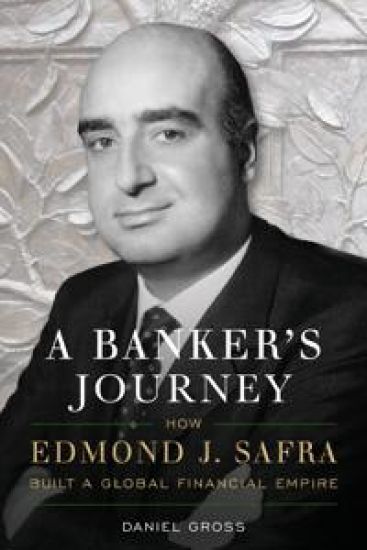
A Banker's Journey

A Banker's Journey

Daniel Gross

Diversion Books
2022
sidottu
The remarkable life and career of Edmond J. Safra: the most successful banker of the second half of the 20th century; protector of the global Sephardic Jewish community; philanthropist; and collector. From the age of fifteen to a career spanning Europe, and North and South America, across six languages, Safra built a global financial empire while staying true to his family legacy. Who was Edmond J. Safra? The greatest banker of his generation, in the estimation of a former World Bank President. The founder of four massive financial institutions on three continents, and a proud child of Beirut's Jewish quarter. An innovative avatar of financial globalization, and a faithful heir to a tradition of old-world banking. The leading champion and protector of the Sephardic diaspora. In A Banker's Journey, financial journalist and historian Daniel Gross, who, like Safra, traces his heritage to Aleppo, Syria, reconstructs the public life of an intensely private man. With exclusive access to Safra's personal archives, Gross tracks the banker's remarkable journey from Beirut to Milan, São Paulo, Geneva, and New York—to the pinnacle of global finance. Edmond Safra was fifteen in 1947, when his father sent him to establish a presence in Milan, Italy. Fluent in six languages, and with an eye for value, managing risk, and personal potential, Safra was in perpetual motion until his tragic death in 1999. The modern, global financial empire he built was based on timeless principles: a banker must protect his depositors and avoid excessive leverage and risk. In an age of busts and bailouts, Safra posted remarkable returns while rarely suffering a credit loss. From a young age, Safra assumed the mantle of leadership in the Syrian-Lebanese Jewish community, providing personal aid, supporting the communities that formed in exile, and championing Sephardic religious and educational efforts in Israel and around the world. Edmond J. Safra's life of achievement in the twentieth century offers enduring lessons for those seeking to make their way in the twenty-first century. He inspired generations to make the world a better place.
Talent

Talent

Tyler Cowen; Daniel Gross

John Murray Press
2022
sidottu

Halvin toimitettuna 28,50 €

Vital and impactful strategies on how to spot, assess, woo, and retain highly talented people. Find the people really capable of making a difference!
Talent: How to Identify Energizers, Creatives, and Winners Around the World
The art and science of talent search: how to spot, assess, woo, and retain highly talented people. How do you find talent with a creative spark? To what extent can you predict human creativity, or is human creativity something irreducible before our eyes, perhaps to be spotted or glimpsed by intuition, but unique each time it appears? Obsessed with these questions, renowned economist Tyler Cowen and venture capitalist and entrepreneur Daniel Gross set out to study the art and science of finding talent at the highest level: the people with the creativity, drive, and insight to transform an organization and make everyone around them better. Cowen and Gross guide the reader through the major scientific research areas relevant for talent search, including how to conduct an interview, how much to weight intelligence, how to judge personality and match personality traits to jobs, how to evaluate talent in online interactions such as Zoom calls, why talented women are still undervalued and how to spot them, how to understand the special talents in people who have disabilities or supposed disabilities, and how to use delegated scouts to find talent. Talent appreciation is an art, but it is an art you can improve through study and experience. Identifying underrated, brilliant individuals is one of the simplest ways to give yourself an organizational edge, and this is the book that will show you how to do that. Talent is both for people searching for talent and for those who wish to be searched for, found, and discovered.
Better, Stronger, Faster

Better, Stronger, Faster

Daniel Gross

The Free Press
2014
pokkari
Daniel Gross, Yahoo! financial columnist and author of Dumb Money, offers a refreshingly optimistic take on our nation’s economic prospects, examining the positive trends that point to a better, stronger future. Financial meltdown, a deep recession, and political polarization—combined with strong growth outside the U. S.—have led to a global bubble of pessimism surrounding the U. S. and its economic prospects. Bloated with debt, outpaced by China, India, and other emerging markets, the U. S. has been left for dead as an economic force. But, Daniel Gross, widely respected for his Newsweek and Slate coverage of the crash and the recovery, shows that much of the talk about decline is misplaced. In the wake of the crash, rather than accept the inevitability of a Japan-style lost decade, America’s businesses and institutions tapped into the very strengths that built the nation’s economy into the global powerhouse in the first place: speed, ingenuity, adaptability, pragmatism, entrepreneurship, and, most significantly, an ability to engage with the world. As the U. S. wallowed in self-pity, the world continued to see promise in what America has to offer—buying exports, investing in the U. S., and adapting American companies and business models as their own. Global growth, it turns out, is not a zero-sum game. These same attributes can propel the world’s largest economy forward through the significant headwinds it faces. Better, Stronger, Faster is a narrative of the remarkable reconstruction and reorientation that started in March 2009, a period that Gross compares to March 1933. Both marked the start of unexpected recoveries and monumental shifts in our nation’s history. As Gross explains, through stories of innovative solutions devised by policymakers, businesses, investors, and consumers, America has the potential to emerge from this period, not as the unrivaled ruler of the global economy, but as a leader and enabler of growth.
Dumb Money

Dumb Money

Daniel Gross

The Free Press
2009
pokkari
The financial crisis that has gripped this country since last September has had so many twists and turns, it would make for a great drama -- if it all were not so real and damaging. Companies are shutting down and laying off workers, 401ks are melting away, and the government is spending $700 billion dollars to bail out banks and financial institutions -- and that's only the beginning. The financial services industry, and the many industries that depend on it -- from housing to cars -- is in intensive care. So what happened? How did we get to this point of financial disaster? Is the economy just a huge, Madoff-esque Ponzi scheme? It is a complicated and confusing story -- but Daniel Gross of Newsweek has a special gift for making complicated matters easy to understand and even entertaining. In Dumb Money, he offers a guide to the debacle and to what the future may hold. This is not so much a book about who did what, though that's part of the story. Rather, it pieces together the building blocks of the debt-fueled economy, and distills the theory and personalities behind our late, lamented easy money culture. Dumb Money is a book that finally lays it all out in an engaging way, and might just help people invest their money smartly until the gloom passes.
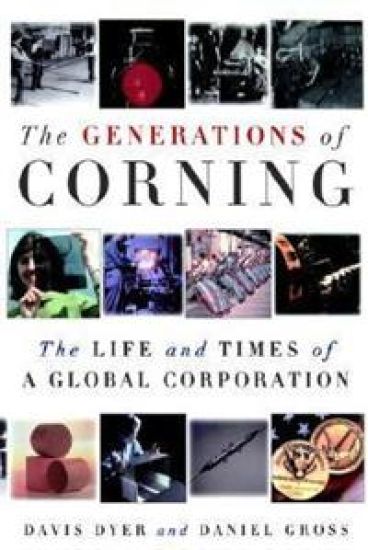
The Generations of Corning

The Generations of Corning

Davis Dyer; Daniel Gross

Oxford University Press Inc
2001
sidottu
This engrossing history of an extraordinary company, Corning Incorporated, chronicles how one of the oldest business enterprises in the world maintained its place as a global leader in technology for over 150 years. In the nineteenth century, Corning developed coloured signal lights for railroads. In the twentieth century, it created Pyrex and colour television tubes; today, it is a Fortune 500 company leading the international marketplace in areas such as fibre optics and photonics. If you use the Internet, drive a car, or simply turn on a light, then Corning is a part of your life. The Generations of Corning tells the fascinating stories of its founding family, the Houghtons, the inventors, and the adventures, behind Corning's remarkable achievements - from unexpected discoveries, like the laboratory mishap that led to Corning Ware, to the years of painstaking, often frustrating, research that led to its breakthrough in fibre optics. From 1851 to 1996, five generations of Houghtons made Corning a company that combined a culture of continuous innovation with a sense of loyalty to its employees and their community. Davis Dyer and Daniel Gross show how the critical changes in organization and leadership that accompanied each new generation helped Corning not just survive, but to prosper, and push itself to the cutting edge of materials technology in decade after decade. The Generations of Corning is a classic success story and a triumph of the inventive spirit.
Forbes Greatest Business Stories of All Time

Forbes Greatest Business Stories of All Time

Daniel Gross

John Wiley Sons Inc
1996
sidottu
Robert Morris: America's First Financier Cyrus McCormick's Reaper and the Industrialization of Farming John D. Rockefeller and the Modern Corporation J. P. Morgan Saves the Country Henry Ford and the Model T Charles Merrill and the Democratization of Stock Ownership David Sarnoff, RCA, and the Rise of Broadcasting Walt Disney and his Family-Entertainment Empire John Johnson: Finding the Black Consumer David Ogilvy and the Creation of Modern Advertising Ray Kroc, McDonald's, and the Fast-Food Industry Betting the Company: Joseph Wilson and the Xerox 914 American Express and the Charge Card Mary Kay Ash and her Corporate Culture for Women Intel's Microprocessor and the Computer Revolution Sam Walton, Wal-Mart, and the Discounting of America William McGowan and MCI: A New World of Telecommunications The Turnaround at Harley-Davidson Kohlberg Kravis Roberts & Co. and the Leveraged Buyout William Gates and the Dominance of Microsoft A Byron Preiss Visual Publications book What do Bill Gates, Henry Ford, J. P. Morgan, Mary Kay Ash, and Walt Disney have in common? Uncompromising vision, a willingness to take risks, and exceptional business acumen. Not only did these individuals amass great fortunes, they revolutionized the business world and helped shape society as we know it. While most of us have a general knowledge of these and other legendary figures, few know the details of their exceptional careers. Daniel Gross and the Editors of Forbes magazine, one of the world's foremost business publications, present twenty fascinating stories. You'll meet the personalities behind some of the best-known name brands in history, including McDonald's, Harley-Davidson, RCA, Merrill Lynch, Xerox, Wal-Mart, and Standard Oil, among others. Forbes Greatest Business Stories of All Time draws on a wealth of sources to offer this priceless collection. The book brings to life extraordinary achievements, many of them forgotten or little known: how Robert Morris, the preeminent merchant of the eighteenth century, financed the American Revolution with his personal credit; how Ray Kroc used a shrewd real estate strategy to turn a faltering hamburger franchise operation into a fast-food empire; and how Mary Kay Ash built a billion-dollar direct sales cosmetics company by preaching a message of economic empowerment to women. Covering industries ranging from oil to cosmetics, from the eighteenth century up to the present, Forbes Greatest Business Stories of All Time celebrates larger-than-life ambition, inspired leadership, wheeling and dealing, and hard work. These tales are as entertaining as they are informative—an essential tool for business enthusiasts and anyone interested in how our modern commercial culture was built.
Unions of Our Own

Unions of Our Own

Daniel Gross

Haymarket Books
2026
sidottu
An actionable, inviting, and confidence-boosting philosophy on how to tackle problems in your workplace and win. Our workplaces urgently need to get better, but change can feel murky, daunting, or even impossible. We imagine a different world, too, but billionaires are doing their best to make things worse. In Unions of Our Own, veteran labor organizer and cofounder of the IWW Starbucks Workers Union Daniel Gross provides a radically new, step-by-step framework for workers who want to dramatically improve their jobs—and dream of bigger changes too. It reveals and puts into your hands the eight fundamental building blocks of a union that meets your needs and values. Through proven tools, Gross’s personal stories from campaigns, vivid history, and real-world examples, Unions of Our Own offers a practical, accessible, and empowering philosophy on how to design your own union and win.
Unions of Our Own

Unions of Our Own

Daniel Gross

Haymarket Books
2026
pokkari
An actionable, inviting, and confidence-boosting philosophy on how to tackle problems in your workplace and win. Our workplaces urgently need to get better, but change can feel murky, daunting, or even impossible. We imagine a different world, too, but billionaires are doing their best to make things worse. In Unions of Our Own, veteran labor organizer and cofounder of the IWW Starbucks Workers Union Daniel Gross provides a radically new, step-by-step framework for workers who want to dramatically improve their jobs—and dream of bigger changes too. It reveals and puts into your hands the eight fundamental building blocks of a union that meets your needs and values. Through proven tools, Gross’s personal stories from campaigns, vivid history, and real-world examples, Unions of Our Own offers a practical, accessible, and empowering philosophy on how to design your own union and win.
A Banker's Journey

A Banker's Journey

Daniel Gross

Diversion Books
2026
pokkari
The remarkable life and career of Edmond J. Safra: the most successful banker of the second half of the 20th century; protector of the global Sephardic Jewish community; philanthropist; and collector. From the age of fifteen to a career spanning Europe, and North and South America, across six languages, Safra built a global financial empire while staying true to his family legacy. Who was Edmond J. Safra? The greatest banker of his generation, in the estimation of a former World Bank President. The founder of four massive financial institutions on three continents, and a proud child of Beirut's Jewish quarter. An innovative avatar of financial globalization, and a faithful heir to a tradition of old-world banking. The leading champion and protector of the Sephardic diaspora. In A Banker's Journey, financial journalist and historian Daniel Gross, who, like Safra, traces his heritage to Aleppo, Syria, reconstructs the public life of an intensely private man. With exclusive access to Safra's personal archives, Gross tracks the banker's remarkable journey from Beirut to Milan, São Paulo, Geneva, and New York—to the pinnacle of global finance. Edmond Safra was fifteen in 1947, when his father sent him to establish a presence in Milan, Italy. Fluent in six languages, and with an eye for value, managing risk, and personal potential, Safra was in perpetual motion until his tragic death in 1999. The modern, global financial empire he built was based on timeless principles: a banker must protect his depositors and avoid excessive leverage and risk. In an age of busts and bailouts, Safra posted remarkable returns while rarely suffering a credit loss. From a young age, Safra assumed the mantle of leadership in the Syrian-Lebanese Jewish community, providing personal aid, supporting the communities that formed in exile, and championing Sephardic religious and educational efforts in Israel and around the world. Edmond J. Safra's life of achievement in the twentieth century offers enduring lessons for those seeking to make their way in the twenty-first century. He inspired generations to make the world a better place.
Solidarity Unionism At Starbucks

Solidarity Unionism At Starbucks

Staughton Lynd; Daniel Gross

PM Press
2011
nidottu
Legendary legal scholar Staughton Lynd teams up with influential labor organizer Daniel Gross in this exposition on solidarity unionism, the do-it-yourself workplace organizing system that is rapidly gaining prominence around the country and around the world. Lynd and Gross make the audacious argument that workers themselves on the shop floor, not outside union officials, are the real hope for labor's future. Utilizing the principles of solidarity unionism, any group of co-workers, like the workers at Starbucks, can start building an organization to win an independent voice at work without waiting for a traditional trade union to come and "organize" them. Indeed, in a leaked recording of a conference call, the nation's most prominent union-busting lobbyist coined a term, "the Starbucks problem," as a warning to business executives about the risk of working people organizing themselves and taking direct action to improve issues at work. Combining history and theory with the groundbreaking practice of the model by Starbucks workers, Lynd and Gross make a compelling case for solidarity unionism as an effective, resilient, and deeply democratic approach to winning a voice on the job and in society.