Kirjojen hintavertailu – 12 859 826 kirjaa ja 27 kauppaa

Kirjailija

Daniel Johnston

Kirjat ja teokset yhdessä paikassa: 19 kirjaa, julkaisuja vuosilta 1994–2025, suosituimpiin kuuluu Theatre and Phenomenology. Vertaile teosten hintoja ja tarkista saatavuus suomalaisista kirjakaupoista.

19 kirjaa

Kirjojen julkaisuvuodet: 1994–2025.

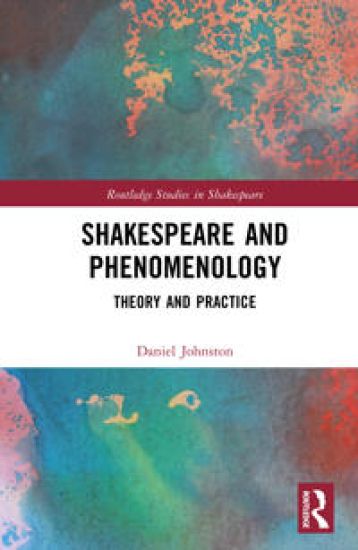
Shakespeare and Phenomenology

Shakespeare and Phenomenology

Daniel Johnston

TAYLOR FRANCIS LTD
2025
sidottu
This book considers how Shakespeare’s theatre investigates and reveals “Being-in-the-world”. Through the lens of phenomenology (the study of how the world shows itself to conscious experience) Johnston examines how Shakespeare’s texts and dramaturgy reveal aspects of Being. This volume explores philosophical themes in Shakespeare’s drama, including perceptions of stage space and fictional place, temporality, bodies, authenticity, and memory in early modern English staging. It examines how Shakespeare asks the question of the meaning of Being by playing with the distinction between “what is” and “what is not”. The work offers practical performance tips and exercises to connect with modern audiences. Each chapter aims to inspire creative artists in production and rehearsal through a unique focus and provide a critical approach to performance. Through a phenomenological exploration of dramatic possibilities drawn from the key concepts of philosophers such as Edmund Husserl, Martin Heidegger, Maurice Merleau-Ponty, and Edith Stein, Johnston investigates theatre as a practical form of philosophical investigation. Theatre-makers should not only consider the fictional world of the play, but also the historical context of Shakespeare’s world and the contemporary context for connecting with audiences here, today, now.
Phenomenology for Actors

Phenomenology for Actors

Daniel Johnston

INTELLECT
2023
nidottu
This book gives new insight into acting and theatre-making through phenomenology (the study of how the world shows itself to conscious experience). It examines Being-in-the-world in everyday life with exercises for workshops and rehearsal. Each chapter explores themes to guide the creative process through objects, bodies, spaces, being with others, time, history, freedom and authenticity. Key examples in the work are drawn from Chekhov’s The Cherry Orchard, Sophocles’ Antigone and Shakespeare’s Hamlet. Practical tasks in each section explore how the theatrical event can offer unique insight into Being and existence. In this way, the book makes a bold leap to understand acting as an embodied form of philosophy and to explain how phenomenology can be a rich source of inspiration for actors, directors, designers and the creative process of theatre-making. This original new book will provide new insight into the practice and theory of acting, stimulate new approaches to rehearsal and advance the notion of theatre making a genuine contribution to philosophical discourse. The fundamental task of the actor is to be on stage with purposeful action in the given circumstances. But this simple act of ‘Being’ is not easy. Phenomenology can provide valuable insight into the challenge. For some time, scholars have looked to phenomenology to describe and analyse the theatrical event. But more than simply drawing attention to embodiment and the subjective experience of the world, a philosophical perspective can also shed light on broader existential issues of being. No specialist knowledge of philosophy is required for the reader to find this text engaging and it will be relevant for second-year students and above at tertiary level. For postgraduates and researchers, the book will provide a valuable touchstone for phenomenology and performance as research. The book will appeal to theatre and performance studies, and some applied philosophy courses. The material is also relevant to studies in literary and critical theory, cultural studies and comparative literature. The work is relevant to The International Federation of Theatre Research (IFTR/FIRT) (Performance and Consciousness), Performance Studies International (psi) and the Performance Philosophy Research Network — an influential and growing research field. Primary markets for this book will be students (both at university and conservatoires) and academics in theatre studies, as well as practitioners and actors in training. The text will be useful to students in units or modules relating to acting theory and theatre-making processes, and which combine critical theory with practical performance. It will also be useful for practitioners of theatre looking to expand or inflect their own methods of approaching performance.

Phenomenology for Actors

Phenomenology for Actors

Daniel Johnston

Intellect Books
2021
sidottu
This book gives new insight into acting and theatre-making through phenomenology (the study of how the world shows itself to conscious experience). It examines Being-in-the-world in everyday life with exercises for workshops and rehearsal. Each chapter explores themes to guide the creative process through objects, bodies, spaces, being with others, time, history, freedom and authenticity. Key examples in the work are drawn from Chekhov’s The Cherry Orchard, Sophocles’ Antigone and Shakespeare’s Hamlet. Practical tasks in each section explore how the theatrical event can offer unique insight into Being and existence. In this way, the book makes a bold leap to understand acting as an embodied form of philosophy and to explain how phenomenology can be a rich source of inspiration for actors, directors, designers and the creative process of theatre-making. This original new book will provide new insight into the practice and theory of acting, stimulate new approaches to rehearsal and advance the notion of theatre making a genuine contribution to philosophical discourse. The fundamental task of the actor is to be on stage with purposeful action in the given circumstances. But this simple act of ‘Being’ is not easy. Phenomenology can provide valuable insight into the challenge. For some time, scholars have looked to phenomenology to describe and analyse the theatrical event. But more than simply drawing attention to embodiment and the subjective experience of the world, a philosophical perspective can also shed light on broader existential issues of being. No specialist knowledge of philosophy is required for the reader to find this text engaging and it will be relevant for second-year students and above at tertiary level. For postgraduates and researchers, the book will provide a valuable touchstone for phenomenology and performance as research. The book will appeal to theatre and performance studies, and some applied philosophy courses. The material is also relevant to studies in literary and critical theory, cultural studies and comparative literature. The work is relevant to The International Federation of Theatre Research (IFTR/FIRT) (Performance and Consciousness), Performance Studies International (psi) and the Performance Philosophy Research Network — an influential and growing research field. Primary markets for this book will be students (both at university and conservatoires) and academics in theatre studies, as well as practitioners and actors in training. The text will be useful to students in units or modules relating to acting theory and theatre-making processes, and which combine critical theory with practical performance. It will also be useful for practitioners of theatre looking to expand or inflect their own methods of approaching performance.
Theatre and Phenomenology

Theatre and Phenomenology

Daniel Johnston

Red Globe Press
2017
sidottu
This core textbook provides a clear and accessible introduction to the key concepts of phenomenology in relation to theatre, showing how they shed light on the works of influential theatre-makers such as Brecht, Artaud, and Stanislavski. By placing these concepts in dialogue with theatre-makers, Johnston is able to demonstrate how philosophical ideas can be put to work in a theatrical context and how we can approach difficult theory from a practical perspective. Each chapter features exercises and topics for discussion to encourage readers to explore the ideas presented in more depth. This is an excellent resource for undergraduate and postgraduate students of theatre, performance studies, and philosophy.
Theatre and Phenomenology

Theatre and Phenomenology

Daniel Johnston

Red Globe Press
2017
nidottu
This core textbook provides a clear and accessible introduction to the key concepts of phenomenology in relation to theatre, showing how they shed light on the works of influential theatre-makers such as Brecht, Artaud, and Stanislavski. By placing these concepts in dialogue with theatre-makers, Johnston is able to demonstrate how philosophical ideas can be put to work in a theatrical context and how we can approach difficult theory from a practical perspective. Each chapter features exercises and topics for discussion to encourage readers to explore the ideas presented in more depth. This is an excellent resource for undergraduate and postgraduate students of theatre, performance studies, and philosophy.
Introduction to Oil Company Financial Analysis

Introduction to Oil Company Financial Analysis

David Johnston; Daniel Johnston

PennWell Books
2005
sidottu
This title is written by David Johnston and Daniel Johnston. There has always been a bit of magic in the stock market, especially when it comes to oil companies. When the oil industry and the stock market get together, the affair is usually dynamic and not always pleasant. Basic principles are widely understood in the financial industry, but the terminology and analytical techniques can vary greatly. This book is written for the nonfinancial shareholders, managers, and oil company employees interested in the forces that influence stock values. The bottom line in any company is expressed in the language of finance. This book explains financial concepts in a nontechnical, practical way so that nonfinancial professionals and others may understand and appreciate this aspect of the business. The value information found in this book includes: abbreviations and expanded definitions of key terms; energy conversion factors; reporting systems & statements; and stock tables explained.
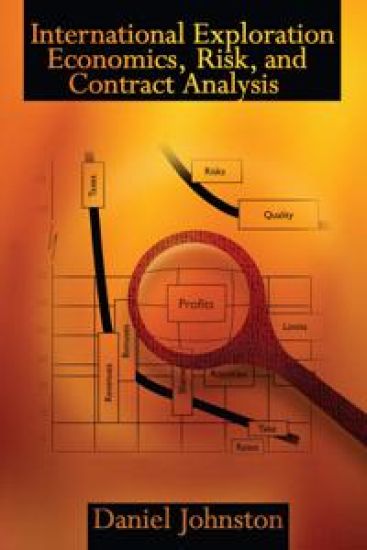
International Exploration Economics, Risk, and Contract Analysis
This book is written by Daniel Johnston. International exploration and production is challenging and exciting. Negotiating with governments and understanding the dynamics of their fiscal systems and/or production sharing contracts can mean the difference between success and failure. Long-time industry consultant, negotiator and lecturer, Daniel Johnston, provides an extremely clear and practical perspective on: international exploration economics and risk analysis, petroleum fiscal system analysis and design, contract negotiations, and, economic, financial and accounting aspects of: production sharing contracts, and royalty/tax systems.""International Exploration Economics, Risk, and Contracts Analysis"" is an anthology of articles from Johnston's column in the ""Petroleum Accounting and Financial Management Journal"" (""PAFMJ"") - Institute of Petroleum Accounting, University of North Texas. While some chapters date back a number of years, the key chapters and concepts have been dramatically updated with detailed examples. It is a collection of valuable articles gathered in one book. It is fully updated with detailed examples.
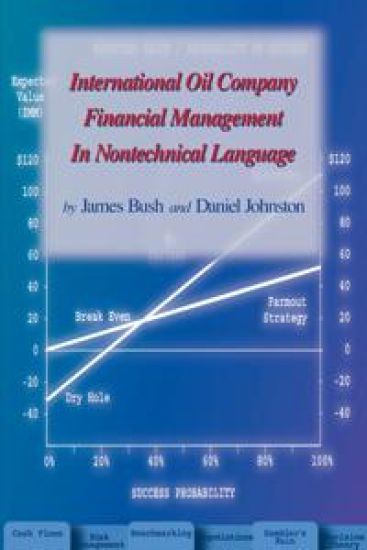
International Oil Company Financial Management in Nontechnical Language
A practical guide to all facets of modern financial management and strategic planning. Contents: Oil industry financial accounting Integrated management system Competitive comparison Cost management Capital budgeting and investment theory Cash flows in the oil industry Capital structure Financial reporting and investor/stockholder relations Econometrics.
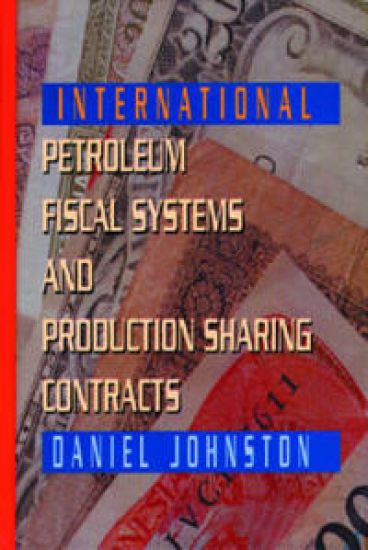
International Petroleum Fiscal Systems and Production Sharing Contracts
The practical examples and step-by-step calculations in the book, partnered with illustrations and diagrams, make the text easy to read and understand. Johnston does an excellent job clarifying international oilfield taxation and regulation in the same way he explained oilfield accounting in his other PennWell title, Oil Company Financial Analysis in Nontechnical Language. Covers everything from historical development of contracts to terminology of accounting and negotiations, to threshold field size analysis, to arithmetic behind contract terms, and much more.