Kirjojen hintavertailu – 12 859 818 kirjaa ja 27 kauppaa

Kirjailija

Daniel Neyland

Kirjat ja teokset yhdessä paikassa: 9 kirjaa, julkaisuja vuosilta 2007–2020, suosituimpiin kuuluu Organizational Ethnography. Vertaile teosten hintoja ja tarkista saatavuus suomalaisista kirjakaupoista.

9 kirjaa

Kirjojen julkaisuvuodet: 2007–2020.

The Everyday Life of an Algorithm

The Everyday Life of an Algorithm

Daniel Neyland

Saint Philip Street Press
2020
sidottu
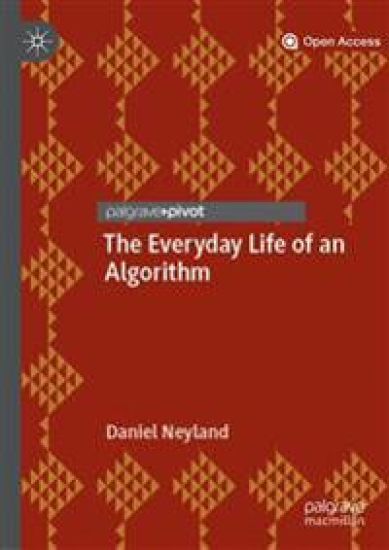
This open access book begins with an algorithm-a set of IF... THEN rules used in the development of a new, ethical, video surveillance architecture for transport hubs. Readers are invited to follow the algorithm over three years, charting its everyday life. Questions of ethics, transparency, accountability and market value must be grasped by the algorithm in a series of ever more demanding forms of experimentation. Here the algorithm must prove its ability to get a grip on everyday life if it is to become an ordinary feature of the settings where it is being put to work. Through investigating the everyday life of the algorithm, the book opens a conversation with existing social science research that tends to focus on the power and opacity of algorithms. In this book we have unique access to the algorithm's design, development and testing, but can also bear witness to its fragility and dependency on others. This work was published by Saint Philip Street Press pursuant to a Creative Commons license permitting commercial use. All rights not granted by the work's license are retained by the author or authors.
The Everyday Life of an Algorithm

The Everyday Life of an Algorithm

Daniel Neyland

Saint Philip Street Press
2020
pokkari
This open access book begins with an algorithm-a set of IF... THEN rules used in the development of a new, ethical, video surveillance architecture for transport hubs. Readers are invited to follow the algorithm over three years, charting its everyday life. Questions of ethics, transparency, accountability and market value must be grasped by the algorithm in a series of ever more demanding forms of experimentation. Here the algorithm must prove its ability to get a grip on everyday life if it is to become an ordinary feature of the settings where it is being put to work. Through investigating the everyday life of the algorithm, the book opens a conversation with existing social science research that tends to focus on the power and opacity of algorithms. In this book we have unique access to the algorithm's design, development and testing, but can also bear witness to its fragility and dependency on others. This work was published by Saint Philip Street Press pursuant to a Creative Commons license permitting commercial use. All rights not granted by the work's license are retained by the author or authors.
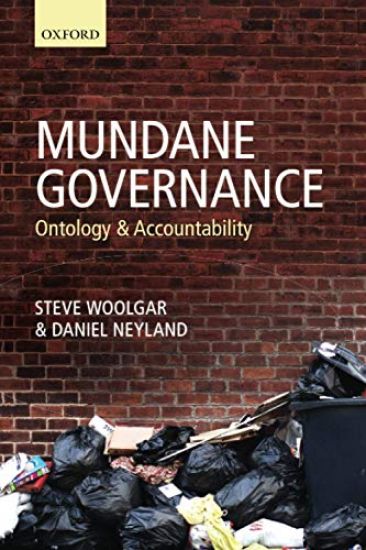
Mundane Governance

Mundane Governance

Steve Woolgar; Daniel Neyland

Oxford University Press
2020
nidottu

Halvin toimitettuna 75,00 €

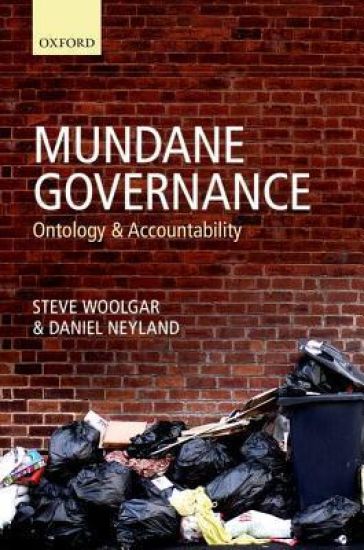
What is to be made of the outcry when newly issued recycling "wheelie" bins are discovered to contain microchips for weighing and evaluating householders' rubbish? The angry accusations that speed cameras are generating excessive income for the government? The consternation at the measures taken by airports to heighten security in the wake of the increased threat of terrorist attacks? These increasingly widespread reactions to ordinary events and everyday phenomena share a common theme. They all embody concerns about the ways in which our lives are increasingly regulated and controlled in relation to ordinary objects and technologies. This book takes these concerns as the starting point for exploring the ways in which relations of governance and accountability in contemporary life are organized around ordinary, everyday, pervasive objects and technologies. In contrast to the contemporary literature on governance, the book argues for the importance of examining how accountability relations are enacted on the ground, in relation to mundane objects and technologies. In particular, it is crucial to understand how governance and accountability are mediated through material relations involving ordinary everyday objects and technologies. The book argues that the key to understanding governance is to focus on political constitution at the level of ontology rather than just on the traditional politics of organization, structure, and human compliance. The term ontology is used here to draw attention to the social and cultural processes whereby the nature and existence of ordinary things come to matter. The argument is developed in relation to a wide variety of empirical materials drawn from three main areas of everyday life: waste management and recycling; the regulation and control of traffic (especially speed cameras and parking); and security and passenger movement in airports.
The Everyday Life of an Algorithm

The Everyday Life of an Algorithm

Daniel Neyland

Springer Nature Switzerland AG
2019
sidottu
This open access book begins with an algorithm–a set of IF…THEN rules used in the development of a new, ethical, video surveillance architecture for transport hubs. Readers are invited to follow the algorithm over three years, charting its everyday life. Questions of ethics, transparency, accountability and market value must be grasped by the algorithm in a series of ever more demanding forms of experimentation. Here the algorithm must prove its ability to get a grip on everyday life if it is to become an ordinary feature of the settings where it is being put to work. Through investigating the everyday life of the algorithm, the book opens a conversation with existing social science research that tends to focus on the power and opacity of algorithms. In this book we have unique access to the algorithm’s design, development and testing, but can also bear witness to its fragility and dependency on others.
Mundane Governance

Mundane Governance

Steve Woolgar; Daniel Neyland

Oxford University Press
2013
sidottu
What is to be made of the outcry when newly issued recycling "wheelie" bins are discovered to contain microchips for weighing and evaluating householders' rubbish? The angry accusations that speed cameras are generating excessive income for the government? The consternation at the measures taken by airports to heighten security in the wake of the increased threat of terrorist attacks? These increasingly widespread reactions to ordinary events and everyday phenomena share a common theme. They all embody concerns about the ways in which our lives are increasingly regulated and controlled in relation to ordinary objects and technologies. This book takes these concerns as the starting point for exploring the ways in which relations of governance and accountability in contemporary life are organized around ordinary, everyday, pervasive objects and technologies. In contrast to the contemporary literature on governance, the book argues for the importance of examining how accountability relations are enacted on the ground, in relation to mundane objects and technologies. In particular, it is crucial to understand how governance and accountability are mediated through material relations involving ordinary everyday objects and technologies. The book argues that the key to understanding governance is to focus on political constitution at the level of ontology rather than just on the traditional politics of organization, structure, and human compliance. The term ontology is used here to draw attention to the social and cultural processes whereby the nature and existence of ordinary things come to matter. The argument is developed in relation to a wide variety of empirical materials drawn from three main areas of everyday life: waste management and recycling; the regulation and control of traffic (especially speed cameras and parking); and security and passenger movement in airports.
Managing Privacy through Accountability

Managing Privacy through Accountability

Carla Ilten; Inga Kroener; Daniel Neyland; Hector Postigo

Palgrave Macmillan
2012
sidottu
Draws together contributions from leading figures in the field of surveillance to engage in the discussion of the emergence of accountability as a means to manage threats to privacy. The first of its kind to enrich the debate about accountability and privacy by drawing together perspectives from experienced privacy researchers and policy makers.
Managing Privacy through Accountability

Managing Privacy through Accountability

Carla Ilten; Inga Kroener; Daniel Neyland; Hector Postigo

Palgrave Macmillan
2012
nidottu
Draws together contributions from leading figures in the field of surveillance to engage in the discussion of the emergence of accountability as a means to manage threats to privacy. The first of its kind to enrich the debate about accountability and privacy by drawing together perspectives from experienced privacy researchers and policy makers.
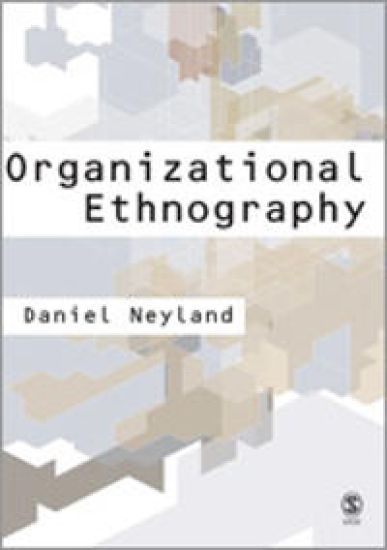
Organizational Ethnography

Organizational Ethnography

Daniel Neyland

SAGE Publications Inc
2007
sidottu
'This is an excellent resource for those interested in studying organizations in both formal and informal contexts' - Choice Taking readers through the practical history of ethnography from its anthropological origins through to its use in a ever-widening variety of organizational, academic and business contexts, this book covers the whole research project process, starting with research design, and dealing with such practical issues as gaining access, note-taking, project management, analysing one's data and negotiating an exit strategy. It is highly practical and incorporates a range of case studies, illustrating organisational ethnography at work. This book is an invaluable resource for anyone wanting to plan and conduct their own ethnographic, observational or participant observational research in an organizational context, whatever their level of experience and regardless of whether they are studying a business organization or other types of organization such as schools and hospitals.
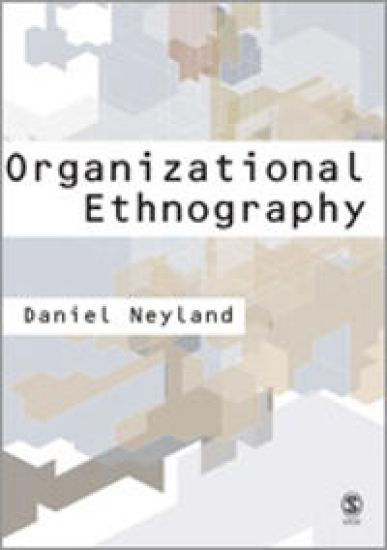
Organizational Ethnography

Organizational Ethnography

Daniel Neyland

SAGE Publications Inc
2007
nidottu
'This is an excellent resource for those interested in studying organizations in both formal and informal contexts' - Choice Taking readers through the practical history of ethnography from its anthropological origins through to its use in a ever-widening variety of organizational, academic and business contexts, this book covers the whole research project process, starting with research design, and dealing with such practical issues as gaining access, note-taking, project management, analysing one's data and negotiating an exit strategy. It is highly practical and incorporates a range of case studies, illustrating organisational ethnography at work. This book is an invaluable resource for anyone wanting to plan and conduct their own ethnographic, observational or participant observational research in an organizational context, whatever their level of experience and regardless of whether they are studying a business organization or other types of organization such as schools and hospitals.