

Kirjailija
Daniel Oudshoorn
Kirjat ja teokset yhdessä paikassa: 8 kirjaa, julkaisuja vuodelta 2020, suosituimpiin kuuluu A Magnificent Work. Vertaile teosten hintoja ja tarkista saatavuus suomalaisista kirjakaupoista.
8 kirjaa

A Magnificent Work is an autobiographical exploration of the interconnectedness of toxic masculinity, White supremacy, and settler colonialism within the context of Canadian-occupied territories. It is a work of ""documentary fiction"" (to use the term of W. G. Sebald) or ""autotheory"" (as proposed by Maggie Nelson). Oudshoorn moves from relating his personal experiences as both a son and a father to exploring the ways in which similar events have played out on a much larger scale within the Canadian occupation. Special attention is given to the history of the Mohawk Institute, Canada's oldest and longest-running ""Indian Residential School."" Thus, although an Anglican bishop once described the Mohawk Institute as ""a magnificent work,"" Oudshoorn argues that the truly magnificent work that awaits people like him--notably, cishet male settlers of Christian and European descent--is the process of embodying a gentle masculinity, recovering a sense of one's proper place of connectedness within a network of relationships with varying degrees of responsibility and accountability, and striving towards decolonization.

Building on the themes established in the first two volumes of Paul and the Uprising of the Dead, Pauline Solidarity explores: (a) how the Pauline faction transforms relationships within the household unit in the new transnational family of God; (b) how dominant cultural conceptions of honor are rejected in the embrace of shame in the company of the crucified; (c) how vertical practices of patronage are replaced with a horizontal sibling-based political economy of grace; and (d) how the gospel of the Caesars is overcome by the lawlessness of the good news that is being assembled in an uprising of life among the left for dead. Along the way, many of the traditional themes associated with Paulinism (grace, justice, love, loyalty, sin, flesh, death, Jesus, spirit, life) are reexamined and understood as core components of a movement that was spreading among vanquished, colonized, oppressed, dispossessed, and enslaved peoples who were finding new (and treasonous) ways of organizing themselves in order to be life-giving and life-affirming, and in order to counter all the death-dealing structures of Roman imperialism.

Building on the themes established in the first two volumes of Paul and the Uprising of the Dead, Pauline Solidarity explores: (a) how the Pauline faction transforms relationships within the household unit in the new transnational family of God; (b) how dominant cultural conceptions of honor are rejected in the embrace of shame in the company of the crucified; (c) how vertical practices of patronage are replaced with a horizontal sibling-based political economy of grace; and (d) how the gospel of the Caesars is overcome by the lawlessness of the good news that is being assembled in an uprising of life among the left for dead. Along the way, many of the traditional themes associated with Paulinism (grace, justice, love, loyalty, sin, flesh, death, Jesus, spirit, life) are reexamined and understood as core components of a movement that was spreading among vanquished, colonized, oppressed, dispossessed, and enslaved peoples who were finding new (and treasonous) ways of organizing themselves in order to be life-giving and life-affirming, and in order to counter all the death-dealing structures of Roman imperialism.
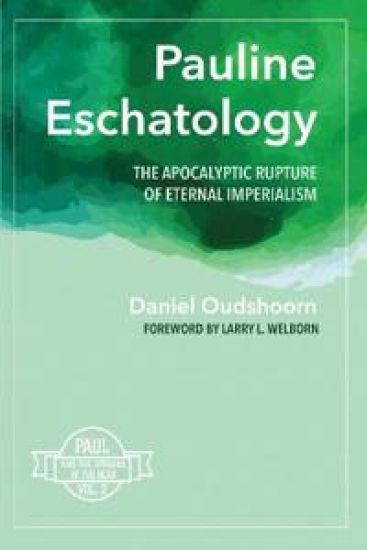
When seeking to understand what Paul and his coworkers were trying to accomplish, it is no longer possible to ignore Graeco-Roman cultural, economic, political, and religious beliefs and practices. Nor can one ignore the ways in which colonized and vanquished peoples adopted, developed, subverted, and resisted these things. Therefore, in order to properly contextualize the Pauline faction, the traditional background material related to Paul and politics must be developed in the following ways: Pauline eschatology must be examined in light of apocalyptic resistance movements; Pauline eschatology must be understood in light of the realized eschatology of Roman imperialism; and the ideo-theology of Rome (its four cornerstones of the household unit, cultural constructs of honor and shame, practices of patronage, and traditional Roman religiosity now all reworked within the rapidly spreading imperial cult s]) must be explored in detail. This is the task of Pauline Eschatology, the second volume of Paul and the Uprising of the Dead. In it, we will witness how Pauline apocalypticism ruptures the eternal now of empire, and this, then, paves our way for the detailed study of Paulinism that follows in volume 3, Pauline Solidarity.
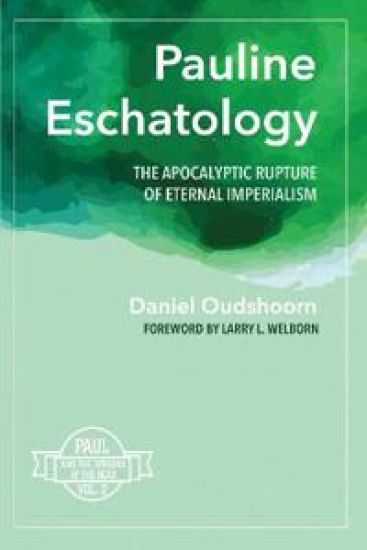
When seeking to understand what Paul and his coworkers were trying to accomplish, it is no longer possible to ignore Graeco-Roman cultural, economic, political, and religious beliefs and practices. Nor can one ignore the ways in which colonized and vanquished peoples adopted, developed, subverted, and resisted these things. Therefore, in order to properly contextualize the Pauline faction, the traditional background material related to Paul and politics must be developed in the following ways: Pauline eschatology must be examined in light of apocalyptic resistance movements; Pauline eschatology must be understood in light of the realized eschatology of Roman imperialism; and the ideo-theology of Rome (its four cornerstones of the household unit, cultural constructs of honor and shame, practices of patronage, and traditional Roman religiosity now all reworked within the rapidly spreading imperial cult s]) must be explored in detail. This is the task of Pauline Eschatology, the second volume of Paul and the Uprising of the Dead. In it, we will witness how Pauline apocalypticism ruptures the eternal now of empire, and this, then, paves our way for the detailed study of Paulinism that follows in volume 3, Pauline Solidarity.

The Pauline Epistles have been claimed as a useful ally by parties across the political spectrum. Neoconservatives claim that Paul and his coworkers were law-abiding, authority-honoring, devoutly religious people oriented around their respect for hard work, private property, and family values. Liberals claim that the Pauline faction was devoted to the celebration of diversity, internally transcending social markers of status, and the embrace of peace. Radicals claim that Paul was a leader within an anti-imperial revolutionary movement sweeping across the eastern portion of the Roman Empire. However, it is rare for these (and still other ) parties to engage in dialogue with each other because each party tends to operate with presuppositions that make open engagement difficult. Pauline Politics examines the main positions taken in relation to Paul and politics and then engages in a thorough examination of the underlying arguments used to argue that this-or-that position is more or less plausible. Underlying arguments tend to relate to two things: first, positions on the socioeconomic status of Paul, his coworkers, and other early Jesus loyalists; and second, positions on Pauline eschatology. This volume will comprehensively explore these matters.

The Pauline Epistles have been claimed as a useful ally by parties across the political spectrum. Neoconservatives claim that Paul and his coworkers were law-abiding, authority-honoring, devoutly religious people oriented around their respect for hard work, private property, and family values. Liberals claim that the Pauline faction was devoted to the celebration of diversity, internally transcending social markers of status, and the embrace of peace. Radicals claim that Paul was a leader within an anti-imperial revolutionary movement sweeping across the eastern portion of the Roman Empire. However, it is rare for these (and still other ) parties to engage in dialogue with each other because each party tends to operate with presuppositions that make open engagement difficult. Pauline Politics examines the main positions taken in relation to Paul and politics and then engages in a thorough examination of the underlying arguments used to argue that this-or-that position is more or less plausible. Underlying arguments tend to relate to two things: first, positions on the socioeconomic status of Paul, his coworkers, and other early Jesus loyalists; and second, positions on Pauline eschatology. This volume will comprehensively explore these matters.