Kirjojen hintavertailu – 12 859 818 kirjaa ja 27 kauppaa

Kirjailija

Daniel Patrick Moynihan

Kirjat ja teokset yhdessä paikassa: 6 kirjaa, julkaisuja vuosilta 1992–2019, suosituimpiin kuuluu The Moynihan Report: The Negro Family - The Case for National Action. Vertaile teosten hintoja ja tarkista saatavuus suomalaisista kirjakaupoista.

6 kirjaa

Kirjojen julkaisuvuodet: 1992–2019.

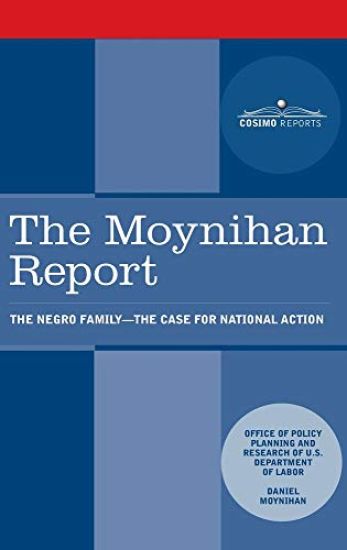
The Moynihan Report: The Negro Family - The Case for National Action

The Moynihan Report: The Negro Family - The Case for National Action

U. S. Department of Labor; Daniel Patrick Moynihan

Cosimo Reports
2018
nidottu
"The fundamental problem... is that of family structure. The evidence--not final but powerfully persuasive--is that the Negro family in the urban ghettos is crumbling." --From the introduction to The Moynihan Report, 1965Against the backdrop of President Johnson's War on Poverty and the Watts riots in Los Angeles, a young civil servant with the OFFICE OF PLANNING AND RESEARCH at the Department of Labor, DANIEL P. MOYNIHAN, wrote in 1965 his most controversial study The Moynihan Report--The Negro Family: The Case for National Action. This report drew widespread attention from critics and supporters alike. It concluded that the conditions under which black children were being raised, generally in single-mother households, were the leading cause of black poverty. As Moynihan wrote decades later: "The work began in the most orthodox setting, to establish at some level of statistical conciseness what 'everyone knew' that economic conditions determine social conditions. Whereupon, it turned out that what everyone knew was evidently not so." Although Moynihan was a liberal politician and the report called for jobs programs and vocational training for blacks, many black and civil rights leaders found his report patronizing and that it relied on stereotypes of the black family and black men. The 1965 statistics, when approximately 25 percent of black babies were born out of wedlock, have not improved 50 years later, when this percentage has grown to 75 percent--with 50 percent for Hispanic babies and 29 percent for white babies. Also in other areas, such as income, employment, and incarceration, the statistics have deteriorated for blacks. The legacy of The Moynihan Report is that the debate it launched around cultural causes of black poverty is still not settled in modern day America.
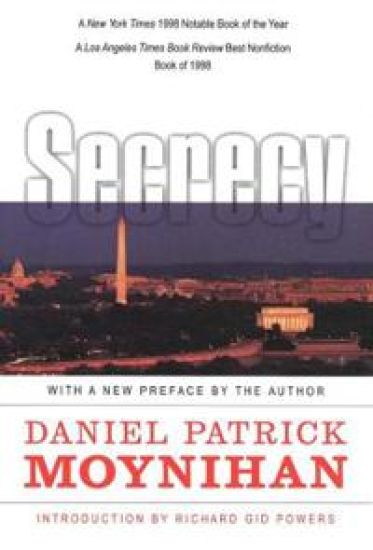
Secrecy

Secrecy

Daniel Patrick Moynihan

Yale University Press
2000
pokkari
Senator Daniel Patrick Moynihan, chairman of the bipartisan Commission on Protecting and Reducing Government Secrecy, here presents an eloquent and fascinating account of the development of secrecy as a mode of regulation in American government since World War I—how it was born, how world events shaped it, how it has adversely affected momentous political decisions and events, and how it has eluded efforts to curtail or end it. Senator Moynihan begins by recounting the astonishing story of the Venona project, in which Soviet cables sent to the United States during World War II were decrypted by the U. S. Army—but were never passed on to President Truman. The divisive Hiss perjury trial and the McCarthy era of suspicion might have had a far different impact on American society, says Moynihan, if government agencies had not kept secrets from one another as a means of shoring up their power. Moynihan points to many other examples of how government bureaucracies used secrecy to avoid public scrutiny and got into trouble as a result. He discusses the Bay of Pigs, Watergate, the Iran-Contra affair, and, finally, the failure to forecast the collapse of the Soviet Union, suggesting that many of the tragedies resulting from these events could have been averted had the issues been clarified in an open exchange of ideas. America must lead the way to an era of openness, says Moynihan in this vitally important book. It is time to dismantle the excesses of government secrecy and share information with our citizens and with the world. Analysis, far more than secrecy, is the key to national security.

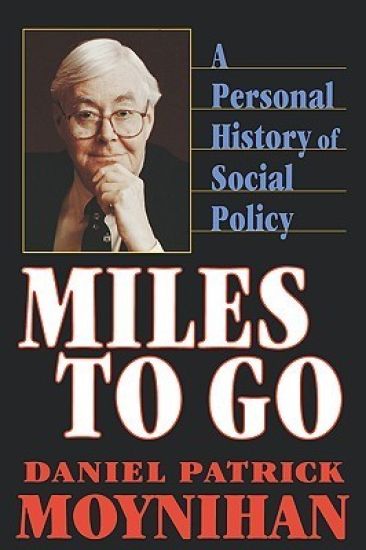
Miles to Go

Miles to Go

Daniel Patrick Moynihan

Harvard University Press
1997
nidottu
The democratic senator reflects on the politics, economics, and social problems of the last sixty years, and describes why the Democratic party has seen its social programs reversed in recent years
Pandaemonium

Pandaemonium

Daniel Patrick Moynihan; Adam Roberts

Oxford University Press
1993
sidottu
Responsible for the collapse of empires ranging from the Ottoman to the Soviet, self-determination has been one of the key factors in the history of the entire twentieth century. Surprisingly, scholars have been slow to appreciate the value of ethnicity as a way of understanding the key political developments of our times. In this challenging new book, Senator Daniel Patrick Moynihan draws on a rich and diverse fund of historical and contemporary examples to trace the history and illustrate the considerable predictive powers of ethnic studies. In particular, he shows how ethnicity confounded Marx's hopes for an international proletariat and reveals how an inability to grasp the importance of ethnic diversity left the West unprepared for the disintegration of the Communist bloc. About the author: Daniel Patrick Moynihan has been been the senior US Senator from New York since 1976 and is the only man in American history to have served in the cabinet or sub-cabinet of four successive presidents. He is also a highly distinguished academic, having taught at Harvard, Yale, Columbia, Syracuse, Cornell, and New York Universities and been lauded with an astonishing 55 honorary degrees.
On the Law of Nations

On the Law of Nations

Daniel Patrick Moynihan

Harvard University Press
1992
nidottu
Foreign Policy. “In the annals of forgetfulness there is nothing quite to compare with the fading from the American mind of the idea of the law of nations.” Grenada. “We might have benefited from a weekend’s pause in which we could have considered our interests rather than merely giving in to our impulses.” The mining of Nicaraguan harbors. “A practice of deception mutated into a policy of deceit.” Iran–Contra. “The idea of international law had faded. But just as important, in the 1980s it had come to be associated with weaknesses in foreign policy. Real men did not cite Grotius.” As the era of totalitarianism recedes, the time is at hand to ask by what rules we expect to conduct ourselves, Senator Daniel Patrick Moynihan writes in this pellucid, and often ironic, examination of international law. Our founding fathers had a firm grasp on the importance and centrality of such law; later presidents affirmed it and tried to establish international institutions based on such high principles; but we lost our way in the fog of the Cold War. Moynihan’s exploration of American attitudes toward international law—those of presidents, senators, congressmen, public officials, and the public at large—reveals the abiding reverence for a law of nations and the attempts for almost two hundred years to make international law the centerpiece of foreign and strategic policy. Only in the last decade did a shift in values at the highest levels of government change the goals and conduct of the United States. Displaying a firm grasp of history, informed by senatorial insights and investigative data, elegantly written, this book is a triumph of scholarship, interpretation, and insight.