
Kirjojen hintavertailu – 12 903 725 kirjaa ja 27 kauppaa

Kirjailija

Daniel Shuman

Kirjat ja teokset yhdessä paikassa: 2 kirjaa, julkaisuja vuosilta 2005–2010, suosituimpiin kuuluu Fundamentals of Forensic Practice. Vertaile teosten hintoja ja tarkista saatavuus suomalaisista kirjakaupoista.

2 kirjaa

Kirjojen julkaisuvuodet: 2005–2010.

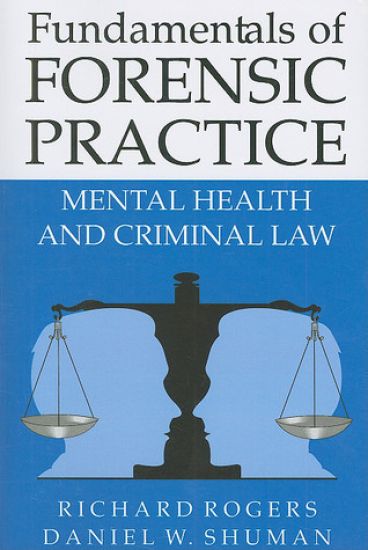
Fundamentals of Forensic Practice

Fundamentals of Forensic Practice

Richard Rogers; Daniel Shuman

Springer-Verlag New York Inc.
2010
nidottu
Forensic psychologists and psychiatrists are increasingly asked to provide expertise to courts and attorneys in the criminal justice system. To do so effectively, they must stay abreast of important advances in the understanding of legal standards as well as new developments in sophisticated measures and the methods for their assessment. Fundamentals of Forensic Practice is designed to address the critical issues that are faced by mental health experts in their role of conducting assessments, presenting findings, and preparing for challenges to admissibility and credibility. Uniquely practical and comprehensive, this volume operationalizes legal standards and describes empirically validated methods for their evaluation. Not only is this essential for mental health professionals, but it is equally valuable to criminal attorneys. Lawyers require both clinical knowledge and understanding of legal standards in order to prepare their own experts and to challenge those on the opposing side. For both clinical and legal experts Fundamentals of Forensic Practice offers a full view of all phases of criminal proceedings: - Pretrial—diversion, determinations of bail, waivers of Miranda rights, and the capacity to consent to searches. - Trial—competency to stand trial and criminal responsibility. Beyond insanity, the latter addresses mens rea, automatism, and psychological context evidence, such as battered-woman syndrome. - Post-trial—sentencing, capital sentencing, competency to be executed, and other post-conviction issues. Other key features include: - Chapters on specific criminal issues in a consistent format, with comprehensive coverage of legal standards and relevant clinical methods - Guidelines for conducting more effective forensic evaluations - In-depth coverage of specialized assessments, eg. malingering, sexual predator cases, and the insanity defense. - A detailed overview of direct and cross-examination strategies This book is the second collaboration between Rogers and Shuman. As individual authors, each received the American Psychiatric Association’s prestigious Guttmacher Award for their outstanding contributions to forensic psychiatry.

Fundamentals of Forensic Practice

Fundamentals of Forensic Practice

Richard Rogers; Daniel Shuman

Springer-Verlag New York Inc.
2005
sidottu
Forensic psychologists and psychiatrists are increasingly asked to provide expertise to courts and attorneys in the criminal justice system. To do so effectively, they must stay abreast of important advances in the understanding of legal standards as well as new developments in sophisticated measures and the methods for their assessment. Fundamentals of Forensic Practice is designed to address the critical issues that are faced by mental health experts in their role of conducting assessments, presenting findings, and preparing for challenges to admissibility and credibility. Uniquely practical and comprehensive, this volume operationalizes legal standards and describes empirically validated methods for their evaluation. Not only is this essential for mental health professionals, but it is equally valuable to criminal attorneys. Lawyers require both clinical knowledge and understanding of legal standards in order to prepare their own experts and to challenge those on the opposing side. For both clinical and legal experts Fundamentals of Forensic Practice offers a full view of all phases of criminal proceedings: - Pretrial—diversion, determinations of bail, waivers of Miranda rights, and the capacity to consent to searches. - Trial—competency to stand trial and criminal responsibility. Beyond insanity, the latter addresses mens rea, automatism, and psychological context evidence, such as battered-woman syndrome. - Post-trial—sentencing, capital sentencing, competency to be executed, and other post-conviction issues. Other key features include: - Chapters on specific criminal issues in a consistent format, with comprehensive coverage of legal standards and relevant clinical methods - Guidelines for conducting more effective forensic evaluations - In-depth coverage of specialized assessments, eg. malingering, sexual predator cases, and the insanity defense. - A detailed overview of direct and cross-examination strategies This book is the second collaboration between Rogers and Shuman. As individual authors, each received the American Psychiatric Association’s prestigious Guttmacher Award for their outstanding contributions to forensic psychiatry.