Kirjojen hintavertailu – 12 859 828 kirjaa ja 27 kauppaa

Kirjailija

Daniel Treisman

Kirjat ja teokset yhdessä paikassa: 5 kirjaa, julkaisuja vuosilta 2007–2024, suosituimpiin kuuluu Spin Dictators. Vertaile teosten hintoja ja tarkista saatavuus suomalaisista kirjakaupoista.

5 kirjaa

Kirjojen julkaisuvuodet: 2007–2024.

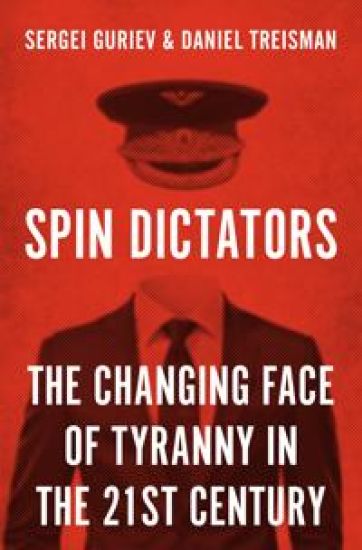
Diktatory obmana: Novoe lico tiranii v XXI veke

Diktatory obmana: Novoe lico tiranii v XXI veke

Sergei Guriev; Daniel Treisman

ISIA Media Verlag
2024
nidottu
Kak ustroeny nedemokraticheskie rezhimy v XXI veke? Daniel Trejsman i Sergej Guriev sobrali dannye o staryh i novyh diktaturah, kotorye pokazyvajut, chto bol'shinstvo segodnjashnih avtokratov otlichajutsja ot svoih predshestvennikov tem, chto ispol'zujut obman, a ne strah. V jetoj knige avtory rasskazyvajut shirokoj auditorii, kak voznik fenomen diktatorov novogo tipa i v chem ih otlichie ot tradicionnyh diktatorov straha. Odnovremenno avtory knigi preduprezhdajut o tom, chto sama priroda diktatur vsegda predpolagaet i obratnuju transformaciju avtoritarnyh rezhimov. Novaja versija knigi 2024g ser'ezno dorabotana s uchetom tekushhej situacii v Rossii i v mire. Takzhe nad knigoj byla provedena ob"emnaja redaktorskaja rabota.
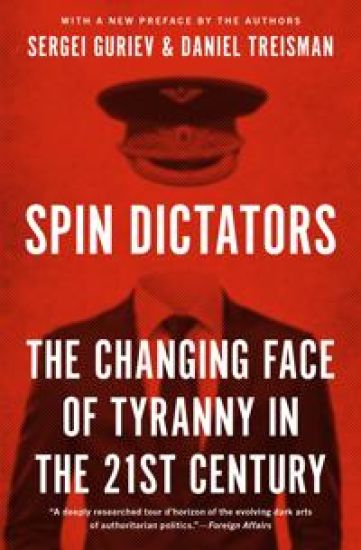
Spin Dictators

Spin Dictators

Daniel Treisman; Sergei Guriev

PRINCETON UNIVERSITY PRESS
2023
pokkari

Halvin toimitettuna 22,70 €

A New Yorker Best Book of the YearA Foreign Affairs Best Book of the YearAn Atlantic Best Book of the YearA Financial Times Best Politics Book of the YearHow a new breed of dictators holds power by manipulating information and faking democracyHitler, Stalin, and Mao ruled through violence, fear, and ideology. But in recent decades a new breed of media-savvy strongmen has been redesigning authoritarian rule for a more sophisticated, globally connected world. In place of overt, mass repression, rulers such as Vladimir Putin, Recep Tayyip Erdogan, and Viktor Orbán control their citizens by distorting information and simulating democratic procedures. Like spin doctors in democracies, they spin the news to engineer support. Uncovering this new brand of authoritarianism, Sergei Guriev and Daniel Treisman explain the rise of such “spin dictators,” describing how they emerge and operate, the new threats they pose, and how democracies should respond. Spin Dictators traces how leaders such as Singapore’s Lee Kuan Yew and Peru’s Alberto Fujimori pioneered less violent, more covert, and more effective methods of monopolizing power. They cultivated an image of competence, concealed censorship, and used democratic institutions to undermine democracy, all while increasing international engagement for financial and reputational benefits. The book reveals why most of today’s authoritarians are spin dictators—and how they differ from the remaining “fear dictators” such as Kim Jong-un and Bashar al-Assad, as well as from masters of high-tech repression like Xi Jinping. Offering incisive portraits of today’s authoritarian leaders, Spin Dictators explains some of the great political puzzles of our time—from how dictators can survive in an age of growing modernity to the disturbing convergence and mutual sympathy between dictators and populists like Donald Trump.
Spin Dictators

Spin Dictators

Daniel Treisman; Sergei Guriev

PRINCETON UNIVERSITY PRESS
2022
sidottu
A New Yorker Best Book of the YearA Foreign Affairs Best Book of the YearAn Atlantic Best Book of the YearA Financial Times Best Politics Book of the YearHow a new breed of dictators holds power by manipulating information and faking democracyHitler, Stalin, and Mao ruled through violence, fear, and ideology. But in recent decades a new breed of media-savvy strongmen has been redesigning authoritarian rule for a more sophisticated, globally connected world. In place of overt, mass repression, rulers such as Vladimir Putin, Recep Tayyip Erdogan, and Viktor Orbán control their citizens by distorting information and simulating democratic procedures. Like spin doctors in democracies, they spin the news to engineer support. Uncovering this new brand of authoritarianism, Sergei Guriev and Daniel Treisman explain the rise of such “spin dictators,” describing how they emerge and operate, the new threats they pose, and how democracies should respond. Spin Dictators traces how leaders such as Singapore’s Lee Kuan Yew and Peru’s Alberto Fujimori pioneered less violent, more covert, and more effective methods of monopolizing power. They cultivated an image of competence, concealed censorship, and used democratic institutions to undermine democracy, all while increasing international engagement for financial and reputational benefits. The book reveals why most of today’s authoritarians are spin dictators—and how they differ from the remaining “fear dictators” such as Kim Jong-un and Bashar al-Assad, as well as from masters of high-tech repression like Xi Jinping. Offering incisive portraits of today’s authoritarian leaders, Spin Dictators explains some of the great political puzzles of our time—from how dictators can survive in an age of growing modernity to the disturbing convergence and mutual sympathy between dictators and populists like Donald Trump.
The Architecture of Government

The Architecture of Government

Daniel Treisman

Cambridge University Press
2007
pokkari
Since the days of Montesquieu and Jefferson, political decentralization has been seen as a force for better government and economic performance. It is thought to bring government 'closer to the people', nurture civic virtue, protect liberty, exploit local information, stimulate policy innovation, and alleviate ethnic tensions. Inspired by such arguments, and generously funded by the major development agencies, countries across the globe have been racing to devolve power to local governments. This book re-examines the arguments that underlie the modern faith in decentralization. Using logical analysis and formal modeling, and appealing to numerous examples, it shows that most are based on vague intuitions or partial views that do not withstand scrutiny. A review of empirical studies of decentralization finds these as inconclusive and mutually contradictory as the theories they set out to test.
The Architecture of Government

The Architecture of Government

Daniel Treisman

Cambridge University Press
2007
sidottu
Since the days of Montesquieu and Jefferson, political decentralization has been seen as a force for better government and economic performance. It is thought to bring government 'closer to the people', nurture civic virtue, protect liberty, exploit local information, stimulate policy innovation, and alleviate ethnic tensions. Inspired by such arguments, and generously funded by the major development agencies, countries across the globe have been racing to devolve power to local governments. This book re-examines the arguments that underlie the modern faith in decentralization. Using logical analysis and formal modeling, and appealing to numerous examples, it shows that most are based on vague intuitions or partial views that do not withstand scrutiny. A review of empirical studies of decentralization finds these as inconclusive and mutually contradictory as the theories they set out to test.