Kirjojen hintavertailu – 12 859 829 kirjaa ja 27 kauppaa

Kirjailija

Daniel Trohler

Kirjat ja teokset yhdessä paikassa: 6 kirjaa, julkaisuja vuosilta 2008–2013, suosituimpiin kuuluu 1805-1809. Vertaile teosten hintoja ja tarkista saatavuus suomalaisista kirjakaupoista.

Nimi esiintyy myös muodoissa: Daniel Tröhler

6 kirjaa

Kirjojen julkaisuvuodet: 2008–2013.

August 1817-1820

August 1817-1820

Rebekka Horlacher; Daniel Trohler

Walter De Gruyter
2013
sidottu
Der f nfte Band der Briefe an Pestalozzi umfasst die Zeit von August 1817 bis 1820 und damit eine Zeit mit grassierender Armut sowie die Jahre des Durchbruchs der Restauration vor allem in Preussen. Diese Ereignisse pr gten auch die Korrespondenz Pestalozzis. berdeckt wurde die Krise durch die zahlreich eingehenden Briefe zur erfolgreichen Subskription von Pestalozzis gesammelten Werken. Die politisch, wirtschaftlich und pers nlich turbulente Zeit war auch dadurch gekennzeichnet, dass Pestalozzi nach vielen erfolglosen Versuchen wieder eine Armenanstalt - in Yverdons Vorort Clindy - er ffnen konnte und eine intensive Rezeption seiner Methode in England und Irland begann. Und tats chlich: Die Sch lerzahlen stiegen wieder an, und es kam zu einer eigentlichen "englischen Kolonie" in Yverdon. Zudem verschob sich das Interesse in den Osten und S dosten Europas sowie in die aufstrebenden industrialisierten Regionen des Niederrheins.

Languages of Education

Languages of Education

Daniel Tröhler

Routledge
2013
nidottu
In this landmark contribution to the study of the formation of the modern school, Daniel Tröhler applies one of the most recognized methods of historical research to an analysis of the "language" of the academic discipline of education. Arguing the value of looking at languages rather than arguments--langues rather than paroles--this method of historical research is used to examine the background of different philosophies, theories, or arguments of education, specifically republicanism and Protestantism. Tröhler’s argument is that such analysis is essential to tracing back educational arguments to the ideological core of their concerns, and thus to understanding in international perspective the historical development of education systems and organizations and to evaluating their different theoretical and political approaches and claims. Elegantly written, with the historian’s attention to archival material, this book enables the reader to understand the complex and different social, cultural, religious, and political context factors embedded in the "thought" of schooling and its objects of scrutiny--its notions of the child and teacher. Languages of Education is essential reading for scholars and students across the fields of history and philosophy of education, curriculum studies, and comparative education.
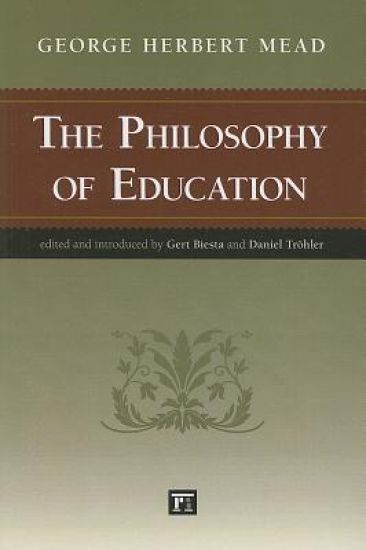
Philosophy of Education

Philosophy of Education

George Herbert Mead; Gert J. J. Biesta; Daniel Trohler

Paradigm
2011
nidottu
Never before published, this book features George Herbert Mead's illuminating lectures on the Philosophy of Education at the University of Chicago during the early 20th century. These lectures provide unique insight into Mead's educational thought and reveal how his early psychological writings on the social character of meaning and the social origin of reflective consciousness was central in the development of what Mead referred to as his social conception of education. The introduction to the book provides an overview of Mead's educational thought and places it against the wider social, intellectual, and historical background of modern educational concepts.
Languages of Education

Languages of Education

Daniel Tröhler

Routledge
2011
sidottu
In this landmark contribution to the study of the formation of the modern school, Daniel Tröhler applies one of the most recognized methods of historical research to an analysis of the "language" of the academic discipline of education. Arguing the value of looking at languages rather than arguments--langues rather than paroles--this method of historical research is used to examine the background of different philosophies, theories, or arguments of education, specifically republicanism and Protestantism. Tröhler’s argument is that such analysis is essential to tracing back educational arguments to the ideological core of their concerns, and thus to understanding in international perspective the historical development of education systems and organizations and to evaluating their different theoretical and political approaches and claims. Elegantly written, with the historian’s attention to archival material, this book enables the reader to understand the complex and different social, cultural, religious, and political context factors embedded in the "thought" of schooling and its objects of scrutiny--its notions of the child and teacher. Languages of Education is essential reading for scholars and students across the fields of history and philosophy of education, curriculum studies, and comparative education.
1805-1809

1805-1809

Rebekka Horlacher; Daniel Trohler; Sandra Aebersold

Walter De Gruyter
2010
sidottu
Der zweite Band der Briefe an Pestalozzi umfasst die Jahre 1805 bis 1809 und enth lt knapp 400 Briefe. Im napoleonischen Europa avancierte "Volkserziehung" zu einem wichtigen Punkt auf der nationalen Agenda, so dass die Methode Pestalozzis praktische Relevanz bekam. Dar berhinaus zeigen die Briefe, auf welche Gegenargumente die Bewunderer Pestalozzis stie en und wie es zu ersten Konflikten in seinem Institut auf Schloss Yverdon kam. In der Schweiz kann der Titel ber die Neue Z rcher Zeitung bezogen werden.
Philosophy of Education

Philosophy of Education

George Herbert Mead; Gert J. J. Biesta; Daniel Trohler

Paradigm
2008
sidottu
Never before published, this book features George Herbert Mead's illuminating lectures on the Philosophy of Education at the University of Chicago during the early 20th century. These lectures provide unique insight into Mead's educational thought and reveal how his early psychological writings on the social character of meaning and the social origin of reflective consciousness was central in the development of what Mead referred to as his social conception of education. The introduction to the book provides an overview of Mead's educational thought and places it against the wider social, intellectual, and historical background of modern educational concepts.