Kirjojen hintavertailu – 12 859 819 kirjaa ja 27 kauppaa

Kirjailija

Daniel Walker Howe

Kirjat ja teokset yhdessä paikassa: 5 kirjaa, julkaisuja vuosilta 1984–2010, suosituimpiin kuuluu Om den amerikanska idén. Vertaile teosten hintoja ja tarkista saatavuus suomalaisista kirjakaupoista.

5 kirjaa

Kirjojen julkaisuvuodet: 1984–2010.

Om den amerikanska idén

Om den amerikanska idén

Peter Baldwin; Peter Beinart; Kathleenn Burk; James Carroll; David Ellwood; Godfrey Hodgson; Daniel Walker Howe; Oliver Kamm; Deepak Lal; Anatol Lieven; Edward Luce; Pauline Maier; Douglas Murray; Jong-Yil Ra; David Reynolds; Philippe Roger; Göran Rosenberg; robert J Shapiro; Anders Stephanson; Reinhold Wagnleitner; Alan Wolfe

Bokförlaget Atlantis
2010
sidottu
Hur uppstod idén om Amerika, hur har den omformats genom historien, vart är den på väg? Kring dessa och liknande frågor kretsade Engelsbergsseminariet 2009. Vilka är komponenterna i den amerikanska idén? Hur förvaltas de i dagens USA? Hur reagerar resten av världen på dem? Sker idag en övergång till en post-amerikansk värld? Vem kommer i så fall att ta över USA:s ledande ställning? Indien? Kina? Och vad skulle det innebära? Vilka tankefigurer skulle då komma att prägla världen? Eller har USA chansen att bli kvar som herre på täppan? Bevittnar vi början på slutet för idén om Amerika eller befinner vi oss bara i början av en amerikansk era? Bland bidragsgivarna märks Anatol Lieven, Deepak Lal, Jong-Yil Ra, Edward Luce och Alan Wolfe.
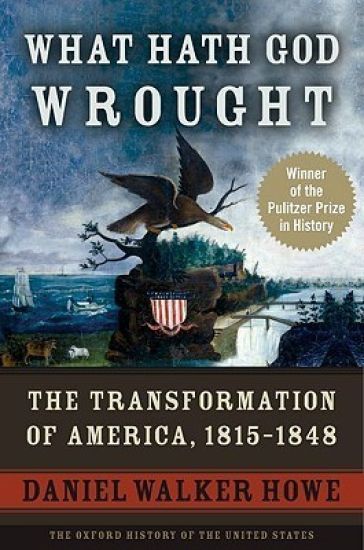
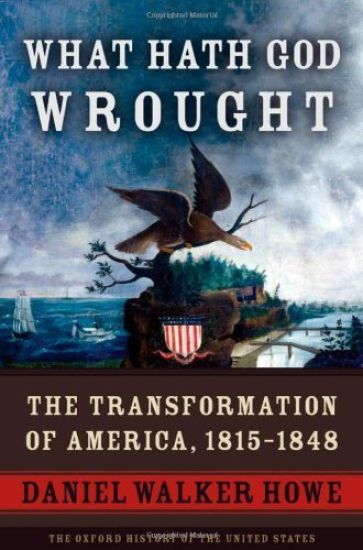
What Hath God Wrought

What Hath God Wrought

Daniel Walker Howe

Oxford University Press Inc
2009
nidottu
The Oxford History of the United States is by far the most respected multi-volume history of our nation. In this prize-winning, critically acclaimed addition to the series, historian Daniel Walker Howe illuminates the period from the battle of New Orleans to the end of the Mexican-American War, an era when the United States expanded to the Pacific and won control over the richest part of the North American continent. Howe's panoramic narrative portrays revolutionary improvements in transportation and communications that accelerated the extension of the American empire. Railroads, canals, newspapers, and the telegraph dramatically lowered travel times and spurred the spread of information. These innovations prompted the emergence of mass political parties and stimulated America's economic development from an overwhelmingly rural country to a diversified economy in which commerce and industry took their place alongside agriculture. In his story, the author weaves together political and military events with social, economic, and cultural history. He examines the rise of Andrew Jackson and his Democratic party, but contends that John Quincy Adams and other Whigs--advocates of public education and economic integration, defenders of the rights of Indians, women, and African-Americans--were the true prophets of America's future. He reveals the power of religion to shape many aspects of American life during this period, including slavery and antislavery, women's rights and other reform movements, politics, education, and literature. Howe's story of American expansion culminates in the bitterly controversial but brilliantly executed war waged against Mexico to gain California and Texas for the United States. Winner of the New-York Historical Society American History Book Prize Finalist, 2007 National Book Critics Circle Award for Nonfiction
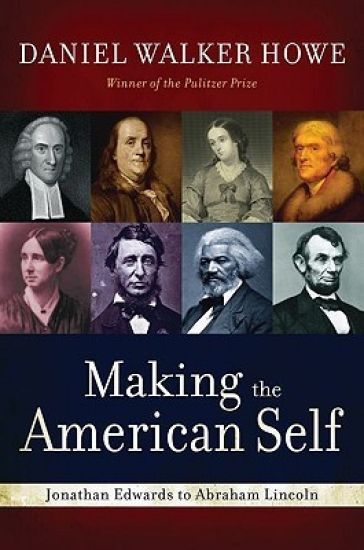
Making the American Self

Making the American Self

Daniel Walker Howe

Oxford University Press Inc
2009
nidottu
Originally published in 1997 and now back in print, Making the American Self by Daniel Walker Howe, the Pulitzer Prize-winning author of What Hath God Wrought, charts the genesis and fascinating trajectory of a central idea in American history. One of the most precious liberties Americans have always cherished is the ability to "make something of themselves"--to choose not only an occupation but an identity. Examining works by Benjamin Franklin, Jonathan Edwards, Abraham Lincoln, Frederick Douglass, Henry David Thoreau, Ralph Waldo Emerson, Margaret Fuller, and others, Howe investigates how Americans in the 18th and 19th centuries engaged in the process of "self-construction," "self-improvement," and the "pursuit of happiness." He explores as well how Americans understood individual identity in relation to the larger body politic, and argues that the conscious construction of the autonomous self was in fact essential to American democracy--that it both shaped and was in turn shaped by American democratic institutions. "The thinkers described in this book," Howe writes, "believed that, to the extent individuals exercised self-control, they were making free institutions--liberal, republican, and democratic--possible." And as the scope of American democracy widened so too did the practice of self-construction, moving beyond the preserve of elite white males to potentially all Americans. Howe concludes that the time has come to ground our democracy once again in habits of personal responsibility, civility, and self-discipline esteemed by some of America's most important thinkers. Erudite, beautifully written, and more pertinent than ever as we enter a new era of individual and governmental responsibility, Making the American Self illuminates an impulse at the very heart of the American experience.
What Hath God Wrought

What Hath God Wrought

Daniel Walker Howe

Oxford University Press Inc
2008
sidottu

Halvin toimitettuna 31,90 €

The Oxford History of the United States is by far the most respected multi-volume history of our nation. The series includes two Pulitzer Prize winners, two New York Times bestsellers, and winners of the Bancroft and Parkman Prizes. Now, in What Hath God Wrought, historian Daniel Walker Howe illuminates the period from the battle of New Orleans to the end of the Mexican-American War, an era when the United States expanded to the Pacific and won control over the richest part of the North American continent. Howe's panoramic narrative portrays revolutionary improvements in transportation and communications that accelerated the extension of the American empire. Railroads, canals, newspapers, and the telegraph dramatically lowered travel times and spurred the spread of information. These innovations prompted the emergence of mass political parties and stimulated America's economic development from an overwhelmingly rural country to a diversified economy in which commerce and industry took their place alongside agriculture. In his story, the author weaves together political and military events with social, economic, and cultural history. He examines the rise of Andrew Jackson and his Democratic party, but contends that John Quincy Adams and other Whigs--advocates of public education and economic integration, defenders of the rights of Indians, women, and African-Americans--were the true prophets of America's future. He reveals the power of religion to shape many aspects of American life during this period, including slavery and antislavery, women's rights and other reform movements, politics, education, and literature. Howe's story of American expansion culminates in the bitterly controversial but brilliantly executed war waged against Mexico to gain California and Texas for the United States. By 1848 America had been transformed. What Hath God Wrought provides a monumental narrative of this formative period in United States history.
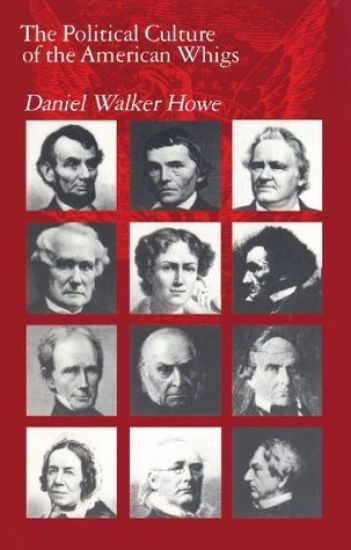
The Political Culture of the American Whigs

The Political Culture of the American Whigs

Daniel Walker Howe

University of Chicago Press
1984
nidottu
Howe studies the American Whigs with the thoroughness so often devoted their party rivals, the Jacksonian Democrats. He shows that the Whigs were not just a temporary coalition of politicians but spokesmen for a heritage of political culture received from Anglo-American tradition and passed on, with adaptations, to the Whigs' Republican successors. He relates this culture to both the country's economic conditions and its ethnoreligious composition.