Kirjojen hintavertailu – 12 903 724 kirjaa ja 27 kauppaa

Kirjailija

Danny Dorling

Kirjat ja teokset yhdessä paikassa: 36 kirjaa, julkaisuja vuosilta 2001–2027, suosituimpiin kuuluu From Votes to Seats. Vertaile teosten hintoja ja tarkista saatavuus suomalaisista kirjakaupoista.

36 kirjaa

Kirjojen julkaisuvuodet: 2001–2027.

Do We Need Economic Inequality?

Do We Need Economic Inequality?

Danny Dorling

Polity Press
2017
sidottu
Although economic inequality provokes widespread disquiet, its supposed necessity is rarely questioned. At best, a basic level of inequality is seen as a necessary evil. At worst, it is seen as insufficient to encourage aspiration, hard work and investment – a refrain sometimes used to advocate ever greater inequality. In this original new book, Danny Dorling critically analyses historical trends and contemporary assumptions in order to question the idea that inequality is an inevitability. What if, he asks, widespread economic inequality is actually just a passing phase, a feature of the capitalist transition from a settled rural way of life to our next highly urban steady-state? Is it really likely that we face a Blade Runner-style dystopian future divided between a tiny elite and an impoverished mass? Dorling shows how, amongst much else, a stabilizing population, changing gender relations and rising access to education make a more egalitarian alternative to this nightmare vision not only preferable, but realistic. This bold contribution to one of the most significant debates of our time will be essential reading for anyone interested in our economic, social and political destiny.
Do We Need Economic Inequality?

Do We Need Economic Inequality?

Danny Dorling

Polity Press
2017
nidottu
Although economic inequality provokes widespread disquiet, its supposed necessity is rarely questioned. At best, a basic level of inequality is seen as a necessary evil. At worst, it is seen as insufficient to encourage aspiration, hard work and investment – a refrain sometimes used to advocate ever greater inequality. In this original new book, Danny Dorling critically analyses historical trends and contemporary assumptions in order to question the idea that inequality is an inevitability. What if, he asks, widespread economic inequality is actually just a passing phase, a feature of the capitalist transition from a settled rural way of life to our next highly urban steady-state? Is it really likely that we face a Blade Runner-style dystopian future divided between a tiny elite and an impoverished mass? Dorling shows how, amongst much else, a stabilizing population, changing gender relations and rising access to education make a more egalitarian alternative to this nightmare vision not only preferable, but realistic. This bold contribution to one of the most significant debates of our time will be essential reading for anyone interested in our economic, social and political destiny.
The Human Atlas of Europe

The Human Atlas of Europe

Dimitris Ballas; Danny Dorling; Benjamin Hennig

Policy Press
2017
nidottu
What does Brexit actually mean for the UK and what are the wider implications for Europe? Was the UK ‘leave’ vote actually symptomatic of broader issues within Europe such as population mobility and the rise of non-traditional parties? Written by leading international authors, this timely atlas explores Europe’s society, culture, economy, politics and environment using state of the art mapping techniques With maps covering over 80 topics ranging from life expectancy, greenhouse gas emissions, GDP to Eurovision voting, The Human Atlas of Europe addresses fundamental questions around social cohesion and sustainable growth as Europe negotiates the UK’s exit while continuing through the economic crisis. This concise, accessible atlas is packed with exciting features, including: • short introductions to each topic • maps using the very latest data • infographics bringing this all to life • summaries of key information including league tables • core statistics on Europe Taken as a whole, the atlas shows how geographical and state boundaries only tell a partial story and that we still live in a far more cohesive Europe than we realise.
Geography: Ideas in Profile

Geography: Ideas in Profile

Danny Dorling; Carl Lee

Profile Books Ltd
2016
nidottu
Ideas in Profile: Small Introductions to Big Topics Geography gives shape to our innate curiosity; cartography is older than writing. Channelling our twin urges to explore and understand, geographers uncover the hidden connections of human existence, from infant mortality in inner cities to the decision-makers who fly overhead in executive jets, from natural disasters to over-use of fossil fuels. In this incisive introduction to the subject, Danny Dorling and Carl Lee reveal geography as a science which tackles all of the biggest issues that face us today, from globalisation to equality, from sustainability to population growth, from climate change to changing technology - and the complex interactions between them all. Illustrated by a series of award-winning maps created by Benjamin D. Hennig, this is a book for anyone who wants to know more about why our world is the way it is today, and where it might be heading next.
People and Places

People and Places

Danny Dorling; Bethan Thomas

Policy Press
2016
nidottu
How has UK society changed since 2001? What does the UK population look like in 2016? This unique atlas, the third in a bestselling series, uses a wealth of up-to-the minute data sources alongside the last 2011 Census data to identify national and local trends and provide analysis and discussion of the implications of these for future policy. Fascinating information on everything from sex, age, marriage and ethnicity to qualifications, employment, housing and migration is provided in gloriously colourful maps and graphics. Packed with at-a-glance data tracking the period from boom to bust and beyond to the new Conservative government of 2015, key features include the analysis of over 100,000 demographic statistics and the use of new cartographic projections and techniques, all laid out in an attractive and accessible format. Put together, this is the most accessible guide to social change over the past 15 years in the UK.
People and Places

People and Places

Danny Dorling; Bethan Thomas

Policy Press
2016
sidottu
How can very recent UK trends in the years 2011-2015 be understood in the context of detailed maps of social change in the 10 years between 2001 and 2011? This unique atlas, the third in a bestselling series, uses a wealth of up-to-the minute data sources alongside 2011 Census data. It shows national and local trends and provides analysis of the implications of these for future policy. Packed with at-a-glance data tracking the period from boom to bust and beyond to the new Conservative government of 2015, key features include the analysis of over 100,000 demographic statistics and the use of new cartographic projections and techniques, all laid out in an attractive and accessible format. Put together, this is the most accessible guide to social change over the past 15 years, and is essential reading for all those working in local authorities, health authorities, and statutory and voluntary organisations, as well as for researchers, students, policy makers, journalists and politicians interested in social geography, social policy, social justice and social change. This is the only social atlas of the 2011 Census that explains so much about how all of the UK is changing.
A Better Politics

A Better Politics

Danny Dorling

London Publishing Partnership
2016
nidottu
The aim of this book is to inspire a better politics: one that will enable future generations to be happier. Greater well-being and better health should be the goals - rather than wealth maximization. We need to value health-care more than hedge-funds, caring above careers, relationships more than real-estate. Happiness is the avoidance of misery, the gaining of long-term life satisfaction, the feeling of fulfilment, of worth, of kindness, of usefulness and of love. The book is about what makes most of us happier, but it is also about the collective good. We cannot truly be happy if those around us are not happy. Individualist attempts at self-improvement - or only looking after yourself and your family - do not work in the long-run. This book looks at the evidence for a successful politics that would promote happiness and health. It suggests policies that take account of this evidence. Government can and should work to make us happier.
Injustice

Injustice

Danny Dorling

Policy Press
2015
nidottu
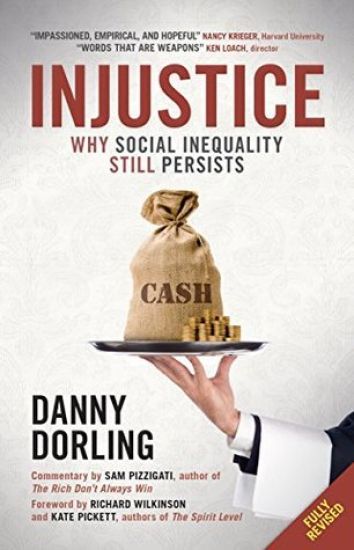
In the five years since the first edition of Injustice there have been devastating increases in poverty, hunger and destitution in the UK. Globally, the richest 1% have never held a greater share of world wealth, while the share of most of the other 99% has fallen in the last five years, with more and more people in debt, especially the young. Economic inequalities will persist and continue to grow for as long as we tolerate the injustices which underpin them. This fully rewritten and updated edition revisits Dorling’s claim that Beveridge’s five social evils are being replaced by five new tenets of injustice: elitism is efficient; exclusion is necessary; prejudice is natural; greed is good and despair is inevitable. By showing these beliefs are unfounded, Dorling offers hope of a more equal society. We are living in the most remarkable and dangerous times. With every year that passes it is more evident that Injustice is essential reading for anyone concerned with social justice and wants to do something about it.
All That Is Solid

All That Is Solid

Danny Dorling

Penguin Books Ltd
2015
pokkari
In All That is Solid Danny Dorling offers an agenda-shaping look at the UK's dangerous relationship with housing - and how it's all going to come crashing downHousing was at the heart of the financial collapse, and our economy is now precariously reliant on the housing market. In this ground-breaking book, Danny Dorling argues that housing is the defining issue of our times. Tracing how we got to our current crisis and how housing has come to reflect class and wealth in Britain, All That Is Solid shows that the solution to our problems - rising homelessness, a generation priced out of home ownership - is not, as is widely assumed, building more homes. Inequality, he argues, is what we really need to overcome.'An urgent book about an urgent topic' - Lynsey Hanley, New Statesman 'A brilliantly original study of our national obsession' - Nick Cohen, Observer Danny Dorling is Halford Mackinder Professor in Geography at the University of Oxford. He has worked both with the British government and the World Health Organization and is frequently asked to comment on current issues on TV and the radio. He has published more than twenty-five books, including Injustice: Why Social Inequality Exists, So You Think You Know About Britain? and The 32 Stops for Penguin Underground Lines.
The Social Atlas of Europe

The Social Atlas of Europe

Dimitris Ballas; Danny Dorling; Benjamin Hennig

Policy Press
2014
sidottu
Many of us think of European countries as discreet entities - their own languages, cultures, food, and economies squarely contained within their national boundaries. But in fact Europe is at once a unified place and a sophisticatedly fragmented one, and national boundaries rarely reflect its social and economic realities. The social atlas of Europe is the first atlas to map Europe according to these realities, from the perspective of human geography rather than simply a political one. Using innovative full-color visualization methods, it reconsiders European identity through its many different facets: economy, culture, history, and human and physical geography, visualizing Europe and its people in a more fluid way, in some cases using maps without artificial national boundaries. It utilizes the latest available demographic, social, and economic data through state-of-the-art geographical information systems and new cartography techniques. Through these new visualizations, this highly illustrated book offers fresh perspectives on a range of topics, including social values, culture, education, employment, environmental footprints, health and well-being, and social inequalities and cohesion. It is a bold rethinking of Europe as we know it and will be of interest to anyone who wants to understand the continent in its truest form. Politics maps Eurovision voting patterns
Unequal Health

Unequal Health

Danny Dorling

Policy Press
2013
sidottu
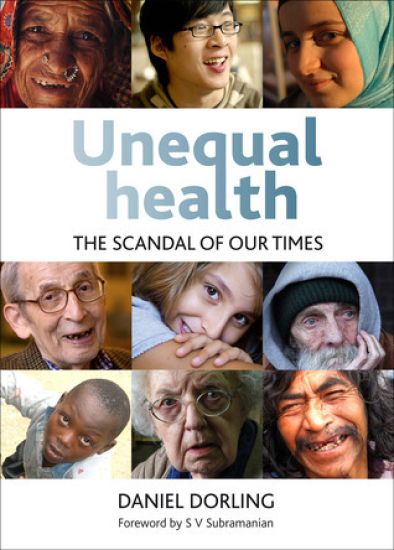
Health inequalities are the most important inequalities of all. In the US and the UK these inequalities have now reached an extent not seen for over a century. Most people's health is much better now than then, but the gaps in life expectancy between regions, between cities, and between neighbourhoods within cities now surpass the worst measures over the last hundred years. In almost all other affluent countries, inequalities in health are lower and people live longer. In his new book, academic and writer Danny Dorling describes the current extent of inequalities in health as the scandal of our times. He provides nine new chapters and updates a wide selection of his highly influential writings on health, including international-peer reviewed studies, annotated lectures, newspaper articles, and interview transcripts, to create an accessible collection that is both contemporary and authoritative. As a whole the book shows conclusively that inequalities in health are the scandal of our times in the most unequal of rich nations and calls for immediate action to reduce these inequalities in the near future.
Unequal Health

Unequal Health

Danny Dorling

Policy Press
2013
nidottu
Health inequalities are the most important inequalities of all. In the US and the UK these inequalities have now reached an extent not seen for over a century. Most people's health is much better now than then, but the gaps in life expectancy between regions, between cities, and between neighbourhoods within cities now surpass the worst measures over the last hundred years. In almost all other affluent countries, inequalities in health are lower and people live longer. In his new book, academic and writer Danny Dorling describes the current extent of inequalities in health as the scandal of our times. He provides nine new chapters and updates a wide selection of his highly influential writings on health, including international-peer reviewed studies, annotated lectures, newspaper articles, and interview transcripts, to create an accessible collection that is both contemporary and authoritative. As a whole the book shows conclusively that inequalities in health are the scandal of our times in the most unequal of rich nations and calls for immediate action to reduce these inequalities in the near future.
The Population of the UK

The Population of the UK

Danny Dorling

SAGE Publications Ltd
2012
sidottu
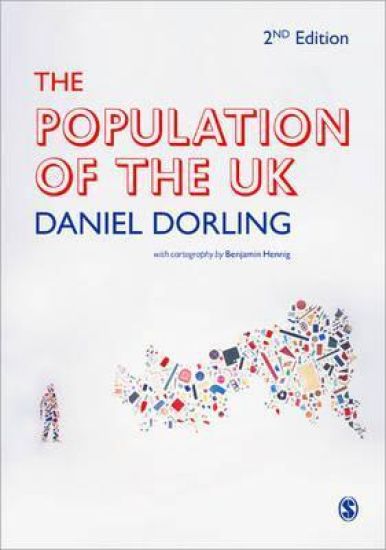
Did you know that where you were born may affect when you die? The Population of the UK explains how geography - in the widest sense - makes a difference to life outcomes. It explains the geographical differences in key socio-economic variables - like education, health, and work - that illustrate the UK's stark social inequalities and affect everyone's lives. Written for undergraduate students across social science disciplines, this unique text presents a social geography of the UK which: Contains over 100 maps. These are drawn in proportion to the numbers of people being depicted and so represent the human geography of the UK in a fair way. Visualises quantitative evidence. The very latest statistics from numerous sources - including the 2010 election - reveal the many aspects of the underlying geographical structure of society in the UK. Relates geographies of identity to geographies of inequality, mortality, work, and settlement, and in a final chapter shows how the UK's population fits in to the world picture of who has most of what, and where. Using the most advanced cartographic techniques of social mapping employed anywhere in the world, The Population of the UK explains the nuts and bolts of UK population in comparative context. A note on data: Much of the data comes from 2010 and 2011. However, because as yet only the age and sex data from the 2011 census has been released the book shows 2001 patterns where only census data can reveal it. As 2011 census data is released, Danny plans to update the maps on-line.
The Population of the UK

The Population of the UK

Danny Dorling

SAGE Publications Ltd
2012
nidottu
Did you know that where you were born may affect when you die? The Population of the UK explains how geography - in the widest sense - makes a difference to life outcomes. It explains the geographical differences in key socio-economic variables - like education, health, and work - that illustrate the UK's stark social inequalities and affect everyone's lives. Written for undergraduate students across social science disciplines, this unique text presents a social geography of the UK which: Contains over 100 maps. These are drawn in proportion to the numbers of people being depicted and so represent the human geography of the UK in a fair way. Visualises quantitative evidence. The very latest statistics from numerous sources - including the 2010 election - reveal the many aspects of the underlying geographical structure of society in the UK. Relates geographies of identity to geographies of inequality, mortality, work, and settlement, and in a final chapter shows how the UK's population fits in to the world picture of who has most of what, and where. Using the most advanced cartographic techniques of social mapping employed anywhere in the world, The Population of the UK explains the nuts and bolts of UK population in comparative context. A note on data: Much of the data comes from 2010 and 2011. However, because as yet only the age and sex data from the 2011 census has been released the book shows 2001 patterns where only census data can reveal it. As 2011 census data is released, Danny plans to update the maps on-line.
The Visualization of Spatial Social Structure
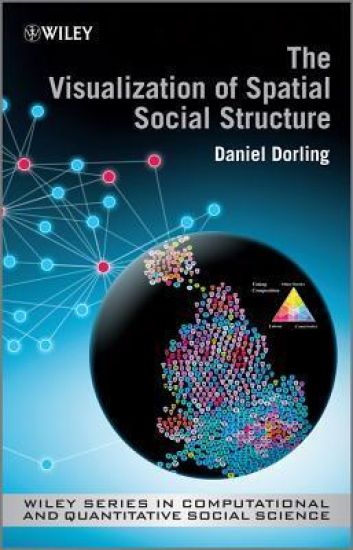
How do you draw a map of 100,000 places, of more than a million flows of people, of changes over time and space, of different kinds of spaces, surfaces and volumes, from human travel time to landscapes of hopes, fears, migration, manufacturing and mortality? How do you turn the millions of numbers concerning some of the most important moments of our lives into images that allow us to appreciate the aggregate while still remembering the detail? The visualization of spatial social structure means, literally, making visible the geographical patterns to the way our lives have come to be socially organised, seeing the geography in society. To a statistical readership visualization implies using data. More widely defined it implies freeing our imaginations. The Visualization of Spatial Social Structure introduces the reader to new ways of thinking about how to look at social statistics, particularly those about people in places. The author presents a unique combination of statistical focus and understanding of social structures and innovations in visualization, describing the rationale for, and development of, a new way of visualizing information in geographical research. These methods are illustrated through extensive full colour graphics; revealing mistakes, techniques and discoveries which present a picture of a changing political and social geography. More complex aspects on the surface of social landscapes are revealed with sculptured symbols allowing us to see the relationships between the wood and the trees of social structure. Today's software can be so flexible that these techniques can now be emulated without coding. This book centres on a particular place and time; 1980s Britain, and a particular set of records; routine social statistics. A great deal of information about the 80s' social geography of Britain is contained within databases such as the population censuses, surveys and administrative data. Following the release of the 2011 census, now is a good time to look back at the past to introduce many new visualization techniques that could be used by future researchers.
The No-nonsense Guide To Equality

The No-nonsense Guide To Equality

Danny Dorling

New Internationalist Publications Ltd
2012
nidottu
The No-Nonsense Guide to Equality discusses the positive effects that equality can have, using examples and case studies from across the globe, including many from the UK. It examines the lessons of history and covers race, gender and ethnicity, age, and wealth. Danny Dorling considers, realistically, just how equal it is possible to be, the challenges we face, and the factors that will lead to greater equality for all.