
Kirjojen hintavertailu – 12 859 826 kirjaa ja 27 kauppaa

Kirjailija

Daojiong Zha

Kirjat ja teokset yhdessä paikassa: 2 kirjaa, julkaisuja vuosilta 2000–2013, suosituimpiin kuuluu China's International Relations in the 21st Century. Vertaile teosten hintoja ja tarkista saatavuus suomalaisista kirjakaupoista.

2 kirjaa

Kirjojen julkaisuvuodet: 2000–2013.

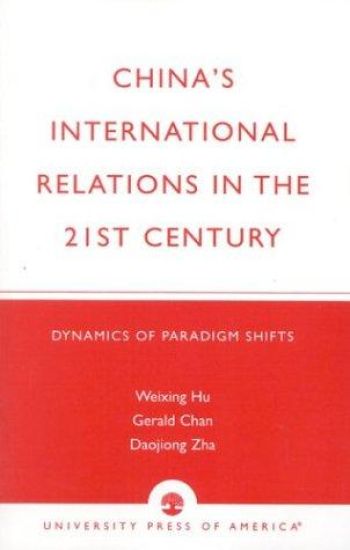
China's International Relations in the 21st Century

China's International Relations in the 21st Century

Weixing R. Hu; Gerald Chan; Daojiong Zha

University Press of America
2000
nidottu
Most people believe China's foreign behavior is driven by its growing power status in world politics. Chinese leaders still firmly uphold some traditional values in foreign policy such as sovereignty, territorial integrity, and national unification. However, it is often neglected that China's behavior is also shaped by its changing perception of the globalizing world and, to a large extent, is a result of external pressure on China. By examining the dynamics of paradigm shifts in China's foreign policy thinking, this book explores the ideological sources of China's international relations in the new century. With growing economic interdependence with the outside world, which creates both constraints as well as incentives to adapt to the prevailing norms in contemporary international relations, authors of this volume analyze indigenous Chinese sources of intellect on the paradigm shifts. The concepts studied in this volume include national identity, nationalism, globalism, multilateralism, sovereignty, and the role of international law in Chinese foreign policy. This volume helps to shed new light on how the dynamics of paradigm shifts affect China's behavior in international affairs.

Building a Neighborly Community

Building a Neighborly Community

Daojiong Zha; Weixing Hu

Manchester University Press
2013
nidottu
Building a neighborly community, available for the first time in paperback, explores the political economy of post-cold war East Asian co-operation by examining the history of intra-regional co-operation, against the background of China’s rise and Japan’s relative decline, both real and perceived. The book in particular examines how East Asian states have dealt with the South China Sea as a region-wide security challenge and the imperative for self-help after the 1997 economic crisis. The book builds on the explanatory strength of analytical eclecticism, and ultimately concludes that China, South Korea, Japan, and ASEAN states have aimed for constructing a neighborly community. The fundamental differences between a neighborly community and the kind of community that has emerged in Europe and North America are that qualification for membership is not conditional, the process of routine interactions is itself one of reassurance, the aim of inter-state interactions is to foster acceptance of each other, and changes in a member’s foreign policy behaviour are accepted.