Kirjojen hintavertailu – 12 859 818 kirjaa ja 27 kauppaa
Kirjailija
Dave Cole
Kirjat ja teokset yhdessä paikassa: 8 kirjaa, julkaisuja vuosilta 2000–2025, suosituimpiin kuuluu Fight of the Century. Vertaile teosten hintoja ja tarkista saatavuus suomalaisista kirjakaupoista.
Dave Cole; Viet Thanh Nguyen; Jacqueline woodson; Ann Patchett; Brit Bennett; Steven Okazaki; David Handler; Geraldine Brooks; Yaa Gyasi; Sergio De La Pava; Dave Eggers; Timothy Egan; Li Yiyun; Meg Wolitzer; Hector Tobar; Aleksandar Hemon; Elizabeth Strout; Rabih Alameddine; Moriel Rothman-Zecher; Jonathan Lethem; Salman Rushdie; Lauren Groff; Jennifer Egan; Scott Turow; Morgan Parker; Victor Lavalle; Michael Cunningham; Neil Gaiman; Jesmyn Ward; Moses Sumney; George Saunders; Marlon James; William Finnegan; Anthony Doerr
The American Civil Liberties Union partners with award-winning authors Michael Chabon and Ayelet Waldman in this “forceful, beautifully written” (Associated Press) collection that brings together many of our greatest living writers, each contributing an original piece inspired by a historic ACLU case. On January 19, 1920, a small group of idealists and visionaries, including Helen Keller, Jane Addams, Roger Baldwin, and Crystal Eastman, founded the American Civil Liberties Union. A century after its creation, the ACLU remains the nation’s premier defender of the rights and freedoms guaranteed by the Constitution. In collaboration with the ACLU, authors Michael Chabon and Ayelet Waldman have curated an anthology of essays “full of struggle, emotion, fear, resilience, hope, and triumph” (Los Angeles Review of Books) about landmark cases in the organization’s one-hundred-year history. Fight of the Century takes you inside the trials and the stories that have shaped modern life. Some of the most prominent cases that the ACLU has been involved in—Brown v. Board of Education, Roe v. Wade, Miranda v. Arizona—need little introduction. Others you may never even have heard of, yet their outcomes quietly defined the world we live in now. Familiar or little-known, each case springs to vivid life in the hands of the acclaimed writers who dive into the history, narrate their personal experiences, and debate the questions at the heart of each issue. Hector Tobar introduces us to Ernesto Miranda, the felon whose wrongful conviction inspired the now-iconic Miranda rights—which the police would later read to the man suspected of killing him. Yaa Gyasi confronts the legacy of Brown v. Board of Education, in which the ACLU submitted a friend of- the-court brief questioning why a nation that has sent men to the moon still has public schools so unequal that they may as well be on different planets. True to the ACLU’s spirit of principled dissent, Scott Turow offers a blistering critique of the ACLU’s stance on campaign finance. These powerful stories, along with essays from Neil Gaiman, Meg Wolitzer, Salman Rushdie, Ann Patchett, Viet Thanh Nguyen, Louise Erdrich, George Saunders, and many more, remind us that the issues the ACLU has engaged over the past one hundred years remain as vital as ever today, and that we can never take our liberties for granted. Chabon and Waldman are donating their advance to the ACLU and the contributors are forgoing payment.
Dave Cole; Viet Thanh Nguyen; Jacqueline woodson; Ann Patchett; Brit Bennett; Steven Okazaki; David Handler; Geraldine Brooks; Yaa Gyasi; Sergio De La Pava; Dave Eggers; Timothy Egan; Li Yiyun; Meg Wolitzer; Hector Tobar; Aleksandar Hemon; Elizabeth Strout; Rabih Alameddine; Moriel Rothman-Zecher; Jonathan Lethem; Salman Rushdie; Lauren Groff; Jennifer Egan; Scott Turow; Morgan Parker; Victor Lavalle; Michael Cunningham; Neil Gaiman; Jesmyn Ward; Moses Sumney; George Saunders; Marlon James; William Finnegan; Anthony Doerr
To mark its 100-year anniversary, the American Civil Liberties Union partners with award-winning authors Michael Chabon and Ayelet Waldman to bring together many of our greatest living writers, each contributing an original piece inspired by a historic ACLU case. On January 19, 1920, a small group of idealists and visionaries, including Helen Keller, Jane Addams, Roger Baldwin, and Crystal Eastman, founded the American Civil Liberties Union. A century after its creation, the ACLU remains the nation’s premier defender of the rights and freedoms guaranteed by the Constitution. In collaboration with the ACLU, authors Michael Chabon and Ayelet Waldman have curated an anthology of essays about landmark cases in the organization’s one-hundred-year history. Fight of the Century takes you inside the trials and the stories that have shaped modern life. Some of the most prominent cases that the ACLU has been involved in—Brown v. Board of Education, Roe v. Wade, Miranda v. Arizona—need little introduction. Others you may never even have heard of, yet their outcomes quietly defined the world we live in now. Familiar or little-known, each case springs to vivid life in the hands of the acclaimed writers who dive into the history, narrate their personal experiences, and debate the questions at the heart of each issue. Hector Tobar introduces us to Ernesto Miranda, the felon whose wrongful conviction inspired the now-iconic Miranda rights—which the police would later read to the man suspected of killing him. Yaa Gyasi confronts the legacy of Brown v. Board of Education, in which the ACLU submitted a friend of- the-court brief questioning why a nation that has sent men to the moon still has public schools so unequal that they may as well be on different planets. True to the ACLU’s spirit of principled dissent, Scott Turow offers a blistering critique of the ACLU’s stance on campaign finance. These powerful stories, along with essays from Neil Gaiman, Meg Wolitzer, Salman Rushdie, Ann Patchett, Viet Thanh Nguyen, Louise Erdrich, George Saunders, and many more, remind us that the issues the ACLU has engaged over the past one hundred years remain as vital as ever today, and that we can never take our liberties for granted. Chabon and Waldman are donating their advance to the ACLU and the contributors are forgoing payment.
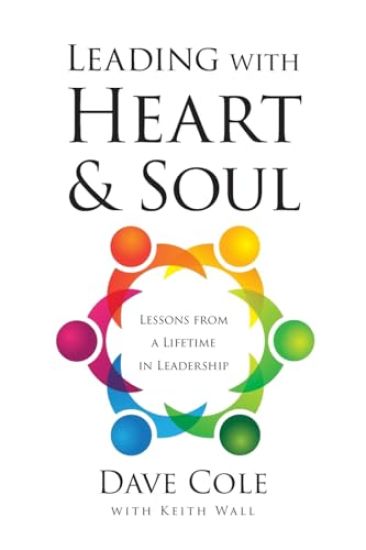
Leading with Heart and Soul is an inspiring memoir that chronicles Dave Cole's journey through decades of leadership, driven by resilience, faith, and the hard-earned wisdom of experience. From humble beginnings to executive roles in major corporations, his story reveals how a self-described "modestly gifted individual" can rise to leadership excellence. In each chapter, he shares valuable lessons on trust, teamwork, and relying on God's guidance, reminding readers that true leadership emerges not only in success but in times of challenge and failure. Cole provides a roadmap to help you: Embrace challenges and setbacks as opportunities to grow and strengthen your leadership. Prioritize empathy, integrity, and optimism to foster a positive team environment. Trust in a higher purpose to guide your decisions and inspire others. Leading with heart and soul is not only possible but essential for making a lasting impact. Whether you're an aspiring leader or a seasoned executive, this book offers transformative insights for leading with purpose and passion.
The southeastern corner of White County Tennessee contains a remarkably well preserved treasure trove of natural features and forgotten history. In their heyday the communities that occupied the Scott's Gulf area were a bustling community of stores schools farms and homes. By the early seventies not a single building remained. Today not even a single foundation stone can be found at Dodson, or the nearby town of Bethesda. What had once been a heavily traveled road between several small but bustling communities around the turn of the century had, in the intervening years, turned to little more than an extended ditch that was more water than road. The Davis family moved to the Big Bottom area White county's history. Although John White is remembered by the locals as one of the founding residents of White County and is recorded as moving into the area in 1789, the Davis family lived in the Big Bottom area at least as early as 1783. The author's great-great-great-great-grandfather Ephraim Davis is recorded as being born in White County in 1783.
The purpose of road signs is to help the driver get to the desired destination as safely as possible. To achieve this goal, road signs provide innumerable regulations, directions, descriptions, instructions and so-on. As anyone knows, getting on the road today is always a risk. You may have heard the saying, "taking your life into your own hands". Traversing the ''Highway To Hell'' is no less risky and in point of fact you not only have 'your life' in your hands, you have 'your eternal life' in your hands. So, if road signs are required to get you from "Tatum, TX." to "Peculiar, MO." how much more so to get you from the cradle to the grave? We all understand that road signs don't guarantee we reach our destination, but they do improve our probability. The road signs we are going to consider posted on the 'Highway To Hell' will, if heeded, increase the probability of a safe arrival to 'hell'.
L'atel hit the hyper-light control. His ship was seriously damaged but all the indicators seemed to suggest that the hyper-light would still work. If it failed to start, he and the human colonel in the seat beside him were both dead. Time seemed to slow to a crawl, the engines seemed to take forever to activate. As the seconds ticked away L'atel and Colonel Yeager were becoming convinced that something had gone seriously wrong. Just then, the stars disappeared. Are we alone? For ages humans have gazed at the night sky and wondered if there was anyone else out there. Five years ago that question had been answered a small group of aliens made an unscheduled crash landing on a Tennessee lake on live TV. As mankind adjusted to the knowledge of alien visitors, national leaders learned the more disturbing details. Aliens were not only here now but had been visiting Earth for thousands of years. In addition to being the unwitting hosts of off-world travelers, mankind had also been used as pawns in a galactic game of chess between two very advanced races. The action-packed follow up to Splashdown: First Contact? Earth Rising picks up five years after the events of Splashdown: First Contact?, in which L'atel, an alien cargo pilot, and six unauthorized passengers first arrived on Earth. While most of his passengers had eventually returned to their home-worlds, L'atel and one of his female passengers, Pan'niah, had chosen to remain on Earth. They married and settled in Las Vegas Nevada becoming the first two actual space aliens to hold a Resident Alien Card issued by the United States Government. Five years later, mankind is poised to become a part of the cosmic community. Alien technology is filtering into the consumer marketplace. Alliances have been formed and treaties signed. Soon, by hook or crook, mankind will have interstellar capability, despite the attempts of the Ebens to block us. Mankind is about to become much more than a pawn in that galactic chess game. But to the Ebens, who have played the part of the queen for thousands of years, there is no room on the board for anything but pawns, and they will do anything make sure that it stays that way. Five years ago we defied them, and they promised that we would regret it. Now it seems as though they are about to make good on that threat. A war is coming. Is mankind prepared for the fight?
Written by two Ivy League graduates who struggled with learning disabilities and ADHD, Learning Outside the Lines teaches students how to take control of their education and find true success with brilliant and easy study suggestions and tips. Every day, your school, your teachers, and even your peers draw lines to measure and standardize intelligence. They decide what criteria make one person smart and another person stupid. They decide who will succeed and who will just get by. Perhaps you find yourself outside the norm, because you learn differently—but, unlike your classmates, you have no system in place that consistently supports your ability and desire to learn. Simply put, you are considered lazy and stupid. You are expected to fail. Learning Outside the Lines is written by two such “academic failures”—that is, two academic failures who graduated from Brown University at the top of their class. Jonathan Mooney and David Cole teach you how to take control of your education and find true success—and they offer all the reasons why you should persevere. Witty, bold, and disarmingly honest, Learning Outside the Lines takes you on a journey toward personal empowerment and profound educational change, proving once again that rules sometimes need to be broken.