Kirjojen hintavertailu – 12 859 827 kirjaa ja 27 kauppaa

Kirjailija

David A. Rennie

Kirjat ja teokset yhdessä paikassa: 4 kirjaa, julkaisuja vuosilta 2020–2025, suosituimpiin kuuluu Cultural comets and other celestials. Vertaile teosten hintoja ja tarkista saatavuus suomalaisista kirjakaupoista.

4 kirjaa

Kirjojen julkaisuvuodet: 2020–2025.

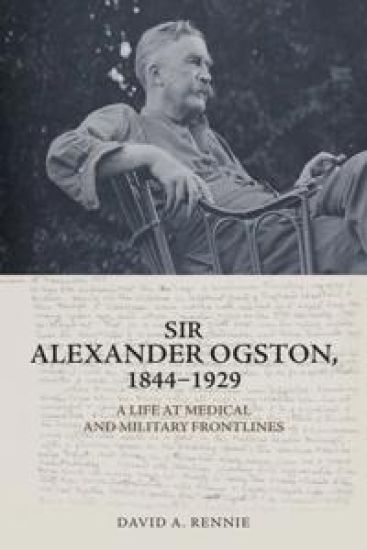
Sir Alexander Ogston, 1844-1929

Sir Alexander Ogston, 1844-1929

David A. Rennie

EDINBURGH UNIVERSITY PRESS
2025
nidottu
Ogston's career was of far-ranging, yet underacknowledged, excellence. Inspired by the work of Joseph Lister and Robert Koch, Ogston determined to find the cause of post-operative infection. Working in his home laboratory, Ogston established the link between acute inflammation and suppuration and microorganisms, discovered (and named) staphylococcus (better known today in connection with MRSA), and correctly linked localised microorganism infections with blood poisoning. Ogston served as a medical volunteer during the 1885 Soudan Campaign and, in 1892, became Surgeon in Ordinary to Queen Victoria. Although instrumental in founding the Royal Army Medical Corps in 1898, Ogston remained critical of the army medical services. These views were amply confirmed by the events of the Boer War, in which Ogston offered his medical services. During the Great War, Ogston in his early seventies and President of the British Medical Association served as a surgeon with the British Red Cross at the Villa Trento hospital in north-east Italy a site which served as an inspiration for the British hospital in Ernest Hemingway's A Farewell to Arms.
Sir Alexander Ogston, 1844-1929

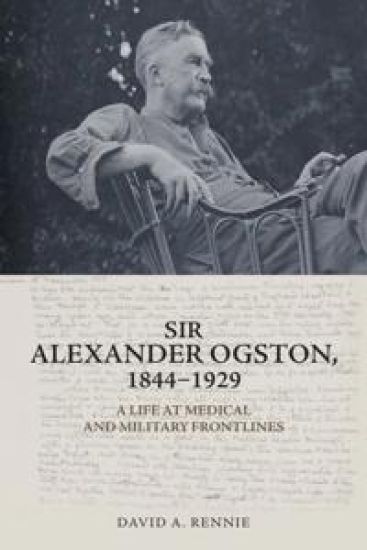
Sir Alexander Ogston, 1844-1929

David A. Rennie

EDINBURGH UNIVERSITY PRESS
2023
sidottu
Ogston's career was of far-ranging, yet under acknowledged, excellence. Inspired by the work of Joseph Lister and Robert Koch, Ogston was determined to find the cause of post-operative infection. Working in his home laboratory, Ogston established the link between acute inflammation and suppuration and microorganisms, discovered (and named) staphylococcus (better known today in connection with MRSA), and correctly linked localised microorganism infections with blood poisoning. Ogston served as a medical volunteer during the 1885 Soudan Campaign and, in 1892, became Surgeon in Ordinary to Queen Victoria. Although instrumental in founding the Royal Army Medical Corps in 1898, Ogston remained critical of the army medical services. These views were amply confirmed by the events of the Boer War, in which Ogston offered his medical services. During the Great War, Ogston in his early seventies and President of the British Medical Association served as a surgeon with the British Red Cross at the Villa Trento hospital in north-east Italy a site which served as an inspiration for the British hospital in Ernest Hemingway's A Farewell to Arms.
Cultural comets and other celestials

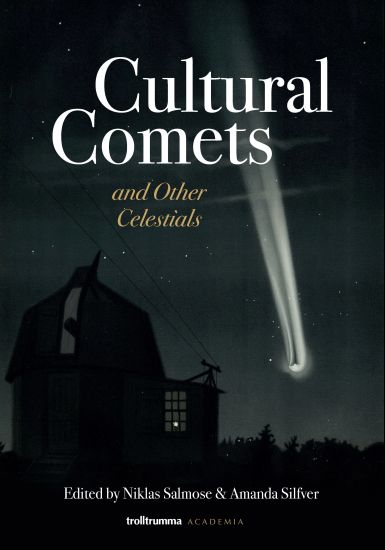
Cultural comets and other celestials

Terence Meaden; Randall Stevenson; David A. Rennie; Eric Sandberg; Amanda Silfver; Niklas Salmose

Trolltrumma AB
2022
nidottu
This is a book on comets – visually stunning dirty space snowballs of mostly ice and dust that formed during the birth of the solar system 4.6 billion years ago. Most comets have stable orbits in the outer reaches of the solar system past the planet Neptune, or in the still-more remote Oort Cloud. But if destabilized by gravitational forces, they may move into the inner solar system – with some risk of collision with the Earth, and some justification for the dread, fear, and awe they have inspired in many different cultures and societies around the world and throughout time. The depiction of comets in popular culture is firmly rooted in the long Western tradition of seeing comets as harbingers of doom and as omens of world-altering change. Comets are thus horrifying and exhilarating, at the same time, with a profound impact on earthly societies and cultures. Comets and other celestials as fictional devices offer, as this collection of essays show, a tremendous opportunity to radically cut up the infectious wounds of our post-industrial society for close inspection and anamnesis. This volume contains fluid examples of how comets, suns, moons, planets all have contributed to creating speculative yet sensitized narratives about some of the most urgent existential, ontological and ecological matters in the modern world. Essays by Terence Meaden, Randall Stevenson, Eric Sandberg, David Rennie, Amanda Silfver, and Niklas Salmose.
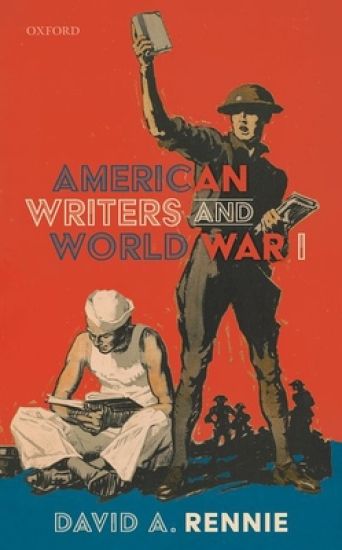
American Writers and World War I

American Writers and World War I

David A. Rennie

Oxford University Press
2020
sidottu
Looking at texts written throughout the careers of Edith Wharton, Ellen La Motte, Mary Borden, Thomas Boyd, F. Scott Fitzgerald, Laurence Stallings, and Ernest Hemingway, American Writers and World War I argues that authors' war writing continuously evolved in response to developments in their professional and personal lives. Recent research has focused on constituencies of identity--such as gender, race, and politics--registered in American Great War writing. Rather than being dominated by their perceived membership of such socio-political categories, this study argues that writers reacted to and represented the war in complex ways which were frequently linked to the exigencies of maintaining a career as a professional author. War writing was implicated in, and influenced by, wider cultural forces such as governmental censorship, the publishing business, advertising, and the Hollywood film industry. American Writers and World War I argues that even authors' hallmark 'anti-war' works are in fact characterized by an awareness of the war's nuanced effects on society and individuals. By tracking authors' war writing throughout their entire careers--in well-known texts, autobiography, correspondence, and neglected works--this study contends that writers' reactions were multifaceted, and subject to change--in response to their developments as writers and individuals. This work also uncovers the hitherto unexplored importance of American cultural and literary precedents which offered writers means of assessing the war. Ultimately, the volume argues, American World War I writing was highly personal, complex, and idiosyncratic.