Kirjojen hintavertailu – 12 859 824 kirjaa ja 27 kauppaa
Kirjailija
David A. T. Harper
Kirjat ja teokset yhdessä paikassa: 5 kirjaa, julkaisuja vuosilta 2012–2024, suosituimpiin kuuluu The Origins of All Things. Vertaile teosten hintoja ja tarkista saatavuus suomalaisista kirjakaupoista.
David A.T. Harper; Ole Seberg; Jan Audun Liljeroth Rasmussen; Anthony D. Barnosky; Arden Roy Bashforth; Mary L. Berbee; Meredith Blackwell; Gilles Cuny; Tais W. Dahl; Danny Eibye-Jacobsen; Jon Fjeldså; M. Thomas P. Gilbert; Michael Houmark-Nielsen; Henning Haack; Eline Lorenzen; Nina Lundholm; Jesper Milàn; Gitte Petersen; Minik Rosing; Hannes Schroeder; Svend Stouge; Martin V. Sørensen; Lars Vilhelmsen; Colin N. Waters; Mark Williams; Jan Zalasiewicz
This book invites the reader to take a unique journey through the history of the Solar System, the Earth, its evolving biodiversity and ecosystems, and the current state of the planet. It is an attempt to stimulate the reader’s sense of wonder and fascination with our planet: how it was created, the eons before it was populated by ourselves, how organic life, including humans, developed and evolved, and some of the threats we face during the Late Holocene. The Origins of All Things is well suited for teaching purposes, as it offers a synoptic, well-supported overview of key issues in biology and geology, and an easy introduction to key publications that broaden the scope of each chapter. The book is relevant for students of biology, geography, geology and anyone interested in the origin of life on Earth and its evolution.
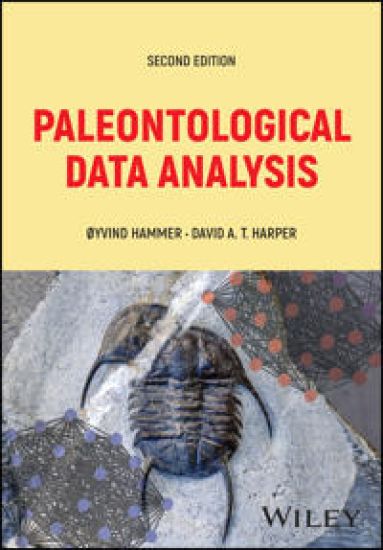
PALEONTOLOGICAL DATA ANALYSIS An up-to-date edition of the indispensable guide to analysing paleontological data Paleontology has developed in recent decades into an increasingly data-driven discipline, which brings to bear a huge variety of statistical tools. Applying statistical methods to paleontological data requires a discipline-specific understanding of which methods and parameters are the most appropriate ones, and how to account for statistical bias inherent in the fossil record. By guiding the reader to these and other fundamental questions in the statistical analysis of fossilized specimens, Paleontological Data Analysis has become the standard text for anyone with an interest in quantitative analysis of the fossil record. Now fully updated to reflect the latest statistical methods and disciplinary advances, it is an essential tool for practitioners and students alike. Readers of the second edition of Paleontological Data Analysis readers will also find: New sections on machine learning, Bayesian inference, phylogenetic comparative methods, analysis of CT data, and much more New use cases and examples using PAST, R, and Python software packages Full color illustrations throughout Paleontological Data Analysis is ideal for paleontologists, evolutionary biologists, taxonomists, and students in any of these fields.
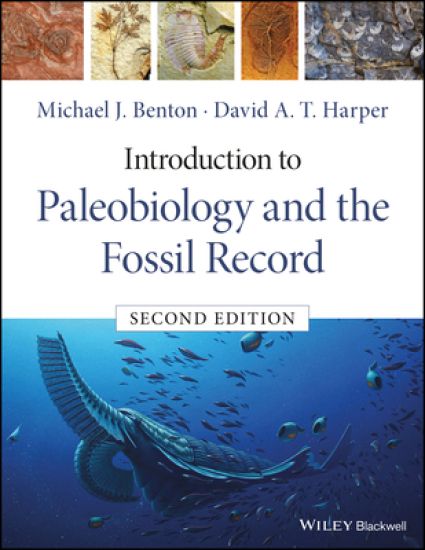
This book presents a comprehensive overview of the science of the history of life. Paleobiologists bring many analytical tools to bear in interpreting the fossil record and the book introduces the latest techniques, from multivariate investigations of biogeography and biostratigraphy to engineering analysis of dinosaur skulls, and from homeobox genes to cladistics. All the well-known fossil groups are included, including microfossils and invertebrates, but an important feature is the thorough coverage of plants, vertebrates and trace fossils together with discussion of the origins of both life and the metazoans. All key related subjects are introduced, such as systematics, ecology, evolution and development, stratigraphy and their roles in understanding where life came from and how it evolved and diversified. Unique features of the book are the numerous case studies from current research that lead students to the primary literature, analytical and mathematical explanations and tools, together with associated problem sets and practical schedules for instructors and students. New to this edition The text and figures have been updated throughout to reflect current opinion on all aspectsNew case studies illustrate the chapters, drawn from a broad distribution internationallyChapters on Macroevolution, Form and Function, Mass extinctions, Origin of Life, and Origin of Metazoans have been entirely rewritten to reflect substantial advances in these topicsThere is a new focus on careers in paleobiology
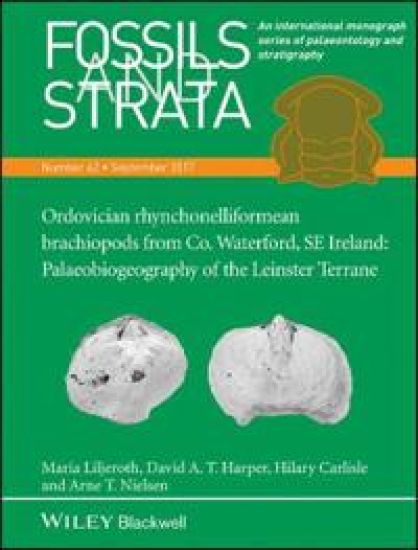
A detailed look at the rhynchonelliformean brachiopods of Ireland This publication, Ordovician rhynchonelliformean brachiopods from Co. Waterford, SE Ireland: Palaeobiogeography of the Leinster Terrane, is Number 62 within the Fossils and Strata series. The international Fossils and Strata series features monographs in palaeontology and biostratigraphy with taxonomic descriptions. The series is owned by and published on behalf of The Lethaia Foundation in cooperation with the Scandinavian countries.
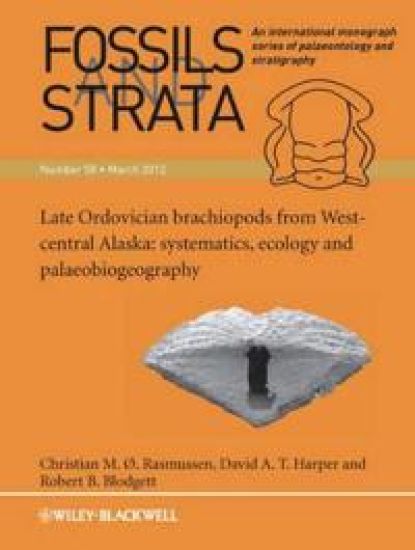
A Late Ordovician silicified brachiopod fauna from the White Mountain area, west-central Alaska is described and interpreted in a palaeoecological and biogeographical context. This area is situated within the Nixon Fork Subterrane of the Farewell Terrane, which origin and timing of final docking with Laurentia has been much debated. The current study adds new faunal data to the debate with nearly 100 species described, of these at least nine are new. The fauna is predominantly a deep-water autochthonous fauna that was mixed with an allochthonous fauna as a result of down-slope movement of turbidity currents. Biogeographically this study demonstrates close faunal affinities with Siberia.