Kirjojen hintavertailu – 12 867 464 kirjaa ja 27 kauppaa
Kirjailija
David A. Williams
Kirjat ja teokset yhdessä paikassa: 32 kirjaa, julkaisuja vuosilta 1988–2025, suosituimpiin kuuluu Deformed Discourse. Vertaile teosten hintoja ja tarkista saatavuus suomalaisista kirjakaupoista.
Written in response to reader requests for a short, “to the point” text that clearly summarizes the most important chemical elements of therapeutically relevant drug classes, Essentials of Foye's Principles of Medicinal Chemistry is a concise, quick-reference source of reliable information in the field. Derived from the highly regarded Foye's Principles of Medicinal Chemistry , this focused text provides an essential understanding of drug action and demonstrates its practical application to today’s pharmacy practice. Highlights the “take home” chemical points of every chapter in the parent text, and uses an easy-to-read, bulleted format to convey essential concepts. Covers mechanism of action (MOA), structure-activity relationships (SAR), physicochemical and pharmacokinetic properties, metabolism, and clinical applications in all chapters. Uses numerous figures and tables to illustrate key concepts and make reference quick and easy. Summarizes additional information such as adverse effects, drug-drug or drug-food interactions, chemical points of interest, and unique aspects of clinical use in side boxes or Chemical Note side bars. Concludes each chapter with a section emphasizing the clinical relevance of chapter content, as well as review questions for self-assessment. Written by the same international team of renowned researchers and academicians as Foye’s Principles of Medicinal ChemistryNow with the print edition, enjoy the bundled interactive eBook edition, which can be downloaded to your tablet and smartphone or accessed online and includes features like:Complete content with enhanced navigationPowerful search tools and smart navigation cross-links that pull results from content in the book, your notes, and even the webCross-linked pages, references, and more for easy navigationHighlighting tool for easier reference of key content throughout the textAbility to take and share notes with friends and colleaguesQuick reference tabbing to save your favorite content for future use
It has been firmly established over the last quarter century that cosmic dust plays important roles in astrochemistry. The consequences of these roles affect the formation of planets, stars and even galaxies. Cosmic dust has been a controversial topic but there is now a considerable measure of agreement as to its nature and roles in astronomy, and its initiation of astrobiology. The subject has stimulated an enormous research effort, with researchers in many countries now involved in laboratory research and in ab initio computations. This is the first book devoted to a study of the chemistry of cosmic dust, presenting current thinking on the subject distilled from many publications in surface and solid-state science, and in astronomy. The authors discuss the nature of dust, its formation and evolution, the chemistry it can promote on its surfaces, and the consequences of these functions. The purpose of this book is to review current understanding and to indicate where future work is required. Mainly intended for researchers in the field of astrochemistry, the book could also be used as the basis of a course for postgraduate students who have an interest in astrochemistry.
Molecular line emissions offer researchers exciting opportunities to learn about the evolutionary state of the Milky Way and distant galaxies. This text provides a detailed introduction to molecular astrophysics and an array of useful techniques for observing astronomical phenomena at millimetre and submillimetre wavelengths. After discussing the theoretical underpinnings of molecular observation, the authors catalogue suitable molecular tracers for many types of astronomical regions in local and distant parts of the Universe, including cold gas reservoirs primed for the formation of new stars, regions of active star formation, giant photon-dominated regions and near active galactic nuclei. Further chapters demonstrate how to obtain useful astronomical information from raw telescope data while providing recommendations for appropriate observing strategies. Replete with maps, charts and references for further reading, this handbook will suit research astronomers and graduate students interested in broadening their skill to take advantage of the new facilities now coming online.
Introducing astrochemistry to a wide audience, this book describes how molecules formed in chemical reactions occur in a range of environments in interstellar and circumstellar space, from shortly after the Big Bang up to the present epoch. Stressing that chemistry in these environments needs to be driven, it helps identify these drivers and the various chemical networks that operate giving rise to signature molecules that enable the physics of the region to be better understood. The book emphasises, in a non-mathematical way, the chemistry of the Milky Way Galaxy and its planet-forming regions, describes how other galaxies may have rather different chemistries and shows how chemistry was important even in the Early Universe when most of the elements had yet to be formed. This book will appeal to anyone with a general interest in chemistry, from students to professional scientists working in interdisciplinary areas and non-scientists fascinated by the evolving and exciting story of chemistry in the cosmos.
Public activism has grown significantly during the 21st century as a cornerstone of the democratic process. But activism, regardless of its ideological roots, is often interpreted through the lens of the culture wars-pitting social movements with opposing ideals against one another. For too long, as George Yancey and David Williamson argue, progressive activists, one side of these culture wars, have been seldom studied and virtually never critiqued in public conversation. Yancey and Williamson describe and analyze the multifaceted cultural progressive movement and its place within the larger American society. What they uncover is a collective identity informed by staunch opposition to cultural conservatives-both political and religious-that is motivated by the progressive activist's preference for absolute rationality. Further, Yancey and Williamson argue that, despite great resistance to conservatives purportedly nonrational appeals, progressive activists are found to use irrational techniques when seeking to establish their movement and position their cause as socially legitimate. In the contemporary heated political climate the often-surprising and likely controversial findings of What Motivates Cultural Progressives? will prove essential, thought-provoking reading for understanding the growing concern over the influence of activism.
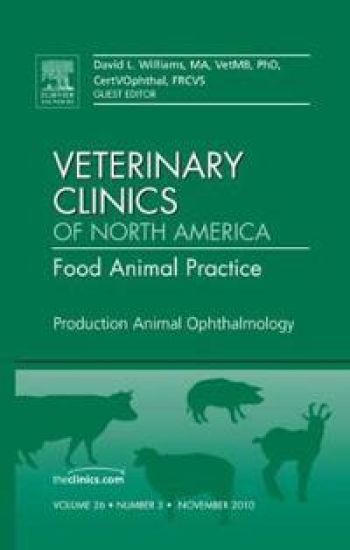
An ophthalmology primer for the food animal practitioner! Articles include examination techniques and therapeutic regimens for the ruminant eye, surgical techniques, infectious bovine keratoconjunctivitis, congenital abnormalities, listerial keratoconjunctivitis and uveitis, ophthalmology of small camelids, squamous cell carcinoma, and more!
Ocular emergencies can present major problems for vets. Signs can be dramatic, manifesting as apparent instant blindness, severe trauma from fights or road accidents, or the acute discoloration of the white of the eye to red or blue. The vet needs to identify quickly what the problem is so that the immediate palliative measures are appropriate and do not make matters worse. A major feature of this book is its unique problem-oriented approach, not used in the standard ophthalmology texts. This is complemented by a section arranged on a more anatomical basis, with appropriate cross-referencing, so that access to the right section is made as easy (and quick!) as possible. The book emphasises differential diagnoses and treatment options, showing clearly wherethe case needs referral to a specialist for resolution. Extra material on background pathogenesis and treatment rationale is provided in boxes. The material needed for the actual emergency will be made readily accessible, using bullet points and easy-to-follow line diagrams. David Williams is based in the UK. He has recently completed a PhD and is building on an international reputation in both ophthalmology and exotic medicine. His US co-author, Kathie Barrie, is current President of the American College of Veterinary Ophthalmology and a practising vet; she has ensured that the text is of equal relevance to US practice. Written at an appropriate level for the non-specialist veterinarian, making it a practical guide for managing small animal ophthalmic emergencies. Provides instant access to the correct diagnosis and management of ocular emergencies with clear, easy-to-use diagnostic flowcharts. Highlights key information and important issues in tinted boxes throughout the text, making clinical facts accessible to busy practitioners.
Every poet arrives at some sense of how language works. Chaucer's engagement, like that of the greatest literary figures, goes beyond the brilliant, skilful use of language as a tool of expression, beyond what we usually call "talent." He brings to the creative use of signification a sophisticated philosophical questioning of the very nature of language, of how we know and how we signify. Chaucer and Language argues that Chaucer's work points to answers to these questions, emphasizing that in various ways Chaucer made language itself the subject of his writing. The polyvalent nature of signs and the ambiguity this makes possible are discussed as one aspect of Chaucer's use of language as subject, as is irony. Chaucer's extension of the concept of language to include relics and the Eucharist, his exploitation of equivocation and the lie, and the semiotic dimensions of his poetic themes are also treated. These issues derive directly from the long tradition of mediaeval sign theory and anticipate the major issues of the modern theory of signs that is semantics.
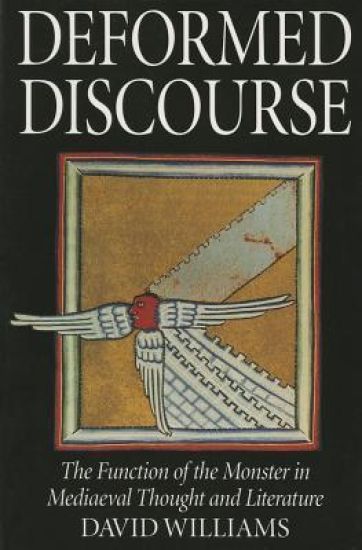
Part I traces the poetics of teratology, the study of monsters, to Christian neoplatonic theology and philosophy, particularly Pseudo-Dionysius's negative theology and his central idea that God cannot be known except by knowing what he is not. Williams argues that the principles of negative theology as applied to epistemology and language made possible a symbolism of negation and paradox whose chief sign was the monster. Part II provides a taxonomy of monstrous forms with a gloss on each, and Part III examines the monstrous and the deformed in three heroic sagas -- the medieval Oedipus, The Romance of Alexander, and Sir Gawain and the Green Knight -- and three saints' lives -- Saint Denis, Saint Christopher, and Saint Wilgeforte. The book is beautifully illustrated with medieval representations of monsters. The most comprehensive study of the grotesque in medieval aesthetic expression, Deformed Discourse successfully brings together medieval research and modern criticism.
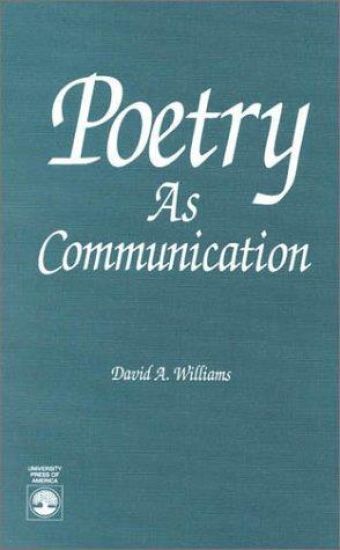
This text provides an argument for the use of poetry in a communication context. It is designed to be used in a class in the communication of poetry. Chapter One introduces the reader to the need for symbols in society. Chapter Two provides an historical perspective concerning the view of literature in society in this century. It concludes that literature is not a viable source of symbol for society. Chapter Three demonstrates a use of poetry as therapy. The use of literature in medical schools is also discussed. Chapters Four and Five discuss poetry as communication. The need for the analogic code is emphasized. Chapter Six briefly discusses Alexithymia as a linguistic ailment that could possibly affect us all. Hopefully, the reader will become sensitized to the potential of poetry as a special code that communicates in a vital, enriching and necessary way.
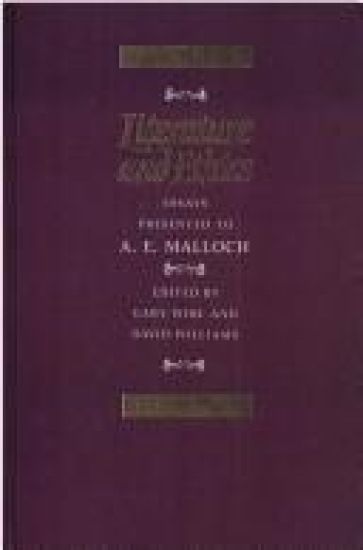
Part I examines literary conventions as forms of ethical indecision in studies of Empson, Hamlet, and Elizabethan portraiture. Part II defines the "ethics of the unsaid" as an act of resistance and judgment in the work of Austen, Irigaray, and Chaucer. Part III considers discursive "networks," formally in Boethius, technologically in Joyce, and academically in the policy of modern universities on tenure. This book includes essays by Elaine Bandor, Maggie Berg, David Braybrooke, Abbott Conway, Leslie Duer, Dean Frye, Donald F. Theall, Gary Wihl, and David Williams, and honours A. E. Malloch.