Kirjojen hintavertailu – 12 903 724 kirjaa ja 27 kauppaa
Kirjailija
David Abulafia
Kirjat ja teokset yhdessä paikassa: 21 kirjaa, julkaisuja vuosilta 1993–2026, suosituimpiin kuuluu Marknaden : Kapital, stater och tankar om en fri värld. Vertaile teosten hintoja ja tarkista saatavuus suomalaisista kirjakaupoista.
David Abulafia; Ali Ansari; Richard Bratby; Mary Bridges; Caroline Burt; David Butterfield; Edward Chancellor; Marie Kawthar Daouda; Eloise Davies; Ulrike Franke; Francis J. Gavin; Magnus Henrekson; William Inboden; Shashank Joshi; Knut N. Kjaer; Kwasi Kwarteng; Charlie Laderman; Ian Leslie; Nicklas Berild Lundblad; Iain Martin; Jade McGlynn; Mario Pisani; Alina Polyakova; Sergey Radchenko; Mick Ryan; Paul Tucker; Rikard Westerberg; Adrian Wooldridge; David Wootton; Linda Yueh
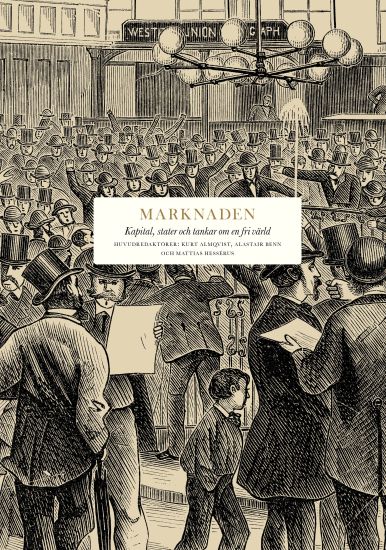
Från det romerska torget till digitala valutor – hur har marknaden utvecklats under historiens gång och hur kan den komma att se ut i framtiden? Denna antologi gör en djupdykning i marknadsutvecklingen och tittar närmare på marknaders avgörande roll i att utforma samtiden men tar också upp den brännande frågan om hur vi ska navigera mot en hållbar framtid. I tankeväckande essäer skrivna av internationella forskare, politiker och andra sakkunniga utforskas marknadens dynamik. Med utgångspunkt i de antika torgen och i det medeltida Europas marknader undersöker författarna hur tekniska framsteg, konsumentbeteende och geopolitisk strategi – till exempel den politik som utövades under Reagan-eran – har format nutida marknader. Slutligen tar boken upp de utmaningar för stabiliteten på marknaden som utgörs av auktoritära stater och AI. Boken finns även i engelsk utgåva, The Market.
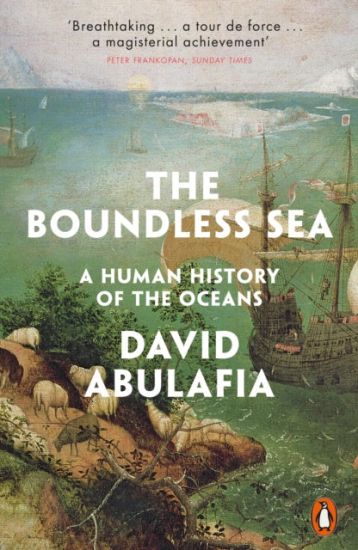
WINNER OF THE WOLFSON HISTORY PRIZE 2020A SUNDAY TIMES, FINANCIAL TIMES, THE TIMES AND BBC HISTORY MAGAZINE BOOK OF THE YEARFor most of human history, the seas and oceans have been the main means of long-distance trade and communication between peoples - for the spread of ideas and religion as well as commerce. This book traces the history of human movement and interaction around and across the world's greatest bodies of water, charting our relationship with the oceans from the time of the first voyagers. David Abulafia begins with the earliest of seafaring societies - the Polynesians of the Pacific, the possessors of intuitive navigational skills long before the invention of the compass, who by the first century were trading between their far-flung islands. By the seventh century, trading routes stretched from the coasts of Arabia and Africa to southern China and Japan, bringing together the Indian Ocean and the western Pacific and linking half the world through the international spice trade. In the Atlantic, centuries before the little kingdom of Portugal carved out its powerful, seaborne empire, many peoples sought new lands across the sea - the Bretons, the Frisians and, most notably, the Vikings, now known to be the first Europeans to reach North America. As Portuguese supremacy dwindled in the late sixteenth century, the Spanish, the Dutch and then the British each successively ruled the waves. Following merchants, explorers, pirates, cartographers and travellers in their quests for spices, gold, ivory, slaves, lands for settlement and knowledge of what lay beyond, Abulafia has created an extraordinary narrative of humanity and the oceans. From the earliest forays of peoples in hand-hewn canoes through uncharted waters to the routes now taken daily by supertankers in their thousands, The Boundless Sea shows how maritime networks came to form a continuum of interaction and interconnection across the globe: 90 per cent of global trade is still conducted by sea. This is history of the grandest scale and scope, and from a bracingly different perspective - not, as in most global histories, from the land, but from the boundless seas.
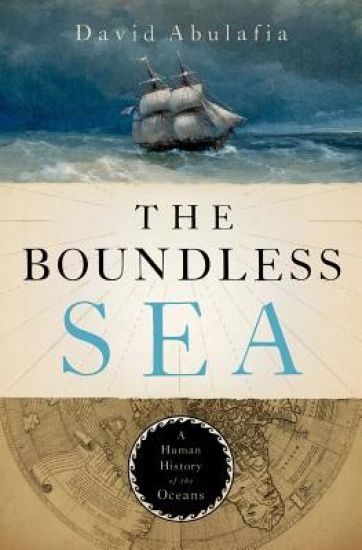
From the beginning of history to the present, a sweep of the world's oceans and seas and how they have shaped the course of civilization. From the author of the acclaimed The Great Sea, ("Magnificent . . . radiates scholarship and a sense of wonder and fun," Simon Sebag Montefiore; Book of the Year, The Economist), David Abulafia's new book guides readers along the world's greatest bodies of water to reveal their primary role in human history. The main protagonists are the three major oceans--the Atlantic, the Pacific, and the Indian--which together comprise the majority of the earth's water and cover over half of its surface. Over time, as passage through them gradually extended and expanded, linking first islands and then continents, maritime networks developed, evolving from local exploration to lines of regional communication and commerce and eventually to major arteries. These waterways carried goods, plants, livestock, and of course people--free and enslaved--across vast expanses, transforming and ultimately linking irrevocably the economies and cultures of Africa, Europe, Asia, and the Americas. Far more than merely another history of exploration, The Boundless Sea shows how maritime networks gradually formed a continuum of interaction and interconnection. Working chronologically, Abulafia moves from the earliest forays of peoples taking hand-hewn canoes into uncharted waters, to the routes taken daily by supertankers in the thousands. History on the grandest scale and scope, written with passion and precision, this is a project few could have undertaken. Abulafia, whom The Atlantic calls "superb writer with a gift for lucid compression and an eye for the telling detail," proves again why he ranks as one of the world's greatest storytellers.
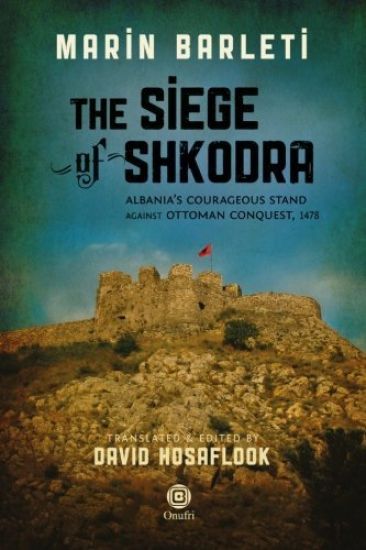
The first English translation of an eyewitness account of the Ottoman sieges of Shkodra (Albania) in 1474 and 1478-79, written by a besieged Shkodran citizen who fought in the battles and would later become a priest in ItalyThe book is considered both history and literature, written in classical Latin in 1504 for a Western audience concerned about the advance of the Ottomans into the heart of Europe. It is considered by scholars to be a seminal source of history providing significant details about the Balkans, the Ottoman Empire, the Republic of Venice, the Albanians, Sultan Mehmed II "The Conqueror," religious conflict, late-medieval siege tactics, and the development of weaponry. Though the account is history, it unfolds as a gripping story with all the human drama and pathos that accompanies warfare. Inside are rousing speeches, intense battle scenes, passionate prayers, and counsel for future generations. Barleti and his contemporaries considered Shkodra to be the shield of Europe (indeed this was the final great battle before the Ottomans attacked Otronto in 1480). Barleti's work comprises only 50% of the work, as this edition includes supplemental material such a brief foreword by Ismail Kadare, a historical preface by Prof. David Abulafia, the original introduction by Prof. Aleks Buda, "The War of Shkodra" ("Bellum Scodrense") by George Merula, a panegyric to the Venetian Senate by Marin Be ikemi, passages from Ottoman chroniclers about the siege (A. Pashazade, Tursun, Kivami, Idris-i Bidlisi, K. Pashazade), and new maps and historical commentary by translator-editor David Hosaflook. MINI-REVIEWS"If one were to search for a literary creation wholly worthy of the expression 'monumental work, ' it would be hard to find a better example than 'The Siege of Shkodra' by Marin Barleti ... It earned monumentality throughout the centuries ... This is what happens with the great books, the ones that enter the world as grand testimonies. The siege of Shkodra is the final act of a tragedy that would not only alter the face of Albania, but also of all the Balkans and a portion of the continent for nearly six hundred years.-ISMAIL KADARE, renown and revered Albanian author "David Hosaflook has brought vividly back to life an extraordinary chapter from the history of the fifteenth century--a gripping eyewitness account of the Albanian resistance to the advance of the Ottomans into the heart of Europe. Their defense of Shkodra was as heroic and thrilling as the better-known siege of Malta. Barleti's narrative does it full justice, and Hosaflook's translation is both scholarly and highly readable."-ROGER CROWLEY, best-selling author of Mediterranean narrative history such as Empires of the Sea and City of Fortune" "I felt like Howard Carter peering into the tomb of King Tut for the first time when I started reading Hosaflook's masterful new translation of the epic story recounted by Barleti. Beautifully crafted and painstakingly researched, the work fills an important gap and provides unique and compelling new scholarship in the field of Renaissance history."-KIRSTIN DOWNEY, former Washington Post reporter, historical biographer, and author of books such as "The Woman Behind the New Deal: The Life and Legacy of Frances Perkins" and "Isabella: The Warrior Queen." "The Ottoman Empire spread into southeastern Europe, with the banners of Islam looming on the horizon. One of the key moments of this expansion, and a turning point in Albanian history, was the siege of Shkodra in the late fifteenth century. We would know little of the dramatic events were it not for historian Marin Barleti. His account (1504) is a seminal source of Balkan history. The English-speaking reader can now finally savour this gripping tale, in the flowing rendition of David Hosaflook."-ROBERT ELSIE, author and specialist in Albanian studies
The fifth volume of The New Cambridge Medieval History brings together studies of the political, religious, social and economic history of the whole of Europe and of the Mediterranean world between about 1198 and 1300. Comprehensive coverage of the developments in western Europe is balanced by attention to the east of Europe, including the Byzantine world, and the Islamic lands in Spain, north Africa and the Levant. Thematic articles look at the fine arts, the vernacular, communications and other aspects of a period in which the frontiers of Latin Christendom were expanding vigorously outwards; and attention is paid to the frontier societies that emerged in Spain, the Baltic and the Mediterranean islands.
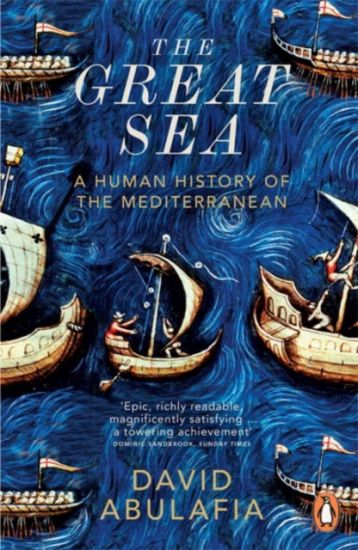
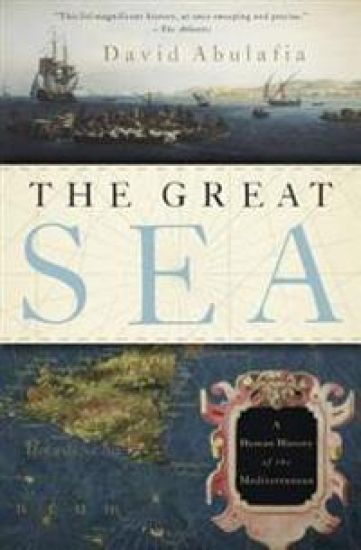
For over three thousand years, the Mediterranean Sea has been one of the great centres of civilization. David Abulafia's The Great Sea is the first complete history of the Mediterranean, from the erection of temples on Malta around 3500 BC to modern tourism. Ranging across time and the whole extraordinary space of the Mediterranean from Gibraltar to Jaffa, Genoa to Tunis, and bringing to life pilgrims, pirates, sultans and naval commanders, this is the story of the sea that has shaped much of world history.
Connecting Europe, Asia, and Africa, the Mediterranean Sea has been for millennia the place where religions, economies, and political systems met, clashed, influenced and absorbed one another. In this brilliant and expansive book, David Abulafia offers a fresh perspective by focusing on the sea itself: its practical importance for transport and sustenance; its dynamic role in the rise and fall of empires; and the remarkable cast of characters-sailors, merchants, migrants, pirates, pilgrims-who have crossed and re-crossed it. Ranging from prehistory to the 21st century, The Great Sea is above all a history of human interaction. Interweaving major political and naval developments with the ebb and flow of trade, Abulafia explores how commercial competition in the Mediterranean created both rivalries and partnerships, with merchants acting as intermediaries between cultures, trading goods that were as exotic on one side of the sea as they were commonplace on the other. He stresses the remarkable ability of Mediterranean cultures to uphold the civilizing ideal of convivencia, "living together." Now available in paperback, The Great Sea is the definitive account of perhaps the most vibrant theater of human interaction in history.
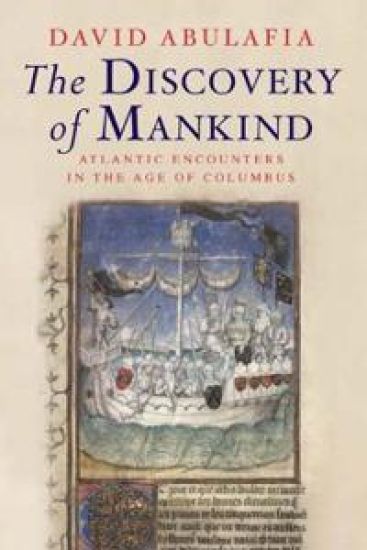
A new and fascinating perspective on the earliest phases of European exploration across the Atlantic Ocean The first landings in the Atlantic World generated striking and terrifying impressions of unknown peoples who were entirely foreign to anything in European explorers’ experience. From the first recorded encounters with the native inhabitants of the Canary Islands in 1341 to Columbus's explorations in 1492 and Cabral's discovery of Brazil in 1500, western Europeans struggled to make sense of the existence of the peoples they met. Were they Adam's children, of a common lineage with the peoples of the Old World, or were they a separate creation, the monstrous races of medieval legend? Should they govern themselves? Did they have the right to be free? Did they know God? Could they know God? Emphasizing contact between peoples rather than the discovery of lands, and using archaeological findings as well as eyewitness accounts, David Abulafia explores the social lives of the New World inhabitants, the motivations and tensions of the first transactions with Europeans, and the swift transmutation of wonder to vicious exploitation. Lucid, readable, and scrupulously researched, this is a work of humane engagement with a period in which a tragically violent standard was set for European conquest across the world.
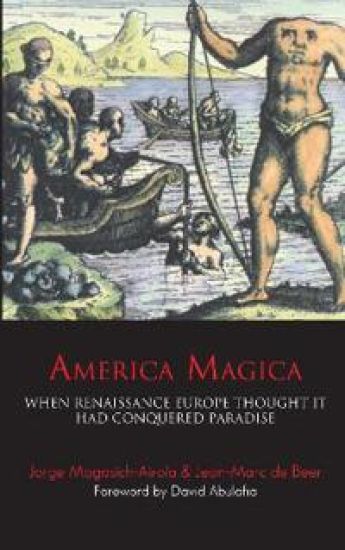
An enthralling account of the conflicting experiences of discovering the New World, drawing upon the intriguing tales of early discovery and amazing illustrations of the day. The authors invoke the unique exhilaration of exploration, investigating the conflict between the ambitious idealism and harsh realities that have always characterized and torn the country. After all, did people not go to America in search of both the Garden of Eden and the tribes of the damned?
Seeks to explain how the north Italian merchants attempted to extend and to protect their interests in the kingdom of Sicily, by agreements with the Norman rulers or with those in Germany and Byzantium. This book is a study of the economic development in twelfth-century Italy of Sicily and the maritime ports.
In recent years, the 'medieval frontier' has been the subject of extensive research. But the term has been understood in many different ways: political boundaries; fuzzy lines across which trade, religions and ideas cross; attitudes to other peoples and their customs. This book draws attention to the differences between the medieval and modern understanding of frontiers, questioning the traditional use of the concepts of 'frontier' and 'frontier society'. It contributes to the understanding of physical boundaries as well as metaphorical and ideological frontiers, thus providing a background to present-day issues of political and cultural delimitation. In a major introduction, David Abulafia analyses these various ambiguous meanings of the term 'frontier', in political, cultural and religious settings. The articles that follow span Europe from the Baltic to Iberia, from the Canary Islands to central Europe, Byzantium and the Crusader states. The authors ask what was perceived as a frontier during the Middle Ages? What was not seen as a frontier, despite the usage in modern scholarship? The articles focus on a number of themes to elucidate these two main questions. One is medieval ideology. This includes the analysis of medieval formulations of what frontiers should be and how rulers had a duty to defend and/or extend the frontiers; how frontiers were defined (often in a different way in rhetorical-ideological formulations than in practice); and how in certain areas frontier ideologies were created. The other main topic is the emergence of frontiers, how medieval people created frontiers to delimit areas, how they understood and described frontiers. The third theme is that of encounters, and a questioning of medieval attitudes to such encounters. To what extent did medieval observers see a frontier between themselves and other groups, and how does real interaction compare with ideological or narrative formulations of such interaction?
Situated astride the trade routes of the western Mediterranean, the Catalan kingdom of Majorca has long deserved attention. It was established under the will of King James I of Aragon, who conquered Majorca in 1229, but was ruled from 1276 to 1343 by a cadet dynasty. In addition to the Balearic Islands the kingdom included the key business centres of Montpellier and Perpignan, and other lands in what is now southern France. It was also home to important Jewish and Muslim communities, and was the focus of immigration from Catalonia, Provence and Italy. This book emphasises the major transformations in the trade of the Balearic Islands from the eve of the Catalan conquest to the Black Death, and the effect of the kingdom’s creation and demise on the economy of the region. Links between the island and mainland territories, and as far afield as England and the Canaries, are analysed in depth.
This third volume by David Abulafia looks at the interactions between territories, peoples and religions across the Mediterranean, and at the influence of the Mediterranean economy on the world beyond. Topics addressed are trade across the Christian-Muslim frontier; the relative importance of local and long distance trade in economic development; the policies of Frederick II and his successors towards the Jews and Muslims; and the complex political relationships within the western and central Mediterranean in the aftermath of the revolt of the Sicilian Vespers. Attention is also paid to Italian merchants and bankers as far afield as London and Southampton, and to the business affairs of Lorenzo de'Medici. Taken together, these papers present an original, Mediterranean, perspective on the economy, society and politics of central and late medieval Europe.
The fifth volume of The New Cambridge Medieval History brings together studies of the political, religious, social and economic history of the whole of Europe and of the Mediterranean world between about 1198 and 1300. Comprehensive coverage of the developments in western Europe is balanced by attention to the east of Europe, including the Byzantine world, and the Islamic lands in Spain, north Africa and the Levant. Thematic articles look at the fine arts, the vernacular, communications and other aspects of a period in which the frontiers of Latin Christendom were expanding vigorously outwards; and attention is paid to the frontier societies that emerged in Spain, the Baltic and the Mediterranean islands.