Kirjojen hintavertailu – 12 903 725 kirjaa ja 27 kauppaa
Kirjailija
David Armitage
Kirjat ja teokset yhdessä paikassa: 21 kirjaa, julkaisuja vuosilta 2000–2025, suosituimpiin kuuluu Kansalaissotien käsitehistoria. Vertaile teosten hintoja ja tarkista saatavuus suomalaisista kirjakaupoista.
Now you may not think a cornflake can be special...... but you would be wrong. Connor is different, very different. He is strong, brave, fearless, a cereal version of James Bond and a really cool dude. But having been thrown in the rubbish, he soon realizes that he is special, but his first mission is to escape the jaws of a four-legged foe who thinks it's snack time. Join Connor the Cornflake and the Mighty Variety team of cereal superheroes on a fast paced, action-packed adventure as they try to stop the evil Colonel Cereal's plot to scare the children of the world, with his Krispy robots, so they will never eat cereal again. From a walking stick-wielding ninja Granny Granola and a baby oiled tag team wrestling wheat biscuit duo, to a sugar cube powered flying cereal box and a flying dog on the back of a remote-controlled monster truck; can the team fight off this mad robotic Krispy army to save the world from a future of boring breakfast?
Now you may not think a cornflake can be special...... but you would be wrong. Connor is different, very different. He is strong, brave, fearless, a cereal version of James Bond and a really cool dude. But having been thrown in the rubbish, he soon realizes that he is special, but his first mission is to escape the jaws of a four-legged foe who thinks it's snack time. Join Connor the Cornflake and the Mighty Variety team of cereal superheroes on a fast paced, action-packed adventure as they try to stop the evil Colonel Cereal's plot to scare the children of the world, with his Krispy robots, so they will never eat cereal again. From a walking stick-wielding ninja Granny Granola and a baby oiled tag team wrestling wheat biscuit duo, to a sugar cube powered flying cereal box and a flying dog on the back of a remote-controlled monster truck; can the team fight off this mad robotic Krispy army to save the world from a future of boring breakfast?
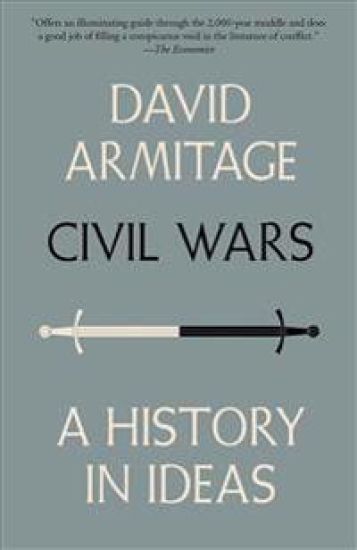
A highly original history of the least understood and most intractable form of organised human aggression, from ancient Rome to our present conflict-ridden world We think we know civil war when we see it. Yet ideas of what it is, and isn't, have a long and contested history. Defining the term is acutely political, for ideas about what makes a war "civil" often depend on whether one is ruler or rebel, victor or vanquished, sufferer or outsider; it can also shape a conflict’s outcome, determining whether external powers are involved or stand aside. From the American Revolution to the Iraq war, pivotal decisions have hung on such shifts of perspective. The West’s age of civil war may be over, but elsewhere it has exploded – from the Balkans to Rwanda, Burundi, Somalia, Sri Lanka and, most recently, Syria. And the language of civil war has burgeoned as democratic politics has become more violently fought. This book's unique perspective on the roots, dynamics and shaping force of civil war will be essential to our ongoing struggles with this seemingly interminable problem.
A highly original history, tracing the least understood and most intractable form of organized human aggression from Ancient Rome through the centuries to the present day. We think we know civil war when we see it. Yet ideas of what it is, and what it isn't, have a long and contested history, from its fraught origins in republican Rome to debates in early modern Europe to our present day. Defining the term is acutely political, for ideas about what makes a war "civil" often depend on whether one is a ruler or a rebel, victor or vanquished, sufferer or outsider. Calling a conflict a civil war can shape its outcome by determining whether outside powers choose to get involved or stand aside: from the American Revolution to the war in Iraq, pivotal decisions have depended on such shifts of perspective. The age of civil war in the West may be over, but elsewhere in the last two decades it has exploded--from the Balkans to Rwanda, Burundi, Somalia, and Sri Lanka, and most recently Syria. And the language of civil war has burgeoned as democratic politics has become more violently fought. This book's unique perspective on the roots and dynamics of civil war, and on its shaping force in our conflict-ridden world, will be essential to the ongoing effort to grapple with this seemingly interminable problem.
How should historians speak truth to power – and why does it matter? Why is five hundred years better than five months or five years as a planning horizon? And why is history – especially long-term history – so essential to understanding the multiple pasts which gave rise to our conflicted present? The History Manifesto is a call to arms to historians and everyone interested in the role of history in contemporary society. Leading historians Jo Guldi and David Armitage identify a recent shift back to longer-term narratives, following many decades of increasing specialisation, which they argue is vital for the future of historical scholarship and how it is communicated. This provocative and thoughtful book makes an important intervention in the debate about the role of history and the humanities in a digital age. It will provoke discussion among policymakers, activists and entrepreneurs as well as ordinary listeners, viewers, readers, students and teachers. This title is also available as Open Access.
How should historians speak truth to power – and why does it matter? Why is five hundred years better than five months or five years as a planning horizon? And why is history – especially long-term history – so essential to understanding the multiple pasts which gave rise to our conflicted present? The History Manifesto is a call to arms to historians and everyone interested in the role of history in contemporary society. Leading historians Jo Guldi and David Armitage identify a recent shift back to longer-term narratives, following many decades of increasing specialisation, which they argue is vital for the future of historical scholarship and how it is communicated. This provocative and thoughtful book makes an important intervention in the debate about the role of history and the humanities in a digital age. It will provoke discussion among policymakers, activists and entrepreneurs as well as ordinary listeners, viewers, readers, students and teachers. This title is also available as Open Access.
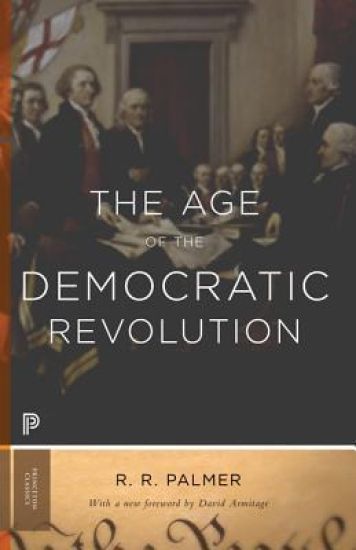
For the Western world, the period from 1760 to 1800 was the great revolutionary era in which the outlines of the modern democratic state came into being. Here for the first time in one volume is R. R. Palmer's magisterial account of this incendiary age. Palmer argues that the American, French, and Polish revolutions--and the movements for political change in Britain, Ireland, Holland, and elsewhere--were manifestations of similar political ideas, needs, and conflicts. Palmer traces the clash between an older form of society, marked by legalized social rank and hereditary or self-perpetuating elites, and a new form of society that placed a greater value on social mobility and legal equality. Featuring a new foreword by David Armitage, this Princeton Classics edition of The Age of the Democratic Revolution introduces a new generation of readers to this enduring work of political history.
The first comprehensive account to place the Pacific Islands, the Pacific Rim and the Pacific Ocean into the perspective of world history. A distinguished international team of historians provides a multidimensional account of the Pacific, its inhabitants and the lands within and around it over 50,000 years, with special attention to the peoples of Oceania. It providing chronological coverage along with analyses of themes such as the environment, migration and the economy; religion, law and science; race, gender and politics.
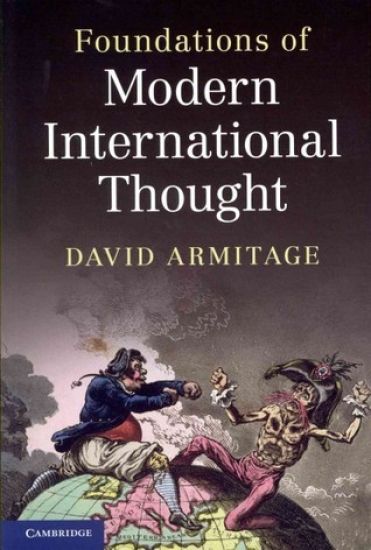
Between the early seventeenth and mid-nineteenth centuries, major European political thinkers first began to look outside their national borders and envisage a world of competitive, equal sovereign states inhabiting an international sphere that ultimately encompassed the whole globe. In this insightful and wide-ranging work, David Armitage – one of the world's leading historians of political thought – traces the genesis of this international turn in intellectual history. Foundations of Modern International Thought combines important methodological essays, which consider the genealogy of globalisation and the parallel histories of empires and oceans, with fresh considerations of leading figures such as Hobbes, Locke, Burke and Bentham in the history of international thought. The culmination of more than a decade's reflection and research on these issues, this book restores the often overlooked international dimensions to intellectual history and recovers the intellectual dimensions of international history.
A distinguished international team of historians examines the dynamics of global and regional change in the late eighteenth and nineteenth centuries. Providing uniquely broad coverage, encompassing North and South America, the Caribbean, Europe, Africa, the Middle East, South and Southeast Asia, and China, the chapters shed new light on this pivotal period of world history. Offering fresh perspectives on:• the American, French, and Haitian Revolutions• the break-up of the Iberian empires• the Napoleonic Wars. The volume also presents ground-breaking treatments of world history from an African perspective, of South Asia's age of revolutions, and of stability and instability in China. The first truly global account of the causes and consequences of the transformative 'Age of Revolutions', this collection presents a strikingly novel and comprehensive view of the revolutionary era as well as rich examples of global history in practice.
A distinguished international team of historians examines the dynamics of global and regional change in the late eighteenth and nineteenth centuries. Providing uniquely broad coverage, encompassing North and South America, the Caribbean, Europe, Africa, the Middle East, South and Southeast Asia, and China, the chapters shed new light on this pivotal period of world history. Offering fresh perspectives on:• the American, French, and Haitian Revolutions• the break-up of the Iberian empires• the Napoleonic Wars. The volume also presents ground-breaking treatments of world history from an African perspective, of South Asia's age of revolutions, and of stability and instability in China. The first truly global account of the causes and consequences of the transformative 'Age of Revolutions', this collection presents a strikingly novel and comprehensive view of the revolutionary era as well as rich examples of global history in practice.
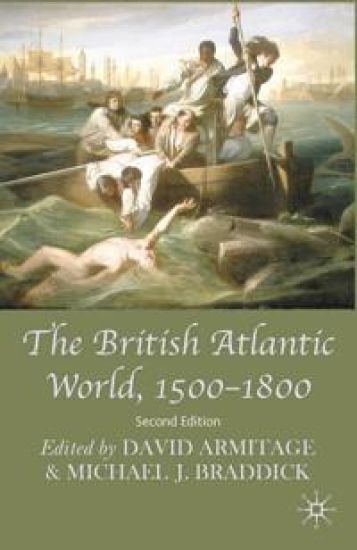
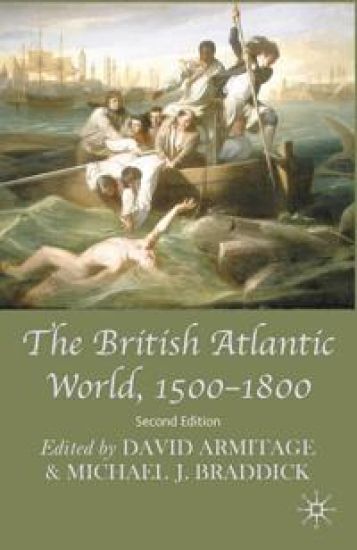
This core textbook gathers an international team of historians to present a comprehensive account of the central themes in the histories of Britain, British America, and the British Caribbean seen in Atlantic perspective. This collection of individual essays provides an accessible overview of essential themes, such as the state, empire, migration, the economy, religion, race, class, gender, politics, and slavery. This new and revised edition brings this text up to date with recent work in the field of Atlantic history and extends its scope to cover themes not treated in the first edition, notably the history of science and global history. Placing the British Atlantic world in imperial and global contexts, this book offers an indispensable survey of one of the liveliest fields of current historical enquiry. This text is a primary resource for both undergraduate and postgraduate students of History, particularly those taking modules on Early Modern British History, Colonial American History, Early American History, Caribbean History, Atlantic History and World History. Together, the essays also provide a useful starting point for researchers in British, American, imperial and Atlantic history.
This core textbook gathers an international team of historians to present a comprehensive account of the central themes in the histories of Britain, British America, and the British Caribbean seen in Atlantic perspective. This collection of individual essays provides an accessible overview of essential themes, such as the state, empire, migration, the economy, religion, race, class, gender, politics, and slavery. This new and revised edition brings this text up to date with recent work in the field of Atlantic history and extends its scope to cover themes not treated in the first edition, notably the history of science and global history. Placing the British Atlantic world in imperial and global contexts, this book offers an indispensable survey of one of the liveliest fields of current historical enquiry. This text is a primary resource for both undergraduate and postgraduate students of History, particularly those taking modules on Early Modern British History, Colonial American History, Early American History, Caribbean History, Atlantic History and World History. Together, the essays also provide a useful starting point for researchers in British, American, imperial and Atlantic history.
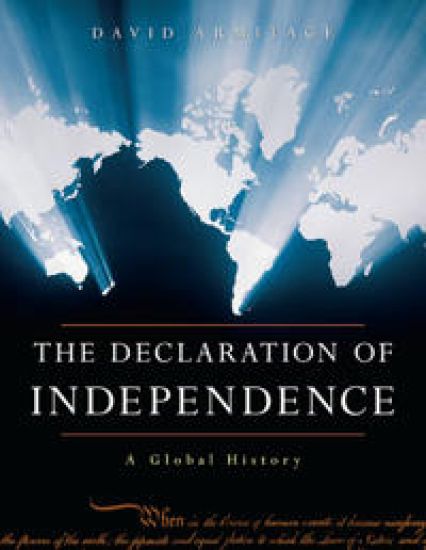
In a stunningly original look at the American Declaration of Independence, David Armitage reveals the document in a new light: through the eyes of the rest of the world. Not only did the Declaration announce the entry of the United States onto the world stage, it became the model for other countries to follow. Armitage examines the Declaration as a political, legal, and intellectual document, and is the first to treat it entirely within a broad international framework. He shows how the Declaration arose within a global moment in the late eighteenth century similar to our own. He uses over one hundred declarations of independence written since 1776 to show the influence and role the U. S. Declaration has played in creating a world of states out of a world of empires. He discusses why the framers’ language of natural rights did not resonate in Britain, how the document was interpreted in the rest of the world, whether the Declaration established a new nation or a collection of states, and where and how the Declaration has had an overt influence on independence movements—from Haiti to Vietnam, and from Venezuela to Rhodesia. Included is the text of the U. S. Declaration of Independence and sample declarations from around the world. An eye-opening list of declarations of independence since 1776 is compiled here for the first time. This unique global perspective demonstrates the singular role of the United States document as a founding statement of our modern world.
Microdisplays are tiny, high-resolution electronic displays, designed for use in magnifying optical systems such as HDTV projectors and near-eye personal viewers. As a result of research and development into this field, Microdisplays are incorporated in a variety of visual electronics, notably new 3G portable communications devices, digital camera technologies, wireless internet applications, portable DVD viewers and wearable PCs. Introduction to Microdisplays encapsulates this market through describing in detail the theory, structure, fabrication and applications of Microdisplays. In particular this book: Provides excellent reference material for the Microdisplay industry through including an overview of current applications alongside a guide to future developments in the fieldCovers all current technologies and devices such as Silicon Wafer Backplane Technology, Liquid Crystal Devices, Micromechanical Devices, and the emerging area of Organic Light Emitting DiodesPresents guidance on the design of applications of Microdisplays, including Microdisplays for defence and telecoms, from basic principles through to their performance limitations Introduction to Microdisplays is a thorough and comprehensive reference on this emerging topic. It is essential reading for display technology manufacturers, developers, and system integrators, as well as practising electrical engineers, physicists, chemists and specialists in the display field. Graduate students, researchers, and developers working in optics, material science, and telecommunications will also find this a valuable resource. The Society for Information Display (SID) is an international society, which has the aim of encouraging the development of all aspects of the field of information display. Complementary to the aims of the society, the Wiley-SID series is intended to explain the latest developments in information display technology at a professional level. The broad scope of the series addresses all facets of information displays from technical aspects through systems and prototypes to standards and ergonomics
Greater Britain, 1516-1776 brings together a series of studies by David Armitage on the history of the early modern British Atlantic world. The essays examine the history of the Britain and its empire from the 16th century to the 18th and place special emphasis on the intellectual histories of the Three Kingdoms of Britain and Ireland in their Atlantic context. They range in time from the Reformation to the American Revolution and treat not only the forces that encouraged the growth of the first British Empire but also the anxieties that constrained it. All are placed in a wider context of the relations among the Three Kingdoms, Europe and the British Empire from the middle ages to the late eighteenth century. Taken together, they offer an account of the ideological history of the anglophone Atlantic world which will be of use to historians of Britain, the British Empire and colonial America, as well as to literary critics and historians of political thought.
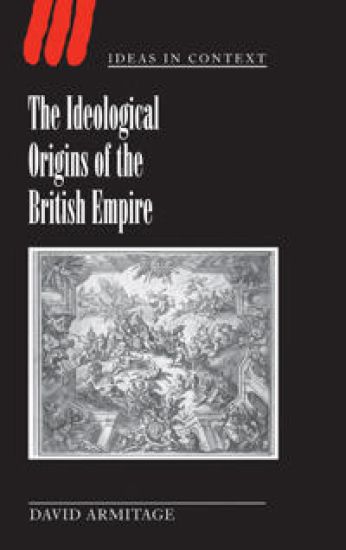
The Ideological Origins of the British Empire presents a comprehensive history of British conceptions of empire for more than half a century. David Armitage traces the emergence of British imperial identity from the mid-sixteenth to the mid-eighteenth centuries, using a full range of manuscript and printed sources. By linking the histories of England, Scotland and Ireland with the history of the British Empire, he demonstrates the importance of ideology as an essential linking between the processes of state-formation and empire-building. This book sheds light on major British political thinkers, from Sir Thomas Smith to David Hume, by providing fascinating accounts of the 'British problem' in the early modern period, of the relationship between Protestantism and empire, of theories of property, liberty and political economy in imperial perspective, and of the imperial contribution to the emergence of British 'identities' in the Atlantic world.