Kirjojen hintavertailu – 12 859 818 kirjaa ja 27 kauppaa

Kirjailija

David Barnett

Kirjat ja teokset yhdessä paikassa: 38 kirjaa, julkaisuja vuosilta 2005–2026, suosituimpiin kuuluu 2000 AD Regened Volume 4. Vertaile teosten hintoja ja tarkista saatavuus suomalaisista kirjakaupoista.

38 kirjaa

Kirjojen julkaisuvuodet: 2005–2026.

Heiner Müller's The Hamletmachine

Heiner Müller's The Hamletmachine

David Barnett

Routledge
2017
sidottu
""I'm good Hamlet gi'me a cause for grief""At first glance, readers of The Hamletmachine (1979) could be forgiven for wondering whether it is actually a play at all: it opens with a montage of texts that are not ascribed to a character, there is no vestige of a plot, and the whole piece lasts a total of ten pages. Yet, Heiner Müller's play regularly features in theatres' repertoires and is frequently staged by university theatre departments. In four short chapters, David Barnett unpicks the complexities of The Hamletmachine's writing and frames its author as an experimental, politically committed writer who confronts the shortcomings of his age. In considering the problems Müller poses for the play's performance, he also discusses two exemplary productions in order to show how the work can engage very different audiences. This book examines why such a compact, radically open, and yet seemingly obscure play has proved so popular.

Heiner Müller's The Hamletmachine

Heiner Müller's The Hamletmachine

David Barnett

Routledge
2016
nidottu
"I’m good Hamlet gi’me a cause for grief"At first glance, readers of The Hamletmachine (1979) could be forgiven for wondering whether it is actually a play at all: it opens with a montage of texts that are not ascribed to a character, there is no vestige of a plot, and the whole piece lasts a total of ten pages. Yet, Heiner Müller’s play regularly features in theatres’ repertoires and is frequently staged by university theatre departments. In four short chapters, David Barnett unpicks the complexities of The Hamletmachine’s writing and frames its author as an experimental, politically committed writer who confronts the shortcomings of his age. In considering the problems Müller poses for the play’s performance, he also discusses two exemplary productions in order to show how the work can engage very different audiences. This book examines why such a compact, radically open, and yet seemingly obscure play has proved so popular.

Gideon Smith and the Mask of the Ri
In an alternate nineteenth century where a technologically advanced Britain holds sway over most of the known world and the American Revolution never happened, young Gideon Smith is firmly established as the Hero of the Empire. Back in London, Gideon and his colleagues: journalist Aloysius Bent, airship pilot Rowena Fanshawe, and Maria, the mechanical girl to whom Gideon has lost his heart, are dragged into a case that is confounding the Metropolitan Police. For the city is on the edge of mass rioting due to the continuing reign of terror by the serial killer known only as Jack the Ripper, who is rampaging though London's less salubrious quarters. While chasing the madman, a villain from their past strips Gideon Smith of his memory and is cast adrift in the seedy underbelly of London, where life is tough and death lurks in every shadowy alley. With mob rule threatening to engulf London, the Empire has never needed its hero more...but where is Gideon Smith? Gideon Smith and the Mask of the Ripper is the latest in David Barnett's riproaring steampunk adventures about a Britain that never was...but should have been.
A History of the Berliner Ensemble

A History of the Berliner Ensemble

David Barnett

Cambridge University Press
2015
sidottu
The Berliner Ensemble was founded by Bertolt Brecht and his wife Helene Weigel in 1949. The company soon gained international prominence, and its productions and philosophy influenced the work of theatre-makers around the world. David Barnett's book is the first study of the company in any language. Based on extensive archival research, it uncovers Brecht's working methods and those of the company's most important directors after his death. The book considers the boon and burden of Brecht's legacy, and provides new insights into battles waged behind the scenes for the preservation of the Brechtian tradition. The Berliner Ensemble was also the German Democratic Republic's most prestigious cultural export, attracting attention from the highest circles of government, and from the Stasi, before it privatised itself after German reunification in 1990. Barnett pieces together a complex history that sheds light on both the company's groundbreaking productions and their turbulent times.
Brecht in Practice

Brecht in Practice

David Barnett

Methuen Drama
2014
sidottu
David Barnett invites readers, students and theatre-makers to discover new ways of apprehending and making use of Brecht in this clear and accessible study of Brecht's theories and practices. The book analyses how Brecht’s ideas can come alive in rehearsal and performance, and reveals just how carefully Brecht realized his vision of a politicized, interventionist theatre. What emerges is a nuanced understanding of Brecht’s concepts, his work with actors and his approaches to directing. The reader is encouraged to engage with his method which sought to ‘make theatre politically’, in order to appreciate the innovations he introduced into his stagecraft. Barnett provides many examples of how Brecht's ideas can be staged, and the final chapter takes a closer look at two very different plays: one written by Brecht and one by a playwright with no acknowledged connection to Brecht. Through an interrogation of The Resistible Rise of Arturo Ui and Patrick Marber’s Closer, Barnett asks how a Brechtian approach can enliven and illuminate production.
Brecht in Practice

Brecht in Practice

David Barnett

Methuen Drama
2014
nidottu
David Barnett invites readers, students and theatre-makers to discover new ways of apprehending and making use of Brecht in this clear and accessible study of Brecht's theories and practices. The book analyses how Brecht’s ideas can come alive in rehearsal and performance, and reveals just how carefully Brecht realized his vision of a politicized, interventionist theatre. What emerges is a nuanced understanding of Brecht’s concepts, his work with actors and his approaches to directing. The reader is encouraged to engage with his method which sought to ‘make theatre politically’, in order to appreciate the innovations he introduced into his stagecraft. Barnett provides many examples of how Brecht's ideas can be staged, and the final chapter takes a closer look at two very different plays: one written by Brecht and one by a playwright with no acknowledged connection to Brecht. Through an interrogation of The Resistible Rise of Arturo Ui and Patrick Marber’s Closer, Barnett asks how a Brechtian approach can enliven and illuminate production.
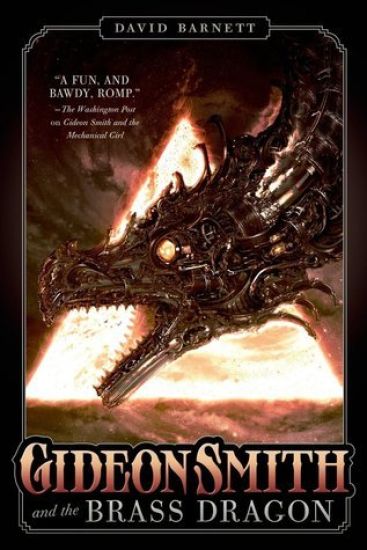
Gideon Smith and the Brass Dragon

Gideon Smith and the Brass Dragon

David Barnett

St. Martin's Press
2014
pokkari
Nineteenth century London is the center of a vast British Empire, a teeming metropolis where steam-power is king and airships ply the skies, and where Queen Victoria presides over three quarters of the known world including the east coast of America, following the failed revolution of 1775. Young Gideon Smith has seen things that no green lad of Her Majesty's dominion should ever experience. Through a series of incredible events Gideon has become the newest Hero of the Empire. But Gideon is a man with a mission, for the dreaded Texas pirate Louis Cockayne has stolen the mechanical clockwork girl Maria, along with a most fantastical weapon a great brass dragon that was unearthed beneath ancient Egyptian soil. Maria is the only one who can pilot the beast, so Cockayne has taken girl and dragon off to points east. Gideon and his intrepid band take to the skies and travel to the American colonies hot on Cockayne's trail. Not only does Gideon want the machine back, he has fallen in love with Maria. Their journey will take them to the wilds of the lawless lands south of the American colonies to free Texas, where the mad King of Steamtown rules with an iron fist (literally), where life is cheap and honor even cheaper. Does Gideon have what it takes to not only save the day but win the girl? David Barnett's Gideon Smith and the Brass Dragon is a fantastical steampunk fable set against an alternate historical backdrop: the ultimate Victoriana/steampunk mash-up "
Gideon Smith and the Brass Dragon

Gideon Smith and the Brass Dragon

David Barnett

Snowbooks Ltd
2014
sidottu
Nineteenth century London is the center of a vast British Empire, a teeming metropolis where steam-power is king and airships ply the skies, and where Queen Victoria presides over three quarters of the known world-including the east coast of America, following the failed revolution of 1775. Young Gideon Smith has seen things that no green lad of Her Majesty's dominion should ever experience. Through a series of incredible events Gideon has become the newest Hero of the Empire. But Gideon is a man with a mission, for the dreaded Texas pirate Louis Cockayne has stolen the mechanical clockwork girl Maria, along with a most fantastical weapon-a great brass dragon that was unearthed beneath ancient Egyptian soil. Maria is the only one who can pilot the beast, so Cockayne has taken girl and dragon off to points east. Gideon and his intrepid band take to the skies and travel to the American colonies hot on Cockayne's trail. Not only does Gideon want the machine back, he has fallen in love with Maria. Their journey will take them to the wilds of the lawless lands south of the American colonies-to free Texas, where the mad King of Steamtown rules with an iron fist (literally), where life is cheap and honor even cheaper. Does Gideon have what it takes to not only save the day but win the girl?
Gideon Smith and the Brass Dragon

Gideon Smith and the Brass Dragon

David Barnett

Snowbooks Ltd
2014
pokkari
Nineteenth century London is the center of a vast British Empire, a teeming metropolis where steam-power is king and airships ply the skies, and where Queen Victoria presides over three quarters of the known world-including the east coast of America, following the failed revolution of 1775. Young Gideon Smith has seen things that no green lad of Her Majesty's dominion should ever experience. Through a series of incredible events Gideon has become the newest Hero of the Empire. But Gideon is a man with a mission, for the dreaded Texas pirate Louis Cockayne has stolen the mechanical clockwork girl Maria, along with a most fantastical weapon-a great brass dragon that was unearthed beneath ancient Egyptian soil. Maria is the only one who can pilot the beast, so Cockayne has taken girl and dragon off to points east. Gideon and his intrepid band take to the skies and travel to the American colonies hot on Cockayne's trail. Not only does Gideon want the machine back, he has fallen in love with Maria. Their journey will take them to the wilds of the lawless lands south of the American colonies-to free Texas, where the mad King of Steamtown rules with an iron fist (literally), where life is cheap and honor even cheaper. Does Gideon have what it takes to not only save the day but win the girl?
Gideon Smith and the Mechanical Girl

Gideon Smith and the Mechanical Girl

David Barnett

Snowbooks Ltd
2013
pokkari
Nineteenth century London is the centre of a vast British Empire. Airships ply the skies and Queen Victoria presides over three-quarters of the known world-including the East Coast of America, following the failed revolution of 1775. London might as well be a world away from Sandsend, a tiny village on the Yorkshire coast. Gideon Smith dreams of the adventure promised him by the lurid tales of Captain Lucian Trigger, the Hero of the Empire, told in Gideon's favourite "penny dreadful." When Gideon's father is lost at sea in highly mysterious circumstances Gideon is convinced that supernatural forces are at work. Deciding only Captain Lucian Trigger himself can aid him, Gideon sets off for London. On the way he rescues the mysterious mechanical girl Maria from a tumbledown house of shadows and iniquities. Together they make for London, where Gideon finally meets Captain Trigger. But Trigger is little more than an ageing fraud, providing cover for the covert activities of his lover, Dr. John Reed, a privateer and sometime agent of the British Crown. Looking for heroes but finding only frauds and crooks, it falls to Gideon to step up to the plate and attempt to save the day...but can a humble fisherman really become the true Hero of the Empire?
Privileged Thinking in Today's Schools

Privileged Thinking in Today's Schools

David Barnett; Carol J. Christian; Richard Hughes; Rocky Wallace

Rowman Littlefield Education
2010
nidottu
Privileged thinking in today's schools is alive and well and shows its ugly head in a variety of ways that often go undetected (or are not addressed) by the educators down in the trenches. In this collection of scenarios and episodes, many of which were experienced by the authors in their years as school administrators, you will find an array of provocative examples of social injustice in the classroom, and what you can do to prevent it in your own school community. As the authors candidly and vulnerably reveal their own 'blind spots' and biases that occurred 'on their watch,' readers will be able to take a look in the mirror as well, thus taking a critical step in better advocating for those students 'left on the fringe' in classrooms and schools.
Privileged Thinking in Today's Schools

Privileged Thinking in Today's Schools

David Barnett; Carol J. Christian; Richard Hughes; Rocky Wallace

Rowman Littlefield Education
2010
sidottu
Privileged thinking in today's schools is alive and well and shows its ugly head in a variety of ways that often go undetected (or are not addressed) by the educators down in the trenches. In this collection of scenarios and episodes, many of which were experienced by the authors in their years as school administrators, you will find an array of provocative examples of social injustice in the classroom, and what you can do to prevent it in your own school community. As the authors candidly and vulnerably reveal their own 'blind spots' and biases that occurred 'on their watch,' readers will be able to take a look in the mirror as well, thus taking a critical step in better advocating for those students 'left on the fringe' in classrooms and schools.
Rainer Werner Fassbinder and the German Theatre

Rainer Werner Fassbinder and the German Theatre

David Barnett

Cambridge University Press
2009
pokkari
Using extensive and untapped archival material as well as a series of in-depth interviews with Fassbinder's main theatre associates, this book offers commentary on and insights into Fassbinder's plays, his dramaturgies and staging practice. David Barnett helps to unlock the much discussed theatricality of Fassbinder's films by showing its many concrete sources. The first study of Fassbinder's work in the theatre, as a playwright and director, this book gives a full contextualisation of his work within the upheavals of its times. Readers are introduced to the cultural history of the West German theatre in the late 1960s and early 1970s. Radicalism in society meets experiment on stage as Fassbinder emerges from the cellar theatre scene of Munich, co-founds the antiteater and is then integrated into the most subsidised theatre in Europe, before being offered his own theatre to run for one fateful season.
Rainer Werner Fassbinder and the German Theatre

Rainer Werner Fassbinder and the German Theatre

David Barnett

Cambridge University Press
2005
sidottu
Using extensive and untapped archival material as well as a series of in-depth interviews with Fassbinder's main theatre associates, this book offers commentary on and insights into Fassbinder's plays, his dramaturgies and staging practice. David Barnett helps to unlock the much discussed theatricality of Fassbinder's films by showing its many concrete sources. The first study of Fassbinder's work in the theatre, as a playwright and director, this book gives a full contextualisation of his work within the upheavals of its times. Readers are introduced to the cultural history of the West German theatre in the late 1960s and early 1970s. Radicalism in society meets experiment on stage as Fassbinder emerges from the cellar theatre scene of Munich, co-founds the antiteater and is then integrated into the most subsidised theatre in Europe, before being offered his own theatre to run for one fateful season.