Kirjojen hintavertailu – 12 903 724 kirjaa ja 27 kauppaa

Kirjailija

David Basinger

Kirjat ja teokset yhdessä paikassa: 11 kirjaa, julkaisuja vuosilta 1986–2023, suosituimpiin kuuluu The Openness of God – A Biblical Challenge to the Traditional Understanding of God. Vertaile teosten hintoja ja tarkista saatavuus suomalaisista kirjakaupoista.

11 kirjaa

Kirjojen julkaisuvuodet: 1986–2023.

The Openness of God – A Biblical Challenge to the Traditional Understanding of God

The Openness of God – A Biblical Challenge to the Traditional Understanding of God

Clark H. Pinnock; Richard Rice; John Sanders; William Hasker; David Basinger

Inter-Varsity Press
1994
nidottu
Voted one of Christianity Today's Books of the Year The Openness of God presents a careful and full-orbed argument that the God known through Christ desires "responsive relationship" with his creatures. While it rejects process theology, the book asserts that such classical doctrines as God's immutability, impassibility and foreknowledge demand reconsideration. The authors insist that our understanding of God will be more consistently biblical and more true to the actual devotional lives of Christians if we profess that "God, in grace, grants humans significant freedom" and enters into relationship with a genuine "give-and-take dynamic." The Openness of God is remarkable in its comprehensiveness, drawing from the disciplines of biblical, historical, systematic and philosophical theology. Evangelical and other orthodox Christian philosophers have promoted the "relational" or "personalist" perspective on God in recent decades. Now here is the first major attempt to bring the discussion into the evangelical theological arena.

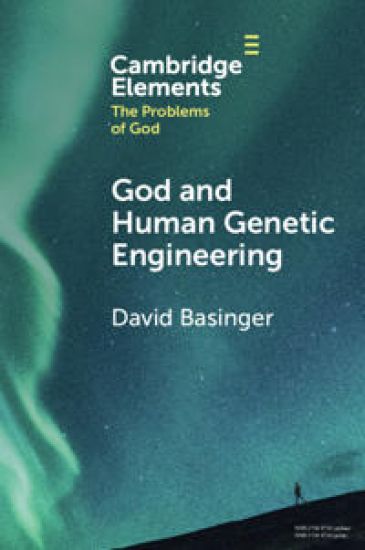
God and Human Genetic Engineering

God and Human Genetic Engineering

David Basinger

Cambridge University Press
2023
sidottu
Science and Religion have often intersected on issues. However, no set of current scientific advances is more promising and problematic for religious (or non-religious) individuals than those that fall under the heading of Human Genetic Engineering, as these advances have the potential not only to cure human disease, remove undesirable human traits, and enhance desirable human traits but to pass on these modifications to future generations. This Element is an introductory overview of these advances, the ethical issues they raise, and the lines of reasoning, including religious lines of reasoning, used to support or challenge these advances. The author's goal is to suggest a way of assessing these advances that will give us, whether religious or not, a solid basis for deciding these issues for ourselves and engaging in respectful, constructive dialog with others.
God and Human Genetic Engineering

God and Human Genetic Engineering

David Basinger

Cambridge University Press
2023
pokkari
Science and Religion have often intersected on issues. However, no set of current scientific advances is more promising and problematic for religious (or non-religious) individuals than those that fall under the heading of Human Genetic Engineering, as these advances have the potential not only to cure human disease, remove undesirable human traits, and enhance desirable human traits but to pass on these modifications to future generations. This Element is an introductory overview of these advances, the ethical issues they raise, and the lines of reasoning, including religious lines of reasoning, used to support or challenge these advances. The author's goal is to suggest a way of assessing these advances that will give us, whether religious or not, a solid basis for deciding these issues for ourselves and engaging in respectful, constructive dialog with others.
Miracles

Miracles

David Basinger

Cambridge University Press
2018
pokkari
This Element is a critical overview of the manner in which the concept of miracle is understood and discussed in contemporary analytic philosophy of religion. In its most basic sense, a miracle is an unusual, unexpected, observable event brought about by direct divine intervention. The focus of this study is on the key conceptual, epistemological, and theological issues that this definition of the miraculous continues to raise. As this topic is of existential as well as theoretical interest to many, there is no reason to believe the concept of miracle won't continue to be of ongoing interest to philosophers.
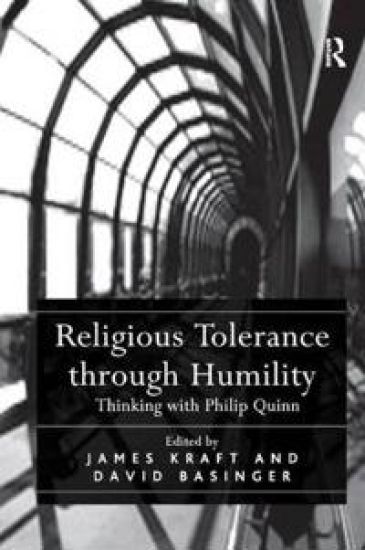
Religious Tolerance through Humility
The acclaimed scholars contributing to this volume place under scrutiny a fascinating alternative proposal for a pathway to religious tolerance - that serious consideration of religious diversity tends to reveal the weakness of support many have for their religious commitments, and the humility produced tends to result in religious tolerance. The authors illuminate the debate within philosophy about the way beliefs are supported, the controversy between internalism and externalism, and disagreement about how humility and tolerance are related. Critical and supportive views are represented so that the main lines of agreement and disagreement rise to the surface and are mapped out for the first time. The collection honours Philip Quinn who advocated the pathway so rigorously that the special attention given to his views focuses and deepens the critical discussion. Original essays by some of the most respected contemporary intellectuals in this field make this collection especially attractive.
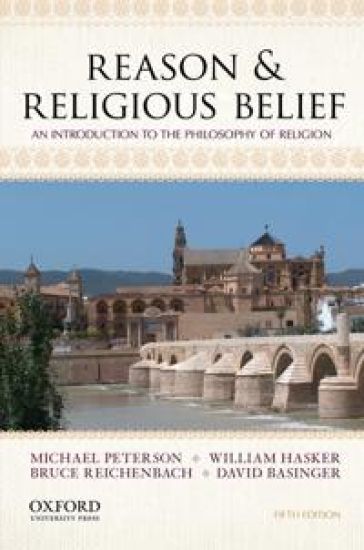
Reason & Religious Belief

Reason & Religious Belief

Michael Peterson; William Hasker; Bruce Reichenbach; David Basinger

Oxford University Press Inc
2012
nidottu

Halvin toimitettuna 165,20 €

Reason and Religious Belief, now in its fifth edition, explores perennial questions in the philosophy of religion. Drawing from the best in both classical and contemporary discussions, the authors examine religious experience, faith and reason, the divine attributes, arguments for and against the existence of God, divine action (in various forms of theism), Reformed epistemology, religious language, religious diversity, and religion and science. Revised and updated to reflect current philosophical discourse, the fifth edition offers new material on neuro-theology, the "new Atheism," the intelligent design movement, theistic evolution, and skeptical theism. It also provides more coverage of non-Western religions--particularly Buddhism--and updated discussions of evidentialism, free will, life after death, apophatic theology, and more. A sophisticated yet accessible introduction, Reason and Religious Belief, Fifth Edition, is ideally suited for use with the authors' companion anthology, Philosophy of Religion: Selected Readings, Fourth Edition (OUP, 2009).
Religious Tolerance through Humility

Religious Tolerance through Humility

David Basinger

Ashgate Publishing Limited
2008
sidottu
The acclaimed scholars contributing to this volume place under scrutiny a fascinating alternative proposal for a pathway to religious tolerance - that serious consideration of religious diversity tends to reveal the weakness of support many have for their religious commitments, and the humility produced tends to result in religious tolerance. The authors illuminate the debate within philosophy about the way beliefs are supported, the controversy between internalism and externalism, and disagreement about how humility and tolerance are related. Critical and supportive views are represented so that the main lines of agreement and disagreement rise to the surface and are mapped out for the first time. The collection honours Philip Quinn who advocated the pathway so rigorously that the special attention given to his views focuses and deepens the critical discussion. Original essays by some of the most respected contemporary intellectuals in this field make this collection especially attractive.
Religious Diversity

Religious Diversity

David Basinger

Ashgate Publishing Limited
2002
nidottu
Religious diversity exists whenever seemingly sincere, knowledgeable individuals hold incompatible beliefs on the same religious issue. Diversity of this sort is pervasive, existing not only across basic theistic systems but also within these theistic systems themselves. Religious Diversity explores the breadth and significance of such conflict. Examining the beliefs of various theistic systems, particularly within Christianity, Judaism, Hinduism and Buddhism, Basinger discusses seemingly incompatible claims about many religious issues, including the nature of God and the salvation of humankind. He considers particularly the work of Hick, Gellman, Plantinga, Schellenberg, Alston, Wainwright, and Quinn, applying their perspectives on 'exclusivism' and 'pluralism' as they become relevant to the issues in question. Basinger's survey of the relevant literature, proposed solutions, and fresh insights offer an invaluable contribution not only for philosophers of religion and philosophical theologians but for anyone interested in the increasingly significant question of what a religious believer can or cannot justifiably say about their religious perspective.
Förnuft och religiös tro : En inledning till religionsfilosofin

Förnuft och religiös tro : En inledning till religionsfilosofin

Michael Peterson; William Hasker; Bruce Reichenbach; David Basinger

Bokförlaget Nya Doxa
1997
nidottu
Finns en allsmäktig, allvetande gudom? Kan existensen av en god Gud förenas med existensen av det onda? Är religion och vetenskap förenliga? Dessa är några av de många eviga frågor som behandlas i Förnuft och religiös tro, en inledning till såväl klassiska som samtida motiv inom religionsfilosofin. Som en heltäckande och helt aktuell presentation erbjuder boken en kvalificerad men ändå begriplig inledning i religionsfilosofi.
Predestination and Free Will – Four Views of Divine Sovereignty and Human Freedom

Predestination and Free Will – Four Views of Divine Sovereignty and Human Freedom

David Basinger; Randall Basinger; John Feinberg; Norman L. Geisler; Bruce Reichenbach

Inter-Varsity Press,US
1986
nidottu
If God is in control, are people really free? This question has bothered Christians for centuries. And answers have covered a wide spectrum. Today Christians still disagree. Those who emphasize human freedom view it as a reflection of God's self-limited power. Others look at human freedom in the order of God's overall control. In this Spectrum Multiview volume, David and Randall Basinger have put this age-old question to four scholars trained in theology and philosophy. John Feinberg of Trinity Evangelical Divinity School and Norman Geisler of Dallas Theological Seminary focus on God's specific sovereignty. Bruce Reichenbach of Augsburg College and Clark Pinnock of McMaster Divinity College insist that God must limit his control to ensure our freedom. Each writer argues for his perspective and applies his theory to two practical case studies. Then the other writers respond to each of the major essays, exposing what they see as fallacies and hidden assumptions. This is a lively and provocative volume. Spectrum Multiview Books offer a range of viewpoints on contested topics within Christianity, giving contributors the opportunity to present their position and also respond to others in this dynamic publishing format.