Kirjojen hintavertailu – 12 903 735 kirjaa ja 27 kauppaa

Kirjailija

David Bennet

Kirjat ja teokset yhdessä paikassa: 13 kirjaa, julkaisuja vuosilta 2003–2020, suosituimpiin kuuluu The Course of Knowledge: A 21st Century Theory. Vertaile teosten hintoja ja tarkista saatavuus suomalaisista kirjakaupoista.

13 kirjaa

Kirjojen julkaisuvuodet: 2003–2020.

The Profundity and Bifurcation of Change Part V: Living the Future

The Profundity and Bifurcation of Change Part V: Living the Future

David Bennet; Arthur Shelley; Theresa Bullard

Mqipress
2020
nidottu
This is Part V (and Book 5) of The Profundity and Bifurcation of Change series, which details the human progression through the Intelligent Social Change Journey (ISCJ). This is a developmental journey of the body, mind and heart, moving from the heaviness of cause-and-effect linear extrapolations, to the fluidity of co-evolving with our environment, to the lightness of breathing our thought and feelings into reality. We are on this journey together. Change does not occur in isolation. In this final book of the series, we embrace the ancient art and science of Alchemy to explore the larger shift underway for humanity and how we can consciously and intentionally speed up evolution to enhance outcomes. In this conversation, we look at balancing and sensing, the harmony of beauty, and virtues for living the future. Conscious compassion, a virtue, is introduced as a state of being connected to morality and good character, inclusive of giving selfless service. We are now ready to refocus our attention on knowledge and consciousness, exploring the new roles these play in our advancement. And all of this-all of our expanding and growth as we move through the Intelligent Social Change Journey-is giving a wide freedom of choice as we approach the bifurcation. What future will we manifest? Today we are in the midst of a consciousness shift. The content of this book surfaces and connects the amazing developmental journey underway in which we all play a leading role-whether as a participant, resister or observer-in fully engaging this consciousness shift.
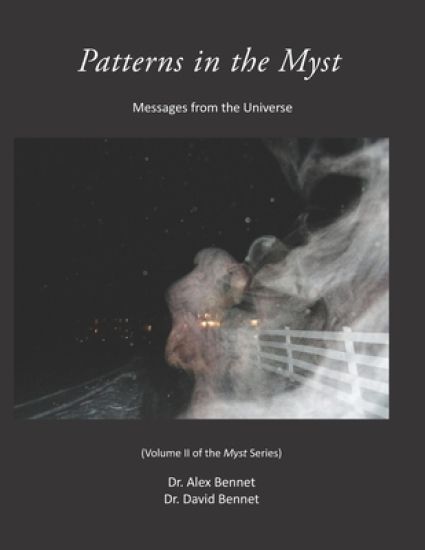
Patterns in the Myst: Messages from the Universe

Patterns in the Myst: Messages from the Universe

David Bennet; Alex Bennet

Mqipress
2020
nidottu
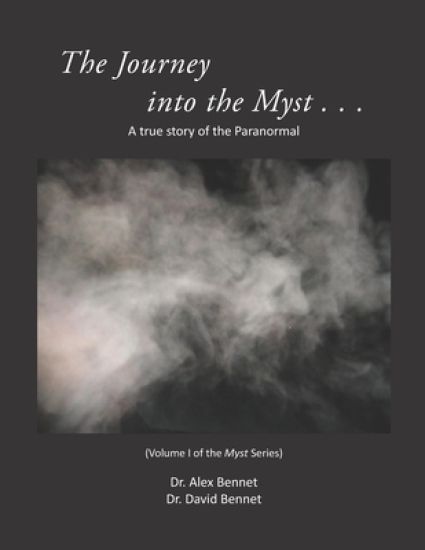
What we are about to tell you would have been quite unbelievable to me before this journey began. Thus begins The Journey into the Myst, the first book in the Myst series. This second book in the series explores the phenomenon of the Myst, the forming and shaping of non-random patterns such as human faces, angels and animals. The authors integrate Science into the Spiritual experience, bringing to bear what the Drs. Bennets have learned through their research and educational experiences in physics, neuroscience, human systems, change, knowledge management and human development. Embracing the paralogical, patterns in the Myst are observed, felt, interpreted, analyzed and compared in terms of their physical make-up, non-randomness, intelligent sources and potential implications. Along the way, the Bennets share insights and amazing pictures reflecting the forming of the Myst.
The Profundity and Bifurcation of Change Part IV: Co-Creating the Future

The Profundity and Bifurcation of Change Part IV: Co-Creating the Future

David Bennet; Arthur Shelley; Theresa Bullard

Mqipress
2020
nidottu
This is Part IV (and Book 4) of The Profundity and Bifurcation of Change series, which details the human progression through the Intelligent Social Change Journey (ISCJ). This is a developmental journey of the body, mind and heart, moving from the heaviness of cause-and-effect linear extrapolations, to the fluidity of co-evolving with our environment, to the lightness of breathing our thought and feelings into reality. We are on this journey together. Change does not occur in isolation. In Part IV of the PBC series, we move into Phase 3 of the ISCJ, fully embracing our role as co-creator. We recognize the power of thought and the role of attention and intention in our ever-expanding search for a higher level of truth. Whether we choose to engage it or not, we explore mental discipline as a tool toward expanded consciousness. In preparing ourselves for the creative leap, there are ever-deepening connections with others. We now understand that the mental faculties are in service to the intuitional, preparing us to, and expanding our ability to, act in and on the world, living with conscious compassion and tapping into the intuitional at will. Today we are in the midst of a consciousness shift. The content of this book surfaces and connects the amazing developmental journey underway in which we all play a leading role-whether as a participant, resister or observer-in fully engaging this consciousness shift.
Journey into the Myst: A true story of the Paranormal
Part I shares the Bennets' extraordinary Journey into the Myst. As they write, "What we are about to tell you would have been quite unbelievable to me before this journey began. It is not a story of the reality either of us has known for well over our 60 and 70 years of age, but rather, the reality of dreams and fairy tales." This is the true story of a sequence of events that happened at Mountain Quest Institute, situated in a high valley of the Allegheny Mountains of West Virginia. The story begins with a miracle, expanding into the capture and cataloging of thousands of pictures of electromagnetic spheres widely known as "orbs." This joyous experience became an exploration into the unknown with the emergence of what the author's fondly call the Myst, the forming and shaping of non-random patterns such as human faces, angels and animals. As this phenomenon unfolds, you will discover how the Drs. Alex and David Bennet began to observe and interact with the Myst. Part II, Patterns in the Myst, brings Science into the Spiritual experience, bringing to bear what the Drs. Bennets have learned through their research and educational experiences in physics, neuroscience, human systems, change, knowledge management and human development. Embracing the paralogical, patterns in the Myst are observed, felt, interpreted, analyzed and compared in terms of their physical make-up, non-randomness, intelligent sources and potential implications. Along the way, the Bennets were provided amazing pictures reflecting the forming of the Myst. In Part III, The Mind and the Myst, the Bennets shift to introspection to explore the continuing impact of the Myst experience on the human psyche.
The Profundity and Bifurcation of Change Part I: Laying the Groundwork

The Profundity and Bifurcation of Change Part I: Laying the Groundwork

David Bennet; Arthur Shelley; Theresa Bullard

Mqipress
2020
nidottu
This book lays the groundwork for the Intelligent Social Change Journey (ISCJ), a developmental journey of the body, mind and heart, moving from the heaviness of cause-and-effect linear extrapolations, to the fluidity of co-evolving with our environment, to the lightness of breathing our thought and feelings into reality. Grounded in development of our mental faculties, these are phase changes, each building on and expanding previous learning in our movement toward intelligent activity. As we lay the groundwork, we move through the concepts of change, knowledge, forces, self and consciousness. Then, recognizing that we are holistic beings, we provide a baseline model for individual change from within.
The Profundity and Bifurcation of Change Part III: Learning in the Present

The Profundity and Bifurcation of Change Part III: Learning in the Present

David Bennet; Arthur Shelley; Theresa Bullard

Mqipress
2020
nidottu
This is Part III (and Book 3) of The Profundity and Bifurcation of Change series, which details the human progression through the Intelligent Social Change Journey (ISCJ). This is a developmental journey of the body, mind and heart, moving from the heaviness of cause-and-effect linear extrapolations, to the fluidity of co-evolving with our environment, to the lightness of breathing our thought and feelings into reality. We are on this journey together. Change does not occur in isolation. Enter the world of learning in the present, which is Phase 2 of the ISCJ. As the world becomes increasingly complex, it is necessary to co-evolve with the environment. This requires a deepening connection to others, moving into empathy. While the NOW is the focus, there is an increasing ability to put together patterns from the past and think conceptually, as well as extrapolate future behaviors. Thus, we look closely at the relationship of time and space, and pattern thinking. We look at the human body as a complex energetic system, exploring the role of emotions as a guidance system, and what happens when we have stuck energy. This book also introduces Knowledge Capacities, different ways of thinking that build capacity for sustainability. Today we are in the midst of a consciousness shift. The content of this book surfaces and connects the amazing developmental journey underway in which we all play a leading role-whether as a participant, resister or observer-in fully engaging in this consciousness shift." Over the course of my 30 years in Knowledge Management, I've always been frustrated at the emphasis placed on technology and process, and the lack of any meaningful research into the most foundational aspect of knowledge - human consciousness. This epic work by the Bennets and their colleagues at MQI fills that void." While we certainly need to learn from the past (Part II) while co-creating the future (Part IV), we can only control what we do in the present moment. That's why this particular volume (Part III) is absolutely essential. It provides a wellspring of deep insights and clear guidance on how to make the most of the vast riches we've already been given, both individually and societally. I plan to draw from this amazing body of work early and often. I strongly recommend that you do the same." - Art Murray, Founder and CEO, Applied Knowledge Sciences, Inc.
Leading with the Future in Mind: Knowledge and Emergent Leadership

Leading with the Future in Mind: Knowledge and Emergent Leadership

David Bennet; John Lewis; Alex Bennet

Mqipress
2019
nidottu
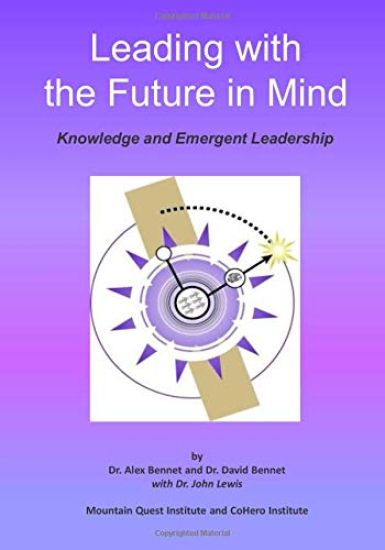
A tour de force for the Future of Leadership ... We exist in a new reality, a global world where the individuated power of the mind/brain offers possibilities beyond our imagination. It is within this framework that thought leading emerges, and when married to our collaborative nature, makes the impossible an everyday occurrence. Leading with the Future in Mind, building on profound insights unleashed by recent findings in neuroscience, provides a new view that converges leadership, knowledge and learning for individual and organizational advancement. This book provides a research-based tour de force for the future of leadership. Moving from the leadership of the past, for the few at the top, using authority as the explanation, we now find leadership emerging from all levels of the organization, with knowledge as the explanation. The future will be owned by the organizations that understand and can master the relationships between knowledge and leadership. Being familiar with the role of a knowledge worker is not the same as understanding the role of a knowledge leader. As the key ingredient, collaboration is much more than "getting along"; it embraces and engages. Knowledge and leadership, a quality of organizations, have always been in relationship. However, the significant mental growth emerging throughout the 20th century-where individuals at all levels began to expand their capacity to learn-and the expansion of the capacity for social knowledge in the interconnected world of the 21st century has propelled humanity into a new age. Knowledge-and the responsibility for how that knowledge is used-sits squarely on the shoulders of leadership at all levels. The nature of the organization has moved beyond the factory and process metaphor, and is now understood as an intelligent complex adaptive system (ICAS). Leading with the Future in Mind covers the essentials of working, learning, and leading in an ICAS, covering knowledge and complexity, but also passion and spiritual energy. As social creatures living in an entangled world, our brains are linked together. We are in continuous interaction with those around us, and the brain is continuously changing in response. Wrapped in the mantle of collaborative leadership and engaging our full resources-physical, mental, emotional and spiritual-we open the door to possibilities. We are dreaming the future together.
The Course of Knowledge: A 21st Century Theory

The Course of Knowledge: A 21st Century Theory

David Bennet; Joyce Avedisian; Alex Bennet

Mqipress Knowledge Series
2019
nidottu
Knowledge is at the core of what it is to be human, the substance which informs our thoughts and determines the course of our actions. Our growing focus on, and understanding of, knowledge and its consequent actions is changing our relationship with the world. Because knowledge determines the quality of every single decision we make, it is critical to learn about and understand what knowledge is. From a 21st century viewpoint, we explore a theory of knowledge that is both pragmatic and biological. Pragmatic in that it is based on taking effective action, and biological because it is created by humans via patterns of neuronal connections in the mind/brain. As humanity moves toward intelligent activity, knowledge, incomplete and imperfect, is the currency of our journey. The better our understanding of this human capacity, the greater the opportunity for making good choices. We begin by laying the foundation with clear definitions of information and knowledge, and levels and types of knowledge, then enter the realms of the voiced and unvoiced, delving into the dimensions of knowledge (explicit, implicit and tacit), engaging tacit knowledge and living through context. From a neuroscience perspective, we explore the magnificent mind/brain, social knowledge and the fallacy of knowledge reuse. Finally, we look at knowledge as values, moving from knowledge to wisdom, the relationship of knowledge and knowing, and sub-personalities as knowledge. We are in a continuous cycle of knowledge creation such that every moment offers the opportunity for the emergence of new and exciting ideas, all waiting to be put in service to an interconnected world. Learn more about this exciting human capacity
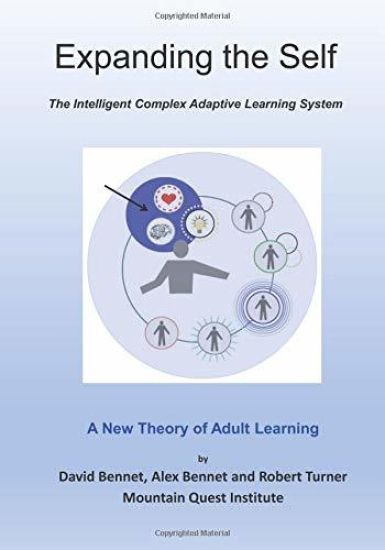
Expanding the Self: The Intelligent Complex Adaptive Learning System (ICALS): A New Theory of Adult Learning
We live in unprecedented times; indeed, turbulent times that can arguably be defined as ushering humanity into a new Golden Age, offering the opportunity to embrace new ways of learning and living in a globally and collaboratively entangled connectedness. In this shifting and dynamic environment, life demands accelerated cycles of learning experiences. Fortunately, we as a humanity have begun to look within ourselves to better understand the way our mind/brain operates, the amazing qualities of the body that power our thoughts and feelings, and the reciprocal loops as those thoughts and feelings change our physical structure. This emerging knowledge begs us to relook and rethink what we know about learning, providing a new starting point to expand toward the future. This book is a treasure for those interested in how recent findings in neuroscience impact learning. The result of this work is an expanded experiential learning model, the Intelligent Complex Adaptive Learning System, which adds a fifth mode of Social Engagement to Kolb's concrete experience, reflective observation, abstract conceptualization and active experimentation, with the five modes undergirded by the power of Self in an ever-shifting environment. A significant conclusion is that, should they desire, adults have much more control over their learning than they may realize.
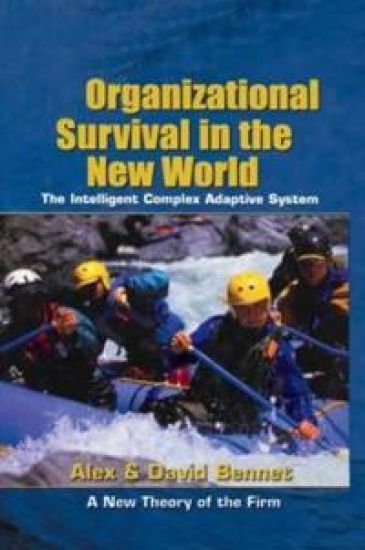
Organizational Survival in the New World

Organizational Survival in the New World

Alex Bennet; David Bennet

Butterworth-Heinemann Ltd
2003
sidottu
In this book David and Alex Bennet propose a new model for organizations that enables them to react more quickly and fluidly to today's fast-changing, dynamic business environment: the Intelligent Complex Adaptive System (ICAS). ICAS is a new organic model of the firm based on recent research in complexity and neuroscience, and incorporating networking theory and knowledge management, and turns the living system metaphor into a reality for organizations. This book synthesizes new thinking about organizational structure from the fields listed above into ICAS, a new systems model for the successful organization of the future designed to help leaders and managers of knowledge organizations succeed in a non-linear, complex, fast-changing and turbulent environment. Technology enables connectivity, and the ICAS model takes advantage of that connectivity by fostering the development of dynamic, effective and trusting relationships in a new organizational structure. This book outlines the model in chapter four, and then breaks down the model into its components in the next two chapters. This is a benefit to readers since different components of the model can be implemented at different times, so the book can guide implementation of one or all of the components as a manager sees fit. There are eight characteristics of the ICAS: organizational intelligence, unity and shared purpose, optimum complexity, selectivity, knowledge centricity, flow, permeable boundaries, and multi-dimensionality.