

Kirjailija
David Berry
Kirjat ja teokset yhdessä paikassa: 35 kirjaa, julkaisuja vuosilta 1999–2027, suosituimpiin kuuluu The First Champions. Vertaile teosten hintoja ja tarkista saatavuus suomalaisista kirjakaupoista.
35 kirjaa
Kirjojen julkaisuvuodet: 1999–2027.

Public Policy and Media Organizations
David Berry; Caroline Kamau
Ashgate Publishing Limited
2013
sidottu
Public policy thinking and implementation is both a process of intellectual thought and rationale for governing. This book examines public policy and the influence news media organizations have in the production and implementation of public policy. Part I assesses the impact of political philosophy on public policy thinking and further discusses the meaning of public policy in social democratic systems. It uses the riots that occurred across England in the summer of 2011 as a case-study to focus on how the idea of the ’Big Society’ was regenerated by government and used as a basis for public policy thinking. Finally, it investigates how media organizations form news representations of public policy issues that seek to contextualize and reshape policy manufactured for public consumption. Part II provides a psychological exploration of the processes which explain the connection between the media, the public and policy-makers. Does the ’common good’ really drive public policy-making, or can group processes better explain what policy-makers decide? This second part of the book explores how media workers’ professional identities and practices shape their decisions about how to represent policy news. It also shows how the public identities and corporate interests of media organizations shape their role as referees of public policy-making and how all this culminates in faulty decision-making about how to represent policy news, polarization in public opinion about particular policies, and shifts in policy-makers’ decisions.



Tales of Awakening: Travels, Teachings and Transcendence with Namgyal Rinpoche: (1931 -- 2003)
Rab Wilkie; David Berry
Createspace Independent Publishing Platform
2012
nidottu


Walks Around Penmachno and Ysbyty Ifan in the Snowdonia National Park
David Berry
KITTIWAKE PRESS
2011
nidottu


Journalism, Ethics and Society provides a comprehensive overview and critical analysis of debates within media ethics in relation to the purpose of news and journalism for society. It assesses how the meaning of news and journalism is central to a discourse in ethics and further evaluates the continuing role of liberalism in helping to define both theory and practice. Its timely and topical analysis focuses on two of the most central concepts within media ethics and journalistic practice: the US based Public Journalism 'movement' and European Union media policies. It provides new ways of thinking about media ethics and will be of interest to students and researchers working within the field of media, cultural studies and journalism, as well as scholars of philosophy.

The Romanian Mass Media and Cultural Development
David Berry
Ashgate Publishing Limited
2004
sidottu
This compelling book assesses the development of the mass media since the Romanian Revolution in December 1989 and the media's impact on cultural development, the public sphere, civil society and democracy. It controversially claims that Romania's failure to experience a thoroughgoing enlightenment project in its entire history remains a major obstacle for producing democratic ownership of the media and democratic development of society. Analyzing both the print and broadcast media and their respective effects on development, the book also discusses the effects of Romanian law on media and societal development, ethics, and media responsibilities. It concludes, however, that far from having an absolutely negative impact on Romanian post-communism, the media has helped produce a contradictory empirical form that equally contains positive moments in terms of subjective cultural development.

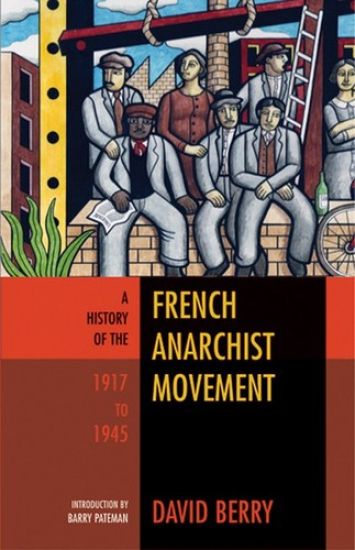
A History of the French Anarchist Movement, 1917-1945
David Berry
Praeger Publishers Inc
2002
sidottu
The first full-length English-language history of the French anarchist movement between the wars, this study analyzes the anarchists' responses to the Russian and Spanish revolutions and to the creation of an international communist movement. It details the dilemmas facing anarchism at a crucial moment in the movement's history, a time characterized by serious questioning of traditional anarchist theory and practice. On the basis of original research using the anarchist movement's press and other publications, as well as archival sources, Barry concludes that the French anarchist movement was not as isolated as has been previously suggested and that it was in fact probably stronger in the 1930s than it had been before or since. During this key era, leading militants within the movement sought to clarify anarchist theory regarding the nature of 20th-century revolutions, to challenge the rejection of organization, and to integrate anarchism more fully into the broader socialist and trade union movements. The movement was capable of organizing large and efficient campaigns and its analyses of developments on the left and in the trade union movement were often more prescient than those of the socialists and communists. Barry takes seriously the anarchists' attempts to come to terms with the challenges of revolution and to respond positively to them in a distinctly libertarian socialist way. Ultimately, they were only partially successful in such efforts, and this accounts in large part for their historic failure as a movement.
Ethics and Media Culture straddles the practical and ethical issues of contention encountered by journalists. The book's various contributors cover a diversity of issues and viewpoints, attempting to broaden out the debates particularly in relation to Journalism Studies, Cultural Studies, Sociology of Culture and Communications, Philosophy and History. The debate concerning media ethics has intensified in recent years, fuelled mainly by the standards of journalist and media practices. The role of practitioners has taken centre-stage as concerns over what constitutes ethical, and therefore socially acceptable practice and behaviour, by the public, practitioners and intellectuals alike. The discursive relationship between the production and consumption of information is central to the debate regarding moral conduct, particularly in light of the commercialisation of the media. Considering that media institutions operate in a climate of intense competition, the value of information and its corresponding quality have begun to be critically assessed in terms of ethical understanding. A degree of open-endedness is maintained in discussions throughout this book, which is intended to engage the reader with the issues raised and determine their own conclusions.