Kirjojen hintavertailu – 12 859 828 kirjaa ja 27 kauppaa
Kirjailija
David Bindman
Kirjat ja teokset yhdessä paikassa: 6 kirjaa, julkaisuja vuosilta 1995–2023, suosituimpiin kuuluu ‘Race Is Everything’. Vertaile teosten hintoja ja tarkista saatavuus suomalaisista kirjakaupoista.
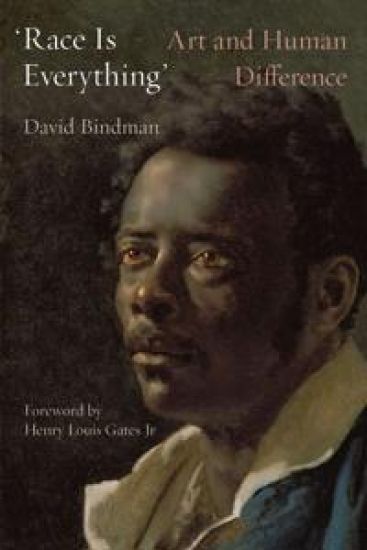
‘Race Is Everything’ looks at ideas of ‘racial science’ in the nineteenth century and the first half of the twentieth century, and how art was influenced by them. It looks at race in general, but with a particular concentration on attitudes towards and representations of people of African and Jewish descent. David Bindman argues that behind all racial ideas is the belief that outward appearance, and especially skull-shape, can be correlated with inner character and intelligence, and that these could be used to create a seemingly scientific hierarchy of races. This book considers many aspects, including the skull as a racial marker; ancient Egypt as a precedent for Southern slavery; Darwin, race and aesthetics; the ‘Mediterranean race’; the visual aspects of eugenics; and the racial politics of Emil Nolde.
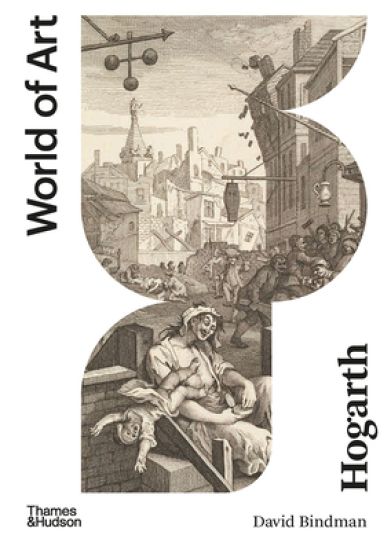
Hogarth was one of the great 18th-century painters, a marvellous colourist and innovator at all levels of artistic expression. Art historian David Bindman surveys the works of this artist whose wry humour and sharp wit were reflected in his prolific paintings and prints including The Rake’s Progress and Marriage-A-la-Mode. Hogarth was also a master of pictorial satire, highlighting the moral and political hypocrisies of the day with delightful detail and comedy – themes that resonate deeply with our times. The artist was a keen observer of class and society; this new edition has been specially updated to include a discussion of Hogarth’s many representations of Black people in 18th-century Britain, a subject that has long been overlooked. Now revised with additional material and illustrated in colour throughout, this is a vivid and incisive study of the man and his art. With 172 illustrations in colour
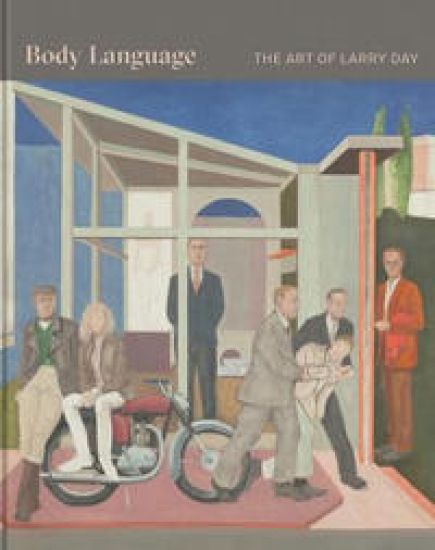
Larry Day (1921-1998) was a distinguished painter and a dominant force in American art from the 1950s through the 1990s. Referred to as "the dean of Philadelphia painters," he was a charismatic teacher to several generations of artists, many of whom are important figures in the arts today. This celebratory catalogue will explore his contributions to the art of his time, and the lasting power of his observations and imagination. Day's first successes were with abstracted views of nature, but he is perhaps best known for figurative portraits and architectural landscapes, which he continued to develop for the rest of his career. The driving force behind Day's paintings was an intense engagement with earlier art and a deep classicism that governed his views of human interactions and the built environment. In the last decades of his life, he made several series of haunting and mysterious figure com-positions that mix everyday scenes with earlier works of art, fully integrating past and present. Day's art tells us that life is deeply imbricated with the past, and that reality is not a matter of simple observation, but is made up of memories and experience of all kinds of images—from art, literature, film, television, and fashion magazines. This fully illustrated catalogue will focus on Day's working process and relationships between his paintings and drawings. It will include a selection of Day's writings along with scholarly articles that will affirm Day's singular place within midcentury American art and his equally important legacy.
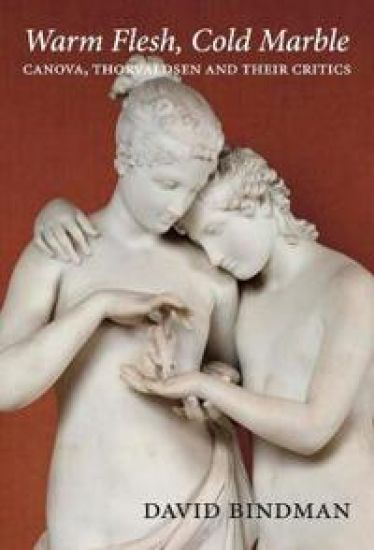
This brilliant book focuses on the aesthetic concerns of the two most important sculptors of the early 19th century, the great Italian sculptor Antonio Canova (1757–1822) and his illustrious Danish rival Bertel Thorvaldsen (1770–1844). Rather than comparing their artistic output, the distinguished art historian David Bindman addresses the possible impact of Kantian aesthetics on their work. Both artists had elevated reputations, and their sculptures attracted interest from philosophically minded critics. Despite the sculptors’ own apparent disdain for theory, Bindman argues that they were in dialogue with and greatly influenced by philosophical and critical debates, and made many decisions in creating their sculptures specifically in response to those debates. Warm Flesh, Cold Marble considers such intriguing topics as the aesthetic autonomy of works of art, the gender of the subject, the efficacy of marble as an imitative medium, the question of color and texture in relation to ideas and practices of antiquity, and the relationship between the whiteness of marble and ideas of race.
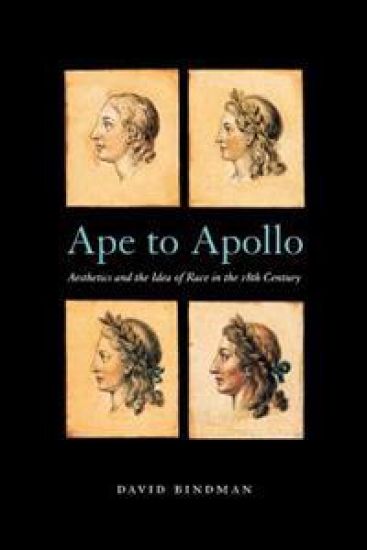
‘Race’ was essentially a construction of the 18th century, a means by which the Enlightenment could impose rational order on human variety. In this book, the art historian David Bindman argues that ideas of beauty were from the beginning inseparable from race, as Europeans judged the civility and aesthetic capacity of other races by their appearance. These judgements were combined with a conflict between those who wished to order humanity into separate races, and those who believed in a common humanity whose differences were due to climatic and geographical variations. Central to this debate was the work of Linnaeus and Buffon, but it was also driven by the writings of the German art historian J. J. Winckelmann, who argued for the supremacy of the ancient Greeks, the Swiss physiognomist J. C. Lavater, who believed that moral character could be deduced from the study of a person's face, and by two scientists – the father and son Reinhold and Georg Forster – who had been on Captain Cook’s second voyage to the South Seas in 1772-5. During this time the philosopher Immanuel Kant attempted the first modern definition of race, a definition which was challenged by Georg Forster and the philosopher J. G. von Herder, sparking a lively but astonishingly little-known controversy that went on through the next decade and beyond. The 1770s also saw the beginnings of a more scientific yet also profoundly aesthetic approach to race in the work of Johann Friedrich Blumenbach and Pieter Camper, whose notorious classification of skulls was, despite their own liberalism, to become the basis of 19th-century ‘racial science’. Ape to Apollo provides a refreshing and original view of a highly contentious subject. It will be essential reading for anyone seeking the origins of today’s controversies over race and ideas of beauty.
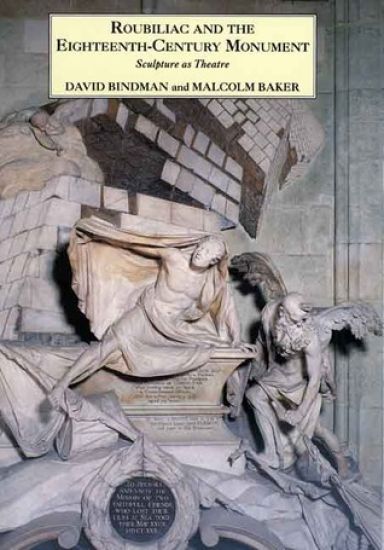
Louis François Roubiliac, the most compelling sculptor in eighteenth-century Britain, was responsible for many complex and dramatic monuments that can be seen in Westminster Abbey and churches throughout the country. This book is not only the first extended treatment of the artist since 1928 but is also an exploration of tomb sculpture in the context of the period. The first section, written by David Bindman, discusses the reasons for the commissioning of tomb sculpture, ideas of death and the afterlife, the setting of the tomb, the themes that govern its imagery, and the negotiations between sculptor and patron. The second section, written by Malcolm Baker, examines in detail the processes involved in the design and making of the monuments. Through an analysis of the monuments themselves, the surviving models, and a range of documentary evidence, Baker considers Roubiliac's technical procedures and compares them to those of other sculptors in Britain and on the continent. The volume ends with a full catalogue raisonné of Roubiliac's known monuments. Each commission is discussed in detail, with full accounts of contemporary documentation, inscriptions, physical construction, and related models. By examining the particular social and religious conditions of the time it becomes possible to account not only for the distinctive features of Roubiliac's work and practice but also for how such theatrical works came to be accepted and admired. The book is fully illustrated, all the major works having been newly photographed to make visible details that are impossible to see under normal viewing conditions. Published for the Paul Mellon Center for Studies in British Art