Kirjojen hintavertailu – 12 859 827 kirjaa ja 27 kauppaa

Kirjailija

David Bloch

Kirjat ja teokset yhdessä paikassa: 6 kirjaa, julkaisuja vuosilta 2002–2014, suosituimpiin kuuluu Aristotle on Memory and Recollection. Vertaile teosten hintoja ja tarkista saatavuus suomalaisista kirjakaupoista.

6 kirjaa

Kirjojen julkaisuvuodet: 2002–2014.

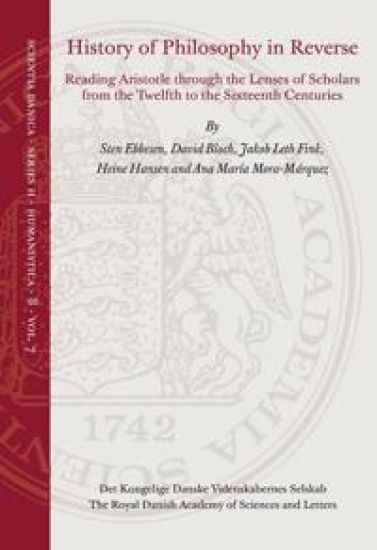
History of Philosophy in Reverse

History of Philosophy in Reverse

Sten Ebbesen; David Bloch; Jakob Leth Fink; Heine Hansen; Ana Mária Mora-Márquez

Det Kongelige Danske Videnskabernes Selskab
2014
nidottu
Aristotle's many philosophical andscientific works have been studied and commented on for over 2,000 years, but never as intensively as in the years between 1100 and 1600. At this time, they were the backbone of the scholastic culture that created the European university system. This book describes and compares the interpretive methods and publication strategies of the scholastics and contemporary Aristotelians. It argues that parts of the old methodology could be resumed, and it shows how valuable interpretative suggestions can be found that are not seen in newer literature. The book's title contains a program. When researchers today deal with the scholastics' interpretation of Aristotle, they typically start from their own opinion of what Aristotle actually meant. They then use that to illuminate the scholastics' understanding. Instead of this movement from Aristotle forward in chronology, the book argues for a reverse: start by understanding the scholastic interpreters, then go back to Aristotle and try to read him through their lenses.

Platon i udvalg - 3

Platon i udvalg - 3

David Bloch; Adam Schwartz; Christel Tvedegaard Lund

Systime
2013
nidottu
Platon er en af den vestlige verdens mest betydningsfulde filosoffer, og hans værker læses af mange studerende på landets gymnasier og universiteter, men hidtil har kun et mindre udsnit af hans dialoger været tilgængelige i moderne udgaver. I forbindelse med udgivelsen af Platons Samlede Værker i ny oversættelse (2009-2015) udsender Gyldendal derfor studieudgaver af de mest læste dialoger. Oversættelserne er sammen med indledninger og oversigter de samme som i den samlede udgave, men studieudgaverne indledes med en generel introduktion til det athenske samfund, som dialogerne udspiller sig i, og til Platon og hans værk. Introduktionen er skrevet med særligt henblik på førstegangslæsere.
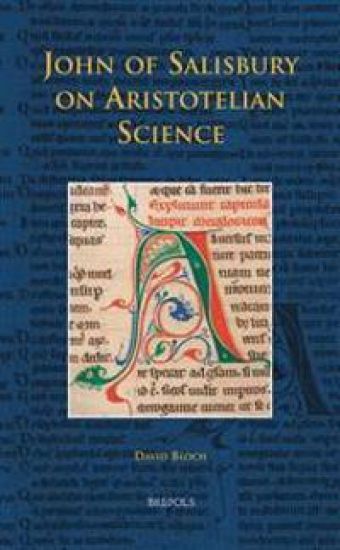
John of Salisbury on Aristotelian Science
This is the first substantial treatment of John of Salisbury's views on Aristotelian science. In his great work on logic and education, John of Salisbury proposes an Aristotelian foundation for education, research, and science. Theories and methods of science and scholarship were central topics in twelfth-century discourse, and John is apparently the first to propose use of the entire Organon, the texts of which were to become very influential and important in the thirteenth century. However, his precise knowledge and understanding of Aristotle has never been thoroughly examined. The present book challenges the view that John read, understood, and used the entire Organon. It pays particular attention to the Metalogicon, but it draws upon a variety of other sources as well in arguing that John did not in fact study the Ars nova with any care, and that he probably never read the most important text, the Posterior Analytics, in its entirety. The conclusions of the book have important consequences not only for our conception of John of Salisbury, but also for our views and understanding of twelfth-century Aristotelianism and science in general.
Aristotle on Memory and Recollection
Twentieth-century Scholarship on Aristotle's De Memoria et Reminiscentia was dominated by the view that Aristotle's theories of memory and recollection are basically very similar to ours. By means of a new critical edition of the Greek text, an essay on Aristotle's own theories and an essay on these theories as they were received in the Latin West, the present book offers material that challenges the opinio communis. The result is a new interpretation of Aristotle's De Memoria et Reminiscentia and its relevance to the concerns of 21st-century philosophers, both regarding the concepts of memory and recollection and regarding Aristotle's philosophical methodology.