Kirjojen hintavertailu – 12 875 705 kirjaa ja 26 kauppaa

Kirjailija

David Broder

Kirjat ja teokset yhdessä paikassa: 6 kirjaa, julkaisuja vuosilta 2020–2023, suosituimpiin kuuluu The Rebirth of Italian Communism, 1943–44. Vertaile teosten hintoja ja tarkista saatavuus suomalaisista kirjakaupoista.

6 kirjaa

Kirjojen julkaisuvuodet: 2020–2023.

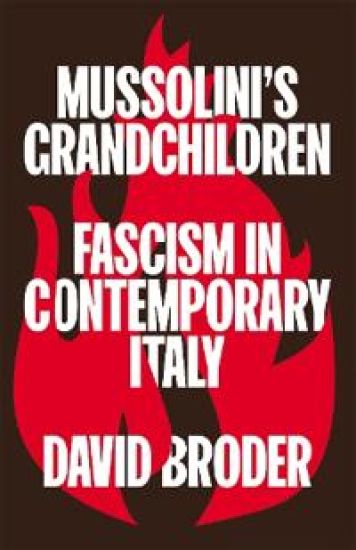
Mussolini's Grandchildren

Mussolini's Grandchildren

David Broder

PLUTO PRESS
2023
pokkari
'Fascinating and trenchant, this account of contemporary Italian neo-fascism is both original and shocking' - John Foot, historian The dominant force in Italian politics is Giorgia Meloni's Fratelli d'Italia — a party with a direct genealogy from Mussolini's regime. Surging to prominence in recent years, it has waged a fierce culture war around national identity, polarised political debate around World War II, and secured the largest vote share in Italy's 2022 general election. Eighty years after the fall of Mussolini, his heirs and admirers are again in power. So how exactly has this situation come about? Mussolini's Grandchildren delves into Italy's self-styled 'post-fascist' movements - rooted in historical fascism yet claiming to have 'transcended' it. David Broder highlights the reinventions of far-right politics since the Second World War, and examines the interplay between a parliamentary face aimed at integrating fascists into the mainstream, and militant fringe groups which, despite their extremism, play an important role in nurturing the broader far right. Fratelli d'Italia has retained its hegemony over fascist subcultures whilst embracing a raft of more pragmatic policy positions, fusing harsh Islamophobia and anti-communism with support for the European Union and NATO. As countervailing anti-fascist forces in Italian society wane, the far-right party's mission to redeem historical fascism, legitimise its political heirs and shift the terrain of mainstream politics is proving alarmingly successful.

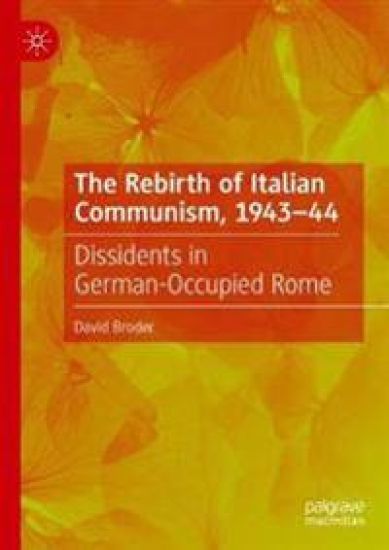
The Rebirth of Italian Communism, 1943–44

The Rebirth of Italian Communism, 1943–44

David Broder

Springer Nature Switzerland AG
2022
nidottu
During the final years of the Second World War, a decisive change took place in the Italian left, as the Italian Communist Party (PCI) rose from clandestinity and recast itself as a mass, patriotic force committed to building a new democracy. This book explains how this new party came into being. Using Rome as its focus, it explains that the rebirth of the PCI required that it subdue other, dissident strands of communist thinking. During the nine-month German occupation of Rome in 1943-44, dissident communists would create the capital’s largest single resistance formation, the Communist Movement of Italy (MCd’I), which galvanised a social revolt in the capital's borgate slums. Exploring this wartime battle to define the rebirth of Italian communism, the author examines the ways in which a militant minority of communists rooted their activity in the everyday lives of the population under occupation. In particular, this study focuses on the role of draft resistance and the revolt against labour conscription in driving recruitment to partisan bands, and how communist militants sought to mould these recruits through an active effort of political education. Studying the political writing of these dissidents, their autodidact Marxism and the social conditions in which it emerged, this book also sheds light on an often-ignored underground culture in the years that preceded the armed resistance that began in September 1943. Revealing an almost unknown history of dissident communism in Italy, outside of more recognisable traditions like Trotskyism or Bordigism, this book provides an innovative perspective on Italian history. It will be of interest to those researching the broad topics of political and social history, but more specifically, resistance in the Second World War and the post-war European left.
October

October

David Broder

Rosedog Books
2022
nidottu
OctoberBy: David BroderCan an angry, disaffected, self-destructive young man find hope and solace at an insane asylum when he doesn't believe they can possibly exist? It is 1983, and Derek is twenty-one and at war with existence itself. If he is vanquished, he lives. If he is victorious, he dies. October challenges all the life-affirming ideas we have been imbued with by calling into question the notions that life has value and meaning, that love is not selfish, and that the people we are closest to will not harm us. October will resonate with those who feel we are all living our lives in delusion, trusting traditional values, relying on all those beliefs that are created to do nothing more than give us a reason to get out of bed. October is for those who, like its author, David Broder, question everything and trust nothing. About the AuthorDavid Broder was born in a log cabin and raised by wolves... He graduated from the University of Connecticut with a BA in history. His studies focused on German romanticism and neo-romanticism from the Revolutions of 1848 through the fall of the Nazi Regime. Broder minored in philosophy, in which he focused on existential nihilism and became an ardent follower of the ideas of Friedrich Nietzsche and Arthur Schopenhauer. Broder has always been a creative individual. In addition to writing, he is a musician playing guitar and keyboards, composing and recording his own version of '80s influenced gothic rock. He has released four CDs, which are available at https: //davidbrts.com. Broder is an avid fan of classic and antique cars. He owns three Jaguars and an old Triumph, which means he is also a masochist. Broder resides in Shelton, Connecticut, with his wife, his two adult sons, several frogs, snakes, tropical fish, and whatever happens to be crawling around in the backyard.
The Rebirth of Italian Communism, 1943–44

The Rebirth of Italian Communism, 1943–44

David Broder

Springer Nature Switzerland AG
2021
sidottu
During the final years of the Second World War, a decisive change took place in the Italian left, as the Italian Communist Party (PCI) rose from clandestinity and recast itself as a mass, patriotic force committed to building a new democracy. This book explains how this new party came into being. Using Rome as its focus, it explains that the rebirth of the PCI required that it subdue other, dissident strands of communist thinking. During the nine-month German occupation of Rome in 1943-44, dissident communists would create the capital’s largest single resistance formation, the Communist Movement of Italy (MCd’I), which galvanised a social revolt in the capital's borgate slums. Exploring this wartime battle to define the rebirth of Italian communism, the author examines the ways in which a militant minority of communists rooted their activity in the everyday lives of the population under occupation. In particular, this study focuses on the role of draft resistance and the revolt against labour conscription in driving recruitment to partisan bands, and how communist militants sought to mould these recruits through an active effort of political education. Studying the political writing of these dissidents, their autodidact Marxism and the social conditions in which it emerged, this book also sheds light on an often-ignored underground culture in the years that preceded the armed resistance that began in September 1943. Revealing an almost unknown history of dissident communism in Italy, outside of more recognisable traditions like Trotskyism or Bordigism, this book provides an innovative perspective on Italian history. It will be of interest to those researching the broad topics of political and social history, but more specifically, resistance in the Second World War and the post-war European left.
Immunodemocracy

Immunodemocracy

Donatella Di Cesare; David Broder

Semiotext (E)
2021
nidottu
A stimulating and profound portrayal of the epochal event that has already left its mark on the twenty-first century. Immunodemocracy offers a stimulating and profound portrayal of the epochal event that has already left its mark on the twenty-first century. Moving from the ecological question to the rule of experts, from the state of exception to immunitarian democracy, from rule by fear to the contagion of conspiracy theory, from forced distancing to digital control, Donatella Di Cesare examines how existence is already changing-and what its future political effects may be. In her own personal style, the author reconstructs the dramatic phases of what she calls "the breathing catastrophe." Coronavirus is a sovereign virus that skirts its way around the walls of patriotism and the sovereignists' imperious frontiers. And it reveals in all its terrible crudeness the immunitarian logic that excludes the weakest and hits the poorest. The Cordon sanitaire of disengagement risks expanding beyond all proportion. The disparity between the protected and the helpless-a challenge to any idea of justice-has never been so blatant. The virus has not introduced, but merely brought out into the open the ruthlessness of the capitalism that is now wrapping us in its devastating spiral, in its compulsive, asphyxial vortex. Is it our final warning? The violent global pandemic shows that it is impossible for us to survive if we don't help each other. We will need to protect ourselves from protection and the specter of absolute immunization. When breathing can no longer be taken for granted, we need to rethink a new way of living together.
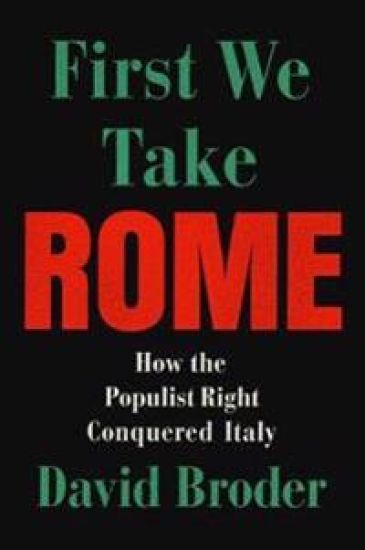
First They Took Rome

First They Took Rome

David Broder

Verso Books
2020
sidottu
It is difficult for Italians to have much faith in the future. The last Labour Minister said it was a good thing if young people emigrated, to stop them 'getting under our feet'; one recent Prime Minister said that young Italians should not invest their hopes in securing a stable job, for that would be 'boring', anyway. Examining Italy's history since the end of the Cold War, Italy is the Future argues that its dismal situation should not be understood in terms of a stereotyped narrative of Italian chaos or backwardness. In a country that could once boast Europe's strongest Left, Italy today epitomises the crisis of democracy in the West. The scandals of Silvio Berlusconi's rule, the pervasive corruption of public life and sky-high youth unemployment are indicators of a particularly sick society. Yet what is also apparent is the difficulty of any new force emerging to renew Italy's institutions, as its atomised citizens lose hope in political change. What has broken apart in Italy is not just its once-mighty Left but the very bases of social solidarity. The parties of the 1990s and 2000s directly express the social demolition wrought by neoliberalism, as isolated and endangered individuals face the consequences of the crisis alone. Not this or that political party, but public life itself, is in full-scale collapse