Deconstructing Theodicy
David Burrell
Brazos Press, Div of Baker Publishing Group
2008
nidottu
Halvin toimitettuna 27,50 €
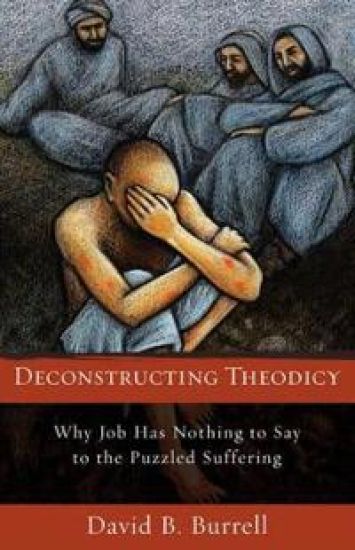
An ancient commentator called Job a "strange and wonderful book." For many readers, "strange" might do. Though Job has been characterized as an answer to the problem of suffering, for many the book fails to satisfy the longing for answers it supposedly contains. Perhaps that, in fact, is the point of Job--there are no satisfactory arguments for why people suffer. In this compact yet substantial volume, David B. Burrell argues that this is the message of Job. Burrell engages major movements of the book in theological and philosophical reflection. The book also contains an interfaith perspective with the inclusion of a chapter by Islamic scholar A. H. Johns on the reading of the Job figure in the Koran. Burrell finally concludes that Job's contribution to the problem of suffering is as an affirmation that God hears and heeds our cries of anguish. EXCERPTWhile an initial reading of the story which frames the book of Job suggests a classical theodicy of divine testing and of reward and punishment, we shall later see (with the help of real friends) just how misguided a reading that is. For now, it will suffice to note how the drama's unfolding belies such a reading, notably in the counterpoint between each of Job's friends and Job himself. For while they each address arguments to Job, his riposte to their arguments is addressed not to them but to the overwhelming presence of the God of Israel, to inaugurate an implicit dialogue vindicated by that same God who ends by announcing his preference for Job above all of them. Indeed, they incur the wrath of that God for attempting vigorously to take God's side! Yet since this is the very One who has taken such care to reveal his ways to a particular people (to whom Job does not belong), one cannot escape concluding that the entire dramatic exchange--between Job and his interlocutors and even more between Job and the God of Israel--must be directed against a recurrent misappropriation of that revelation on the part of the people entrusted with it. So it must be that the book's primary role in the Hebrew canon will be to correct that characteristic misapprehension of the revelation displayed by Job's friends, as their "explanation" of his plight turns on reading the covenant as a set of simple transactions.