Kirjojen hintavertailu – 12 903 741 kirjaa ja 27 kauppaa

Kirjailija

David C. Young

Kirjat ja teokset yhdessä paikassa: 8 kirjaa, julkaisuja vuosilta 2003–2025, suosituimpiin kuuluu History of the Town of Leeds, Androscoggin County, Maine, from Its Settlement, June 10, 1780. Vertaile teosten hintoja ja tarkista saatavuus suomalaisista kirjakaupoista.

Nimi esiintyy myös muodoissa: David C Young

8 kirjaa

Kirjojen julkaisuvuodet: 2003–2025.

School Discipline and Administrator Decision-Making

School Discipline and Administrator Decision-Making

Stephanie Chitpin; David C. Young; Marvin Zuker

Emerald Publishing Limited
2025
sidottu

Halvin toimitettuna 122,70 €

School Discipline and Administrator Decision-Making has been developed for leaders, practitioners, and researchers to explore the theory and practice of decision-making, with specific reference to school administrators and their response to school discipline. This work delves into the experiences of Canadian and Mauritian principals faced with tensions-sometimes racial-regarding discipline. School leaders have the potential to make valuable changes within their schools as their influence touches on all aspects of the school building and culture. Yet, often discipline presents a challenge for school leaders as it requires a certain degree of discretion, especially when examining the issue of racial discipline disparity gaps in schools. Exploring both a Western and non-Western context, the opening chapters highlight the rigidity of behavioural policies and the desire to break from such neoliberal practices despite fears of repercussion in Mauritius. This is followed by an exploration of the decision-making of principals in Ontario and Nova Scotia in a Canadian context. The chapters challenge neoliberal policies and guidelines by questioning current practices and proposing various leadership frameworks. By incorporating both a Canadian and Mauritian context, the authors highlight various strategies which can be used to rethink our current approaches to decision-making.
Marriage and Divorce Records from Maine Freewill Baptist Publications, 1819-1851
The Freewill Baptist denomination began in New Durham, New Hampshire in 1780 and spread with the expanding population throughout the states of the Northeast and Midwest, as well as into Canada. It is not often that you will find a collection of marriage records, such as those gathered here, that cover such a vast portion of the United States: Maine, New Hampshire, New Jersey, Rhode Island, Vermont, Massachusetts, Connecticut, New York, Pennsylvania, Ohio, Iowa, Indiana, Michigan, Tennessee, Wisconsin and the Wisconsin Territory, California, Oregon Territory, as well as New Brunswick and Nova Scotia and what was known as Lower Canada, consisting of Canada East (Quebec) and Canada West (Ontario). The majority of entries, however, come from New England, New York, and Lower Canada. As an example, in Maine many marriages were not officially recorded until the 1830s; it was not required by law until 1892. The state of New Hampshire has even fewer sources for marriage records than Maine (i.e., Maine has county commissioner marriage records, which apparently New Hampshire does not). The entries in this book were abstracted from the Morning Star, published in Limerick, Maine, from 1826-1833 and Dover, New Hampshire, from 1833-1851; the Maine Freewill Baptist Repository of Limerick, Maine, 1843-1851; and the Religious Informer, published in Andover, New Hampshire, and Enfield, New Hampshire, from 1819 and 1825. Entries are listed alphabetically in the form of two indexes; one for grooms and one for brides. A typical entry includes the name of bride and groom, place of residence, date of marriage, place of marriage, name of the elder or other official who performed the ceremony, and a citation that identifies the publication and issue date. Thus, researchers with access to the papers in the original or microfilm form may use this volume as an index and refer to the newspapers for additional data. An alphabetical list of elders/ministers is also provided, naming the dates and towns in which they served.

Computational Chemistry

Computational Chemistry

David C. Young

Wiley-Blackwell
2012
nidottu
A practical, easily accessible guide for bench-top chemists, this book focuses on accurately applying computational chemistry techniques to everyday chemistry problems. * Provides nonmathematical explanations of advanced topics in computational chemistry. * Focuses on when and how to apply different computational techniques. * Addresses computational chemistry connections to biochemical systems and polymers. * Provides a prioritized list of methods for attacking difficult computational chemistry problems, and compares advantages and disadvantages of various approximation techniques. * Describes how the choice of methods of software affects requirements for computer memory and processing time.
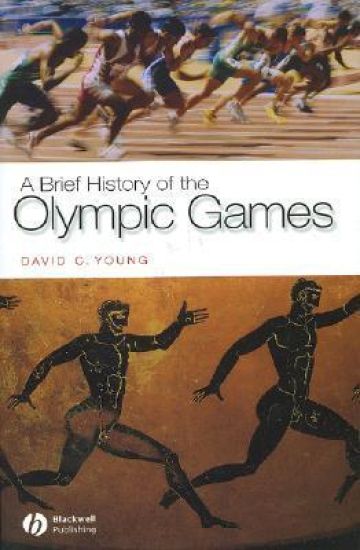
A Brief History of the Olympic Games

A Brief History of the Olympic Games

David C. Young

Wiley-Blackwell (an imprint of John Wiley Sons Ltd)
2004
sidottu
For more than a millennium, the ancient Olympics captured the imaginations of the Greeks, until a Christianized Rome terminated the competitions in the fourth century AD. But the Olympic ideal did not die and this book is a succinct history of the ancient Olympics and their modern resurgence. Classics professor David Young, who has researched the subject for over 25 years, reveals how the ancient Olympics evolved from modest beginnings into a grand festival, attracting hundreds of highly trained athletes, tens of thousands of spectators, and the finest artists and poets.
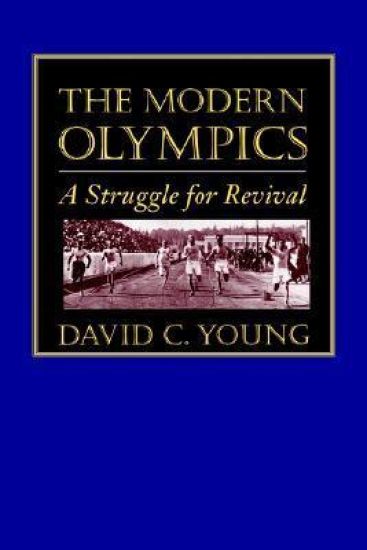
The Modern Olympics

The Modern Olympics

David C. Young

Johns Hopkins University Press
2003
pokkari
According to most accounts, the man solely responsible for reviving the modern Olympic Games was Baron Pierre de Coubertin. Now, in The Modern Olympics, David C. Young challenges this view, revealing that Coubertin was only the last and most successful of many contributors to the dream of the modern Olympics. Based on thirteen years of research in previously neglected documents, Young reconstructs the fascinating and almost unknown history of the Olympic revival movement in the nineteenth century, including two long-forgotten Olympiads-one in London in 1866 and another in Athens in 1870. He traces the idea for the modern Olympics back to an obscure Greek poet in 1833 and follows the sinuous tale to a small village in England, where W. P. Brookes held local Olympiads, founded the British Olympic Committee, and told Coubertin about his vision of an international Olympics. Coubertin's main contribution to the founding of the modern Olympics was the zeal he brought to transforming an idea that had evolved over decades into the reality of Olympiad I and all the Olympic Games held thereafter.