Kirjojen hintavertailu – 12 859 818 kirjaa ja 27 kauppaa

Kirjailija

David Callies

Kirjat ja teokset yhdessä paikassa: 3 kirjaa, julkaisuja vuosilta 2006–2010, suosituimpiin kuuluu Regulating Paradise. Vertaile teosten hintoja ja tarkista saatavuus suomalaisista kirjakaupoista.

3 kirjaa

Kirjojen julkaisuvuodet: 2006–2010.

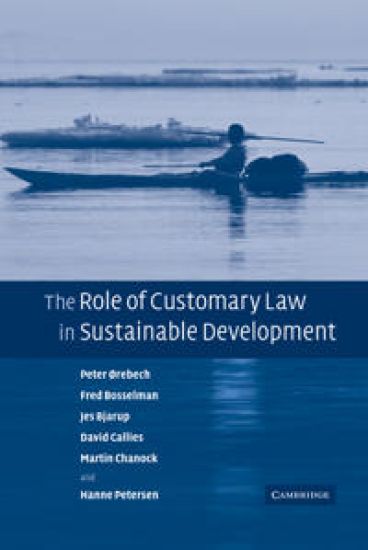
The Role of Customary Law in Sustainable Development

The Role of Customary Law in Sustainable Development

Peter Orebech; Fred Bosselman; Jes Bjarup; David Callies; Martin Chanock; Hanne Petersen

Cambridge University Press
2010
pokkari
For many nations, a key challenge is how to achieve sustainable development without a return to centralized planning. Using case studies from Greenland, Hawaii and northern Norway, this 2006 book examines whether 'bottom-up' systems such as customary law can play a critical role in achieving viable systems for managing natural resources. Customary law consists of underlying social norms that may become the acknowledged law of the land. The key to determining whether a custom constitutes customary law is whether the public acts as if the observance of the custom is legally obligated. While the use of customary law does not always produce sustainability, the study of customary methods of resource management can produce valuable insights into methods of managing resources in a sustainable way.
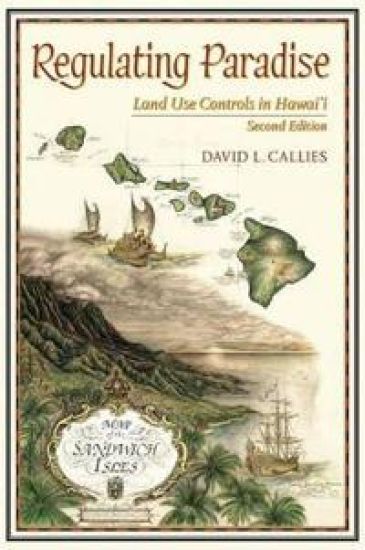
Regulating Paradise

Regulating Paradise

David Callies

University of Hawai'i Press
2010
nidottu
Land use in Hawai‘i remains the most regulated of all the fifty states. According to many sources, the process of going from raw land to the completion of a project may well average ten years given that ninety-five percent of raw land is initially classified by the State Land Use Commission as either conservation or agriculture. How did this happen and to what end? Will it continue? What laws and regulations control the use of land? Is the use of land in Hawai‘i a right or a privilege? These questions and others are addressed in this long-overdue second edition of Regulating Paradise, a comprehensive and accessible text that will guide readers through the many layers of laws, plans, and regulations that often determine how land is used in Hawai‘i. It provides the tools to analyze an enormously complex process, one that frustrates public and private sectors alike, and will serve as an essential reference for students, planners, regulators, lawyers, land use professionals, environmental and cultural organizations, and others involved with land use and planning.
The Role of Customary Law in Sustainable Development

The Role of Customary Law in Sustainable Development

Peter Orebech; Fred Bosselman; Jes Bjarup; David Callies; Martin Chanock; Hanne Petersen

Cambridge University Press
2006
sidottu
For many nations, a key challenge is how to achieve sustainable development without a return to centralized planning. Using case studies from Greenland, Hawaii and northern Norway, this 2006 book examines whether 'bottom-up' systems such as customary law can play a critical role in achieving viable systems for managing natural resources. Customary law consists of underlying social norms that may become the acknowledged law of the land. The key to determining whether a custom constitutes customary law is whether the public acts as if the observance of the custom is legally obligated. While the use of customary law does not always produce sustainability, the study of customary methods of resource management can produce valuable insights into methods of managing resources in a sustainable way.