Kirjojen hintavertailu – 12 903 725 kirjaa ja 27 kauppaa

Kirjailija

David Campbell

Kirjat ja teokset yhdessä paikassa: 89 kirjaa, julkaisuja vuosilta 1992–2025, suosituimpiin kuuluu A Call To Content For The Faith. Vertaile teosten hintoja ja tarkista saatavuus suomalaisista kirjakaupoista.

89 kirjaa

Kirjojen julkaisuvuodet: 1992–2025.

Arts and Animals

Arts and Animals

David Campbell

Goose River Press
2022
sidottu
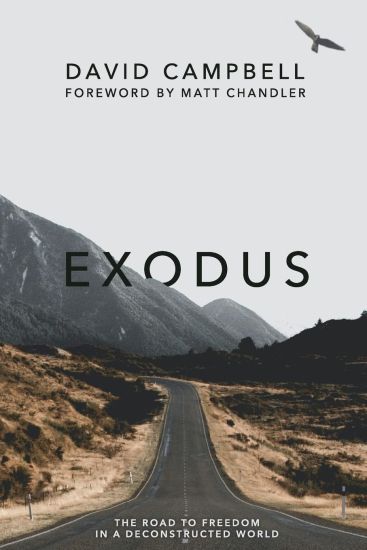
I first drafted a few of these poems as long ago as 50 years, when I branched out from landscape painting into poetry, expanding the direct observation of my surroundings from the visual to the verbal. The book divides distinctly into 3 thematic sections: poems about the arts, animals, old age. Arts comprises Visual, Musical, Literary. Visual is dominated by 17th Century Dutch, the first painters to focus on landscape for its own sake, and also raised portraiture to new levels. Also included are my contemporary fellow realist painters. Next come examples of Music that have touched me deeply, from work-gang chants heard as a child, to Appalachian folk songs which helped introduce me to real-life emotions, to the sane life material as expanded by Bach and Beethoven. The Literary section touches mainly on poets who became important to me, and have remained so. The one non-poet is F. Scott Fitzgerald, who, for no logical reason that I could find, is buried in my hometown. This poem reflects on the theme of becoming estranged from one's origins. Animal Industry is the next section, being observations of creatures going about their natural lives or being hunted by us. On this theme is a poem about the 17th Century beaver trade in New England. Sunset, the title of the book's final section, has a two-fold meaning. My wife and I see a sunset every day of the year from the 4th floor studio where we live. Secondly, I'm in the sunset years. I write about being careful in walking, about over-thinking every physical and mental move while still maintaining a creative life. The conclusion of every sunset is, of course, darkness, though not, in terms of a lifetime, before arriving at a broad view of the world beyond the personal. "I have been pleased to publish David Campbell's poetry in several issues of my publication since 2003, and happy to see two of them - 'Work' and 'Doctor King and the Expatriate'- included in his fine new collection, Arts and Animals. This collection focuses on such interests as artists he's appreciated, animals, and a concluding section on senior life. A visual artist himself, David is especially adept at wordplay, striking images, and strong musicality ('end-of-winter pine cones / gnawed to tattered spines / in squirrelish desperation'). From the subjects he chooses to the channeling of his thoughts into these poems, David guides us 'in my rootedness, having yet to find/ in the arrowing future a longing back / to a landscape maintained in the unsettled / heart and breath by music.' Readers will savor the journey, and his stops along the way."-David MessineoPublisher/Poetry EditorSensations Magazine

2000 NuWave Bravo XL Convection Air Fryer Oven Cookbook
A Must-have & Quick-Start Cookbooks Do you want to kickstart cooking with your Air Fryer but don't know where to start? Quit worrying In this cookbook, you'll learn how to not only start, but love, your NuWave Bravo XL Convection Air Fryer Oven, which will guide you to amazing meals in the most affordable, quick & easy way possible. Not only include tips, tricks and workarounds, but also 2000 Days Easy, Healthy and Delicious Recipes for A Nourishing Meal. The NuWave Bravo XL Convection Air Fryer Oven can do much more than you think 2000 NuWave Bravo XL Convection Air Fryer Oven Cookbook contains the following categories: Breakfast and BrunchPoultryMeatSnack and AppetizerFish and SeafoodsVegetableDehydratedDessertsCome on getting it.
Night Light

Night Light

David Campbell

David Campbell
2021
pokkari
Why are we scared of the dark? Usually it's because we don't know what's there. Perhaps a friend? Perhaps a foe? The Bible tells us that even though we "walk through the valley of the shadow of death," God is with us. In this topical look at Christian suffering, author David Campbell reminds us that God has purpose in every season - even the painful ones. Both provocative and comprehensive, Night Light will give you a foundation of strength to walk through the most challenging circumstances.
Roman Legionary vs Gallic Warrior

Roman Legionary vs Gallic Warrior

David Campbell

Osprey Publishing
2021
nidottu
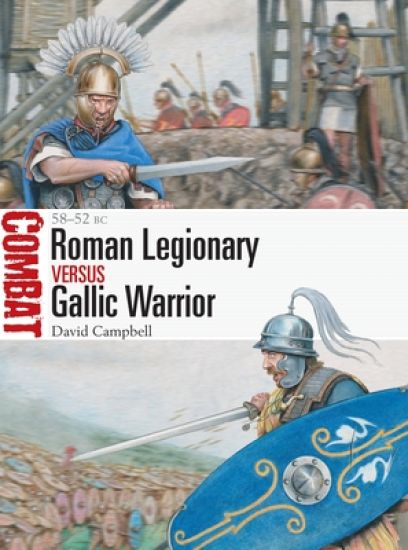
In the manner of many Roman generals, Caesar would write his domestic political ambitions in the blood and treasure of foreign lands. His governorship of Cisalpine Gaul gave him the opportunity to demonstrate the greatness of his character to the people of Rome through the subjugation of those outside Rome’s borders. The fact that the main account of the subsequent wars in Gaul was written by Caesar himself – by far the most detailed history of the subject, with new reports issued annually for the eager audience at home –is no accident. The Roman Army of the late Republic had long been in the process of structural and change, moving towards the all-volunteer permanent standing force that would for centuries be the bulwark of the coming Empire. Well-armed and armoured, this professional army was trained to operate within self-supporting legions, with auxiliaries employed in roles the legions lacked such as light troops or cavalry. The Roman legions were in many ways a modern force, with formations designed around tactical goals and held together by discipline, training and common purpose. The armies fielded by the tribes of Gaul were for the most part lightly armed and armoured, with fine cavalry and a well-deserved reputation for ferocity. As might be expected from a region made up of different tribes with a range of needs and interests, there was no consensus on how to make war, though when large armies were gathered it was usually with the express purpose of bringing the enemy to heel in a pitched battle. For most Gauls – and certainly the military elites of the tribes – battle was an opportunity to prove their personal courage and skill, raising their status in the eyes of friends and foes alike. Fully illustrated, this study investigates the Roman and Gallic forces pitched into combat in three battles: Bibracte (58 BC), Sabis (57 BC) and Gergovia/Alesia (52 BC). Although charismatic Gallic leaders did rise up – notably Dumnorix of the Aedui and later Vercingetorix of the Arverni – and proved to be men capable of bringing together forces that had the prospect of checking Caesar’s ambitions in the bloodiest of ways, it would not be enough. For Caesar his war against the Gauls provided him with enormous power and the springboard he needed to make Rome his own, though his many domestic enemies would ensure that he did not long enjoy his success.
German 88mm Gun vs Allied Armour

German 88mm Gun vs Allied Armour

David Campbell; David Greentree

Osprey Publishing
2021
nidottu
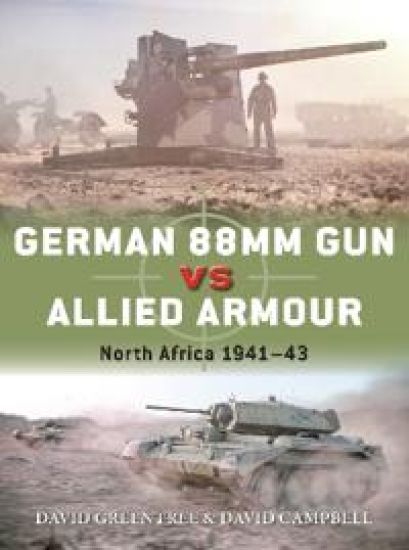
Few weapons developed a more deadly reputation than the German ‘88’ in the role of anti-tank gun, its long reach and lethal hitting power making it a significant problem for every type of British and later American armour. Despite its individual potency, it was almost always utilized as part of a comprehensive system of defences that relied on a mix of weapons carefully deployed in anticipation of the enemy’s likely avenue and method of attack. Used in this way, the 88 became a particularly deadly part of the Afrika Korps’ attempts to shatter British armoured power in the Western Desert. Initially extremely successful over the course of 1941 and 1942 in Operations Battleaxe and Crusader, the Allies’ tactics and vehicles (such as the American-made M3 and the Crusader III) eventually evolved to deal with the 88’s awesome power. This detailed new book tells the story of that evolution and provides an in-depth treatment of this key weapon of World War II.
No Diving

No Diving

David Campbell; Nathan Finochio

David Campbell
2020
pokkari

Halvin toimitettuna 23,80 €

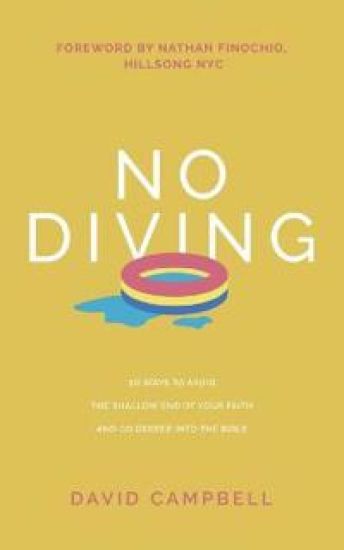
Much like a "No Diving" sign found at a pool, David Campbell seeks to warn Christians about the dangers of diving into shallow interpretations of the Bible and points readers to the deep end. In this book, Campbell wades through mistakes believers make when reading the Bible, and gives them tools for how to fix them. No Diving will give Christians the lessons they need to go deeper in their relationship with God.
Mystery Explained

Mystery Explained

David Campbell; Andrew Fountain

David Campbell
2020
pokkari
Revelation is known as one of the most complex books in the entire Bible. Wouldn't it be nice to have a road map to keep you from getting lost? In Mystery Explained, David Campbell will guide you through Revelation, pointing out important landmarks and happenings along the way. With his help, the journey through the final book of the Bible will be simple and easy to follow.
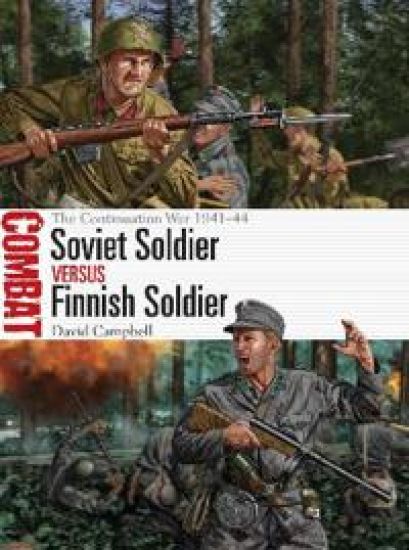
Soviet Soldier vs Finnish Soldier

Soviet Soldier vs Finnish Soldier

David Campbell

Osprey Publishing
2020
nidottu

Halvin toimitettuna 19,50 €

In a bid to recapture territory conceded following the Winter War of 1939–40, Finnish forces cooperated with Nazi Germany and other Axis powers during the invasion of the Soviet Union in June 1941. Rapid Finnish progress in reoccupying lost ground in Karelia during the first few months of the invasion gave way to a more static form of warfare from October 1941. The Finns resisted German pressure to participate fully in the Axis attack on the beleaguered Soviet-held city of Leningrad, and the Continuation War came to be characterized by trench warfare and unconventional operations conducted by both sides behind the front lines. In June 1944 the stalemate was abruptly ended by a massive Soviet offensive that pushed the Finns back; the two sides clashed in a series of major battles, including the battle of Tali-Ihantala, with the Finns halting the Soviet advance before agreeing to an armistice that September. The evolving military situation in this sector of the Eastern Front meant that the soldiers of the Soviet Union and Finland fought one another in a variety of challenging settings, prompting both sides to innovate as new technologies reached the front line. In this study, the doctrine, training, equipment and organization of both sides’ fighting men are assessed and compared, followed by a detailed assessment of their combat records in three key battles of the Continuation War.
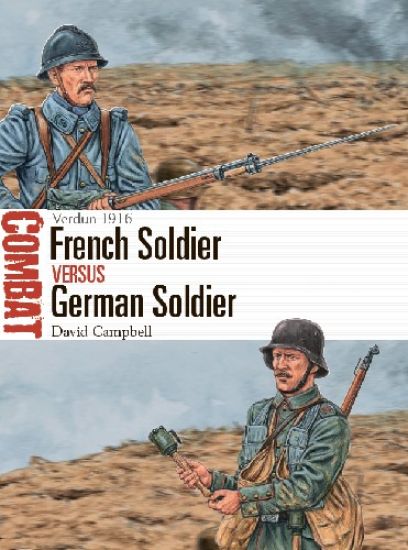
French Soldier vs German Soldier

French Soldier vs German Soldier

David Campbell

Osprey Publishing
2020
nidottu

Halvin toimitettuna 24,90 €

On 21 February 1916, the German Army launched a major attack on the French fortress of Verdun. The Germans were confident that the ensuing battle would compel France to expend its strategic reserves in a savage attritional battle, thereby wearing down Allied fighting power on the Western Front. However, initial German success in capturing a key early objective, Fort Douaumont, was swiftly stemmed by the French defences, despite heavy French casualties. The Germans then switched objectives, but made slow progress towards their goals; by July, the battle had become a stalemate. During the protracted struggle for Verdun, the two sides’ infantrymen faced appalling battlefield conditions; their training, equipment and doctrine would be tested to the limit and beyond. New technologies, including flamethrowers, hand grenades, trench mortars and more mobile machine guns, would play a key role in the hands of infantry specialists thrown into the developing battle, and innovations in combat communications were employed to overcome the confusion of the battlefield. This study outlines the two sides’ wider approach to the evolving battle, before assessing the preparations and combat record of the French and German fighting men who fought one another during three pivotal moments of the 10½-month struggle for Verdun.
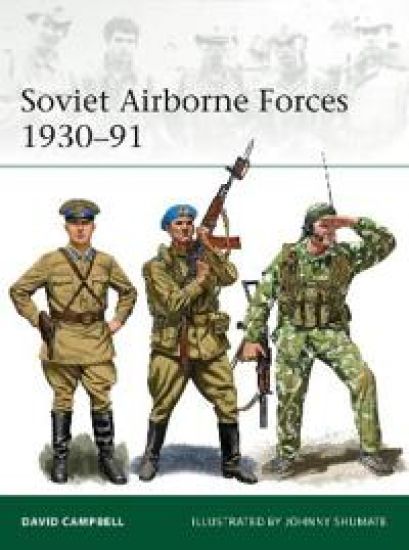
Soviet Airborne Forces 1930–91

Soviet Airborne Forces 1930–91

David Campbell

Osprey Publishing
2020
nidottu
Established in 1932, the Vozdushno-desantnye voyska (‘air-landing forces’, or VDV) of the Red Army led the way in airborne doctrine and practice. Though they were initially handicapped by a lack of infrastructure, due in part to a turbulent political climate in the 1930s, they still conducted major drops during World War II, including at the Dnepr River in September 1943. After the war ended, the VDV became independent of the Air Force and were elevated to the role of strategic asset. The newly rebuilt divisions were now organized and trained to conduct deep insertions behind enemy lines, attacking command-and-control facilities, lines of communication, and key infrastructure targets such as nuclear power plants. This training came into play in numerous Cold War confrontations, including Soviet operations in Hungary (1956) and Czechoslovakia (1968). During the Soviet war in Afghanistan (1979–89), the VDV proved to be the most formidable of the Mujahideen’s opponents, with the development of the air assault concept – the transport, insertion and support of air-landed troops by helicopter rather than parachute. This title explores the development of the VDV from their conception in 1930 to their role in the Cold War and in the later invasion of Afghanistan. Supported by contemporary photography and specially commissioned artwork of uniforms and battlescenes, this title is a comprehensive and engaging guide to the history of airborne forces in the Soviet period.
Second Thoughts on the Theory and Practice of the Milan Approach to Family Therapy
Second Thoughts on the Theory and Practice of the Milan Approach to Family Therapy is a full discussion of the way the original techniques of the Milan Approach have been affected by current thinking in the family therapy field. Hypothesizing, neutrality and circularity, for example, are all redefined in response to the challenge of new cl
Taking Positions in the Organization

Taking Positions in the Organization

David Campbell; Marianne Groenbaek

Routledge
2019
sidottu
This book on social constructionist thinking addresses the manager's job for creating reflective space for people to observe themselves and others. It explores broad societal and organizational discourses that offer positions from day-to-day realities that govern behaviour are constructed.
Systemic Work with Organizations

Systemic Work with Organizations

David Campbell; Tim Coldicott; Keith Kinsella

Routledge
2019
sidottu
Systemic Work with Organizations explores a powerful new perspective on the challenges faced by managers and consultants who work in large organizations. Building on principles and methods originally developed in the family arena, the authors show how an emphasis on connection, context and communication can help managers and others involved in change, deal with issues of identity, leadership, and learning faced by staff in today's complex work environment. The main thesis is that one way cause and effect thinking and a central focus on the role of the individual, is no longer sufficient. Managers and change agents now need to make use of the insights and interventions offered by a systemic perspective that highlights the roles played by circularity and reflexivity in how people construct shared meaning in human systems. In early chapters the three authors develop bridges between the family and organizational fields, exploring the ideas and methods of systemic and constructionist thinking in preparation for the three detailed case studies which illustrate systemic thinking in action.
Learning Consultation

Learning Consultation

David Campbell

Routledge
2019
sidottu
A book which will illuminate the learning process from the perspective of the teacher as well as the learner. The experiences of the various contributors will empower the reader to take more personal risks in their own learning.
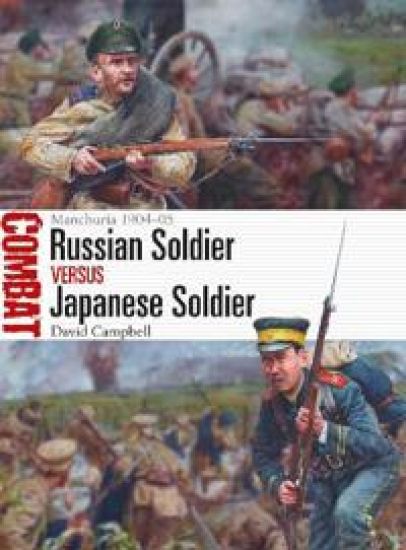
Russian Soldier vs Japanese Soldier

Russian Soldier vs Japanese Soldier

David Campbell

Osprey Publishing
2019
nidottu
At the turn of the 20th century, the region of Manchuria sat atop a potentially catastrophic political fault line; the ancient strength of China was crumbling, leaving opportunities for both Russia and Japan to claw out new territories from the edges of that dying empire. Russian pride would contend with Japanese ambition in a conflict that ushered in the age of massed armies fighting on battlefields that were being redefined by the new tools of war such as newer, larger artillery pieces, and the use of machine guns in pitched battles. The vast, but over-stretched Russian Army was expected to steamroller its far smaller opponent, but the aggressiveness and zeal of the more modern Japanese military confounded expectations. Examining these two armies in detail, this fully illustrated study tells the story of how these two empires clashed in the Russo-Japanese War, heralding a new phase in modern warfare as World War I loomed on the horizon.