Kirjailija
David Chadwick
Kirjat ja teokset yhdessä paikassa: 21 kirjaa, julkaisuja vuosilta 2000–2026, suosituimpiin kuuluu What Happened at Tassajara. Vertaile teosten hintoja ja tarkista saatavuus suomalaisista kirjakaupoista.
21 kirjaa
Kirjojen julkaisuvuodet: 2000–2026.

Tassajara Stories
David Chadwick
Monkfish Book Publishing Company
2025
sidottu
Halvin toimitettuna 30,80 €
From the award-winning and best-selling author of the biography of Shunryu Suzuki (Crooked Cucumber), comes a memoir and oral history of Tassajara--a monastery founded by the San Franciscan Zen Center in 1967. Peopled like a Sixties film of Buddhism invasion, with hippies, dreamers, lovers, and the first serious practitioners in the US. Nyogen Senzaki, D. T. Suzuki, Alan Watts, Gary Snyder, Allen Ginsberg, and of course Shunryu Suzuki and Richard Baker are all here. This is the story of what happened at the founding of the first Zen monastery in the West.
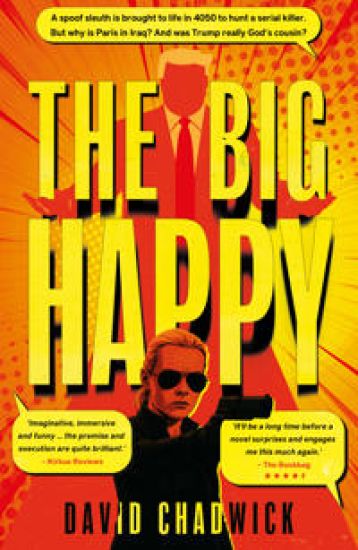
Fictional detective Miranda Miller is brought to life in the far future to catch Family Guy, a sadistic serial killer who is terrorising the three federations ruling the planet. Her investigation starts in Las Vegas, England – a facsimile of the American original, but with a dismal climate. It is part of PopRep, a faddish culture that idolises Donald Trump as the father of populism. While there, Miller speaks IngoLingo, a dumbed-down street slang, to blend in with the locals. On leaving PopRep, she is elated to speak ordinary English again. Her joy ends, though, when she reaches Rio de Jerusalem, capital of Trumpia – a brutally misogynistic theocracy where the Donald is deified. Despite Miller’s expectations, Trumpia and PopRep are constantly at war, each accusing the other of misrepresenting the Orange One. Finally, Miller tracks Family Guy to Paris-on-Euphrates in Scientia, a high-minded liberal meritocracy where everyone has the vote, but some more than others – and oligarchs by a factor of fifty million. Something else bothers Miller: Why do radical leftists revere Adolf Hitler? As she chases down her quarry, Miller realises he is much closer to home – and the seat of power – than she could ever have imagined…
A fast-paced and immersive crime novel set in America at the end of the era-defining Vietnam War. It is a crime noir and high-stakes thriller that is impeccably researched.

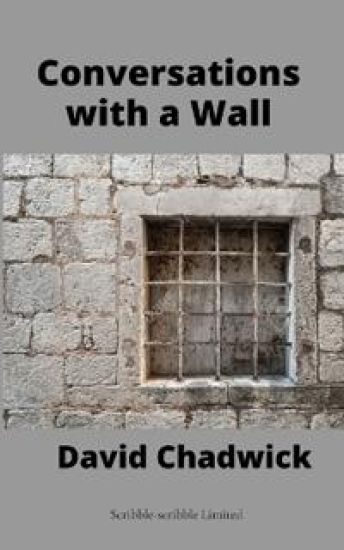
Philip Harbinger may or may not have killed his wife. The police believe he is guilty, but would like to get a formal confession out of him to save tedious paperwork. He is held in an old courthouse in London, and whilst exercising in the yard, he hears a voice in his head that apparently comes from the wall, the witness to 300 hundred years of tortured souls in the ancient building. The dialogue between Philip and the wall act as a counterpoint to the different techniques the police use to obtain his confession.
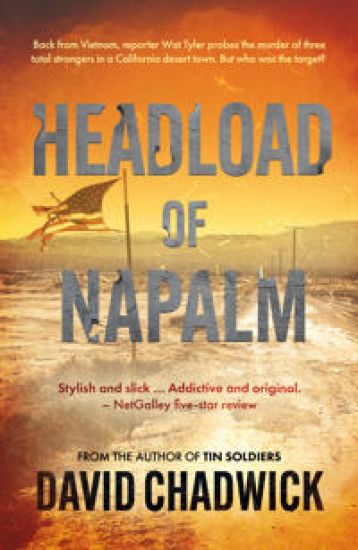
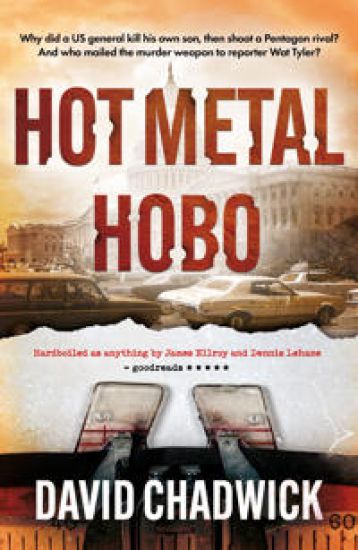
September 1973: A pro-trades union congressman is shot dead in a California desert town – along with a celebrity businessman and a barmaid who went for a break at the wrong time. The triple homicide happened just hours after the congressman told local newspaper editor Wat Tyler that he’d come to town in defiance of a death threat from anti-union workers. Tyler, a Vietnam combat veteran, teams up with the town’s first female chief of detectives. Together, they link the killings to a defence company boss who has gone missing, leaving a huge Pentagon contract and 1,200 jobs in the balance. At a time when reality often humbled the wildest conspiracy theories, Tyler comes up against a hostile FBI agent, angry mobsters and a cheated casino owner. His problems mount when a secretive figure he last saw deep in Viet Cong territory arrives in town…
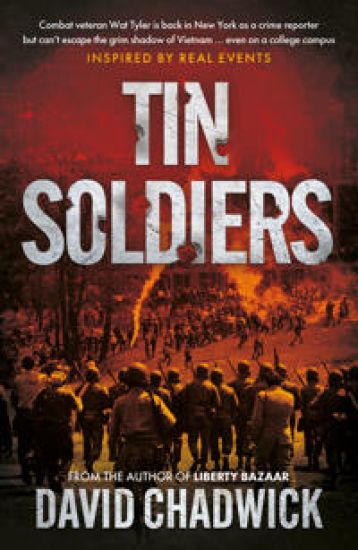
Combat veteran Wat Tyler resumes his job as a New York crime reporter, but can’t escape the shadow of Vietnam – or allegations of cowardice. His first newspaper assignment reveals a high-level cover-up following the fatal shootings by National Guardsmen of three civilians at an anti-war protest. Powerful interests are determined to stop Tyler’s investigation at any cost – especially when he links the campus homicides to the murder of three scientists accused of using Vietnam veterans as lab rats. As Tyler and criminal attorney JoBeth Medlock delve deeper into the paranoid psyche of Nixon’s America, it becomes clear that strings are being pulled in places they would never have imagined. Inspired by real events at Kent State University, Ohio in May 1970, this fast-paced and immersive crime novel powerfully evokes America during the Vietnam War period of US history.
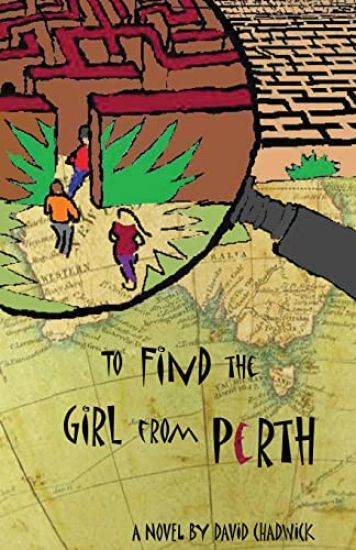
American Zen failure Chadwick this time is in a Western Australian caper. He went there, he writes in the introduction, "on a whim to visit a dear chum, meet her family, friends, and homeland, curious to explore, anticipating only the warmth of new acquaintance, the excitement of unknown flora and fauna, the joy of walking about. There was that, but then there was the unexpected as events propelled me with brazen mates into a bizarre treasure hunt for another lass, one in danger of the grave." Join Chadwick and his cast of curious characters - musicians, techie, wild woman, sweet woman, gangsters, ordinary people, in their search To Find the Girl from Perth.

The profound Zen teachings of Suzuki Roshi brought to life by personal stories and anecdotes from his students. Shunryu Suzuki's extraordinary gift for conveying traditional Zen teachings using ordinary language is well known to the countless readers of Zen Mind, Beginner's Mind. In Zen Is Right Here, we experience an intimate encounter with his teachings through stories told about him by his students. These living encounters with Zen are poignant, direct, humorous, paradoxical, and enlightening; and their setting in real-life contexts makes them wonderfully accessible. Like the Buddha himself, Suzuki Roshi gave profound teachings that were skillfully expressed for each moment, person, and situation he encountered. He emphasized that while the ungraspable essence of Buddhism is constant, the expression of that essence is always changing. Each of the stories presented here is an example of this versatile and timeless quality, showing that the potential for attaining enlightenment exists right here, right now, in this very moment.


Uncreative writing using the word The with a hidden message.
Kids' Club Letters
Richard Appleton; Andrew Nicolson; David Smith; David Chadwick; James MacKenzie
Routledge
2016
sidottu
Kids' Club Letters provides an innovative approach to group psychotherapy for school-aged children who experience a range of social and emotional problems. A narrative therapy approach is adapted, taking the form of letters written by the therapist in the voice of a child who is asking for advice about interpersonal or emotional problems. The child in the letter is asking for guidance from the participants in the group. These letters were devised and written for the purpose of structuring responses in group psychotherapy, allowing the participants to address relevant issues for them individually and at the group level. The children in the groups had previously experienced difficulty discussing these issues spontaneously. Hence the 'Dear Group' letter format was born. The children did not know that the therapist had written the letters.

• The first historical novel about the American Civil War, written from the perspective of real events in Liverpool at that time. Published on the 150th anniversary of the end of the American Civil War (2015). • Provides vivid insights into the significance of Britain in the conflict and events that could have decided the outcome of the American Civil War. • A powerful story of courage, betrayal and love, told in the compelling voices of an escaped slave girl and a Confederate general.
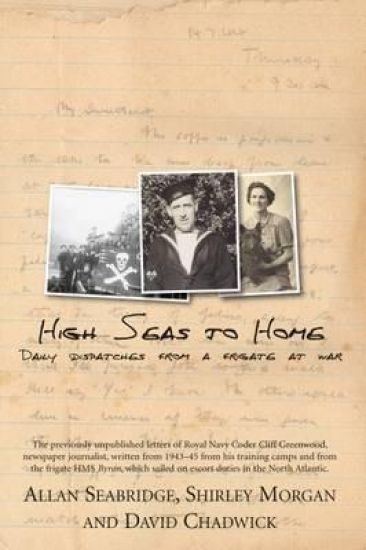
The conflict at sea between Allied merchant ships, their Royal Navy escorts and the German U-boats was christened the Battle of the Atlantic by Winston Churchill on 6 March 1941. Churchill said that the 'U-boat peril' was the only thing that ever really frightened him during the Second World War, but 70 years on the men who sailed on the Atlantic convoys are among the forgotten heroes of the conflict. The casualty figures underline the constant peril - almost 3,000 ships were sunk by U-boat action. Reports of torpedoed vessels sinking in under a minute sent a shudder through the nation. But what was it really like? Coder Cliff Greenwood was called up aged 40 and began his naval training at the former Butlin's holiday camp in Skegness, Lincolnshire. From then on he wrote home to his wife almost every day, although posting his letters was not always easy. The letters are a unique insight into life on the Atlantic convoys, for Cliff's duties as a specialist Royal Navy coder meant he was involved in the transmission of coded communications between the escorting warships and their Merchant Navy charges, a role that gave him rare insights into the broader strategic picture. But as well as being a rare first-hand account of life on board a Royal Navy ship on escort duties in the North Atlantic, the letters represent a rich seam of social history.
An Introduction to Clinical Research
Piers Page; James Carr; William Eardley; David Chadwick; Keith Porter
Oxford University Press
2011
nidottu
This practical book is written specifically for junior doctors by a team of highly experienced authors, as an introductory guide to clinical research. It covers all areas that a junior doctor needs to consider, including funding, study design, ethics, data analysis, disseminating findings, and furthering one's research career. It presents a balance view of clinical research and is written by authors actively involved in clinical research both at the 'coal-face' and at a more supervisory level. Research can be a difficult process and it is essential to make sure that the project is set up in the correct way in order to get verifiable results. This easy-to-read guide is available to help junior doctors develop a good study design and present evidence of a sound academic practice, which will make obtaining funding more likely and be time-efficient. Getting started early in research and developing a solid, gradual understanding of clinical research through using this approachable book will be of huge benefit to junior doctors and their discipline.
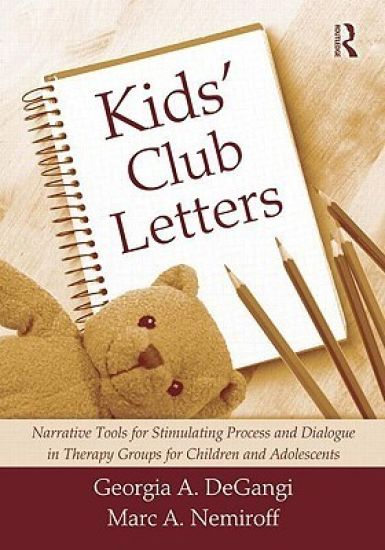
Kids' Club Letters
Richard Appleton; Andrew Nicolson; David Smith; David Chadwick; James MacKenzie
Routledge
2009
nidottu
Kids' Club Letters provides an innovative approach to group psychotherapy for school-aged children who experience a range of social and emotional problems. A narrative therapy approach is adapted, taking the form of letters written by the therapist in the voice of a child who is asking for advice about interpersonal or emotional problems. The child in the letter is asking for guidance from the participants in the group. These letters were devised and written for the purpose of structuring responses in group psychotherapy, allowing the participants to address relevant issues for them individually and at the group level. The children in the groups had previously experienced difficulty discussing these issues spontaneously. Hence the 'Dear Group' letter format was born. The children did not know that the therapist had written the letters.