

Kirjailija
David Christie
Kirjat ja teokset yhdessä paikassa: 19 kirjaa, julkaisuja vuosilta 2009–2020, suosituimpiin kuuluu AEC Regents in Service. Vertaile teosten hintoja ja tarkista saatavuus suomalaisista kirjakaupoista.
19 kirjaa
Kirjojen julkaisuvuodet: 2009–2020.

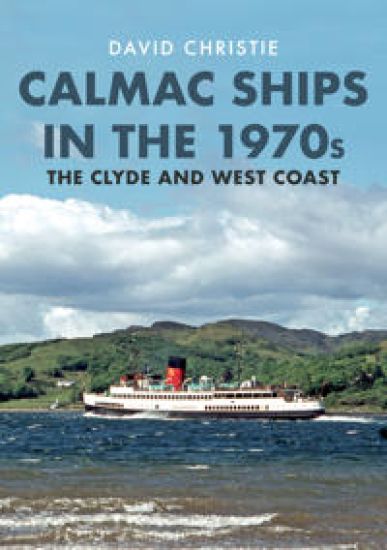
David Christie delves into his archives to present a wonderful, evocative unpublished photographs of a golden age of Calmac ships.
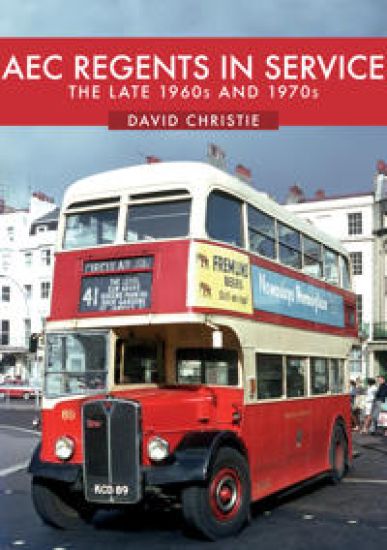
Stunning previously unpublished images of these iconic buses in their heyday. All the photographs are in colour, originally in slide form, from which they have been digitally restored.
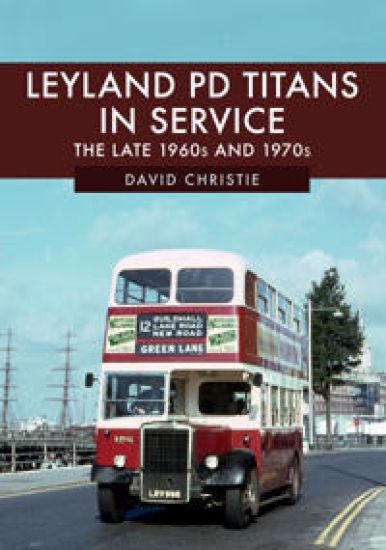
This book covers many variants of the long-lived Leyland PD marque, photographed throughout Britain from 1967 into the seventies. Coming from the south, the author was more familiar with the AEC and the more throaty sound of a PD2, even from London’s RTLs, was a touch exotic. The author documents buses from East Anglia down to the South Coast, before travelling up to the Midlands, then into true Leyland territory of Lancashire and Yorkshire, to finish up in Scotland. The author was born in Romford, Essex, in 1943 but relocated to Scotland in 1973. All photographs are in colour from the original slides, which have been digitally restored.

Starting with a day trip (by air from Blackpool) in 1970, this book covers the rest of the decade with visits in 1971, 1972, 1976 and 1979. The island was a fascinating place for a transport enthusiast, with the traditional Douglas Corporation buses, horse tramway, Manx Electric Railway and the steam railway – not forgetting the Snaefell Railway and the lovely old Steam Packet Co. ships. These traditional ships were the main loss in later years, but changes had also occurred prior to David’s final visit, with the loss of the Douglas livery (all buses now being under a ‘National’ fleetname) and the rationalisation of Douglas railway station. With a range of interesting views and fascinating subject matter, Isle of Man Transport in the 1970s will appeal both to those who have visited the island and general transport enthusiasts.

In September 1962, the author started revisiting his boyhood trainspotting haunts at the London terminals – this time armed with a newly purchased camera loaded with colour slide film. A few days were thought adequate to record mainly steam at Kings Cross, Euston and Paddington but after many viewing sessions of the resulting slides over the winter, there was enthusiasm for more visits in 1963. So began a period over the next four years of travelling by train, via the London terminals, all over the rail system to seek out steam. Although steam was the priority, diesels were not ignored – especially the early livery variants. The decade finished up with several Specials being recorded from Kings Cross, with LNER-liveried Flying Scotsman then the only standard-gauge steam loco allowed on BR. Kings Cross, Paddington, Euston, Marylebone, Waterloo and Victoria all appear in this collection, as well as the author’s ‘home' terminal, Liverpool Street.
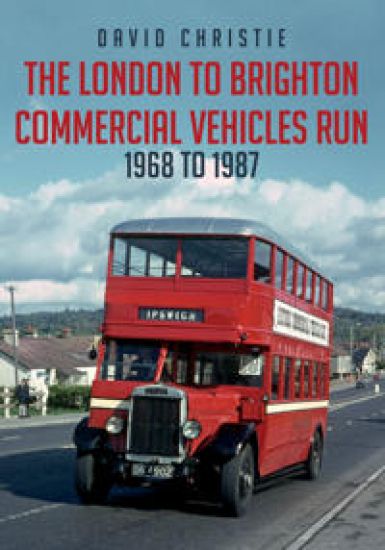
The London to Brighton Commercial Vehicles Run: 1968 to 1987
David Christie
AMBERLEY PUBLISHING
2018
nidottu
The London to Brighton run, held each year by the Historic Commercial Vehicle Society, is a key date in the diary of any vintage vehicle enthusiast or member of the preservation community. David Christie attended the run on a number of occasions between 1968 and 1987, and the images included here document the wonderful variety of commercial vehicles that could be seen – all captured in stunning full-colour photography. Vehicles featured include buses, steam wagons, heavy lorries and some lighter vehicles. These images were captured at various spots along the route, finishing at the sea front in Brighton. Immensely evocative and immaculately preserved, these photos act as both an important historical record and a triumphant celebration of our motoring heritage.
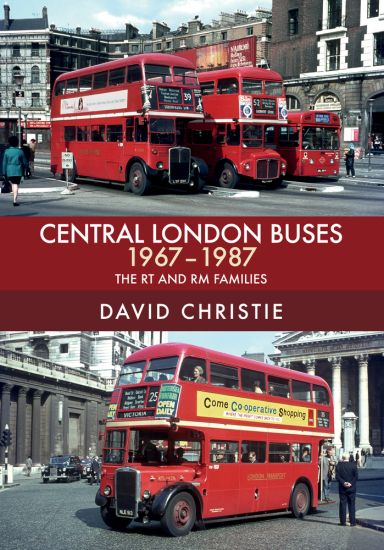
From author David Christie’s home town in Essex, the Green Line route 721 (by RCL) was the usual way of getting to London – into Aldgate, one of his haunts as a young spotter in the ‘50s. From there a walk along to Bank, Aldwych, Trafalgar Square then Whitehall to Parliament Square, returning via the Embankment, invariably followed. This route was generally repeated when, in 1967, he started photographing LT buses. The author was able to capture the last of the RTLs in service, and on later trips to concentrate on the Routemasters. Also featured is the Vintage Route 100, using a 1930-built ST, which started in 1972. With a stunning array of superb photographs, this is a wonderfully evocative and nostalgic look back on an iconic period in London’s transport history.
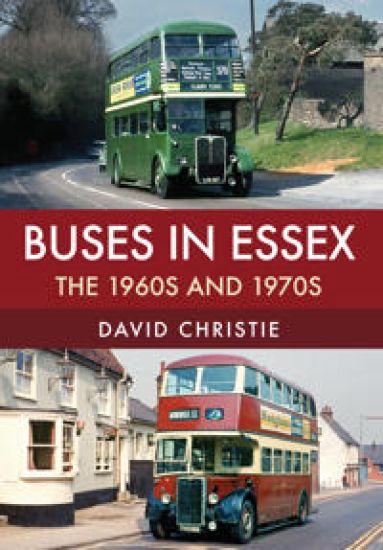
This volume starts with London Transport’s green Country bus routes, radiating eastwards from Rainham, Epping and Romford. The author lived in Romford at this time and a favourite ride was on the 370 Romford–Tilbury Ferry route end-to-end, which started just half a mile from his home at the London Road Green Line Garage forecourt. Southend-on-Sea and Colchester Corporation are the municipal companies featured, as well as independents such as Upminster & District and Osborne’s, as well as some contractors. Most of the images are of the traditional half-cab exposed-radiator buses that were then in their last days, being withdrawn from service in some cases just weeks after being photographed. Going against the trend, Southend Corporation unusually chose to ignore the all-conquering Atlantean rear-engine type (as far as it could) and operated a few of the last exposed-radiator Leyland PD3s built in 1968. With his wonderfully evocative photography capturing an interesting and unique scene, David Christie offers a nostalgic and fascinating snapshot of the area in the late 1960s and early 1970s.
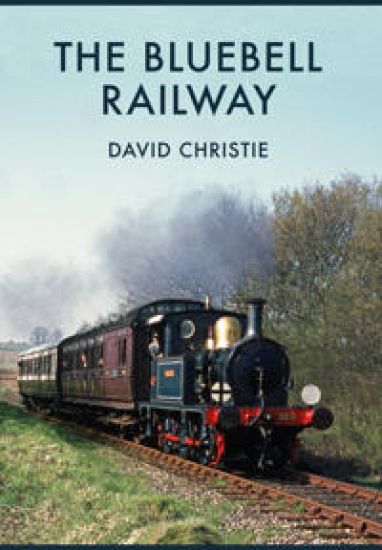
The Bluebell Railway was the premier preserved line in the thirty –year period covered in this book. Busy as he was with recording working BR s team in the mid- sixties, David Christie’s first visit to the line was by train in 1964 and then from 1967 more frequently by car, with a total of eighteen trips. The greater proportion of these were in the period 1969–72 when the line was usually worked by tank engines and nothing larger than the ‘Duke dog’ 4-4-0. The later, more in frequent visits witnessed a change from the ‘sleepy branch line’ image to more of a ‘cross-country’ feel, using longer trains with larger locomotives. With an array of incredible unpublished photography covering the heyday of this iconic line, from 1964 to 1993, the author offers a wonder fully nostalgic and brilliantly evocative record of this wonderful period in the life of the Bluebell Railway.

Driven by the sudden realisation that steam had all but disappeared on his ‘local’ GE line, David Christie set about initially recording the London termini, but was then spurred on to record as much as possible on the whole of BR before it was too late. With the earliest image captured in September 1962, and the latest coming with the August 1968 last runs, the author offers a wonderfully nostalgic look back at the final days of steam power on Britain’s rail network, taking in a diverse range of locations – from London to Carlisle, Newcastle, central Scotland, Shrewsbury, Salisbury, and the Isle of Wight – to capture a variety of locomotives in full colour. Featuring such events as the last express services using A4s in central Scotland, and the last BR express services from Waterloo, David Christie’s superb collection of photographs offer a tantalising look back at a time now past.
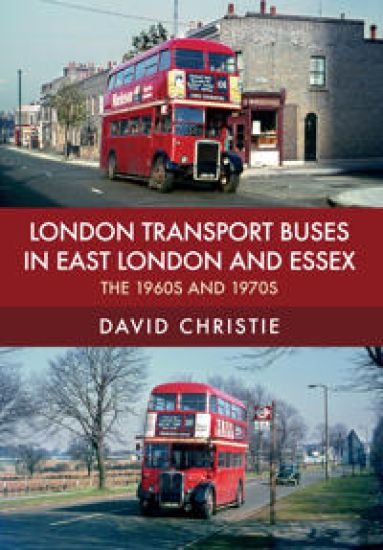
Starting at London City’s eastern terminus, Aldgate, this book begins with the red central bus routes radiating out to Essex, featured together with the Green Line coach services. Hackney, Clapton, Poplar, Bow and Stratford make up East London proper, with Barking, Ilford and Chadwell Heath forming the second ‘wave’. We then come into Essex with Romford, Hainault and then up to Epping. Hornchurch, Rainham and Gidea Park follow, with the outer limits at Upminster and Brentwood. Born in Romford, Essex, in 1943, David Christie started colour photography of railways in 1962 to capture the last days of steam. It wasn’t until 1967 that he realised that he should be doing likewise for his local buses and in particular his favourite – the London RT. So began several years of recording not only local routes, but also those of East London. Primarily featuring images from the late 1960s and early 1970s, the author offers a fascinating view of a golden age of transport in and around the capital, with a variety of buses on show.

Kickoff Foundation. Englisch zum Hauptschulabschluss. Schülerbuch
David Christie
Klett Ernst /Schulbuch
2014
nidottu
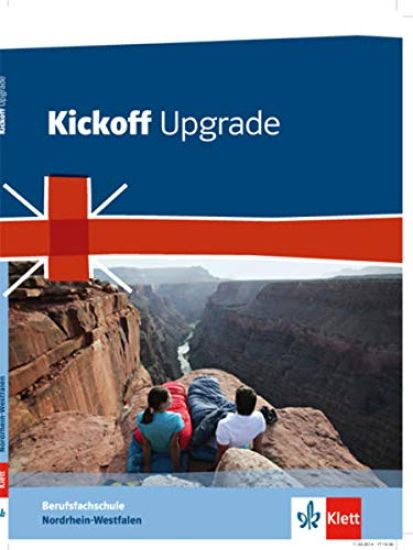
Kickoff Upgrade. Schülerbuch. Nordrhein-Westfalen
David Christie
Klett Ernst /Schulbuch
2014
nidottu
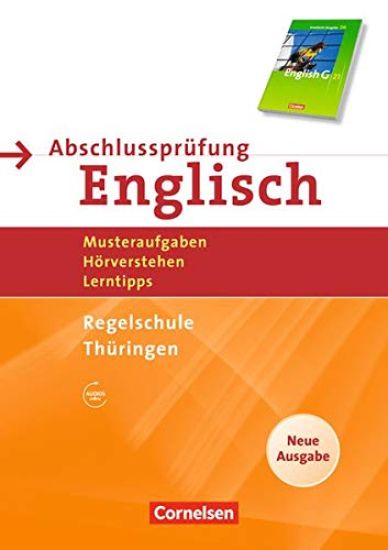
English G 21. 10. Schuljahr. Abschlussprüfung Englisch. Arbeitsheft mit Lösungsheft und Audios online. Neue Ausgabe. Regelschule Thüringen
Brigitte Brümmer; David Christie; Dominik Eberhard
Cornelsen Verlag GmbH
2013
nidottu

Social & Health Expert. Englisch für Soziales und Gesundheit
Evan Frendo; David Christie
Klett Ernst /Schulbuch
2010
nidottu
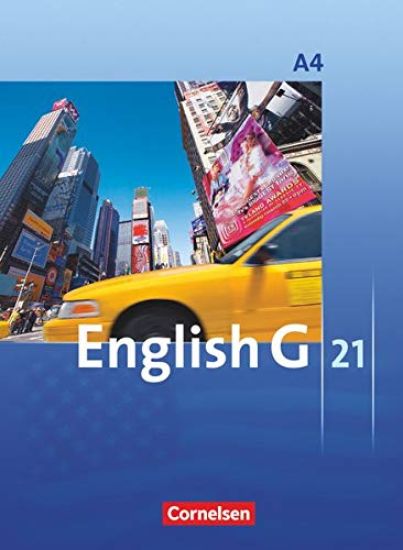
English G 21. Ausgabe A 4. Schülerbuch
Susan Abbey; David Christie; Barbara Derkow-Disselbeck
Cornelsen Verlag GmbH
2009
sidottu
Zur Konzeption Vorwissen: 'English G 21 ' baut durchgehend auf dem lexikalischen und thematischen Vorwissen der Schüler/innen auf. Da die Jugendlichen gewohnt sind, Sprache in festen Wendungen zu lernen, können sie viele Sprachmittel bereits anwenden, bevor diese bewusst gemacht und systematisch behandelt werden. Kompetenzen: Neben den kommunikativen Fertigkeiten schult 'English G 21 ' die Methodenkompetenz. Die Lern- und Arbeitstechniken ' (study skills)' werden integrativ trainiert und den Schülerinnen und Schülern explizit bewusst gemacht. Differenzierung: Zahlreiche Extra-Angebote erlauben es, die unterschiedlichen Leistungsstände der Schüler/innen zu berücksichtigen und binnendifferenziert zu arbeiten. Die Units Lead-in: Eine bildreich gestaltete Doppelseite knüpft an das Vorwissen der Schüler/innen an und führt mit einer Reihe von Aufgabenstellungen in '' das Thema der Unit ein. A-Section: Über die motivierenden Geschichten rund um Kinder und Jugendliche aus GB und den USA vermittelt 'English G 21' Wortschatz, Redemittel, Grammatik und Interkulturelles: - Kommunikationsorientierte und spielerische Aufgaben trainieren sprachliche, methodische und soziale Kompetenzen. - Inhaltsbezogene 'tasks ' stärken die Textkompetenz der Lernenden. - 'Background Files' liefern landeskundliche Hintergrundinformationen (ab Band 2). Practice: Abwechslungsreiche, unterschiedlich anspruchsvolle Übungen decken alle zentralen Kompetenzbereiche ab. Verweise aus dem 'Lead-in ' und der 'A-Section ' zeigen, ab wann sie frühestmöglich eingesetzt werden können. Text: Spannende längere Storys und eine Vielfalt von Textsorten fördern das Lesevergnügen. Weiterführende Aufgaben schulen den Umgang mit Lesetexten und regen zur kreativen Eigenproduktion an. Text File (ab Band 3): Weitere fiktionale und nicht-fiktionale Texte im Anhang bieten vertiefenden Lesestoff. Topics (Bände 1 und 2): Hier gibt es viel Wissens- und auch Nachahmenswertes, aber keine neue Grammatik. Oft schließen die 'Topic-' Themen an die vorausgehende Unit an. Der Nachschlageteil Skills File: Ein ausführlicher Überblick über die Lern- und Arbeitstechniken aus den Units. Themen aus vorhergehenden Bänden werden wiederholt und durch neue ergänzt. Viele Tipps helfen bei der Arbeit mit Hör- und Lesetexten, beim Sprechen und Schreiben von eigenen Texten und bei der Sprachmittlung. Grammar File: Eine anschauliche Zusammenfassung der wichtigen Grammatikstrukturen. Kurze Fragen mit Lösungen am Ende jedes Kapitels fördern selbstständiges Lernen. Vocabulary: Der Lernwortschatz jeder Unit in chronologischer Reihenfolge mit vielen Tipps zur Verwendung und Aussprache der Vokabeln. 'Remember-boxes ' greifen das lexikalische Vorwissen auf. Dictionary: Zwei alphabetische Wortlisten: Die englisch-deutsche Liste führt alle im Schülerbuch vorkommenden Wörter mit Fundstellen auf, das deutsch-englische Wörterverzeichnis ist besonders hilfreich für die eigenständige Textproduktion. Neue Begleitmaterialien Die vertrauten Begleitmaterialien wie Workbook, Wordmaster und Folien wurden komplett überarbeitet und durch folgende neue Angebote ergänzt: - Lehrerfassung des Schülerbuchs - Digitaler Unterrichtsplaner (DVD-ROM) - Unterrichtssoftware - DVD 'Out and About ' bzw. ' What's in, what's on, what's up' - CD-ROM im Workbook '(e-Workbook)' mit vielen Übungen für das selbstständige Arbeiten zu Hause. Neue Elemente in Band 4 - Doppelseitiges 'Background File' in jeder Unit mit landeskundlichen Informationen zu den USA - 'Americana - ' Schlaglichter auf Land und Leute - In jeder Unit eine Seite 'Reading course ' zur systematischen Arbeit am Leseverstehen - Fortführung und Vertiefung der Testvorbereitung - Die abschließende Unit bietet die Möglichkeit, ein 'short play' zu lesen und ggf. zu inszenieren.
English G 21. Ausgabe A 4. Schülerbuch
Susan Abbey; David Christie; Barbara Derkow-Disselbeck
Cornelsen Verlag GmbH
2009
nidottu
Zur Konzeption Vorwissen: 'English G 21 ' baut durchgehend auf dem lexikalischen und thematischen Vorwissen der Schüler/innen auf. Da die Jugendlichen gewohnt sind, Sprache in festen Wendungen zu lernen, können sie viele Sprachmittel bereits anwenden, bevor diese bewusst gemacht und systematisch behandelt werden. Kompetenzen: Neben den kommunikativen Fertigkeiten schult 'English G 21 ' die Methodenkompetenz. Die Lern- und Arbeitstechniken ' (study skills)' werden integrativ trainiert und den Schülerinnen und Schülern explizit bewusst gemacht. Differenzierung: Zahlreiche Extra-Angebote erlauben es, die unterschiedlichen Leistungsstände der Schüler/innen zu berücksichtigen und binnendifferenziert zu arbeiten. Die Units Lead-in: Eine bildreich gestaltete Doppelseite knüpft an das Vorwissen der Schüler/innen an und führt mit einer Reihe von Aufgabenstellungen in '' das Thema der Unit ein. A-Section: Über die motivierenden Geschichten rund um Kinder und Jugendliche aus GB und den USA vermittelt 'English G 21' Wortschatz, Redemittel, Grammatik und Interkulturelles: - Kommunikationsorientierte und spielerische Aufgaben trainieren sprachliche, methodische und soziale Kompetenzen. - Inhaltsbezogene 'tasks ' stärken die Textkompetenz der Lernenden. - 'Background Files' liefern landeskundliche Hintergrundinformationen (ab Band 2). Practice: Abwechslungsreiche, unterschiedlich anspruchsvolle Übungen decken alle zentralen Kompetenzbereiche ab. Verweise aus dem 'Lead-in ' und der 'A-Section ' zeigen, ab wann sie frühestmöglich eingesetzt werden können. Text: Spannende längere Storys und eine Vielfalt von Textsorten fördern das Lesevergnügen. Weiterführende Aufgaben schulen den Umgang mit Lesetexten und regen zur kreativen Eigenproduktion an. Text File (ab Band 3): Weitere fiktionale und nicht-fiktionale Texte im Anhang bieten vertiefenden Lesestoff. Topics (Bände 1 und 2): Hier gibt es viel Wissens- und auch Nachahmenswertes, aber keine neue Grammatik. Oft schließen die 'Topic-' Themen an die vorausgehende Unit an. Der Nachschlageteil Skills File: Ein ausführlicher Überblick über die Lern- und Arbeitstechniken aus den Units. Themen aus vorhergehenden Bänden werden wiederholt und durch neue ergänzt. Viele Tipps helfen bei der Arbeit mit Hör- und Lesetexten, beim Sprechen und Schreiben von eigenen Texten und bei der Sprachmittlung. Grammar File: Eine anschauliche Zusammenfassung der wichtigen Grammatikstrukturen. Kurze Fragen mit Lösungen am Ende jedes Kapitels fördern selbstständiges Lernen. Vocabulary: Der Lernwortschatz jeder Unit in chronologischer Reihenfolge mit vielen Tipps zur Verwendung und Aussprache der Vokabeln. 'Remember-boxes ' greifen das lexikalische Vorwissen auf. Dictionary: Zwei alphabetische Wortlisten: Die englisch-deutsche Liste führt alle im Schülerbuch vorkommenden Wörter mit Fundstellen auf, das deutsch-englische Wörterverzeichnis ist besonders hilfreich für die eigenständige Textproduktion. Neue Begleitmaterialien Die vertrauten Begleitmaterialien wie Workbook, Wordmaster und Folien wurden komplett überarbeitet und durch folgende neue Angebote ergänzt: - Lehrerfassung des Schülerbuchs - Digitaler Unterrichtsplaner (DVD-ROM) - Unterrichtssoftware - DVD 'Out and About ' bzw. ' What's in, what's on, what's up' - CD-ROM im Workbook '(e-Workbook)' mit vielen Übungen für das selbstständige Arbeiten zu Hause. Neue Elemente in Band 4 - Doppelseitiges 'Background File' in jeder Unit mit landeskundlichen Informationen zu den USA - 'Americana - ' Schlaglichter auf Land und Leute - In jeder Unit eine Seite 'Reading course ' zur systematischen Arbeit am Leseverstehen - Fortführung und Vertiefung der Testvorbereitung - Die abschließende Unit bietet die Möglichkeit, ein 'short play' zu lesen und ggf. zu inszenieren.