Kirjojen hintavertailu – 12 903 725 kirjaa ja 27 kauppaa

Kirjailija

David Clark

Kirjat ja teokset yhdessä paikassa: 132 kirjaa, julkaisuja vuosilta 1982–2026, suosituimpiin kuuluu The Diaconate in Ecumenical Perspective. Vertaile teosten hintoja ja tarkista saatavuus suomalaisista kirjakaupoista.

132 kirjaa

Kirjojen julkaisuvuodet: 1982–2026.

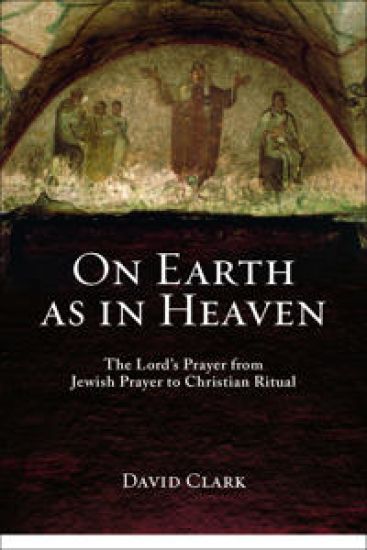
On Earth as in Heaven

On Earth as in Heaven

David Clark

Fortress Press,U.S.
2017
pokkari
Convinced that we can no longer have direct, unmediated access to the sense of Jesus's prayer but must account for the history of its "effects," David Clark seeks to trace the meaning of one of Christianity's most repeated, and thus most "effective" texts through the early centuries of the faith. Clark begins by arguing that the prayer's original context was in a revival of Jewish prayer, then sets it in the literary context of Gospels that, he argues, represented Jesus as recapitulating Israel's testing in the wilderness in his own temptation. He then traces the prayer's meaning within the narratives of Matthew and Luke and in the Didache, then examines the first full commentary on the prayer, that of Tertullian in the third century ce. Clark attends to the evolution of ideas and themes embodied in the prayer and of the understanding of prayer itself across epic transitions, from Judaism to the teaching of Jesus, from Jesus to the Gospels, and from the Gospels to earliest self-consciously "catholic" Christianity.
Tao of Charlie Munger

Tao of Charlie Munger

David Clark

Scribner
2017
sidottu

Halvin toimitettuna 25,60 €

Words of wisdom from Charlie Munger, Warren Buffett’s longtime business partner, collected and interpreted with an eye towards investing by David Clark, coauthor of the bestselling Buffettology series. Born in Omaha, Nebraska in 1924 Charlie Munger studied mathematics at the University of Michigan, trained as a meteorologist at Cal Tech Pasadena while in the Army, and graduated magna cum laude from Harvard Law School without ever earning an undergraduate degree. Today, Munger is one of America’s most successful investors, the Vice Chairman of Berkshire Hathaway, and Warren Buffett’s business partner for almost forty years. Buffett says “Berkshire has been built to Charlie’s blueprint. My role has been that of general contractor.” Munger is an intelligent, opinionated business man whose ideas can teach professional and amateur investors how to be successful in finance and life. Like The Tao of Warren Buffett, The Tao of Charlie Munger is a compendium of pithy quotes including, “Knowing what you don’t know is more useful than being brilliant” and “In my whole life, I have known no wise people who didn’t read all the time, none, zero.” This collection, culled from interviews, speeches, and questions and answers at the Berkshire Hathaway and Wesco annual meetings, offers insights into Munger’s amazing financial success and life philosophies. Charlie Munger’s investment tips, business philosophy, and rules for living are as unique as his life story; intelligent as he clearly is; and as successful as he has been.

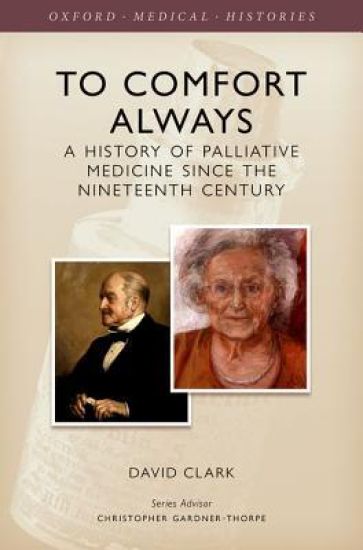
To Comfort Always

To Comfort Always

David Clark

Oxford University Press
2016
sidottu
Palliative medicine was first recognised as a specialist field in 1987. One hundred years earlier, London based doctor William Munk published a treatise on 'easeful death' that mapped out the principles of practical, spiritual, and medical support at the end of life. In the intervening years a major process of development took place which led to innovative services, new approaches to the study and relief of pain and other symptoms, a growing interest in 'holistic' care, and a desire to gain more recognition for care at the end of life. This book traces the history of palliative medicine, from its nineteenth-century origins, to its modern practice around the world. It takes in the changing meaning of 'euthanasia', assesses the role of religious and philanthropic organisations in the creation of homes for the dying, and explores how twentieth-century doctors created a special focus on end of life care. To Comfort Always traces the rise of clinical studies, academic programmes and international collaborations to promote palliative care. It examines the continuing need to support development with evidence, and assesses the dilemmas of unequal access to services and pain relieving drugs, as well as the periodic accusations of creeping medicalization within the field. This is the first history of its kind, and the breadth of information it encompasses makes it an essential resource for those interested in the long-term achievements of palliative medicine as well as the challenges that remain.
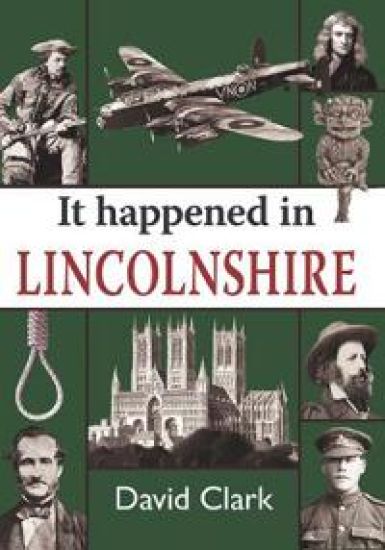
It Happened in Lincolnshire

It Happened in Lincolnshire

David Clark

Merlin Unwin Books
2016
nidottu
What put Lincolnshire on the map? Author David Clark reveals why locals are proud to be Yellowbellies. In a lively and inviting series of chapters, It Happened in Lincolnshire uncovers the county’s myths and legends, its landmarks, battles, its darker side of notorious crime, its curious customs, its entertainers, its wartime experience, its colourful rectors, its great explorers and its ghosts. • King John’s Lost Treasure • The Devil’s Stone • The Dutch Drainers • The Lincolnshire Rising • The Murder of William Storr • Stamford Bull Running • Billy Butlin’s Pymgy Princess • The Dambusters • The Lincolnshire Thrasher • The Man Who Ate His Boots • Marwood the Hangman
The Global Financial Crisis and Austerity
Given the huge impact of the 2008 financial crash and post-crash austerity on so many people’s lives, there is a need for a concise, accessible guide to its causes and its longer-term significance. Written by an expert in political science and straddling finance, economics and political science, this entry-level summary demystifies global finance and puts the financial crisis in its historical context. It also outlines the policy responses of Western governments to the crash and the ensuing recession and turn to austerity. Supplemented by an appendix with an A-Z glossary of key terms, processes and institutions, the book concludes by asking if the crisis is really over and outlines possible future scenarios, making it an impressive overview for anyone with little or no previous knowledge of the subject.
WTF! Life is Not Always What it Seems

WTF! Life is Not Always What it Seems

David Clark

New Generation Publishing
2015
pokkari
David Clark has been on a bit of journey; in essence he has gone from the heights of success to the depths of depression, insanity and back into depression. He was a highly successful, career-oriented individual with a brain that enabled him to travel the world, teaching and sharing his knowledge, skills and experience. He has now written this book, his personal story, as a way of highlighting the importance of looking after your body, your mind and your soul to achieve....... above and beyond your wildest dreams! David is an accredited Master Practitioner in NLP and life coach, drawing on past skills and experience as a Project Manager and Business Excellence Model assessor to work with clients to achieve their dreams. During his career he has worked in a variety of fields including social research, evaluation, training, project management, change management and Board capacity and capability development. More recently he has embarked on a more personal voyage of discovery exploring the field of personal development and is now coaching others, drawing on the skills, knowledge and experience he has gathered over the past 25 years. He is an avid user of social media. Check him out at:F: The Lime Green SolutionsT: @davevirgoW: www.calmercoaching.com
Urban Decline (Routledge Revivals)
In the twentieth century, urban growth was one of the most powerful catalysts of geographical, social and demographic change in the Western world. When this book was first published in 1989, however, a massive process of counter-urbanization was underway, which saw the loss of population and jobs in cities and a pronounced urban to rural shift. This book analyses the causes and consequences of urban decline in Britain and the developed world during this period and beyond, and assesses the implications for urban planning and policy. David Clark’s relevant and comprehensive title will be of value to students with a particular interest in urban geography and development.
Urban Geography (Routledge Revivals)
This book, first published in 1982, addressed the need for a fresh and comprehensive guide to the rapidly expanding area of urban geography. Drawing on examples from cities in a number of countries, including the U. S. A., David Clark outlines the contribution of geographers to the understanding of the city and urban society, and analyses the growth of the urban environment alongside planning and policy. A thorough and unique study, this title will be of particular value to undergraduate students, as well as laying the foundations for a more advanced study in urban geography and planning.
Out There: A Story of Ultra Recovery

Out There: A Story of Ultra Recovery

David Clark

Createspace Independent Publishing Platform
2014
nidottu
David Clark went from the rock bottom of bankruptcy, addiction and obesity to becoming an accomplished athlete. In this compelling story of his life, he not only shares his journey with complete honesty, but he also lays out a blueprint for change that anyone can use to to redefine what is possible.-Out There: A Story of Ultra Recovery is the story of a man who never had a chance to find out who he was. Growing up in the hardest of circumstances, poor, homeless and traveling the country in his father's pickup truck, David Clark was no stranger to the hard knocks of life. Yet, without the benefit of any formal education in his early years, he lifted himself all the way up to owning a chain of 13 retail stores by the time he was 29 years old-only to lose it all to addiction, poor choices, and tough economic breaks. In the aftermath, David started spiraling toward death, spending years eating recklessly, drinking and drugging himself-and growing farther and farther away from everyone around him. One day the thought occurred to him, "If I don't change today, I will die." David went on to completely redefine himself, his values and his very way of looking at life. He lost over 150 pounds and kept it off-not only that, but he went on to compete in some of the toughest endurance events in the world. Today David is a loving father of three and a running coach, sponsored runner, speaker, and gym owner. He dedicates his time to sharing the story of how we can all change everything about ourselves if we want to badly enough. Out There: A Story of Ultra Recovery is the unwashed and unfiltered reality of David's journey. It is brutally and unflinchingly honest-and a testament to the power of redemption and the human spirit.
What Colour is your Building?

What Colour is your Building?

David Clark

RIBA Publishing
2013
nidottu
‘What Colour Is Your Building’ is the result of many years’ analysis and design of low energy buildings. The first part of the book focuses on how to measure and benchmark CO2 emissions due to the operating, embodied and transport energy consumption associated with commercial buildings and the people using them. A simple whole carbon footprint methodology is proposed which can be used to put into context real (not theoretical) energy consumption, embodied carbon (new build and refurbish v demolish), and the significant impact the location of a building has on the CO2 emissions of people travelling to work. The second part of the book provides clear, practical guidance to developers, planners, architects, engineers, building owners, facility managers, and tenants on how to reduce the whole carbon footprint. This includes 10 steps to low energy buildings, the contribution that renewable energy can realistically make, the use of lower carbon materials in construction, refurbishment and fit-out, and how to encourage greener methods of travel. An overview of the ingredients to include in a business case to justify investment in low energy/carbon buildings is also provided. The book will be accompanied by electronic appendices which are free to download.
Transforming the Culture of Dying

Transforming the Culture of Dying

David Clark; Gara LaMarche

Oxford University Press Inc
2013
sidottu
Over a period of almost 10 years, the work of the Project on Death in America (PDIA) played a formative role in the advancement of end of life care in the United States. The project concerned itself with adults and children, and with interests crossing boundaries between the clinical disciplines, the social sciences, arts and humanities. PDIA engaged with the problems of resources in poor communities and marginalized groups and settings, and it attempted to foster collaboration across a range of sectors and organizations. Authored by medical sociologist David Clark, whose research career has focused on mapping, archiving and analyzing the history and development of hospice, palliative care and related end of life issues, this book examines the broad, ambitious conception of PDIA - which sought to 'transform the culture of dying in America' - and assesses PDIA's contribution to the development of the palliative care field and to wider debates about end of life care within American society. Chapters consider key issues and topics tackled by PDIA grantees which include: explorations of the meanings of death in contemporary American culture; the varying experiences of care at the end of life (in different settings, among different social and ethnic groups); the innovations in service development and clinical practice that have occurred in the US in response to a growing awareness of and debate about end of life issues; the emerging evidence base for palliative and end of life care in the US; the maturation of a field of academic and clinical specialization; the policy and legal issues that have shaped development, including the ethical debate about assisted suicide and the Oregon experience; the opportunities and barriers that have been encountered; and the prospects for future development. A final chapter captures developments and milestones in the field since PDIA closed in 2003, and some of the challenges going forward.
Urban Decline (Routledge Revivals)
In the twentieth century, urban growth was one of the most powerful catalysts of geographical, social and demographic change in the Western world. When this book was first published in 1989, however, a massive process of counter-urbanization was underway, which saw the loss of population and jobs in cities and a pronounced urban to rural shift. This book analyses the causes and consequences of urban decline in Britain and the developed world during this period and beyond, and assesses the implications for urban planning and policy. David Clark’s relevant and comprehensive title will be of value to students with a particular interest in urban geography and development.
Urban Geography (Routledge Revivals)
This book, first published in 1982, addressed the need for a fresh and comprehensive guide to the rapidly expanding area of urban geography. Drawing on examples from cities in a number of countries, including the U. S. A., David Clark outlines the contribution of geographers to the understanding of the city and urban society, and analyses the growth of the urban environment alongside planning and policy. A thorough and unique study, this title will be of particular value to undergraduate students, as well as laying the foundations for a more advanced study in urban geography and planning.
Between Medieval Men

Between Medieval Men

David Clark

Oxford University Press
2013
nidottu
Between Medieval Men argues for the importance of synoptically examining the whole range of same-sex relations in the Anglo-Saxon period, revisiting well-known texts and issues (as well as material often considered marginal) from a radically different perspective. The introductory chapters first lay out the premises underlying the book and its critical context, then emphasise the need to avoid modern cultural assumptions about both male-female and male-male relationships, and underline the paramount place of homosocial bonds in Old English literature. Part II then investigates the construction of and attitudes to same-sex acts and identities in ethnographic, penitential, and theological texts, ranging widely throughout the Old English corpus and drawing on Classical, Medieval Latin, and Old Norse material. Part III expands the focus to homosocial bonds in Old English literature in order to explore the range of associations for same-sex intimacy and their representation in literary texts such as Genesis A, Beowulf, The Battle of Maldon, The Dream of the Rood, The Phoenix, and Ælfric's Lives of Saints. During the course of the book's argument, David Clark uncovers several under-researched issues and suggests fruitful approaches for their investigation. He concludes that, in omitting to ask certain questions of Anglo-Saxon material, in being too willing to accept the status quo indicated by the extant corpus, in uncritically importing invisible (because normative) heterosexist assumptions in our reading, we risk misrepresenting the diversity and complexity that a more nuanced approach to issues of gender and sexuality suggests may be more genuinely characteristic of the period.