Kirjojen hintavertailu – 12 859 818 kirjaa ja 27 kauppaa

Kirjailija

David D. Morrison

Kirjat ja teokset yhdessä paikassa: 15 kirjaa, julkaisuja vuosilta 2003–2024, suosituimpiin kuuluu Long Island Rail Road. Vertaile teosten hintoja ja tarkista saatavuus suomalaisista kirjakaupoista.

Nimi esiintyy myös muodoissa: David D Morrison

15 kirjaa

Kirjojen julkaisuvuodet: 2003–2024.

Long Island Rail Road: Morris Park Shops

Long Island Rail Road: Morris Park Shops

David D. Morrison

Arcadia Publishing (SC)
2024
nidottu
David D. Morrison, retired Long Island Rail Road (LIRR) branch line manager and railroad historian, has compiled rare photographs to showcase the shops that power the LIRR, the busiest railroad in North America. The LIRR provides passenger rail service from Midtown Manhattan to to the far ends of Long Island at Greenport and Montauk. A vast operation such as this requires a huge fleet of locomotives and cars. The reliability of the fleet rests mainly upon the shop maintenance facility. The Morris Park Shops, opened in 1889 and closed in the early 2000s, provided over a century of maintenance and repair service, allowing the LIRR to develop and expand through the years. The complexity of the shop facility, from the days of steam locomotives to multiple-unit electric cars and diesel locomotives, is a fascinating chapter in LIRR history.
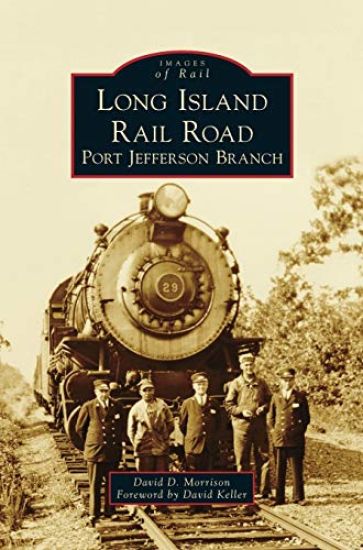
Long Island Rail Road

Long Island Rail Road

David D Morrison; Carol Mills-Nichol

Arcadia Pub (Sc)
2021
sidottu
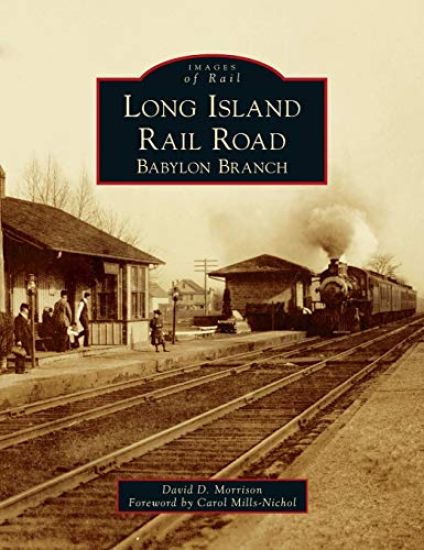
The Long Island Rail Road is the oldest railroad in the country still operating under its original name. It is the busiest railroad in North America, with 90 million annual riders on 735 trains covering 11 different branches. The Babylon Branch, which serves 15 stations from Valley Stream to Babylon, carries 18 million annual riders over its 20-mile right-of-way. The branch has been totally electrified since 1925 and has not had any street crossings at grade since 1979. There are three signal towers and four junctions for other branches on this line. Two railroad museums are housed in former branch station buildings, those being Wantagh and Lindenhurst.
Grand Central Terminal and Penn Station: Statuary and Sculptures
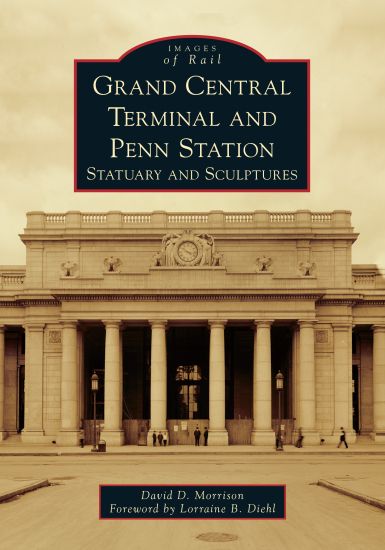
Opened in 1913, Grand Central Terminal is a world-famous landmark building with a magnificent 48-foot-high, 1,500-ton statuary group on top of the main facade. Designed by sculptor Jules-Felix Coutan, a 13-foot-wide Tiffany clock serves as the centerpiece. The figure above the clock is Mercury, with Hercules to the left and Minerva to the right. In the late 1990s, a historic restoration was performed on the terminal after which two cast-iron eagle statues were placed over entrances at Lexington Avenue and Forty-Second Street/Vanderbilt Avenue. These eagles were from the 1898 Grand Central Station building that was demolished in 1910 to make room for the construction of the new Grand Central Terminal structure. Penn Station, which opened in 1910, covered two full city blocks and had statuary groups, designed by sculptor Adolph Weinman, on all four sides of the building. After Penn Station was demolished in the mid-1960s, the statuary was dispersed throughout various locations, mainly in the Northeast.
Grand Central Terminal and Penn Station: Statuary and Sculptures

Grand Central Terminal and Penn Station: Statuary and Sculptures

David D. Morrison

Arcadia Publishing Library Editions
2019
sidottu
Opened in 1913, Grand Central Terminal is a world-famous landmark building with a magnificent 48-foot-high, 1,500-ton statuary group on top of the main facade. Designed by sculptor Jules-Felix Coutan, a 13-foot-wide Tiffany clock serves as the centerpiece. The figure above the clock is Mercury, with Hercules to the left and Minerva to the right. In the late 1990s, a historic restoration was performed on the terminal after which two cast-iron eagle statues were placed over entrances at Lexington Avenue and Forty-Second Street/Vanderbilt Avenue. These eagles were from the 1898 Grand Central Station building that was demolished in 1910 to make room for the construction of the new Grand Central Terminal structure. Penn Station, which opened in 1910, covered two full city blocks and had statuary groups, designed by sculptor Adolph Weinman, on all four sides of the building. After Penn Station was demolished in the mid-1960s, the statuary was dispersed throughout various locations, mainly in the Northeast.
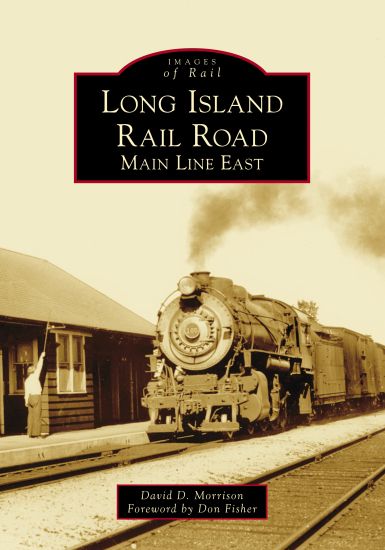
Long Island Rail Road: Main Line East

Long Island Rail Road: Main Line East

David D. Morrison

Arcadia Publishing Library Editions
2018
sidottu
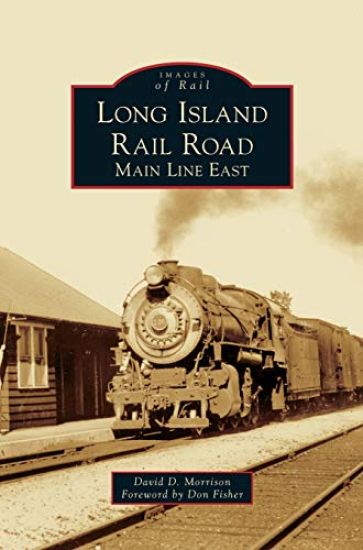
The Long Island Rail Road (LIRR), the oldest railroad in the country still operating under its original name, was chartered in 1834 for the purpose of running trains from the Brooklyn waterfront to the eastern terminal at Greenport. The east end of the LIRR main line consists of a 70-mile stretch of track from Hicksville to Greenport. At one time, there were 29 passenger stations along this east end route, 14 of which are active today. A decommissioned signal tower and obsolete turntable are located on this route. Two stations, Riverhead and Greenport, are locations of the Railroad Museum of Long Island. The 23 miles of track between Hicksville and Ronkonkoma is electrified by third rail current, the electrification having been completed in 1987. Single-track territory since 1844, the line is currently being double-tracked as far east as Ronkonkoma.
Long Island Rail Road: Main Line East

Long Island Rail Road: Main Line East

David D. Morrison

Arcadia Publishing (SC)
2018
nidottu
The Long Island Rail Road (LIRR), the oldest railroad in the country still operating under its original name, was chartered in 1834 for the purpose of running trains from the Brooklyn waterfront to the eastern terminal at Greenport. The east end of the LIRR main line consists of a 70-mile stretch of track from Hicksville to Greenport. At one time, there were 29 passenger stations along this east end route, 14 of which are active today. A decommissioned signal tower and obsolete turntable are located on this route. Two stations, Riverhead and Greenport, are locations of the Railroad Museum of Long Island. The 23 miles of track between Hicksville and Ronkonkoma is electrified by third rail current, the electrification having been completed in 1987. Single-track territory since 1844, the line is currently being double-tracked as far east as Ronkonkoma.
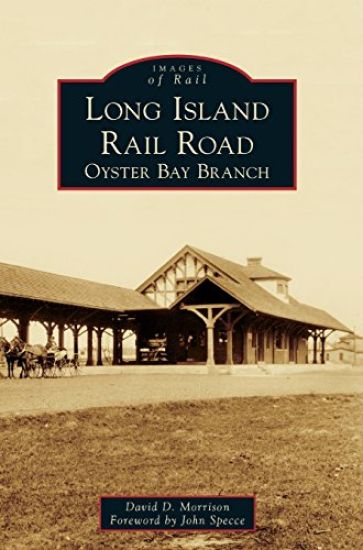
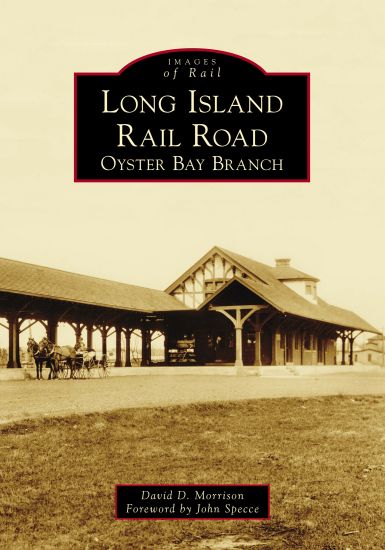
Long Island Rail Road: Oyster Bay Branch

Long Island Rail Road: Oyster Bay Branch

David D. Morrison

Arcadia Publishing Library Editions
2018
sidottu
The Long Island Rail Road (LIRR) is the oldest railroad in the country still operating under its original name. The Oyster Bay Branch is one of the smaller branches but is probably the most historically significant one. There are 12 stations along the 14.3 miles of track (one station is closed but the building still stands). Of the 13 still existing LIRR stations built in the 1800s, six are on the Oyster Bay Branch. The branch is partly electrified, and two signal towers exist, one operating and one abandoned. At the terminal, Oyster Bay Station is the home train station of the 26th president of the United States--Theodore Roosevelt. The Oyster Bay Railroad Museum is currently restoring the train station, as well as the historic turntable and steam locomotive No. 35.
Long Island Rail Road: Oyster Bay Branch

Long Island Rail Road: Oyster Bay Branch

David D. Morrison

Arcadia Publishing (SC)
2018
nidottu
The Long Island Rail Road (LIRR) is the oldest railroad in the country still operating under its original name. The Oyster Bay Branch is one of the smaller branches but is probably the most historically significant one. There are 12 stations along the 14.3 miles of track (one station is closed but the building still stands). Of the 13 still existing LIRR stations built in the 1800s, six are on the Oyster Bay Branch. The branch is partly electrified, and two signal towers exist, one operating and one abandoned. At the terminal, Oyster Bay Station is the home train station of the 26th president of the United States--Theodore Roosevelt. The Oyster Bay Railroad Museum is currently restoring the train station, as well as the historic turntable and steam locomotive No. 35.
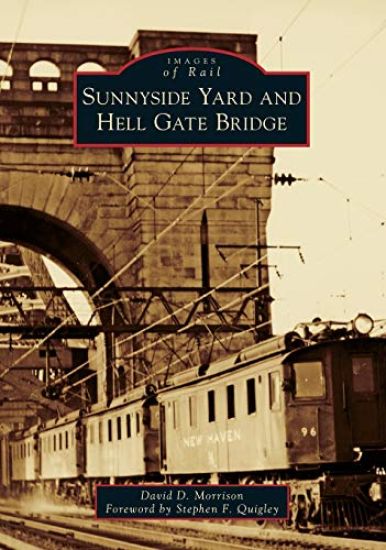
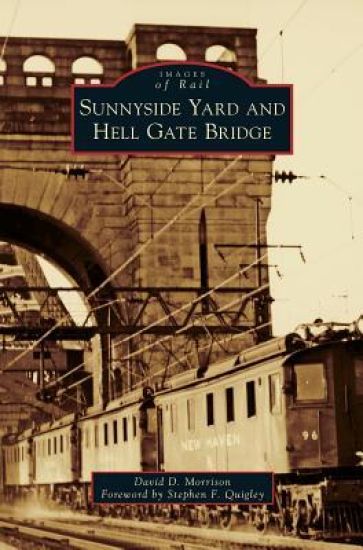
Sunnyside Yard and Hell Gate Bridge

Sunnyside Yard and Hell Gate Bridge

David D. Morrison

Arcadia Publishing Library Editions
2016
sidottu
Sunnyside Yard was built by the Pennsylvania Railroad as part of its massive New York Extension, the centerpiece of which was Pennsylvania Station in the heart of Manhattan. Opened in 1910, it is still the world s largest railroad passenger car storage yard. At the height of its operation in the 1930s, there were 79 tracks, with a capacity for 1,100 cars. Hell Gate Bridge was a joint venture of the Pennsylvania Railroad and the New Haven Railroad to construct a direct rail route for trains between New York City and the New England states. The main span is 1,017 feet between the towers, and it rises more than 300 feet from the East River to the top of the towers."