Kirjojen hintavertailu – 12 903 735 kirjaa ja 27 kauppaa

Kirjailija

David Dabydeen

Kirjat ja teokset yhdessä paikassa: 9 kirjaa, julkaisuja vuosilta 1999–2024, suosituimpiin kuuluu Turner. Vertaile teosten hintoja ja tarkista saatavuus suomalaisista kirjakaupoista.

9 kirjaa

Kirjojen julkaisuvuodet: 1999–2024.

Sweet Li Jie

Sweet Li Jie

David Dabydeen

PEEPAL TREE PRESS LTD
2024
pokkari
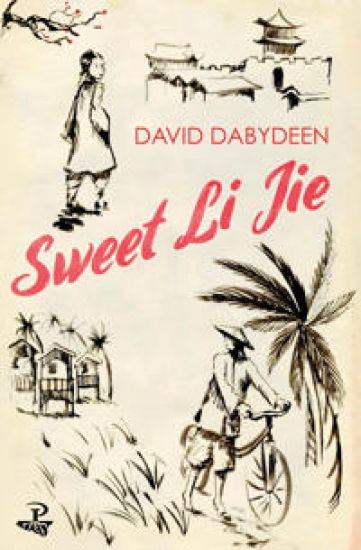
In Sweet Li Jie, two distant worlds converge: Wuhan Province in China and British Guiana. Jia Yun, a traveling textile merchant, leaves Wuhan to join the exodus of migrants escaping poverty. Most of them to become indentured labourers in the canefields of Demerara. Through heartfelt letters intended for his sweetheart, Li Jie, Jia Yun paints a vivid picture of life for Indians, Africans, and other ethnic groups under British rule during the twilight years of indentureship. Meanwhile, the novel’s sections set in China reveal the struggles of rural Wuhan under a crumbling feudal regime.“Sweet Li Jie” delves into complex interpersonal relations, from the landlord-servant dynamics in Wuhan to the bond between Jia Yun and his Afro-Guyanese guide, Harris. Amid vulnerability and uncertainty, and the complexities of living in servitude, these characters grapple for personhood and interdependence.
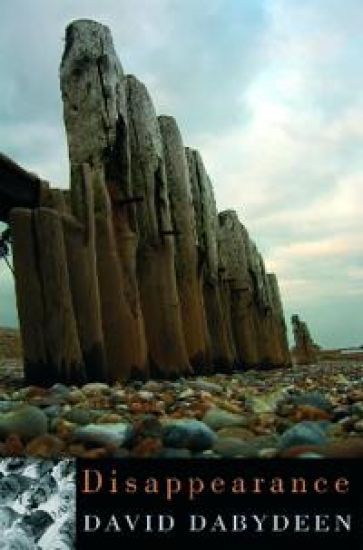
Disappearance

Disappearance

David Dabydeen

Peepal Tree Press Ltd
2005
nidottu
A young Afro-Guyanese engineer comes to a coastal Kentish village as part of a project to shore up its sea-defences. He boards with an old English woman, Mrs Rutherford, and through his relationship with her discovers the latent violence and raw emotions present in this apparently placid village. He discovers, too, that underlying the village's essential Englishness, echoes of the imperial past resound. In the process, he is forced to reconsider his perceptions of himself and his native Guyana, and in particular to question his engineer's certainties in the primacy of the empirical and the rational. This is a richly intertextual novel which uses reference to the novels of Conrad, Wilson Harris and V. S. Naipaul's 'The Enigma of Arrival' to set up a multi-layered dialogue concerning the nature of Englishness, the legacy of Empire and different perspectives on the nature of history and reality.
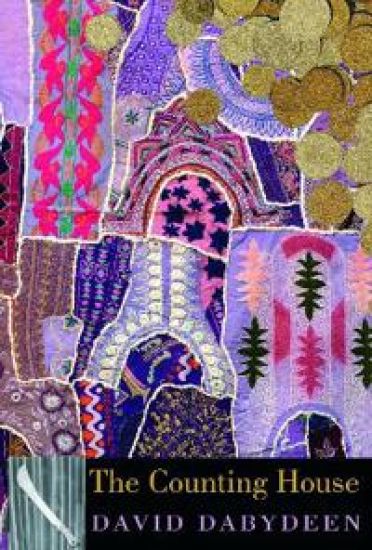
The Counting House

The Counting House

David Dabydeen

Peepal Tree Press Ltd
2005
nidottu
Set in the early nineteenth century The Counting House follows the lives of Rohini and Vidia, a young married couple struggling for survival in a small, caste-ridden Indian village who are seduced by the recruiter's talk of easy work and plentiful land if they sign up as indentured labourers to go to British Guiana. There, however, they discover a harsh fate as 'bound coolies' in a country barely emerging from the savage brutalities of slavery. Having abandoned their families and a country that seems increasingly like a paradise, they must come to terms with their problematic encounters with an Afro-Guyanese population hostile to immigrant labour, with rebels such as Kampta who has made an early abandonment of Indian village culture, and confront the truths of their uprooted condition." Excellent... Presented with poetic precision, this novel succeeds as both a compelling story and a beautifully sustained piece of writing." Sean Coughlan, The Times." Beautifully written... Dabydeen's grace, as a poet turned novelist, is to give his characters' imaginations and inner lives voices in prose... This is a marvelous novel" Michele Roberts, Independent on Sunday. David Dabydeen was born in Guyana. He has published six acclaimed novels and three collections of poetry. He is a Fellow of the Royal Society of Literature and Professor of Literary Studies at the University of Warwick.
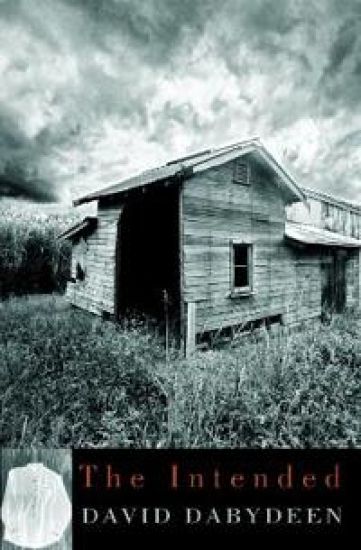
The Intended

The Intended

David Dabydeen

Peepal Tree Press Ltd
2005
nidottu

Halvin toimitettuna 17,90 €

The young narrator of "The Intended" is twelve when he leaves his village in rural Guyana to come to England. There, he is abandoned into social care, but with great determination and self-discipline seizes every opportunity to follow his aunt's farewell advice, 'but you must take education...pass plenty exam' and wins a scholarship to Oxford. With an upper-class white fiancee, he has unquestionably arrived, but at the cost of ignoring the other part of his aunt's farewell: '...you is we, remember you is we.' Through remembering his Guyanese childhood and youth in working class Balham, the narrator's older self explores the contradictions, the difficulties implicit in his aunt's advice and the cost to his personality of losing that past. At one level a moving semi-autobiographical novel, "The Intended" is also a sophisticated postcolonial text with its echoes of 'Heart of Darkness', its play between language registers and its exploration of the instability of identity. As an Indo-Guyanese, the narrator finds himself seen as 'Paki' by the English, and as some mongrel hybrid by 'real' Asians from India and Pakistan; as sharing a common British 'Blackness', yet acutely conscious of the real cultural divisions between Guyanese of African and Indian origins.
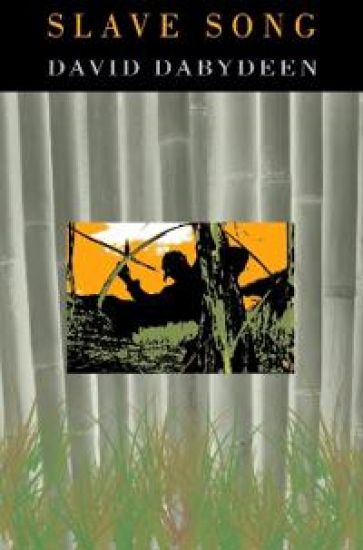
Slave Song

Slave Song

David Dabydeen

Peepal Tree Press Ltd
2005
nidottu
"Slave Song" is unquestionably one of the most important collections of Caribbean/Black British poetry to have been published in the last twenty years. On its first publication in 1984 it won the Commonwealth Poetry Prize and established Dabydeen as a provocative and paradigm-shifting writer. At the heart of "Slave Song" are the voices of African slaves and Indian labourers expressing, in a Guyanese Creole that is as far removed from Standard English as it is possible to get, their songs of defiance, of a thwarted erotic energy. But surrounding this harsh and lyrical core of Creole expression is an elaborate critical apparatus of translations (which deliberately reveal the actual untranslatability of the Creole) and a parody of the kind of critical commentary that does no more than paraphrase or at best contextualise the original poem. It took some time for the displaced critics to recognise that this prosaic apparatus was as much part of the meaning of the whole as the poems themselves, that Dabydeen was engaged in a play of masks, an expression of his own duality and a critique of the relationship which is at the core of Caribbean writing: that between the articulate writer and the supposedly voiceless workers and peasants. This new edition has an afterword by David Dabydeen that briefly explores his response to these poems after more than twenty years.
Turner

Turner

David Dabydeen

Peepal Tree Press Ltd
2002
nidottu
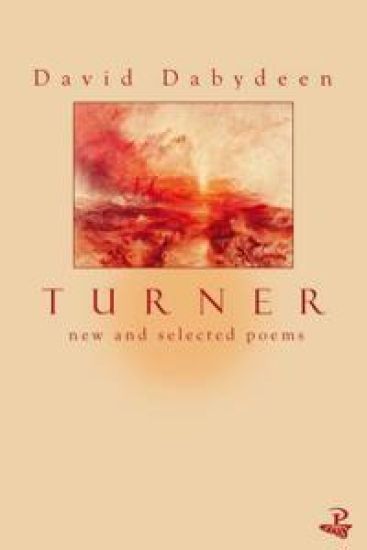
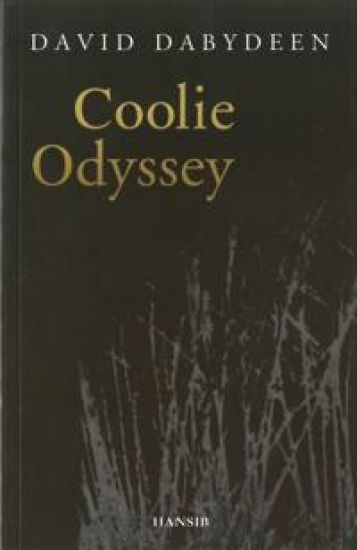
David Dabydeen's Turner is a long narrative poem written in response to JMW Turner's celebrated painting 'Slavers Throwing Overboard the Dead & Dying'. Dabydeen's poem focuses on what is hidden in Turner's painting, the submerged head of the drowning African. In inventing a biography and the drowned man's unspoken desires, including the resisted temptation to fabricate an idyllic past, the poem brings into confrontation the wish for renewal and the inescapable stains of history, including the meaning of Turner's painting. Turner was described Caryl Phillips as "a major poem, full of lyricism and compassion, which gracefully shoulders the burden of history and introduces us to voices from the past whose voices we have all inherited", and by Hanif Kureishi as "Magnificent, vivid and original." In addition to the title poems, Turner contains selections from David Dabydeen's two earlier books, Slave Song (1984) and Coolie Odyssey. David Dabydeen was born in Guyana. He has published six acclaimed novels and three collections of poetry. He is a Fellow of the Royal Society of Literature and Professor of Literary Studies at the University of Warwick.
A Harlot's Progress

A Harlot's Progress

David Dabydeen

Vintage
2000
pokkari
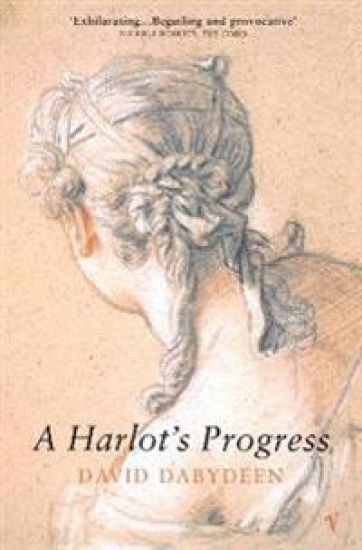
A HARLOT'S PROGRESS reinvents William Hogarth's famous painting of 1732 which tells the story of a whore, a Jewish merchant, a magistrate and a quack doctor bound together by sexual and financial greed. Dabydeen's novel endows Hogarth's characters with alternative potential lives, redeeming them for their cliched status as predators or victims. The protagonist - in Hogarth, a black slave boy, in Dabydeen, London's oldest black inhabitant - is forced to tell his story to the Abolitionists in return for their charity. He refuses however to supply parade of grievances, and to give a simplistic account of beatings, sexual abuses, etc. He will not embark upon yet another fictional journey into the dark nature of slavery for the voyeuristic delight of the English reader. Instead, the old man ties the reader up in knots as deftly as a harlot her client: he spins a tale of myths, half-truths and fantasies; recreating Africa and eighteenth-century London in startlingly poetic ways. What matters to him is the odyssey into poetry, the rich texture of his narrative, not its truthfulness. In this, his fourth novel, David Dabydeen opens up history to myriad imaginary interpretations, repopulating a vanished world with a strange, defiantly vivid and compassionate humanity.
Martin Carter Selected Poems / Poesías Escogidas

Martin Carter Selected Poems / Poesías Escogidas

David Dabydeen; Kwame Dawes

Peepal Tree Press Ltd
1999
nidottu
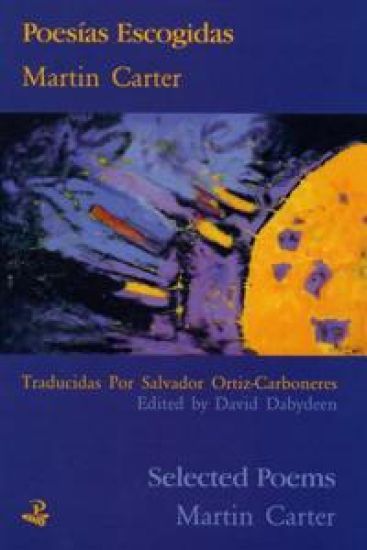
This dual language selection of Martin Carter's poems, edited by David Dabydeen, translated into Spanish by Salvador Ortiz-Carbonares and with an introduction by Gemma Robinson, will establish very clearly that Carter is a major South American poet, in the company of Valejo, Neruda and Paz. "What we have is enough to prove, if proof has been needed... that Martin Carter is, without reservation, one of the finest poets to have emerged in the Caribbean region. And the varied subtlety and strength of his poetry carries him without any doubt into the first rank of world poets. Long after the politics which prompted a number of his poems have been forgotten, and long after the society which he often so scathingly indicted has been changed utterly the poetry will continue to strike a chord among new generations." Ian McDonald The late Martin Carter was without doubt one of the Caribbean's major poets, only less well known than Walcott and Brathwaite because he rarely left his native Guyana. He came to notice first for his Poems of Resistance (1954) written out of his experiences of the anti-colonial struggle which included his imprisonment by the British for his political activities. His work has been a major influence on the current generation of Caribbean poets as John Agard, David Dabydeen, Fred D'Aguiar, Kwame Dawes, Linton Kwesi Johnson and Grace Nichols among others have elsewhere testified. Martin Carter was born in Guyana in 1927. He first came to attention with Poems of Resistance in 1954. He is unquestionably one of the three great West Indian poets of his generation. He died in 1997.